Kyoto’s red gates are famous for a reason. This half-day Fushimi Inari-taisha experience focuses on getting you moving on the “back side” of the mountain instead of being trapped in the main crowd. You’ll learn the significance of the red torii gates and walk a route that threads through bamboo and cedar forests, past smaller worship spots, and up toward the summit area.
I especially like the mix of hiking and storytelling: guides such as Ko, Satsuki, and Go are known for adjusting pacing and pointing out what to notice beyond the obvious. I also like that lunch is built in—soba with a Japanese tea and boiled egg break—so you’re not hunting food once the walking starts. One thing to consider: the path includes steep steps and a forest climb to a summit area, so you’ll want moderate fitness and a willingness to use stairs.
In This Review
- Key things to know before you go
- Finding the tour start at Great Torii Japan
- The plan for Fushimi Inari: a full half-day without feeling rushed
- Seeing the main shrine and the red torii story the right way
- Bamboo and cedar trails: the quieter side of the holy mountain
- A summit stop at 233m: the climb and what you get up there
- Lunch breaks that actually fit the hike: soba, tea, and boiled egg
- Small-group format: why pacing feels calmer (and more personal)
- Price and value: what you’re paying for at $72.26
- Meeting points, mobile tickets, and other day-of reality
- Who this tour is best for (and who should rethink it)
- A smart checklist before you book
- Should you book this Inside of Fushimi Inari tour?
- FAQ
- How long is the tour?
- How big is the group?
- Is lunch included?
- Are there options for special diets?
- Is the admission ticket included?
- What kind of fitness level do I need?
- Where does the tour start and end?
- What happens if the weather is bad?
Key things to know before you go
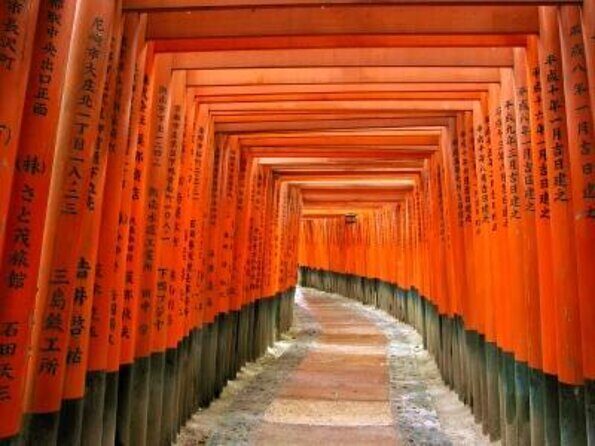
- A route designed to avoid the worst crowds on the main torii stretch
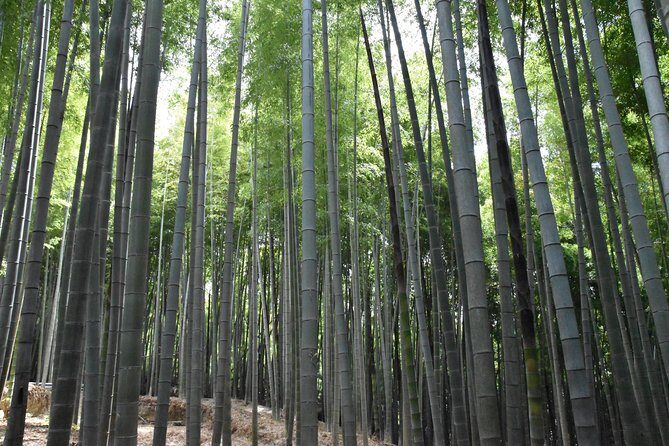
- Bamboo and cedar forest walking with quieter shrines and points of interest
- A climb to the summit area (233m) with a dedicated stop there
- Soba lunch plus tea and boiled egg scheduled into the hike
- Very small group size (max 6) for easier pacing and questions
Finding the tour start at Great Torii Japan
This tour starts at Great ToriiJapan in Fushimi Ward, at 深草薮之内町68番地. It ends back at the same meeting point, which is a big deal in Kyoto: you don’t have to solve your own return transport after the hike. It’s also described as near public transportation, so you can plan your day without stressing over a long transit scramble.
If you’ve ever shown up to a Kyoto meeting point and immediately wondered where everyone went, treat this like a “be early” situation. The hike timing is tight enough that being a few minutes late can throw you off. Bring your mobile ticket (you’ll have it on your phone) and plan to be there a little before the promised start.
A few more Kyoto tours and experiences worth a look


The plan for Fushimi Inari: a full half-day without feeling rushed
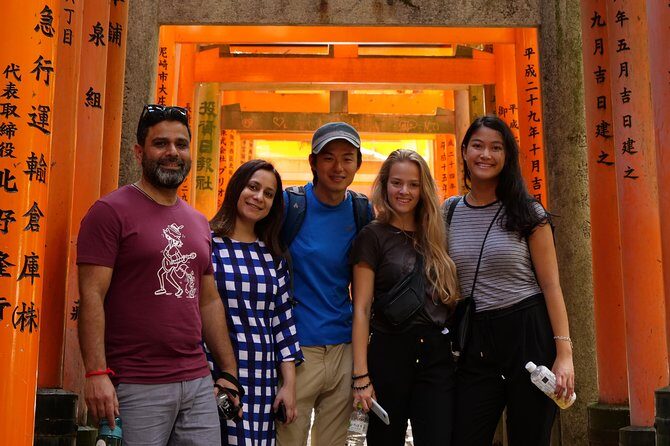
The schedule is built around one core idea: you spend real time inside the Fushimi Inari area, not just along the postcard route. The tour runs about 4 hours, and it’s paced for a mix of walking, short stops, and food. The first major focus is the shrine complex itself, then you shift onto an alternate route that keeps you away from the busiest corridors.
The summit piece matters too. You’ll do a climbing forest route of about 20 minutes to reach the summit area (233m), then get time to see the summit shrine and ask questions. That structure is what makes this feel like more than a quick photo walk.
Seeing the main shrine and the red torii story the right way
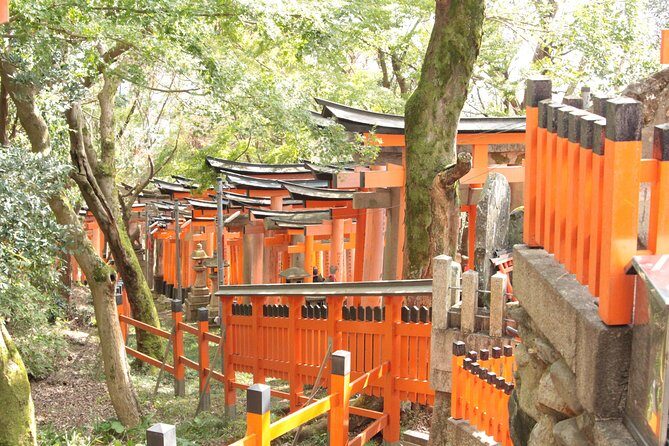
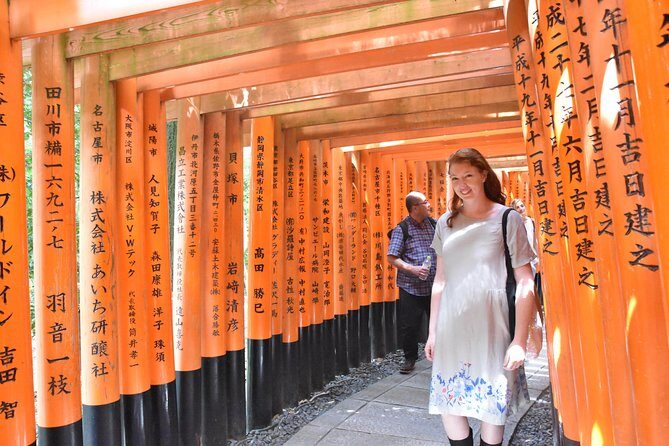
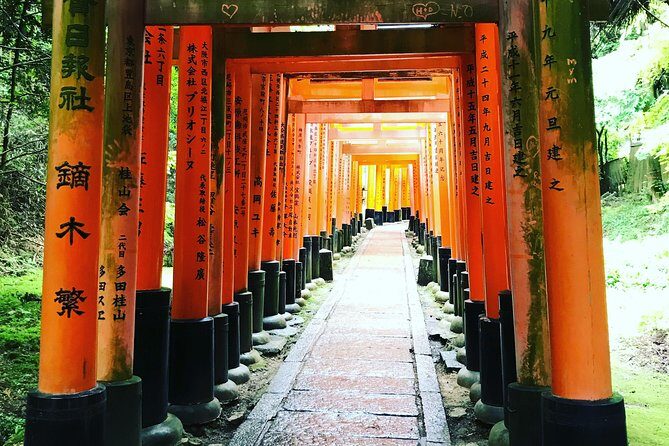
Even though this is a “hike the hidden route” tour, it doesn’t skip the iconic part. You’ll get sightseeing of the main shrine and thousands of red gates, with explanations of the history and cultural background tied to the gates. That matters because it turns the gates from scenery into something you can actually understand while you’re standing there.
Also, the tour doesn’t treat the gates like a checklist. It treats them like a path with meaning. Once you’ve got the context, you notice patterns faster: where people pause, how the spaces feel, and why certain viewpoints matter. You’ll then transition from the main sighting areas into the quieter forest segments.
One practical plus: explanations are built into the flow. So you don’t spend long stretches stopping and starting like you would on a DIY route where you’re constantly checking your phone.
Bamboo and cedar trails: the quieter side of the holy mountain
Here’s where the tour earns its value. You walk through peaceful bamboo and cedar tree forest paths, which is the opposite of what many people expect when they think of Fushimi Inari. Instead of only red torii on red torii, you get shade, softer sounds, and smaller moments of worship along the way.
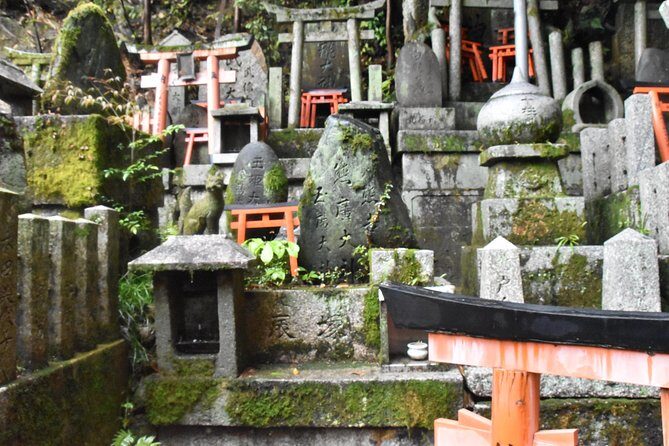
The route includes authentic holy spots such as worship stones and a waterfall. There’s also a gate factory stop. That last one is especially interesting because it connects the shrine experience to the materials and craft that make the red gates possible. You’re not just seeing a religious landmark—you’re seeing the human work around it.
The tour also emphasizes “whole holy mountain” enjoyment by alternative routes. In plain terms: you don’t do the same loop everyone does and call it a day. You get a more layered view of the mountain’s layout, which helps even if you come back later on your own.
A summit stop at 233m: the climb and what you get up there
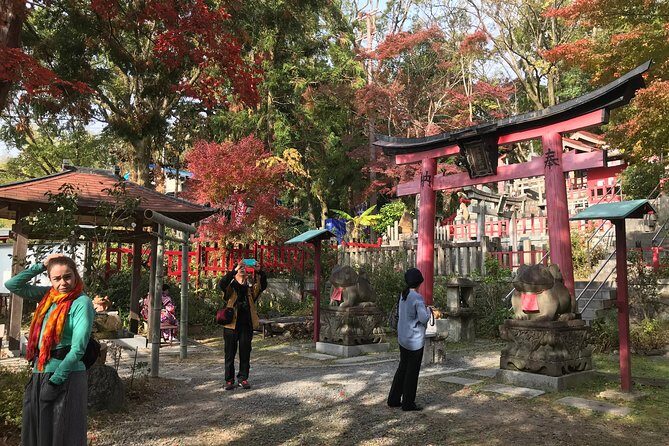
The summit portion is short, but it’s real. The climbing forest route takes about 20 minutes to reach the summit area at 233m, and then you’ll spend time around the summit shrine. This isn’t designed as a long endurance grind. It’s designed as a timed, guided push that still lets you feel the payoff.
The best part of the summit stop is what it changes in your perception. From up there, the experience shifts from “where are the gates” to “how does this mountain function as a sacred space.” Even if you’re not trying to memorize every spot, you’ll feel the difference once you’re there.
Now, the consideration: steps can be steep, and some people find the hike more challenging than they expected. If you know you struggle on stairs, it’s still doable for many people with the right pace, but don’t treat it like a flat stroll.
A few more Kyoto tours and experiences worth a look




Lunch breaks that actually fit the hike: soba, tea, and boiled egg
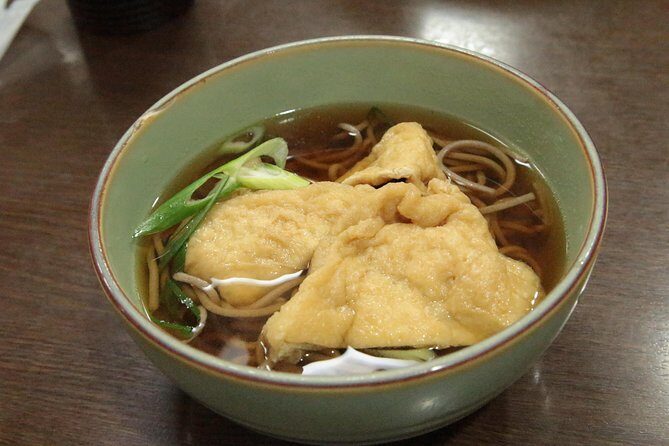
You don’t just get a snack and a vague suggestion to eat later. Lunch is part of the route. You’ll have a soba noodle lunch, plus a Japanese tea and boiled egg break. That matters because Fushimi Inari is the kind of place where food options can be scattered, and timing can get messy when you’re hiking.
This tour also supports several diets: it’s described as vegetarian and Halal friendly, and gluten-free food is available. That’s a big quality-of-life detail for a shrine hike, where you might otherwise end up stuck with a compromised meal.
One more practical benefit: because lunch is scheduled into the itinerary, you’re not constantly judging whether you’re about to miss the next viewpoint. You can eat, reset your energy, and keep moving.
Small-group format: why pacing feels calmer (and more personal)
The tour is built for intimacy. It’s designed as a small-group hiking tour, with a maximum of 6 travelers. That small size is one reason the experience tends to feel less chaotic than doing Fushimi Inari on your own or in a large bus group.
In past experiences with guides like Ko and Satsuki, the emphasis is on adjusting pace so the group stays together. That’s a real comfort on a route with steps and forest stretches. You can ask questions without feeling like you’re holding up a parade.
It also helps that the tour is actively oriented away from the masses. Guides focus on taking you down quieter paths through trees and smaller shrines. The effect is that you get those moments where the mountain feels like a lived-in place, not an outdoor theme park.
Price and value: what you’re paying for at $72.26
At $72.26 per person for about 4 hours, this is not the cheapest way to see Fushimi Inari. But it’s priced like a guided experience with multiple built-in components: a structured route, on-the-spot explanations, and included meals.
Here’s what you’re really buying:
- Time efficiency: you don’t spend time planning a complex alternative route on your own.
- Less crowd frustration: the itinerary is designed for calmer walking.
- Included food: soba lunch plus tea and boiled egg.
- A guided summit segment: you’re not guessing whether the effort is worth it.
The tour is also noted as often being booked around 80 days in advance, which usually signals demand for the small-group slot and a schedule that fits people’s Kyoto itineraries. If you’re traveling in a busy season, booking earlier than you think you need to is a smart move.
Meeting points, mobile tickets, and other day-of reality
This is a mobile ticket experience. That’s convenient in Kyoto, where paper vouchers can get lost in your bag faster than you’d like to admit.
The start and end are the same meeting point near public transportation. That’s ideal for half-day planning because you can keep the rest of your day flexible: you won’t feel trapped into rushing back across town after the hike.
Weather matters here. The experience requires good weather, and if it can’t run due to weather, you’ll be offered a different date or a full refund. Fushimi Inari is outdoors for long stretches, so this isn’t a trivial condition.
Who this tour is best for (and who should rethink it)
This one fits best if you want a guided experience that still feels like exploration. You’ll enjoy it most if you like:
- walking through bamboo and cedar areas,
- learning the meaning behind red torii gates,
- getting lunch handled for you,
- and seeing the mountain from multiple angles, including the 233m summit area.
It’s also a good option if you travel with food needs, since vegetarian, Halal-friendly, and gluten-free options are supported.
Reconsider if you hate stairs or expect a mostly flat walk. This tour includes steep steps, and the forest climb is part of the design. You don’t need to be an athlete, but you do need to be comfortable with a moderate hiking effort.
A smart checklist before you book
You don’t need a lot of gear, but you do need to be ready for the structure:
- plan for a forest hike with steps, including a climb segment of about 20 minutes
- choose comfortable footwear for steep stair sections
- be ready for time outdoors and weather-dependent operations
- arrive early enough to locate the meeting point easily at Great ToriiJapan
If you’re the type who likes to understand what you’re seeing—especially cultural and religious context—this tour format is a good match.
Should you book this Inside of Fushimi Inari tour?
I think you should book it if you want the best “Kyoto shrine experience” combo: guided meaning, quieter walking, and included food. The small group size makes a difference, and the off-the-beaten-track route is built to reduce crowd stress while still showing you the iconic gates.
Skip it if your top priority is a relaxed, low-effort stroll. The climb to the summit area and the step-heavy parts aren’t optional here. Also, make sure your day planning has buffer time for weather changes since the tour depends on good conditions.
If your ideal day includes a calm route through bamboo, a real soba lunch break, and a guided look at the summit shrine area, this is a strong fit.
FAQ
How long is the tour?
It runs for about 4 hours (approx.).
How big is the group?
The tour is described as a small-group experience with a maximum of 6 travelers.
Is lunch included?
Yes. You get a soba noodle lunch, plus a Japanese tea and boiled egg break.
Are there options for special diets?
Vegetarian and Halal-friendly options are available, and gluten-free food is also available.
Is the admission ticket included?
Yes. An admission ticket is included.
What kind of fitness level do I need?
You should have moderate physical fitness level, since the route includes stairs and a forest climb.
Where does the tour start and end?
It starts at Great ToriiJapan (深草薮之内町68番地, 612-0881 Kyoto, Fushimi Ward) and ends back at the same meeting point.
What happens if the weather is bad?
The experience requires good weather. If it’s canceled due to poor weather, you’ll be offered a different date or a full refund.