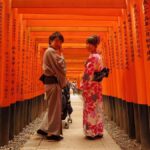
Fushimi Inari is magic after dark. This guided walking tour helps you understand what you’re looking at at Fushimi Inari-taisha, from shrine rituals to the meaning behind the torii gates, without getting lost in the crowds. I like that it’s small-group paced, so you stay with the guide instead of drifting off like an extra on a festival poster.
Two hours can still feel rushed in Kyoto, so I appreciate how this tour is built around a steady climb with historical insights and practical navigation. One thing to consider: it can be a real climb, and you’ll want comfortable shoes, especially on an evening schedule when the complex can feel busy.
In This Review
- Key points at a glance
- Why a 6:00 pm walk changes Fushimi Inari
- What you learn at Fushimi Inari: fox deity, rituals, and gate symbolism
- The 2-hour itinerary: your climb, your viewpoints, and your pace
- Stop 1: Fushimi Inari-taisha Shrine
- Small-group navigation without the stress
- Price and value: $39.64 for a meaningful evening
- Where this tour fits best in your Kyoto plan
- What to expect on the ground: crowd flow, quiet spots, and photo breaks
- Should you book this Kyoto: Fushimi Inari walking tour?
- FAQ
- How long is the Kyoto Fushimi Inari walking tour?
- What time does the tour start?
- Where is the meeting point?
- Is admission to Fushimi Inari included?
- Do I need an app for the ticket?
- Is there an English-speaking guide?
- How big is the group?
- What should I bring or plan for since food isn’t included?
- Can I get a full refund if my plans change?
Key points at a glance
- Skip-the-line convenience with included entry/admission to Fushimi Inari-taisha
- English-speaking guide who explains the meaning behind shrine rituals and fox deity Inari
- Small group (max 10 people) so you don’t lose the thread or the meeting point
- Scenic trail access for calmer moments and panoramic viewpoints along the walk
- Evening timing (6:00 pm start) that helps you experience the shrine without the full daytime crush
Why a 6:00 pm walk changes Fushimi Inari
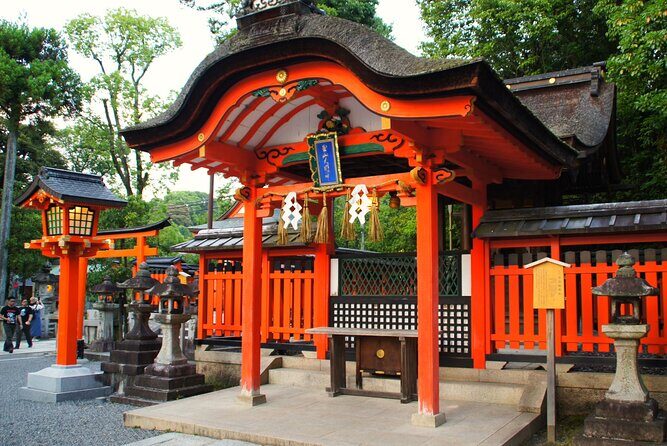
Nightfall at the shrine can feel like a reset button. At 6:00 pm, the crowds are still there, but the whole place has a calmer rhythm than the busiest daytime hours. You get to focus on what matters: the prayers, the quiet corners, and the long path of torii gates.
The guide’s job is more than pointing. You’re there to make sense of a shrine that’s easy to treat like scenery. With context, you can move through the forested mountain trails and actually notice the patterns—where people pause, where small rituals happen, and how the route shapes your mood.
One reason this timing works well for many people is simple: it gives you enough time to enjoy viewpoints without racing the clock. You’re out there for about 2 hours, so it’s doable even if you’ve already walked Kyoto hard that day.
A few more Kyoto tours and experiences worth a look



What you learn at Fushimi Inari: fox deity, rituals, and gate symbolism
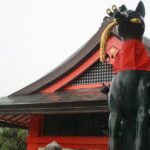
Fushimi Inari-taisha is famous, but familiarity can trick you. You see the orange-red gates and the fox statues, then wonder why everyone is acting like this place has its own rules. This tour is designed to answer that.
You’ll learn the spiritual meaning behind what you’re seeing. The focus is on the fox deity Inari, and on how shrine rituals and customs fit into the experience. Instead of just reading signs, you’ll hear explanations that connect the objects, the setting, and the pauses people take.
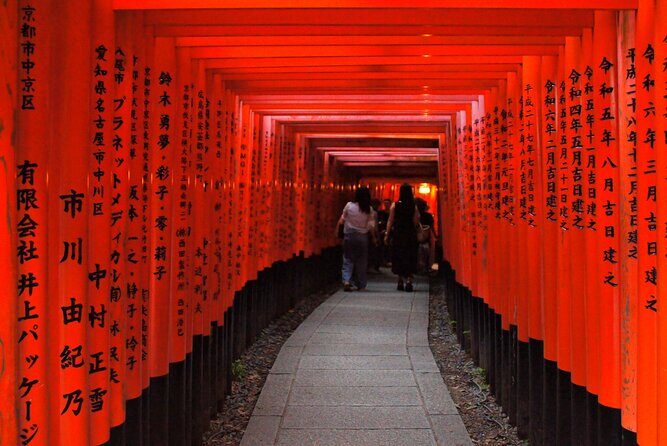
A key win here is gate symbolism. You don’t need to be religious to appreciate structure. Once you understand the logic behind the torii gates and why visitors interact with the shrine in specific ways, the walk stops feeling like a photo line and starts feeling like a journey.
The 2-hour itinerary: your climb, your viewpoints, and your pace
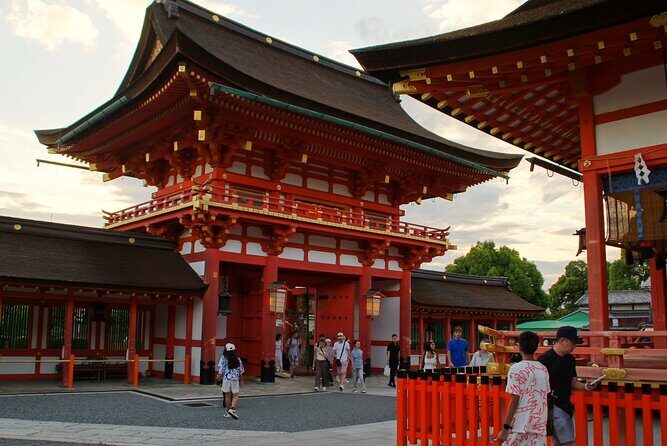
This is a one-stop tour that runs straight through the heart of Fushimi Inari-taisha. You meet at Daily Yamazaki (Fushimi ward) and start from there, then you walk together through the shrine complex toward scenic trails and panoramic viewpoints.
Stop 1: Fushimi Inari-taisha Shrine
You’ll begin at the shrine itself and explore the spiritual heart first. The classic torii gate path is part of what you’ll experience, but the value is how you experience it. The guide helps you keep an eye on the details that many people miss when they rush from one landmark to the next.
As you move upward, the route gives you chances for reflective moments. One of the most praised parts of this tour is pacing that feels human, not like a sprint. That means you get time to stop, look, and understand what you’re looking at, instead of power-walking between the obvious photo spots.
Panoramic viewpoints are part of the promise, and the walk supports that. You’ll get scenes over Kyoto as the trails open up, and you’ll be guided to useful spots to take in the view. Some people also enjoy the way the guide helps you notice calmer areas as you climb, which can make a crowded shrine feel surprisingly peaceful.
Practical note: because you’re ascending, this is not a flat stroll. Bring comfortable shoes and plan to take your time at natural stops. The route feels like a cultural walk plus light hiking.
Small-group navigation without the stress
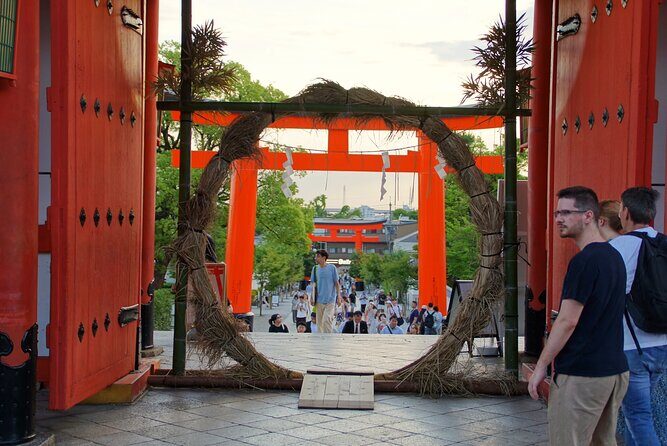
Kyoto can be loud on paper and chaotic in real life. That’s why “someone else to navigate” is more valuable than it sounds. With a group capped at 10 people, the guide can keep watch on timing and re-group quickly when paths split.
This is also the kind of tour where you might want questions answered on the spot. The guide is there for historical insights into the district and for explaining what you’re seeing as you go. It’s a big difference between trying to interpret the shrine with your own notes versus walking with explanations that match your exact location.
The group size also helps with your attention. If you’ve ever tried to tour a complex like this while keeping track of where the crowd is going, you know how tiring it gets. Here, the pace and the route structure make it easier to stay present. You’re less likely to wander off and scramble later to find the meeting point.
And yes, it’s still a shrine with real visitors. Evening means it can be busy. The good news is that the guide helps you work around that, so you spend less time stuck in slow-moving clusters.
Other walking tours we've reviewed in Kyoto






Price and value: $39.64 for a meaningful evening
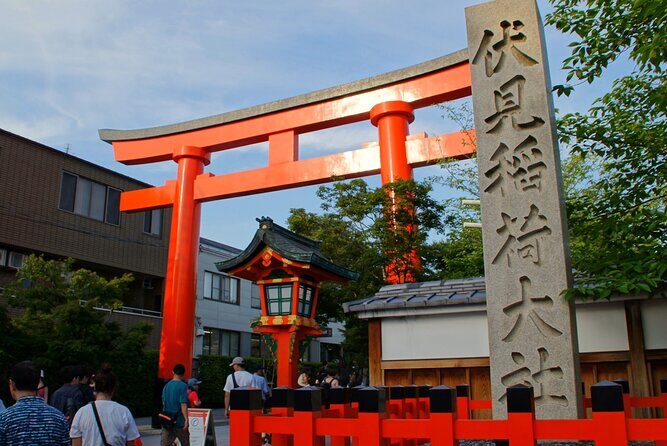
$39.64 can feel like a “tour price” until you break down what’s included. What you’re paying for isn’t just a person walking you to a famous place. You’re paying for admission/entry included in the tour, plus an English-speaking guide who adds context you can’t easily pull from signage alone.
You’re also saving time. The tour is set up to reduce waiting around ticket lines by handling admission as part of the experience. If you’ve dealt with long lines at major sights in Kyoto, you’ll understand why this matters. Time saved in a single evening can be the difference between enjoying the view and feeling like you’re always catching up.
Then there’s the practical side: the tour includes a mobile ticket. That reduces friction right before meeting time, so you can focus on showing up and starting the walk.
Not included are things you’d expect: food and drinks, and tips are optional. Plan on handling your own water/snacks if you need them. But for the core experience, the guide-led structure and included admission are what make the cost feel fair.
Where this tour fits best in your Kyoto plan
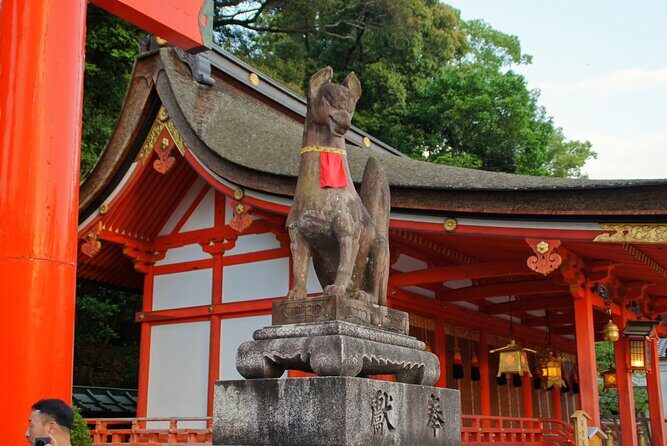
This is a great choice if you want Fushimi Inari to be more than a checklist item. If you like learning what you’re seeing while you walk—especially around rituals, symbolism, and how the shrine works—this format fits your style.
It’s also a good match if you want a manageable commitment. With about 2 hours total and an evening start time, you can pair it with other Kyoto plans earlier in the day. It’s long enough to feel like an actual experience and short enough that you don’t feel trapped on the schedule.
Because it includes a climb, this is best for people who can handle walking on uneven or steep paths. If you struggle with stairs or rough ground, you might find the ascent tiring. Also, if you’re going in expecting a slow, flat promenade, this tour may feel like a workout.
What to expect on the ground: crowd flow, quiet spots, and photo breaks
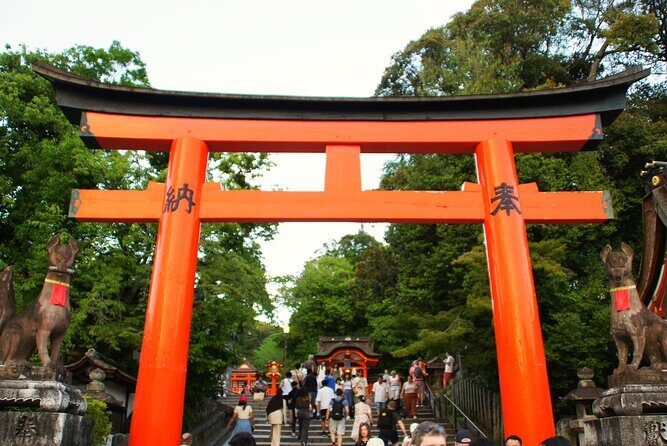
Even with the guide, Fushimi Inari can feel busy. That’s normal. The difference is that the guide helps you find steadier moments along the way.
One of the most praised themes is getting to calm pockets for reflection. People consistently mention that the guide chooses good spots to pause and understand what’s happening. That means less random stopping for photos and more intentional breaks.
You can also expect that the tour is built around explanations that land in real time. When you look at a ritual spot, hear why it matters, and then watch how people behave there, the whole complex makes more sense. It turns the shrine from a backdrop into a living cultural space you can read.
If your goal is photos, you’re not ignored. Viewpoint moments are part of the walk, and there are scenic breaks that make pictures easier. The guide also seems to target spots where you can both look outward and take a breath.
Should you book this Kyoto: Fushimi Inari walking tour?
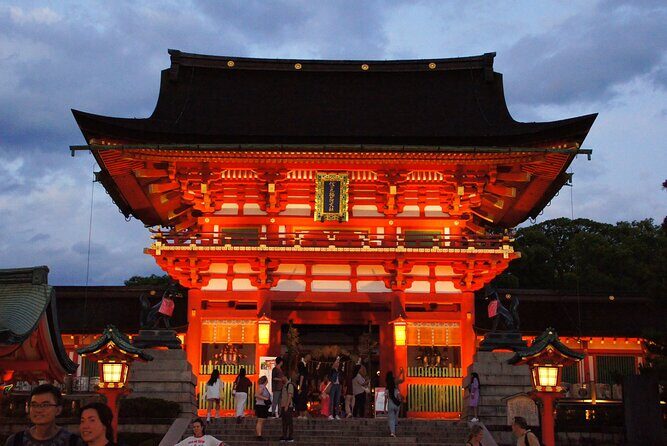
I’d book this if you want to understand the shrine, not just stroll through it. The combination of included admission, an English-speaking guide, small-group pacing, and trail access for viewpoints makes this a strong value for an evening.
Skip it only if you want a no-brain, flat walk with zero interpretation. This tour is built around learning what you’re seeing, and it includes a climb. If that sounds like a good deal, it probably is.
If you’re deciding between a self-guided route and a guided evening, here’s the simplest test: if you’d rather spend your time asking why things look the way they do, choose the guide. If you’d rather wander freely with minimal structure, you can handle the shrine on your own—but you’ll likely miss more of the meaning along the way.
FAQ
How long is the Kyoto Fushimi Inari walking tour?
It’s about 2 hours.
What time does the tour start?
The start time is 6:00 pm.
Where is the meeting point?
The tour meets at Daily Yamazaki Fushimi Inari Shrine, 93 Fukakusa Inarionmaechō, Fushimi Ward, Kyoto.
Is admission to Fushimi Inari included?
Yes. Entry/admission to Fushimi Inari-taisha is included.
Do I need an app for the ticket?
You’ll have a mobile ticket.
Is there an English-speaking guide?
Yes, the tour includes an English speaking guide.
How big is the group?
The maximum group size is 10 people.
What should I bring or plan for since food isn’t included?
Food and drinks are not included, and tips are optional. You’ll want your own plan for water or snacks if you need them.
Can I get a full refund if my plans change?
Yes, you can cancel up to 24 hours in advance for a full refund.
If you cancel less than 24 hours before the start time, you won’t receive a refund.

![Kyoto: Personalize, private tour (3h, 5h, 8h) [W/Car Option] - Picking your start point: lodging, Disney Store, or Sanjo-Ohashi Starbucks](https://kyotoguide.info/wp-content/uploads/2026/05/kyoto-personalize-private-tour-3h-5h-8h-w-car-option.jpg)