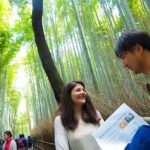
The night version of Arashiyama hits different. This is a Kyoto ghost tour built around atmosphere first: you walk in the bamboo forest after dark, you hear crime-and-spirits stories in the same darkness, and you get a small surprise that feels part performance, part ritual. In sessions led by guides like Eric and Aron (plus other familiar names such as Zowee and Kalle), you’ll get humor and scares in the same breath, with Japanese folklore tone rather than generic jump-scares.
I really like the structure: a solo walk through the bamboo paths, and then a guided story thread that keeps moving to new spots. I also like that you’re not just watching from the sidelines; you’re actively part of the setting, with a drink included at the start and an anti-curse QR code in the mix.
One big consideration: this tour is not for everyone. It’s intentionally unsettling, and it’s not recommended if you get anxious walking alone in the dark, if you have heart issues, or if you’re pregnant, over 65, or using a wheelchair. It also has strict rules (no flashlights, no recording), so you need to go in ready to follow the vibe.
In This Review
- Key points before you go
- Why Arashiyama at Night Feels Like a Different Kyoto
- Meeting at Saga-Arashiyama Station: Simple Logistics, Strict Rules
- The 15-Minute Arashiyama Pass: Getting Oriented Without Losing the Mood
- The Bamboo Forest Hour: Your Solo Walk Through the Dark
- Nonomiya Shrine Stop: Where the Fear Hits Reality
- The Stories, the Humor, and the Creepy Surprise
- Price and Timing: Does $50 Make Sense for 150 Minutes?
- Who Should Book This Kyoto Ghost Tour (and Who Should Skip)
- Practical Tips: What to Bring and How to Avoid Ruining the Night
- Final Call: Should You Book This Ghost Tour or Look Elsewhere?
- FAQ
- Where is the meeting point?
- How long is the tour?
- What is included in the price?
- What language is the tour in?
- Will I be allowed to take photos or record video?
- Is a flashlight allowed?
- Do I need cash?
- Who can join?
- Is cancellation refundable?
Key points before you go
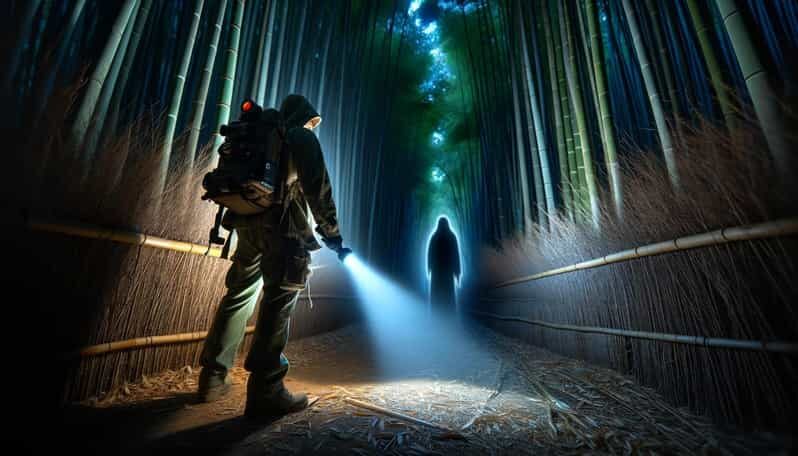
- Solo bamboo walk in the dark: you’re not held by the group the whole time
- Dark tales + true-event framing: crime and ghost lore, told in a story-guided flow
- Haunting Arashiyama atmosphere: bamboo stalks and night silence do half the work
- Nonomiya Shrine stop: you shift from “forest fear” to a real place with spiritual energy
- Anti-curse QR code and a creepy surprise: small extras that make it feel like an event
- English live guide: the stories are paced for English speakers, not just a scripted monologue
Why Arashiyama at Night Feels Like a Different Kyoto
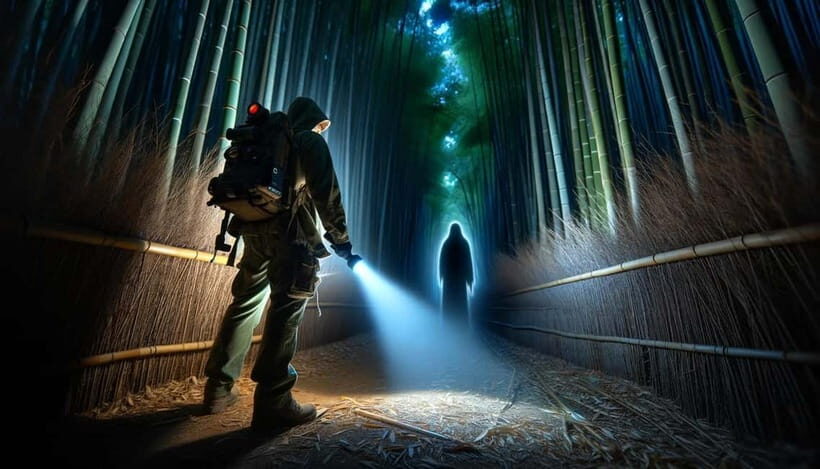
Arashiyama is famous in daylight. At night, it changes personality. The bamboo forest narrows your sightline, the sounds get closer, and the whole place feels less like a landmark and more like a stage set for folklore.
What makes this tour work is that it uses that setting on purpose. You’re not only there to “see” the forest. You’re there to experience it while someone weaves legends, crimes, and yokai-flavored tales into the dark.
If you like ghost stories that feel rooted in place, this is a strong fit. It’s also a good counter-program to the usual Kyoto rhythm of temples in the evening lights. Here, the light stays low by design, and the guide’s storytelling carries the mood.
A few more Kyoto tours and experiences worth a look


Meeting at Saga-Arashiyama Station: Simple Logistics, Strict Rules
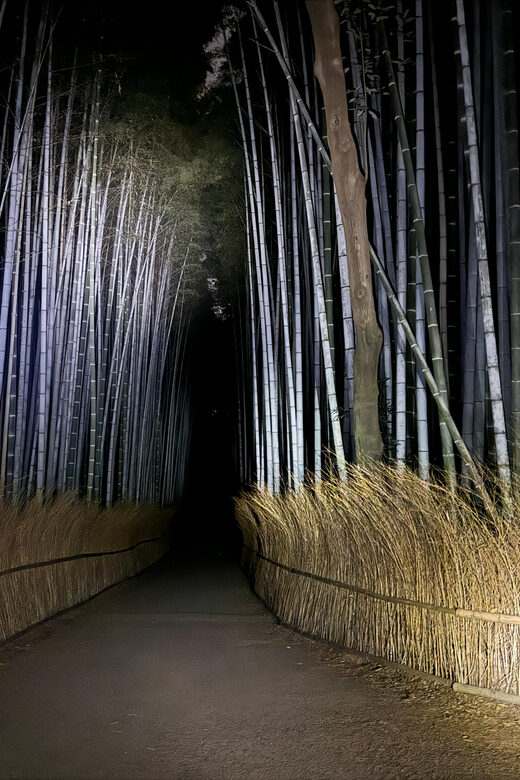
You start at Saga-Arashiyama Station. Go to the rounded window near the North Gate, upstairs, inside. The tour sends full details the day before by email and WhatsApp, and WhatsApp is required for updates, so make sure you can access it on the night.
A practical tip: bring cash. It’s specifically listed as what you should have. And if you’re arriving early, plan your timing so you don’t accidentally spoil the effect.
Important: do not visit the bamboo forest before this experience. Even if you’re tempted for photos, you’ll undercut what the tour is trying to create. The “first time at night” is the point.
Also, go in knowing the rules are real. No flashlights, no video recording, and no audio recording during the whole tour. You’ll also want comfortable shoes, because some parts can feel dim and isolated even with the guide steering the group.
The 15-Minute Arashiyama Pass: Getting Oriented Without Losing the Mood
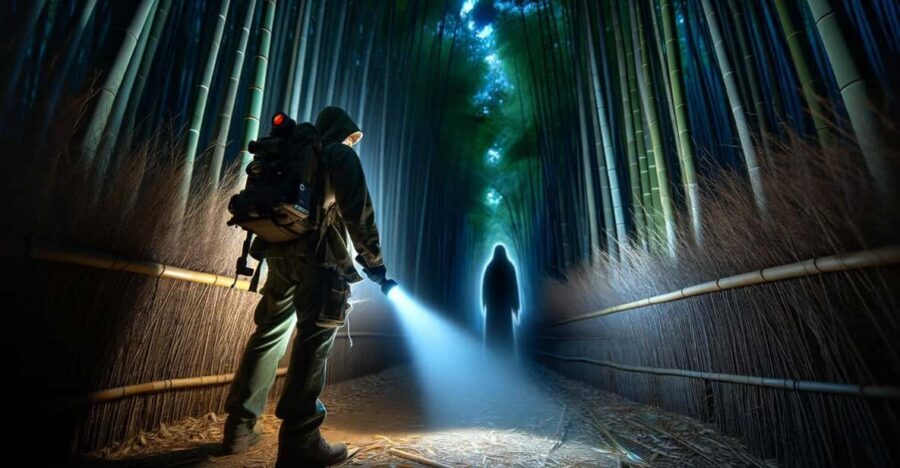
Right after you begin, you move through Arashiyama briefly. The tour keeps this part to about 15 minutes, which is smart. You get oriented to the area without turning the night into a sightseeing buffet.
This short pass matters because the tour wants your brain in “story mode” fast. If you spend too long staring at storefronts and crowds, it’s harder to switch gears when you hit the bamboo.
Expect the guide to set tone early—less lecture, more pacing. The vibe is: you’re walking toward something, and you’re meant to feel that approach in your body, not just your ears.
The Bamboo Forest Hour: Your Solo Walk Through the Dark
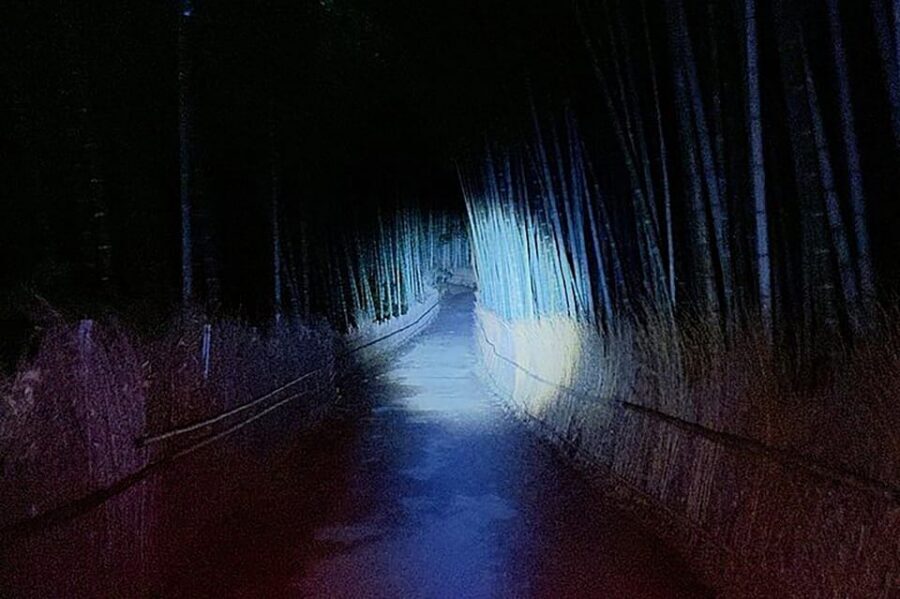
This is the core experience, and it’s designed to make you pay attention.
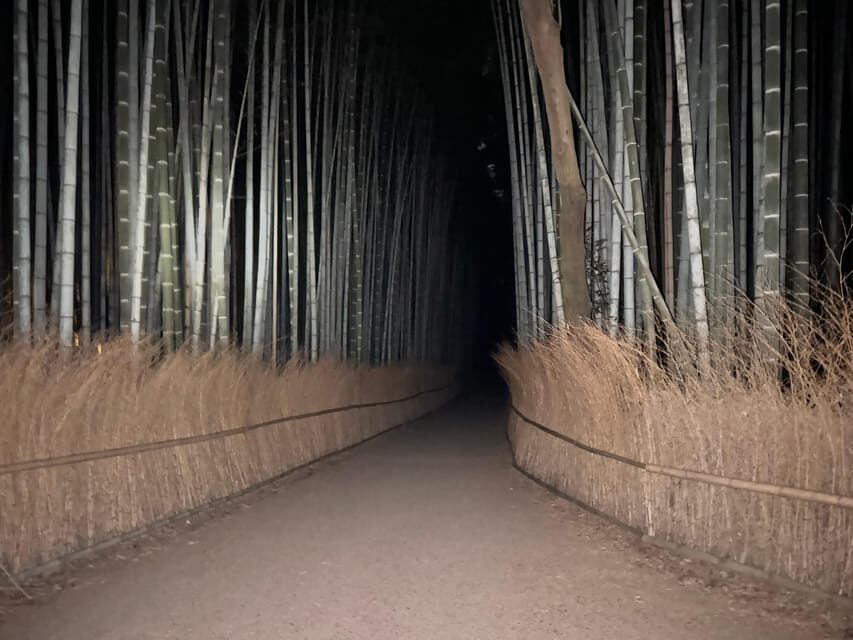
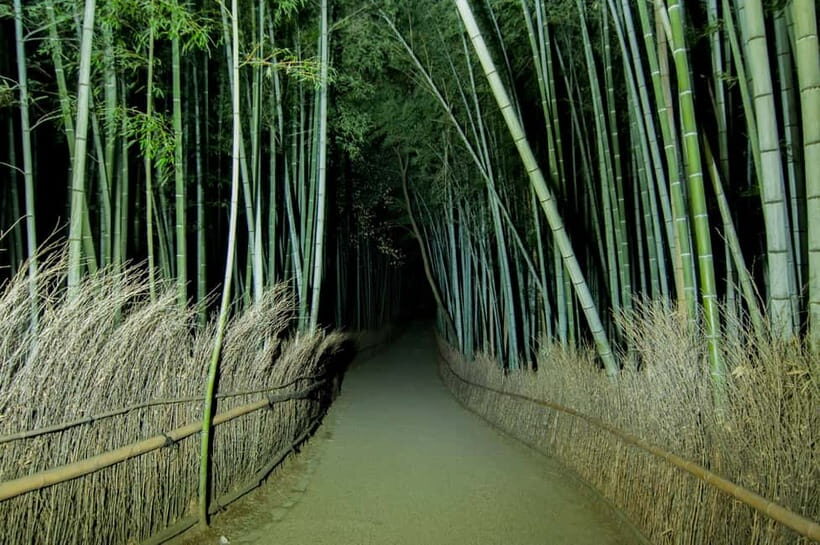
You’ll enter the Arashiyama Bamboo Forest for about one hour, and the defining feature is that you’ll do a solo bamboo walk. That means you’re not always with the group in the usual “everyone stays together” way. You’re given that private stretch where the bamboo stalks become walls and the path feels personal.
From what the guides have emphasized in past runs, the experience is built for people who like being scared—but also for people who can stay calm and follow instructions. If you’re the type to panic when you can’t see far ahead, consider skipping. The tour itself explicitly warns that it’s not recommended for people afraid of walking alone in the dark.
What I find useful to know before you go: you don’t need to act tough, and you don’t need to “perform bravery.” You just need to move steadily and stay present. The story hits harder when you’re not chatting through it.
Also, weather can change the feel. One recurring theme from past participants is that light drizzle can make it even more atmospheric. You can’t control rain, but you can control footwear and your willingness to accept “night weather realism.”
Nonomiya Shrine Stop: Where the Fear Hits Reality
After the bamboo walk, you shift back into guided movement and arrive at Nonomiya Shrine. This stop is more than a photo break. It’s where the tour’s mood meets a real spiritual location.
Why this works: ghost stories in Kyoto land better when they connect to actual sites. A shrine visit gives the legends a physical anchor. The guide’s stories about spirits and unsettling events feel less like entertainment-only and more like folklore sitting on top of a place people still respect.
You’ll also get a short window of downtime in the wider Arashiyama area before the shrine. There’s a shopping/pass time around 15 minutes. Keep it quick. The tour’s energy is meant to keep flowing, not to turn into a casual browse-and-bail moment.


The Stories, the Humor, and the Creepy Surprise
This tour isn’t only about scaring you. It’s about telling stories well. Many past guide styles follow a pattern: humor first, then creeping tension, then a payoff moment when you expect it least.
Guides listed in past sessions include Eric, Aron, Zowee, Kalle, Santiago, and Zoe/Arran/Aaron (names vary by listing and participant memory, but the pattern is consistent). What matters for you is the effect: the storytelling is engaging and paced, so you’re not stuck listening to a monotone script while you walk.
The tour description also highlights that it’s not the typical ghost tour. The emphasis is on legends, true events, and darker undercurrents around crimes and spirits—plus a surprise during the experience.
And then there’s the Anti Curse QR code. That’s a fun detail because it gives you something to do with your phone after the fact, like a little “you survived the night” token. Just remember: recording and live streaming are not allowed, so treat your phone as a listening/communication tool, not a camera.
One more thing: there’s an encouragement to opt out of the scariest section if you’re concerned. You’ll hear from the guide how the route works for your comfort level, and you can choose your boundary.
Price and Timing: Does $50 Make Sense for 150 Minutes?
At $50 per person for about 150 minutes, this isn’t a “cheap night stroll.” But for what you get, it can feel good value if you’re the kind of traveler who values a designed experience.
Here’s what you’re paying for, in plain terms:
- A real guide-led night route in a landmark area
- A solo walk component, which is harder to stage than a standard group walk
- English live narration for the story thread
- Extras like one drink and the anti-curse QR code, plus a creepy surprise
This tour also runs only at certain times based on availability, so you need to line up your Kyoto evening. Still, that’s part of the deal: Arashiyama at night isn’t casual access. The tour’s timing is built for the mood.
If you’re already planning to spend time in Arashiyama after dark, this is a smarter use of that time than wandering alone and trying to invent your own story. But if you mainly want calm sightseeing, you’ll probably feel underwhelmed—this tour is intentionally spooky.
Who Should Book This Kyoto Ghost Tour (and Who Should Skip)
This is best for:
- People who enjoy Japanese ghost lore, yokai-style stories, and mystery atmosphere
- Horror fans who can handle being unsettled but still want fun and humor
- Adults and teens who are comfortable walking in the dark and following guidance
It’s not for:
- Children under 16
- Pregnant women (not suitable)
- People with heart problems
- Wheelchair users
- People over 65
- Anyone who’s not interested in mysteries and ghost stories
- Anyone who’s afraid walking alone in the dark
My practical take: if you’re going with friends, agree in advance about your comfort level. The tour can get scary when you least expect it, and that surprise is part of the design.
Also, if you’re the type who wants to joke through everything, you might disrupt the mood. Some people enjoy a more serious horror tone to really make it work.
Practical Tips: What to Bring and How to Avoid Ruining the Night
The list is short, but it matters:
- Bring cash
- Have WhatsApp installed for day-before updates
- Dress for night walking and dim paths
- Plan to arrive early enough for your own warmup—without going into the bamboo forest
Remember the special tip: most restaurants in the area will be closed, so if you arrive earlier, the tour suggests visiting Kimono Forest nearby, since it’s always open. It’s a nice way to set the mood before you head into the real darkness.
What not to bring:
- Flashlight
- Walking sticks
- Drones
- Video or audio recording gear
- Baby strollers or baby carriages
- Electric wheelchairs
That last part matters because the route isn’t set up like a museum path. It’s a night walk through a specific environment. If you have any mobility concerns, treat the tour rules as a clear signal.
Final Call: Should You Book This Ghost Tour or Look Elsewhere?
Book it if you want Kyoto with a spine. This tour is for people who enjoy being scared in a controlled, story-driven way—and who specifically want the Arashiyama Bamboo Forest at night as part of the experience, not an afterthought.
Don’t book it if you want a relaxed, crowd-free stroll with gentle sightseeing. This tour is darker by design. If solo walking in the dark makes you anxious, your money will likely feel wasted.
If you are on the fence, ask yourself one question: do you want atmosphere and folklore, or do you want comfort and light? The moment you step into the bamboo, you’ll know which one this is.
FAQ
Where is the meeting point?
Meet at Saga-Arashiyama Station, at the rounded window near the North Gate (upstairs, inside).
How long is the tour?
The duration is about 150 minutes.
What is included in the price?
You get one drink (alcoholic or non-alcoholic), a solo walk in the dark, a unique creepy surprise, and an Anti Curse QR code.
What language is the tour in?
The tour is a live English guided experience.
Will I be allowed to take photos or record video?
No. Video recording and live streaming are not allowed, and audio recording is also not allowed during the whole tour.
Is a flashlight allowed?
No. Flashlight is not allowed.
Do I need cash?
Yes, cash is listed as something to bring.
Who can join?
This tour is not suitable for children under 16, and it is also not recommended for pregnant women. It is also listed as not suitable for people with heart problems, wheelchair users, and people over 65.
Is cancellation refundable?
Yes. There is free cancellation up to 24 hours in advance for a full refund.