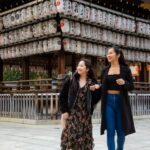
Kyoto at night has a special kind of hush. This private Gion walk—run by Hero Tour Japan—gets you moving through traditional streets with local context and a guide who helps you notice details you’d otherwise miss. I especially liked the nighttime atmosphere around Yasaka Shrine and the way the guide made photo stops feel easy and natural.
One thing to consider: the route includes a short moment where you’ll need to keep your voice down near a stone wall district, plus it’s still a real 1.5-hour walk. If you’re not into night strolling or you’re expecting no quiet rules at all, this might feel a bit more “respectful” than casual tourism.
In This Review
- Key Highlights You’ll Care About
- Why Gion Hits Different After Dark
- Meeting in Front of Minamiza Kabuki: Easy Start, Real Context
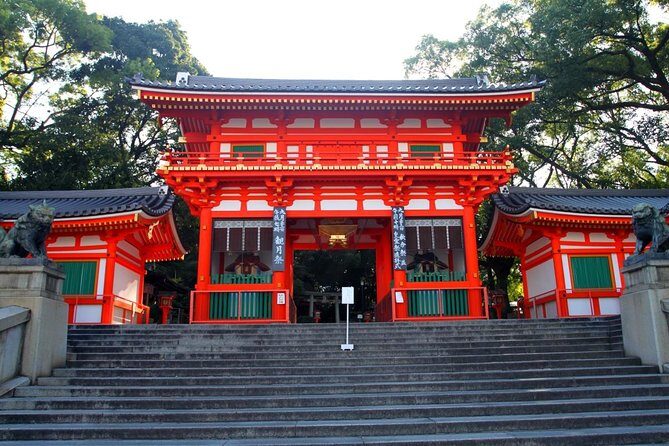
- Yasaka Shrine at Night: A Strong Place to Begin
- The Quiet Stone Wall District: Respect Is the Real Souvenir
- Yasakanoto Pagoda Stop: The Photo Moment That’s Actually Fun
- Walking the Yasaka Slopes: A Neighborhood, Not a Corridor
- Kiyomizu-dera at Night: Light-Up Season Changes Everything
- Timing, Walking Pace, and What to Wear
- Photo Help in the Best Way: Less Stress, Better Frames
- Value Check: Is $35 a Good Deal?
- Who Should Book This Night Walk
- Practical Considerations: Quiet Rules and Seasonal Light
- Should You Book This Kyoto Gion Night Walk?
- FAQ
- How long is the Kyoto night walk tour in the Gion district?
- Is this tour private?
- Where is the meeting point?
- What’s the ticket method?
- Which stops are free, and is Kiyomizu-dera included?
- What if I need to change plans last minute?
- Does the tour run in bad weather?
- Is it easy to reach with public transportation, and is it suitable for most people?
Key Highlights You’ll Care About
- Private, small-group feel for an unhurried night in Gion
- Photo-friendly guidance at signature spots like Yasakanoto
- Free admission at Yasaka Shrine and the Yasakanoto area
- Quiet, low-key lanes where you’re encouraged to keep silent
- Season-dependent lighting possible at Kiyomizu-dera
Why Gion Hits Different After Dark
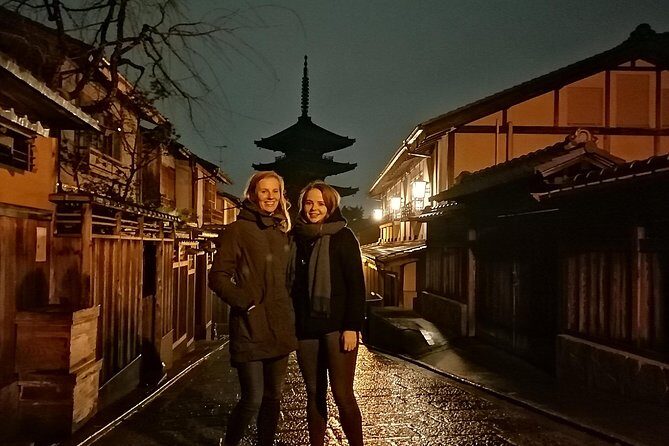
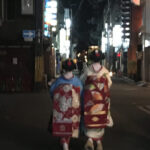
Gion is famous in daylight. At night, it turns more intimate—narrow streets, softer light, and the sense that you’re seeing the neighborhood the way locals do between busy moments. This tour leans hard into that mood, starting with classic landmarks and then shifting into quieter side areas.
You’re also doing this at a time when your “Kyoto checklist” stops feeling like a race. Instead of darting around, you get a guided pace that helps you connect each stop to the next.
And yes, there’s a practical payoff: if it’s your first evening in Kyoto, this walk helps you get your bearings fast for where things are in Higashiyama.
A few more Kyoto tours and experiences worth a look

Meeting in Front of Minamiza Kabuki: Easy Start, Real Context
You meet in front of the Minamiza Kabuki theatre at 194 Kawabatachō in Higashiyama Ward. That’s a helpful anchor point because it puts you right in the action of traditional Kyoto—not tucked away in a random side street.
Once you start, the tone is simple: the guide walks you through the traditional Gion pass with local insight, not just a list of sights. You’ll get enough background to understand what you’re looking at, without drowning in trivia.
For first-timers, I like the structure here. You’ll know where you are, why it matters, and what to look for as the lights come up.
Yasaka Shrine at Night: A Strong Place to Begin
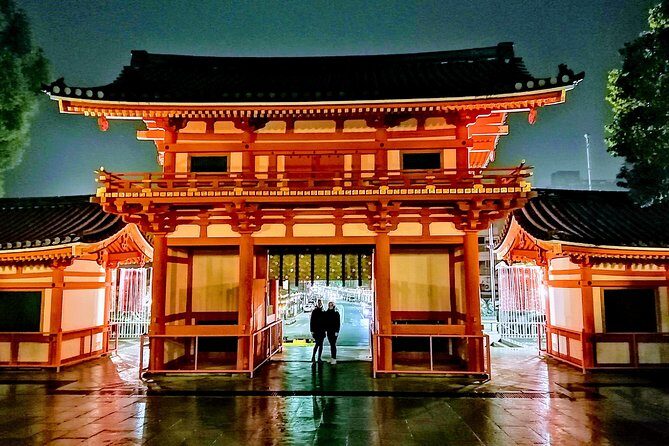
Stop one is Yasaka Shrine, and the mood is part of the point. Nighttime changes how shrines feel—less like a photo backdrop, more like a living civic space with atmosphere.
This stop is about 15 minutes, so it’s not an all-night detour. It’s just long enough to get the story and absorb the setting before you move on.
Admission here is free, which is a nice bonus for value. If you’re paying attention, you’ll also learn how this shrine fits into the broader cultural rhythm of the area.
The Quiet Stone Wall District: Respect Is the Real Souvenir
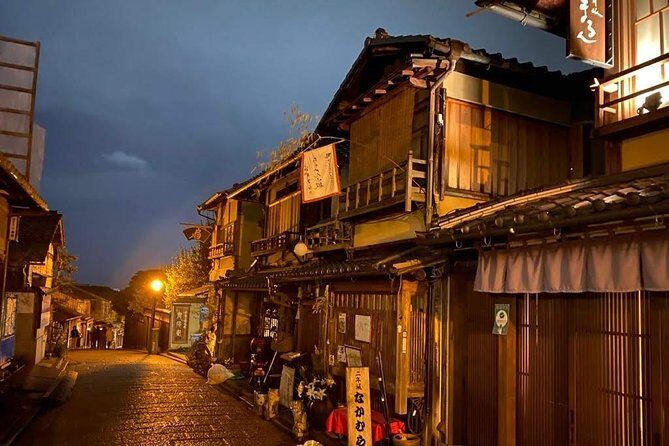
Between major landmarks, the tour includes a segment where you’ll see a stone wall district. The guidance is clear: keep silence there.
That’s not just a rule—it shapes the whole experience. You’ll hear less from your group, see more of the surroundings, and feel the texture of the neighborhood rather than treating it like a stage.
This is also one of those “small moments” that many first-timers miss on their own. If you like the idea of experiencing Kyoto’s etiquette, this portion is worth paying attention to.
Yasakanoto Pagoda Stop: The Photo Moment That’s Actually Fun
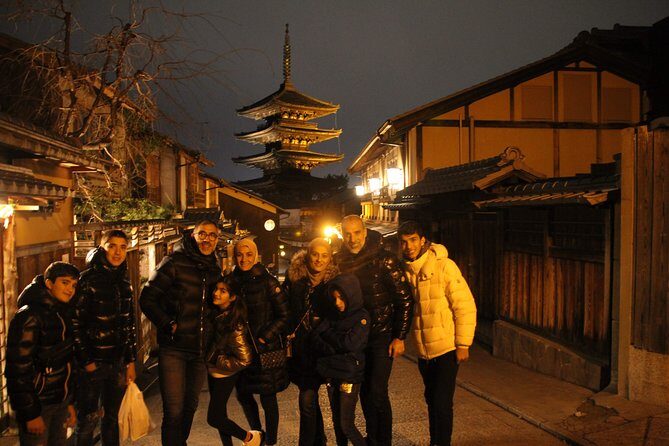
Next up is Yasakanoto, with about 20 minutes on the pagoda area. This is where the tour shifts into “look, learn, photograph, move,” without turning into a stiff lecture.
You’ll get the pagoda’s history, then you’ll have time to take cool pictures in front of it. The best part is that the guide treats photos like a task with a purpose—not random snapshotting.
If you like having someone help with angles and timing, you’ll probably appreciate this stop a lot. Many people emphasize that the guide doubles as a photographer and helps with family shots during the walk.
Admission is free here, so you’re not paying again to enjoy one of the most recognizable night scenes in the Gion area.
Other walking tours we've reviewed in Kyoto




Walking the Yasaka Slopes: A Neighborhood, Not a Corridor
In between the marquee stops, you’ll walk through a famous slope in the Yasaka area. This part matters because slopes and stair-like streets are what make Higashiyama feel like Kyoto.
You’ll also notice how night light travels along the street—reflections on stone, shadow lines under eaves, and the way the streets narrow toward the next turn. It’s the kind of “invisible geography” you can’t fully grasp from a map.
Even if you’re not a history person, this stretch helps you understand why Gion’s layout matters. You’re moving through a real neighborhood rhythm, not a manufactured tourist loop.
Kiyomizu-dera at Night: Light-Up Season Changes Everything
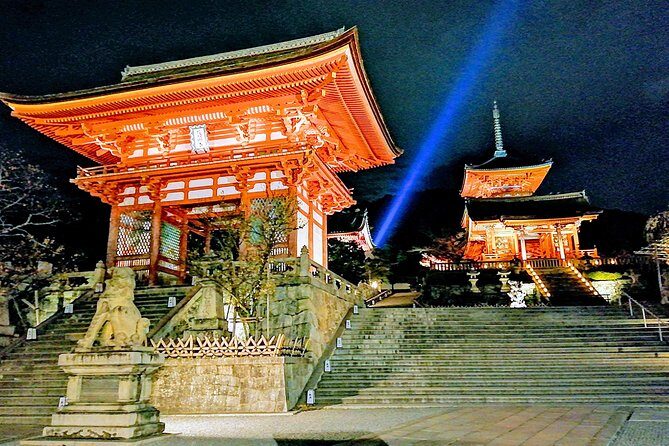
The final major temple stop is Kiyomizu-dera, with about 10 minutes. You may be able to see it light up depending on the season, which is the kind of “bonus Kyoto” you can’t guarantee—but it’s exactly the reason night tours exist.
Here’s the practical catch: admission is not included for Kiyomizu-dera. So if you plan to go in fully, budget for the ticket on the day.
Also, that short time limit means you’ll want to decide what matters most to you. Do you want the light-up views from the key spots, or are you hoping for deeper inside time? The tour is designed more for atmosphere and connection than long temple wandering.
Timing, Walking Pace, and What to Wear
Plan for roughly 1 hour 30 minutes of walking. Even though it’s a short duration compared with full-day tours, Gion’s streets aren’t flat and smooth like modern sidewalks.
Wear comfortable shoes. You’ll appreciate the extra support on slopes and stone paths, especially if you’re coming straight from a long travel day.
If you’re traveling with kids or anyone who tires easily, keep an eye on pace. This tour is private (only your group participates), which usually makes it easier to slow down when you need to.
Photo Help in the Best Way: Less Stress, Better Frames
A major theme in how people talk about this tour is the guide’s ability to handle photos without turning it into a complicated production. You’ll stop at key locations, get guidance, and have your group photographed so you’re not stuck doing the usual phone-on-a-tripod routine.
This matters because Kyoto nights can be tricky for photos—low light, moving subjects, and lots of dark alley shadows. Having a guide help you find good positions is a genuine time-saver.
If you’re traveling as a family, this is even more valuable. You can focus on the moment while someone else handles composition and timing.
Value Check: Is $35 a Good Deal?
At $35 per person for about 1.5 hours, this is priced in the “worth it if you value time” category. You’re paying for three things you’d otherwise piece together yourself:
1) A guided route through the Gion area at the right time of day
2) Context at the stops that make the scenery feel meaningful
3) Private group pacing plus photo help
Admission is mixed: Yasaka Shrine and Yasakanoto are free, while Kiyomizu-dera costs extra. Even with that, the structure still tends to feel efficient—because you’re not guessing where to go next in a busy neighborhood.
Also, the fact that it’s private (only your group) pushes the value up. You’re not competing with tour crowds while trying to hear the guide, and that alone can make the whole night feel smoother.
Who Should Book This Night Walk
You’ll likely love this if you want:
- A first-night orientation to Gion and Higashiyama
- A calmer way to see iconic places without feeling like you’re sprinting
- Photo help that keeps the night fun instead of turning it into chores
- A guide who explains the “why” behind what you see
It’s also a great fit for solo travelers who don’t want to feel alone while walking in a dense area. A private setup can make Kyoto feel less overwhelming—especially at night.
If you want a deep, hours-long temple experience with lots of ticketed entry time, you might find this tour a bit too short. This is built for atmosphere, pacing, and neighborhood insight.
Practical Considerations: Quiet Rules and Seasonal Light
Keep a few things in mind so expectations match reality.
First, there’s that short section where you need to keep silent near the stone wall district. It’s respectful, and it’s part of the authenticity, but you should know it’s not a “talk the whole time” tour.
Second, Kiyomizu-dera light-up visibility depends on the season. You’re going for the chance at that glow, not a guaranteed show.
Third, the experience requires good weather. If it gets canceled for poor conditions, you’ll be offered a different date or a full refund.
Finally, Kiyomizu-dera admission isn’t included, so you’ll want to be prepared to pay on your own if you plan to enter.
Should You Book This Kyoto Gion Night Walk?
Yes, I’d book it if you’re aiming for an efficient first evening in Kyoto and you want Gion to feel lived-in rather than like a checklist. The combination of night atmosphere, free shrine/pagoda stops, and photo-friendly guidance makes it good value for $35.
I would skip it only if you hate walking, dislike quiet moments, or you’re specifically hunting for a long, indoor temple marathon where you’ll spend most of your time inside paid attractions.
If you want a guided Kyoto night that feels respectful and photogenic without being stiff, this is a strong choice.
FAQ
How long is the Kyoto night walk tour in the Gion district?
It runs for about 1 hour 30 minutes.
Is this tour private?
Yes. It’s private, so only your group participates.
Where is the meeting point?
You meet at 194 Kawabatachō, Higashiyama Ward, Kyoto, 605-0075, Japan (in front of the Minamiza Kabuki theatre). The tour ends back at the meeting point.
What’s the ticket method?
You receive a mobile ticket.
Which stops are free, and is Kiyomizu-dera included?
Yasaka Shrine and the Yasakanoto pagoda area are listed as free admission. Kiyomizu-dera is not included, so you’ll need to pay admission there if you enter.
What if I need to change plans last minute?
You can cancel for a full refund up to 24 hours before the experience starts. If you cancel less than 24 hours before, you won’t get a refund.
Does the tour run in bad weather?
The experience requires good weather. If it’s canceled due to poor weather, you’ll be offered a different date or a full refund.
Is it easy to reach with public transportation, and is it suitable for most people?
It’s near public transportation, and most travelers can participate. Service animals are allowed.