Kyoto gets fun fast when you’re on a bike. This afternoon ride strings together Arashiyama icons with real monkey-park energy, plus quieter temple moments that help you dodge the worst crowd crush.
What I like most is that the tour is built around smooth logistics: bike and helmet are included, so you spend less time figuring things out and more time riding and looking up for photos. I also love that you’re not just hitting the biggest postcard spots; you get the Tenryu-ji garden experience and a walk up to Iwatayama for the city views.
One thing to consider: you do need a moderate fitness level for a hike up to the Monkey Park, and the schedule depends on good weather.
In This Review
- Key Reasons This Tour Works So Well
- Why Arashiyama by Bike Beats the Walking Line
- Meeting at Saga-Arashiyama Station and Getting Rolling Fast
- Iwatayama Monkey Park: The Short Climb and Big Reward
- Bamboo Forest Street: Photos, Sound, and Staying Calm
- Tenryu-ji Temple and Sogenchi Teien Garden Calm
- Togetsukyo Bridge: Iconic Kyoto Framing
- The Guide Factor: Why Named People Matter
- Price and Value: What $106.12 Really Covers
- Logistics You Should Know Before You Go
- Who This Tour Fits Best (and Who Might Skip It)
- Should You Book This Kyoto Bike Tour?
- FAQ
- How long is the Kyoto bike tour?
- What does the tour include?
- Where is the meeting point, and what time does it start?
- Is the ride hard?
- Are e-bikes available?
- How big is the group?
- Do I need hotel pickup?
Key Reasons This Tour Works So Well
- Small group size (up to 8) means you get guidance instead of just following a line.
- Standard Cannondale city bikes plus helmet make it an easy afternoon for most riders.
- Iwatayama Monkey Park views start with a short climb and can deliver classic macaque moments.
- Tenryu-ji Temple Sogenchi Teien gives you a calm, high-impact garden stop.
- Bamboo Forest photo time is timed for maximum atmosphere and sound.
- English bilingual guides bring local context and keep you moving between sites.
Why Arashiyama by Bike Beats the Walking Line
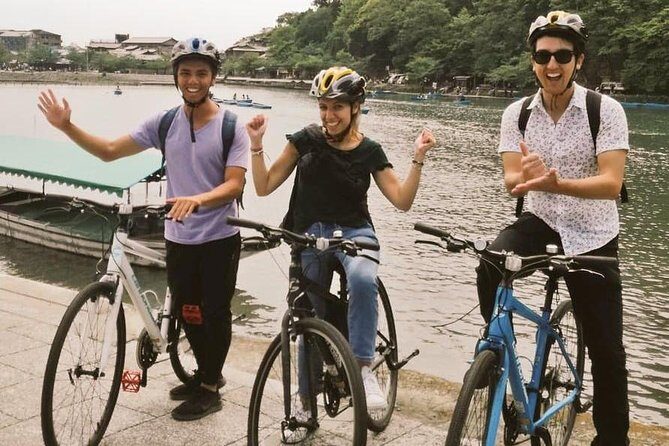
Arashiyama is one of those Kyoto areas where crowds can steal the magic right out of your camera. A bike tour changes the rhythm. Instead of stacking up slow, stop-and-start walking, you glide between neighborhoods and viewpoints at a pace that still leaves room to enjoy what you see.
This particular route is smart because it mixes three moods: big-name Kyoto scenery, peaceful garden time, and the wild-card excitement of Japanese macaques at Iwatayama. You get iconic bamboo-photo results, then you pivot to a viewpoint over Kyoto, then you slow down again at Tenryu-ji.
You’ll also benefit from the small-group format. With a maximum of 8 people, you’re less likely to get lost in the shuffle, and your guide can actually adjust on the fly when conditions change—like where people cluster around the busiest sights.
A few more Kyoto tours and experiences worth a look

Meeting at Saga-Arashiyama Station and Getting Rolling Fast
You start at Saga-Arashiyama Station (1:00 pm), and the good news is you’re not waiting on a complicated pick-up. There’s no hotel pickup or drop-off, so you’ll want to arrive a few minutes early to get your bike and settle in.
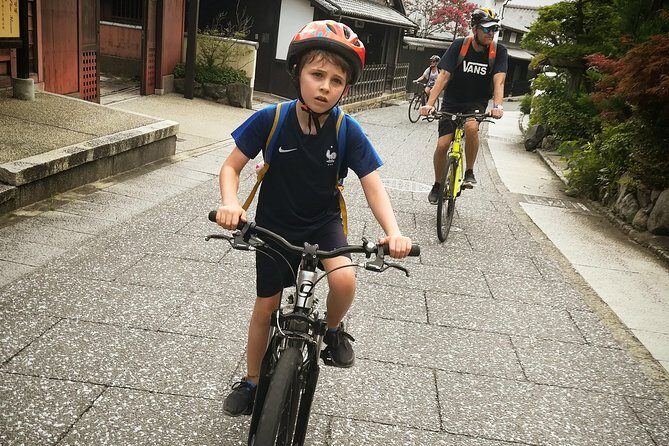
The bikes are included, along with a helmet and bottled water. The bikes are standard Cannondale city bikes, and you’ll be on a route that’s designed for easy riding between stops. If you’d rather take it slower, e-bikes and youth bikes are available upon request for an extra fee.
One small but real advantage: you don’t have to spend your day bargaining for rentals, translating for gear, or figuring out which streets to trust. When your transport is solved, your brain can focus on Kyoto.
Iwatayama Monkey Park: The Short Climb and Big Reward
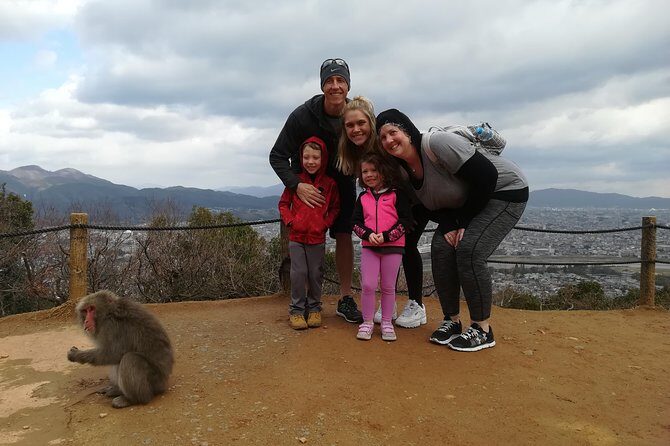
The Monkey Park stop starts with a pleasant 20-minute walk up to the top of Iwata Mountain. That’s the main physical push of the tour. It’s not a long hike, but it’s enough that you’ll feel it—especially if it’s warm, humid, or you haven’t done much walking that day.
At the top, you’re rewarded with two types of payoff. First, you have strong chances to see Japanese macaques roaming in their natural setting. Second, you get an amazing view over Kyoto City. Even if the monkeys are less active at a particular moment, the viewpoint alone tends to land well because you’re seeing Kyoto from a different angle than the streets below.
Practical tip: wear shoes that handle uneven outdoor surfaces comfortably. This is where good foot traction matters more than fancy gear.
Bamboo Forest Street: Photos, Sound, and Staying Calm
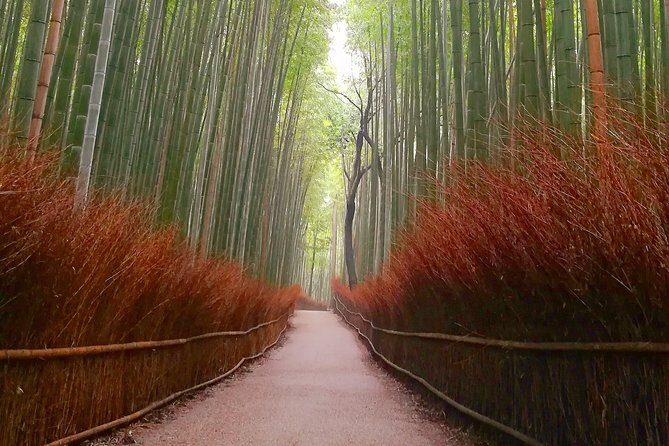
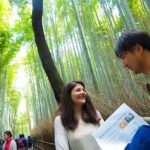
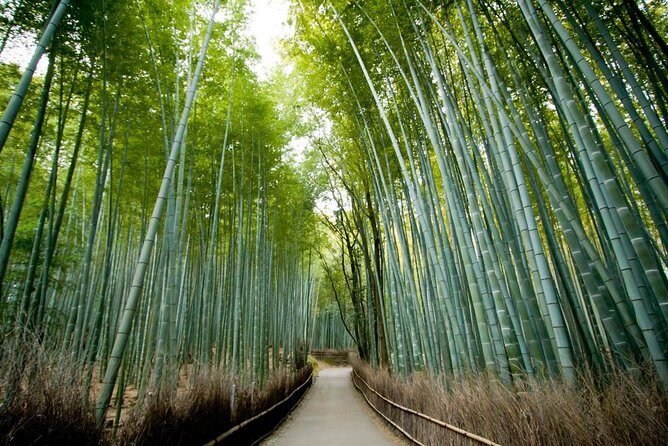
Then comes Arashiyama’s famous Bamboo Forest Street. This is a top soundscape spot in Japan, and the bamboo setting can feel almost unreal when you’re there at the right time of day. The tour gives you a focused window here—about 25 minutes—so you’re not stuck rushing, but you also aren’t stuck lingering after the best moments pass.
This stop is one of the most photographed places in the area, so the trick is not to fight for photos like you’re in a theme-park line. Instead, let the guide’s route help you position yourself for photos without wasting time. With a small group, you can usually move as a unit and avoid turning this into a bottleneck.
If you’re picky about photos, I recommend planning a quick sequence in your mind before you arrive: a wide shot for the bamboo corridor, a mid shot for the textures, and a close shot for detail. Bamboo is full of straight lines and repeating forms, so it rewards a little structure.
Tenryu-ji Temple and Sogenchi Teien Garden Calm
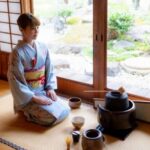
After the bamboo energy, you get a slower, more contemplative stop: Tenryu-ji Temple Sogenchi Teien. This is a World Heritage garden experience, and the point here isn’t to tick a box. It’s to watch how the garden holds still while Kyoto life moves around it.
You’re given about 25 minutes here, which is the right amount of time to walk at an unhurried pace, notice seasonal texture, and actually take in the garden’s design without feeling trapped by other visitors.
One smart aspect of this tour is that it pairs big outdoor drama (bamboo, monkeys) with an indoor/outdoor cultural reset. That balance makes the whole afternoon feel like more than a highlight reel.
Other cycling tours in Kyoto


Togetsukyo Bridge: Iconic Kyoto Framing
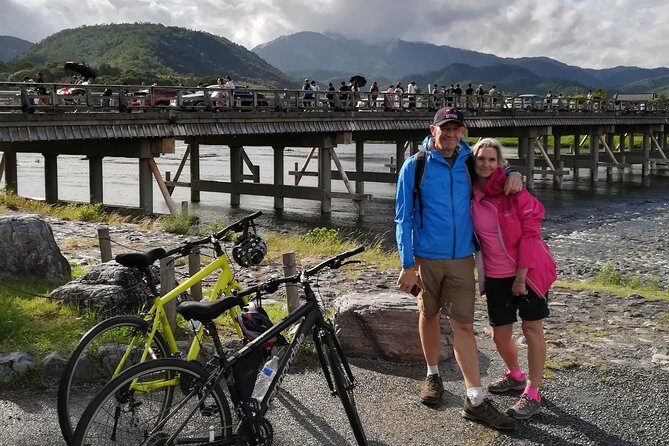
Next is Togetsukyo Bridge, one of Arashiyama’s most iconic views. You’ll take in the mountain landscape as you admire the bridge setting. The timing here is shorter—about 10 minutes—but that works because the main goal is the viewpoint, not a long sit-down.
In practical terms, this stop is where you confirm the Arashiyama story you came for. Bamboo in the forest, monkeys up on the hill, and then the postcard view that ties it together.
If you want photos without chaos, think about timing within the stop. Instead of standing still the whole time, take a few minutes to check angles, then move once you’ve found a composition you like.
The Guide Factor: Why Named People Matter
One of the most highly praised parts of this experience is the guide. This is not a generic script read over a bike bell. The tour uses native English bilingual guides, and the reviews repeatedly highlight how guides like Yuki, Rob, Peter, and Ray bring Kyoto history and local customs into the ride in a way that feels natural.
What stands out is the mix of skills:
- Guides help you get to the good photo points without making you chase them alone.
- They navigate busy Arashiyama sections with enough confidence that you don’t feel stuck.
- They also tend to act like part-time translators for culture and everyday life, not just site managers.
If you’re the type who likes learning while you travel, this tour can feel like a two-for-one: scenery plus context. And if you’re traveling with kids or people who don’t ride much, the guides also seem to keep safety and comfort front and center.
Price and Value: What $106.12 Really Covers
Let’s talk money plainly. At $106.12 per person for about 4 hours, this isn’t the cheapest way to see Arashiyama. But it’s also not just a “bike rental with a route.”
You’re paying for:
- a guide (English bilingual),
- the bicycle and helmet,
- bottled water,
- admission fees included for the stops,
- and a route that links multiple high-demand locations efficiently.
Bike rentals alone can eat up your budget fast once you add helmet and time wasted. Admission fees for major sights can also add up. When those are included, the price stops feeling random.
So who gets the best value? People who want to see multiple major spots without turning the afternoon into logistics. If you’re the kind of traveler who enjoys planning and self-navigation, you might do Arashiyama cheaper on your own. But if you want a smooth run with interpretation and pacing, this price can feel fair.
Logistics You Should Know Before You Go
This is a 1:00 pm start and it ends back at the meeting point. That means you should plan your day so you can return to Saga-Arashiyama without rushing dinner or trains.
You’ll want moderate physical fitness. The ride portion is designed to be easy, and reviews mention the route is flat with only light inclines in certain segments. Still, the Monkey Park involves that walk up to the top.
The tour also runs on good weather. If conditions are poor, it may be canceled and rescheduled or refunded. That’s not unusual for outdoor-focused tours, but it matters in Kyoto when skies change quickly.
Finally, keep in mind the group size limit of 8 travelers. That’s a feature, not a footnote. Smaller groups usually mean better flow, better photo stops, and less time waiting.
Who This Tour Fits Best (and Who Might Skip It)
This tour is a great fit if you want Arashiyama with less strain. It works well for couples, solo travelers, and families—especially because biking is often easier on legs than stacking multiple long walks. Reviews also mention that it managed to work for kids and adults in the same group, which is the hardest group-mix test.
It’s also a strong choice if you care about photo results. You’re hitting the bamboo corridor, a temple garden, and a famous bridge, then adding a viewpoint and monkey viewing chance.
You might consider a different option if:
- you really dislike animal-park environments or crowded viewpoints,
- you can’t handle the walk up to the Monkey Park,
- or you’re traveling with someone who needs a completely step-free experience.
Should You Book This Kyoto Bike Tour?
Yes, if your goal is to see Arashiyama in an afternoon without turning it into a marathon. The combination of biking between major stops, included admissions, and guides who can explain Kyoto in plain English makes the value feel solid.
Book it if you want a day that balances postcard sights with quieter temple beauty, and if you’ll appreciate macaque-park excitement plus a view over Kyoto City. I’d especially recommend it for first-timers in Kyoto who want a high-impact segment in one compact time block.
Skip it only if the Monkey Park walk is a deal-breaker for you or if you want a totally self-directed sightseeing day with no guide.
FAQ
How long is the Kyoto bike tour?
It runs about 4 hours.
What does the tour include?
You get a bicycle, helmet, bottled water, a native English bilingual guide, and admission fees for the included stops.
Where is the meeting point, and what time does it start?
You meet at Saga-Arashiyama Station at 1:00 pm, and the tour ends back at the meeting point.
Is the ride hard?
You should have moderate physical fitness. The route is designed for easy riding between sites, but there’s a 20-minute walk up to reach the Monkey Park.
Are e-bikes available?
Yes. E-bikes are available upon request for an additional fee. Standard bikes are included for the tour.
How big is the group?
The tour has a maximum group size of 8 travelers.
Do I need hotel pickup?
No. There’s no hotel pickup or drop off. You’ll need to get to the meeting point yourself.