Kyoto’s maiko magic can fit your day. This short program is built for people who want the real feel of maiko dance without turning your schedule into a jigsaw puzzle. I love the chance to see two elegant dances back-to-back, and I really like the playful traditional game right after, where the mood shifts from graceful to fun. The main thing to think about: it’s short, and if you’re traveling with kids, they may feel shy about joining the game in a room with other people.
The setting is also worth knowing up front. It’s not an ochaya, and it isn’t inside a traditional house, but it’s a relaxed building setup with friendly staff—and no special prep. You’ll be walking in from the Gojo area, taking stairs (no elevator), and then you’ll be close enough for photos that actually feel like a moment, not a poster shot.
In This Review
- Key Highlights You Should Not Miss
- What This Maiko Dance and Game Really Is
- Timing That Fits Kyoto (and Why It Can Feel Even Shorter)
- The Maiko Dance Part: Grace, Seasons, and Close-Up Attention
- The Traditional Game With Maiko: Fun, Simple Rules, Real Participation
- Photos Right Beside the Maiko: How to Get the Shot You’ll Actually Like
- The Senjafuda Lucky Charm: A Small Gift With Meaning
- Venue Reality Check: Not an Ochaya, But a Relaxed Room
- Price and Value: Why $28 Can Make Sense
- Who Should Book This (and Who Might Want the Tea Ceremony Instead)
- Should You Book the Dance and Game With Maiko?
- FAQ
- How long is Dance and Game with Maiko?
- Where is the meeting point?
- What is included in the price?
- Is tea ceremony included?
- Can the performer be geiko instead of maiko?
- Will I be able to take photos?
- Is there an elevator at the venue?
- Is English translation available?
- FAQ
- Can kids join for free?
- What happens if I arrive late?
- What’s the cancellation policy?
- Are there any age or participation restrictions?
Key Highlights You Should Not Miss
- Two maiko dances in one sitting with expressive, story-like seasonal themes
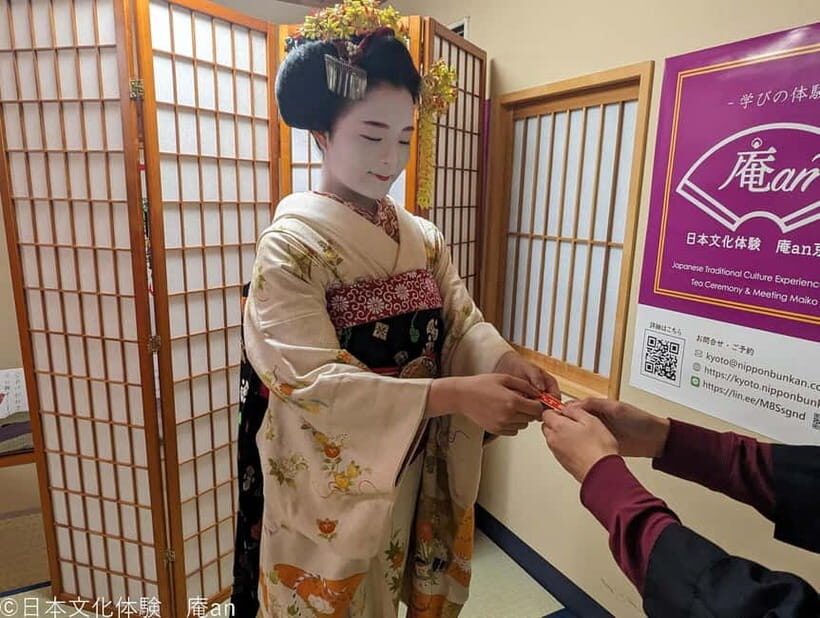
- Photo time right beside the maiko so you’re not stuck at the back row
- A Senjafuda lucky charm to take home as your Kyoto keepsake
- A traditional game with audience participation—clap along and enjoy the energy
- A small, friendly room format that works even when your day is packed
- Possibility of geiko instead of maiko depending on the situation
What This Maiko Dance and Game Really Is
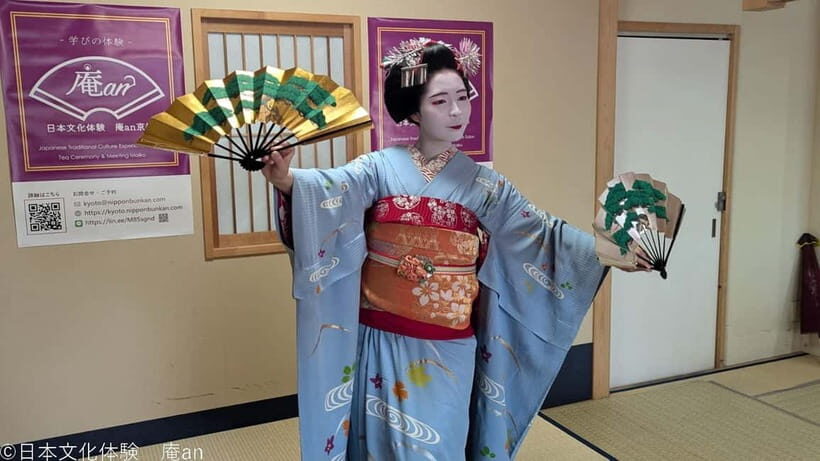
This experience is exactly what it sounds like: dance and a game, performed by a maiko (or sometimes a geiko), with a simple flow that keeps your attention. Instead of a long, staged show, you get a compact cultural snapshot—beautiful movement, music, and then a playful moment that breaks the formality.
Why it works so well is the pacing. Maiko dance is graceful and storytelling-like, but the program doesn’t trap you in silence for an hour. You get a second act that feels more human and social, with cheering and applause.
One more detail that matters: the venue isn’t presented like a private tea house. It’s a building with a relaxed atmosphere. That’s good news if you worry about etiquette. You don’t need special clothing or rituals—just show up ready to watch and, when prompted, participate.
If you're still narrowing it down, here are other tours in Kyoto we've reviewed.


Timing That Fits Kyoto (and Why It Can Feel Even Shorter)
The program is described as around 45 minutes, and the flow is clearly staged: dance performance, game, then photos and the lucky charm. In other words, it’s designed so you can slot it between other sightseeing plans without draining your whole afternoon.
Still, practical reality matters. Some sessions may feel closer to the shorter end of the range, because the core performance and game can run tight to keep everyone moving. If you have a hard next appointment, give yourself a buffer. Kyoto time is easy to underestimate.
Plan for a start during operating hours from 10:00 to 17:00. If you’re reserving at the end of the day, keep in mind requests received after 17:00 are processed next day. And yes, they won’t hold the event to accommodate delays—so treat this like a show with a firm start time, not a casual drop-in.
The Maiko Dance Part: Grace, Seasons, and Close-Up Attention
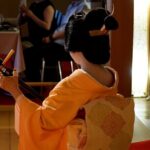
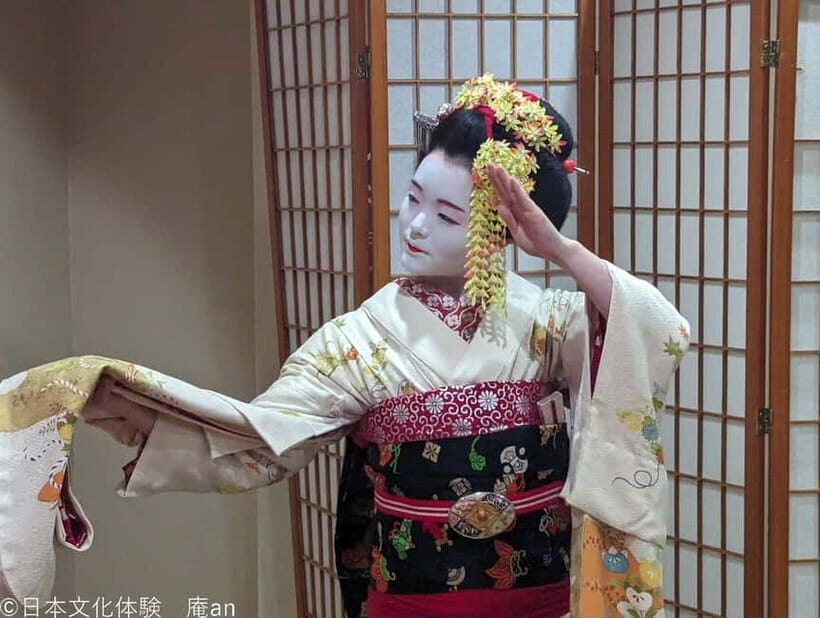
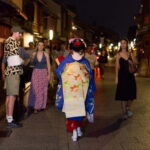
The highlight here is seeing two maiko dance performances in a short window. Maiko dancing isn’t just pretty movement. It’s expressive and often tied to themes like Japan’s seasons, love stories, and everyday life, told through posture, timing, and the way the arms and hands shape the music.
What you’ll likely appreciate most is how quickly you can feel the contrast: the first dance sets the mood, and the second gives you another angle on the storytelling. It’s the kind of double dose that helps you understand maiko dance as more than one “type” of performance.
And you’re not watching from a mile away. The format is designed so you can be up close enough to feel the presence of the performer, not just see a silhouette. That matters for photos too, because the moment you see in person is often what you want to capture.
The Traditional Game With Maiko: Fun, Simple Rules, Real Participation
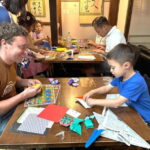
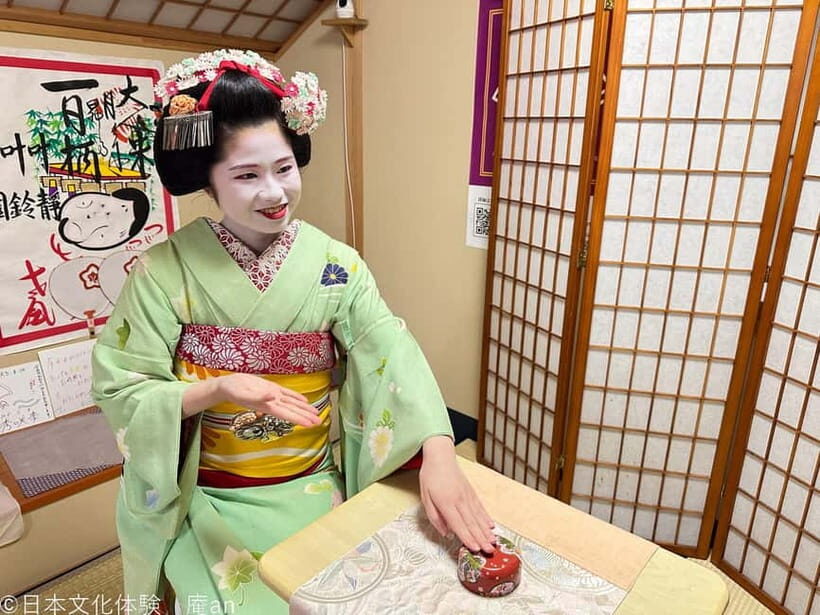
After the dances, the energy shifts. You’ll see a traditional game played between the maiko and guests. The rules are not complicated in concept, and the best part is that audience members may be invited to play.
Even if you don’t end up joining, watching is entertaining. You’ll clap, cheer, and react with the room, and that shared energy is part of why this experience feels different from a museum performance. It’s interactive in the way that turns “watching” into a social moment.
Here’s the practical consideration: if you’re traveling with kids, shy participation is common in tight rooms. Some children may hesitate if there are other people around. If you want the full value of the experience, plan for a calm, encouraging attitude and remember that adults are also invited—so everyone’s in the same social boat.
Also note an important rule: those who do not participate in the experience won’t be allowed to enter. So if you’re thinking of sitting out and just waiting, this isn’t that kind of show.
Photos Right Beside the Maiko: How to Get the Shot You’ll Actually Like
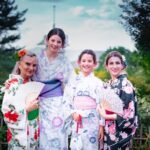
The photo moment happens after the game and before the maiko leaves the room. That means you’re not fumbling for your camera during the dances. You get a dedicated chance to take photos right beside the performer.
This is where the experience earns its keep. A lot of cultural shows advertise photos, but the reality can be “far away, quick, and awkward.” Here, the emphasis is on being close enough for a real commemorative picture—an actual keepsake that looks like you were there, not like you zoomed in later.
Quick tip: charge your battery before you go and be ready to move with the group. Tight timing means you’ll want to spend your time aiming, not troubleshooting settings.

The Senjafuda Lucky Charm: A Small Gift With Meaning
After photos, you’ll receive a lucky charm called Senjafuda. It’s the kind of take-home item that makes the whole program feel complete. You watch the dances, join (or cheer) through the game, take photos, and then you leave with something tangible tied to that moment.
What I like about this is that it doesn’t feel like a souvenir trap. It’s presented as part of the ceremony-like wrap-up, almost like a closing ritual that transforms the experience into a story you can carry.
You’ll also get a short chatting time before room departure. That brief human contact is often where you get the most relaxed impressions of the performer and the whole setting.
Venue Reality Check: Not an Ochaya, But a Relaxed Room
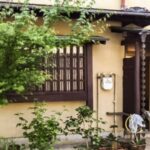
You should know what you’re walking into. The venue isn’t an ochaya or traditional Japanese house. It’s located in a building, but the atmosphere is described as relaxed, with friendly staff.
That matters because Kyoto can be intimidating if you worry about doing things wrong. Here, you’re not in a formal, secret-society setting. You’re in a structured experience room where the staff keeps things moving.
Two other practical notes:
- You’ll need to take stairs, since there’s no elevator. Wear shoes you’re comfortable with, especially if you’re doing other walking the same day.
- English translation is provided as much as possible. If you want extra support, you should contact them in advance. The instructor is Japanese, so the experience is primarily in Japanese with translation support where available.
Price and Value: Why $28 Can Make Sense
At about $28 per person, this is priced like a focused, ticketed cultural session rather than a full afternoon event. For that cost, you’re not just paying for entertainment—you’re paying for the full package: two dance performances, the interactive game, close photos, and the Senjafuda charm.
Here’s the value equation I’d use:
- If you only want to watch a dance and leave, you might feel it’s short.
- If you want a compact Kyoto experience with photos and a take-home charm, it’s much easier to justify.
It’s also good value for people who don’t have time for other longer maiko activities. Kyoto is full of experiences that run 1.5 to 3 hours. This one is designed to fit the “I still want something special today” window.
One more detail that affects value: the program includes a free option for children under 2 years old. Children sitting on parents’ laps are free for under 2. That can help families keep costs under control.
Who Should Book This (and Who Might Want the Tea Ceremony Instead)
This is a great match for you if:
- You want maiko culture without a huge time commitment
- You care about getting photos near the performer
- You like interactive moments and don’t mind clapping and cheering
- You’re okay with a building venue rather than a traditional house setting
It may be less ideal if:
- You’re expecting something that feels like a long, slow-form traditional outing
- You’re planning around a strict next stop and don’t have buffer time
- Your group is uncomfortable with the idea of being invited into the game
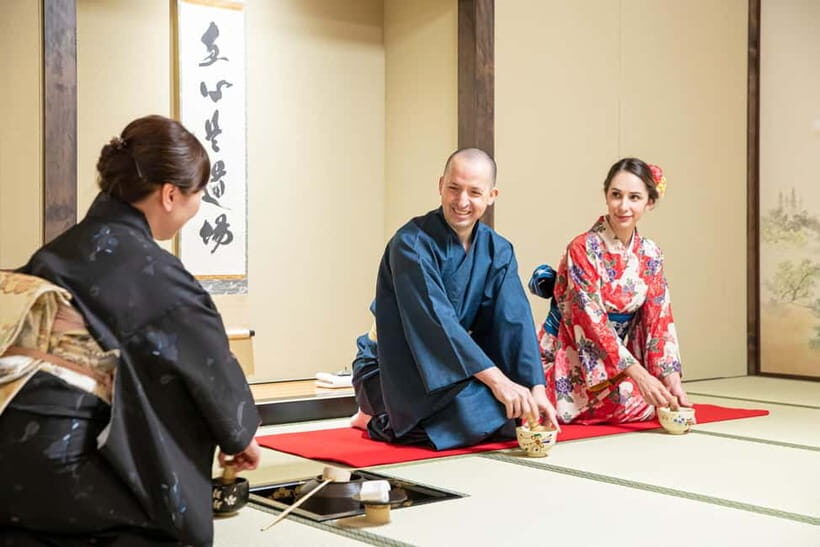
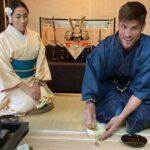
If you want something calmer and more ceremonial, there’s also a tea ceremony option with maiko (and a premium version). Tea is a different vibe—more reflective, less game-and-participation energy. If that’s your style, you’ll probably enjoy it more than this short dance-and-game format.
Should You Book the Dance and Game With Maiko?
I’d book this if you want a fast, photo-friendly, interactive maiko experience that won’t swallow your entire afternoon. It’s a strong choice for first-timers because it gives you multiple key moments—two dances, a game, close photos, and the Senjafuda—without requiring special preparation.
But don’t book it if you’re only looking for a long performance or if participation feels like a deal-breaker for your group. The event expects engagement, and it’s paced tightly.
If you’re staying around the Gojo area, this is also an easy add-on: a one-minute walk from Exit 1 of Karasuma Line Gojo Station. Just plan your timing carefully, bring a charged camera, and be ready for stairs.
FAQ
How long is Dance and Game with Maiko?
The experience is listed as 45 minutes. The flow includes the maiko dance, then the game, followed by photos and the Senjafuda gift, with room departure at the end.
Where is the meeting point?
Meet at a location about a 1-minute walk from Exit 1 of Subway Karasuma Line Gojo Station. The store entrance faces Gojo-dori (the main street).
What is included in the price?
You get Dance and Game with Maiko, including the dance performances, the game session, the photo time, and the maiko presenting you with the Senjafuda lucky charm.
Is tea ceremony included?
No. Tea ceremony with maiko is offered as separate programs (standard and premium), not included in this one.
Can the performer be geiko instead of maiko?
Yes. Depending on the situation, they may invite Geiko instead of Maiko.
Will I be able to take photos?
Yes. You’ll have a chance to take photos right beside the maiko as part of the program.
Is there an elevator at the venue?
No. There is no elevator in the building, so you’ll need to take stairs to reach the venue rooms.
Is English translation available?
English translation is provided as much as possible. If you’d like additional English support, you should contact the provider.
FAQ
Can kids join for free?
Children under 2 years old can join for free if a seat or meal is required, the same fee as 1 person will be charged. Children sitting on their parents’ laps are free of charge (under 2 years old).
What happens if I arrive late?
They won’t be able to hold the event to accommodate delays, so it’s best to arrive with extra time.
What’s the cancellation policy?
You can cancel up to 8 days in advance for a full refund.
Are there any age or participation restrictions?
Those who do not participate in the experience won’t be allowed to enter.