Kyoto at night changes fast. This Gion geisha walk is a smart way to see the district after the day crowds thin out. You’ll follow lantern-lit streets to shrines, temples, and classic alleys, with clear explanations about geisha arts and the traditions that surround them. It’s a 3.5-hour evening that feels like you’re being shown Kyoto by someone who actually pays attention to details.
Two things I really like: the small group size (max 8) keeps the vibe calm and lets you ask questions, and the route blends geisha culture with real Kyoto landmarks instead of just stopping for photos. One possible drawback: it’s still a walking tour with steps and some rocky/unpaved sections, so it’s not a good match if you have mobility issues.
In This Review
- Key points worth knowing before you go
- Why 5:20 pm Gion feels like the real Kyoto
- Small-group format: calm streets and better questions
- Getting your bearings: meeting at Shijo-Kawaramachi and the evening route
- Gion by lantern: Hanamikoji, working houses, and Gion Corner
- Temples and shrines at night: Yasui-Konpiragu, Hōkan-ji, Yasaka Shrine
- Ninenzaka and Nene-no-Michi: stairs, alleys, and a real break
- Pontocho after the tour: the night scene you can extend
- Price and value: what $98 buys you in Kyoto
- Etiquette, photos, and what you should expect to see
- Who this tour suits best (and who should skip it)
- Should you book the Kyoto geisha night walk?
- FAQ
- What time does the Kyoto geisha night walk start, and how long is it?
- Where do I meet the guide?
- Where does the tour end?
- How many people are in the group?
- Is this tour okay for people with mobility limitations?
- What’s included in the price?
- Are the temple and shrine stops extra cost?
- Can I expect to see geisha during the walk?
- What if the weather is bad or I need to cancel?
- Do I need to tip?
Key points worth knowing before you go
- Max 8 people means you get time to ask questions instead of rushing as a crowd
- Night-focused routing helps you dodge the loud daytime Gion scene
- Geisha arts context comes up at multiple stops, not as a one-minute history lesson
- Kabuki theater + shrine/temple blend gives you culture you can connect, not just sightseeing
- Photo opportunities are built into the timing, including the Yasaka Pagoda area
- Nene-no-Michi snack break is included and gives you a proper pause in the middle of walking
Why 5:20 pm Gion feels like the real Kyoto
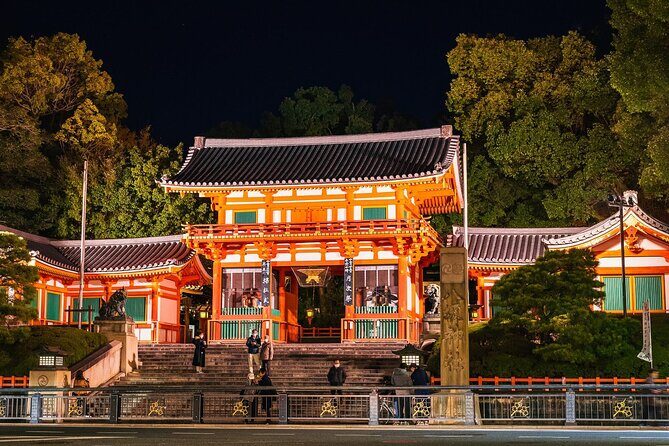
Daytime Gion is packed. At night, the mood shifts: fewer tour groups, more soft light, and more space to notice what’s actually around you. This tour starts at 5:20 pm, right when streets start to look their best, and it stays out long enough to catch Kyoto after dark without feeling like an all-night slog.
The big win here is the pacing. You’re not trying to sprint between famous spots. You’re walking through the geisha district lanes and alleys while your guide connects what you’re seeing to how geisha tradition works—how training fits in, what the setting means, and why Kyoto’s old spaces still matter today.
One extra plus: you’ll also hit areas beyond the main Gion lanes, including historic shrine and temple sites. That helps you understand the geisha world as part of Kyoto’s broader spiritual and cultural landscape—not as a weird side show.
A few more Kyoto tours and experiences worth a look


Small-group format: calm streets and better questions
With up to 8 people, this isn’t the kind of tour where you feel pushed along like luggage in motion. The smaller group size also helps the guide manage the flow through narrow streets and keep everyone oriented, especially in parts of Kyoto that can feel easy to get turned around in.
The tour runs about 3 hours 30 minutes, so it’s a “one evening” commitment. That’s helpful if you’re trying to fit Kyoto’s highlights into a tight schedule. And because it’s a nighttime walk, you get a different layer of the city than the usual daytime temples circuit.
Your guide speaks clear English. In the past, the experience is led by an American/Japanese guide named Richard, and his style is story-based and practical, with answers when questions pop up. Even if your guide isn’t Richard, the structure stays the same: you’ll get explanations that connect geisha culture, kimonos/clothing context, and Kyoto’s belief systems.
Getting your bearings: meeting at Shijo-Kawaramachi and the evening route
You start at the Disney Store – Kyoto Shijo-Kawaramachi (Shimogyo Ward, near Shijo-Kawaramachi). It’s an easy place to find if you’re already using the central transit area. The tour ends at Sanjo Ōhashi Bridge, at the northern end of Pontocho alley. That end point is useful because Pontocho is one of Kyoto’s classic night-walk zones—so you’re not stranded in the middle of nowhere after the tour.
The tour uses a mobile ticket, which is convenient if you like keeping everything on your phone and not fumbling with paper in the dark. Most stops list admission as free, so you’re not hit with extra ticket costs once you’re out walking.
One practical reality: since this is on foot through traditional neighborhoods, you’ll want comfortable shoes and a phone ready for low-light photos. Kyoto at night looks good, but it also means sidewalks and steps can be uneven.
Gion by lantern: Hanamikoji, working houses, and Gion Corner
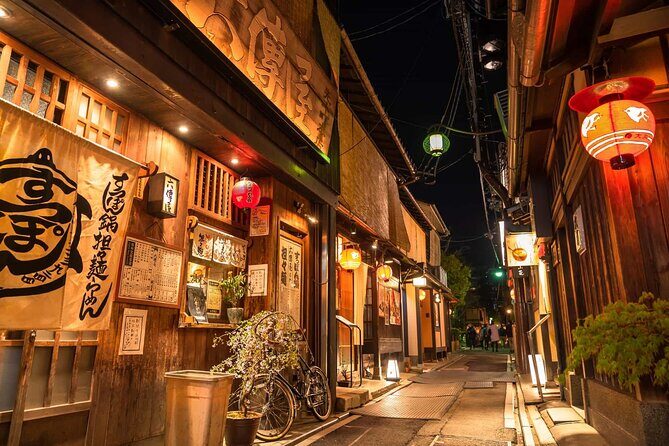
Your first major walk happens on Hanamikoji Street, the iconic Gion lane where you’ll see classic architecture and the rhythm of daily life in the district after dark. This is where the tour’s geisha focus really takes shape.
As you move along, you pass by geisha living quarters and working geisha houses. Even if you never catch a perfect sighting, the value is in the context: the guide explains how geisha arts work, what training looks like, and why the neighborhood layout and seasonal timing matter.
You also go past Gion Corner, a key cultural stop where geisha study and train. If you’ve only heard about geisha as a general concept, this helps you understand it as a structured arts world—one with traditions that have lasted through major changes in Japan.
There’s also an early culture stop at a Kabuki theater. The guide shares background on traditional Japanese entertainment, which helps you connect geisha culture to the larger universe of performing arts in Kyoto and Japan.
Temples and shrines at night: Yasui-Konpiragu, Hōkan-ji, Yasaka Shrine
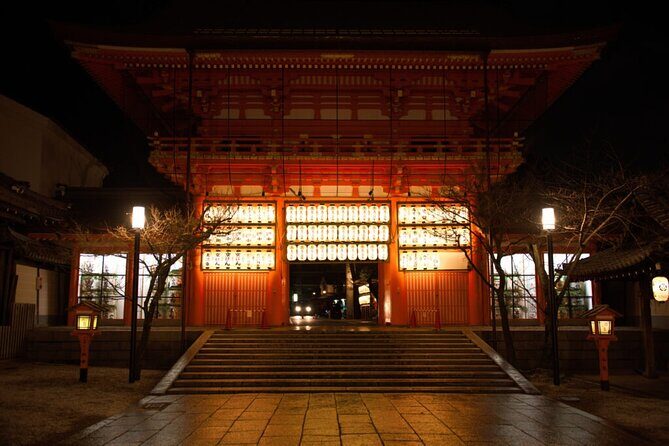
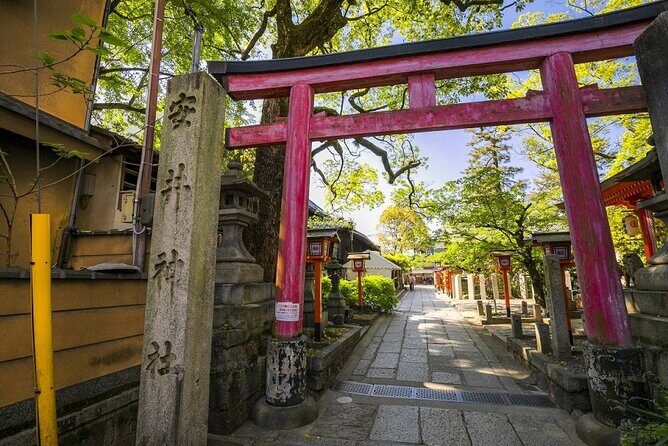
This tour doesn’t treat temples and shrines as background scenery. It builds them into the story. At Yasui-Konpiragu, you’ll explore an intimate shrine setting while the guide explains Shinto traditions.
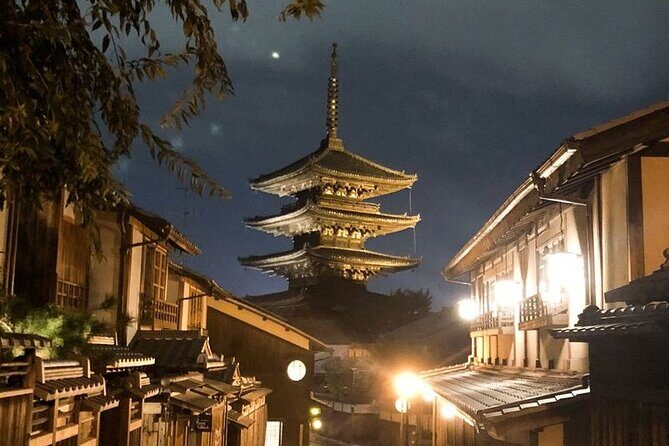
Next comes Hōkan-ji Temple (the Yasaka Pagoda area). This is one of the best parts for atmosphere. You’ll spend around 15 minutes in the area, which is enough time to look slowly and grab photos when the light hits right. If you want Kyoto-night pictures that don’t look like every other Gion snap, this pagoda area is where you’ll get that.
Then you finish the shrine sequence at Yasaka Shrine (about 30 minutes). The guide highlights key features and meaning behind the place. Yasaka Shrine also connects nicely to the rest of the evening because it’s a major Kyoto spiritual site, not just a scenic stop.
One balanced note: these are still “see and learn” stops inside a walking tour. You won’t get hours of temple time here. The tradeoff is that you’ll see more Kyoto neighborhoods in one night and keep your geisha story connected to Kyoto’s beliefs.
Other walking tours we've reviewed in Kyoto




Ninenzaka and Nene-no-Michi: stairs, alleys, and a real break
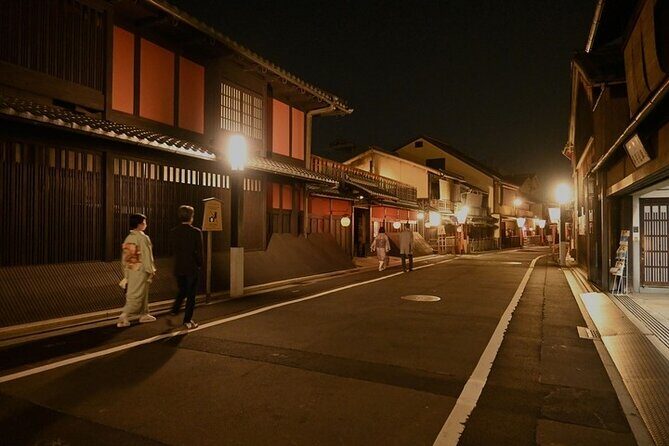
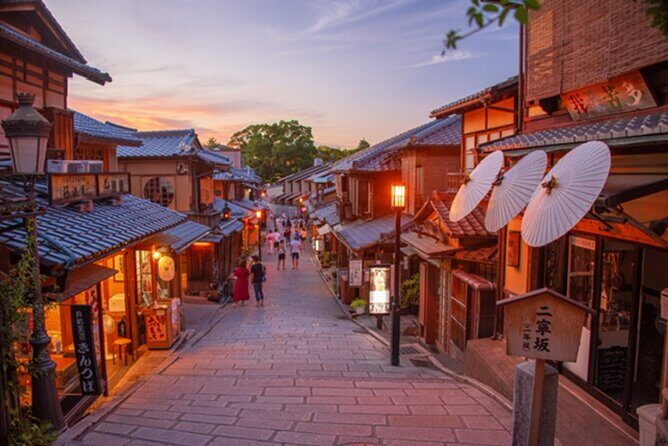
After the shrine/temple stretch, you move into Ninenzaka, the famous Kyoto slope and alley area that looks especially good after dark. Expect a slower, more atmosphere-driven pace here. It’s the kind of place where old-stone streets and evening light make your photos feel more like postcards.
Then comes Nene-no-Michi, your included snack break (about 30 minutes). This matters more than you might think. A snack stop isn’t just food—it’s downtime. Your legs reset, you can rehydrate, and you get a chance to digest what you learned so far (geisha culture is fascinating, but it’s also a lot of information at one go).
The tour lists a Kyoto snack as included, but since snacks can vary, think of this as a cultural pause rather than a gourmet meal. If you have dietary restrictions, this is where you should check what’s offered before booking—because the exact snack type isn’t specified here.
Pontocho after the tour: the night scene you can extend
You end with Pontocho District, exploring the narrow lane known for a mix of geisha houses, bars, and nightlife. The tour gives you about 30 minutes here, which is a solid window to enjoy the atmosphere without feeling trapped.
Because the tour ends at Sanjo Ōhashi Bridge at the northern end of the alley, you can naturally continue your evening. If you want a quiet post-tour stroll, you can linger in Pontocho. If you want dinner, this location also puts you in a good spot to choose something nearby.
Also, you’ll walk through a couple of segments that the tour describes as essential Gion spots and a lesser-known geisha street. That kind of routing is often the difference between seeing the same three lanes every other group posts online and actually getting a little variation.
Price and value: what $98 buys you in Kyoto
At $98 per person for roughly 3.5 hours, you’re paying for three things: (1) guided storytelling in English, (2) a small-group experience (max 8), and (3) a route that combines geisha-focused context with multiple important neighborhoods.
Is it cheap? No. But for Kyoto at night, it’s a fair price when you factor in that you’re not paying for separate paid admissions for the listed stops, and you do get an included snack plus a guide who can explain what you’re seeing. With a larger group, this kind of tour can feel rushed. With this size, it’s easier to actually learn instead of just walk.
If you only do one “culture explanation” tour in Kyoto, this is the kind that gives you a framework. You’ll understand geisha culture better when you’re later wandering on your own through Gion and neighboring areas.
Etiquette, photos, and what you should expect to see
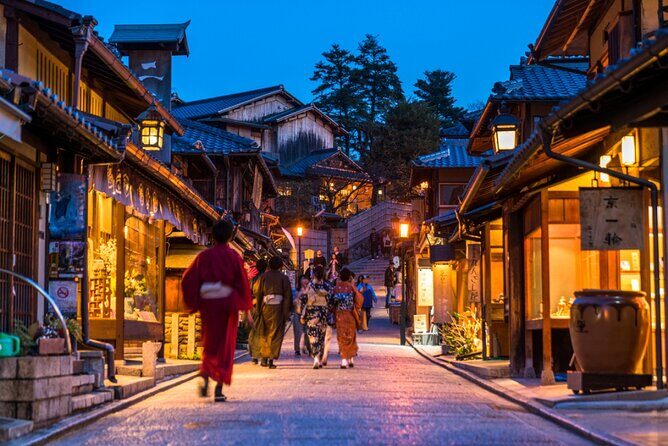
Geisha districts are not theme parks. If you’re hoping for a dramatic movie-style sighting, keep expectations realistic. What the tour does well is teaching you how to notice details: traditional setting, training context, and how the district’s heritage fits into Kyoto life.
You might spot geisha or trainees during your walk, because the route goes through active areas at the right time of day. But it’s not guaranteed. The bigger win is that your guide’s explanations help you make sense of what you see, whether it’s a glimpse or just the district’s quiet atmosphere.
For photos, you’ll get better chances in the Yasaka Pagoda area and the older alley streets like Ninenzaka. Use common sense: keep your distance, avoid blocking walkways, and remember you’re in someone’s neighborhood.
Who this tour suits best (and who should skip it)
This is best for you if:
- You want Gion at night with less crowd pressure
- You’re curious about how geisha training and traditions work
- You like guided walking tours where you can ask questions
- You want classic Kyoto spots (shrines/temples/alley lanes) in one evening
This may not be your best fit if:
- You have walking issues. The tour notes it’s not suitable for anyone with walking problems.
- You’re traveling with a stroller. There are steps and unpaved rocky paths that need maneuvering.
If you’re comfortable on foot for 3.5 hours and want a more thoughtful look at Kyoto’s traditions rather than a quick highlight sprint, this fits nicely.
Should you book the Kyoto geisha night walk?
Book it if you want Gion after dark with small-group attention, structured geisha and Kyoto storytelling, and a route that includes real spiritual landmarks like Yasui-Konpiragu, Hōkan-ji/Yasaka Pagoda, and Yasaka Shrine. The included snack gives you a mid-walk reset, and the end in Pontocho sets you up for an easy continuation of your night.
Skip it if mobility is an issue for you, because this tour involves uneven ground and steps. Also skip it if you only want passive sightseeing with zero walking—this one is built around walking and listening.
If you want one evening in Kyoto that helps everything you see later make more sense, this is a strong choice.
FAQ
What time does the Kyoto geisha night walk start, and how long is it?
It starts at 5:20 pm and runs about 3 hours 30 minutes.
Where do I meet the guide?
The meeting point is the Disney Store – Kyoto Shijo-Kawaramachi (600-8001 Kyoto).
Where does the tour end?
The tour ends at Sanjō Ōhashi Bridge, at the northern end of Pontocho alley.
How many people are in the group?
The tour has a maximum of 8 travelers, with a small-group format.
Is this tour okay for people with mobility limitations?
It is not suitable for anyone having walking issues. There are also steps and some unpaved rocky paths, so keep that in mind.
What’s included in the price?
You get an expert English-speaking guide, a walking tour, and an included Kyoto snack. The ticket is also provided via mobile ticket.
Are the temple and shrine stops extra cost?
The itinerary lists Admission Ticket Free for the stops mentioned.
Can I expect to see geisha during the walk?
The tour focuses on Gion and geisha district areas at night, so you might see geisha or trainees as you pass through the neighborhood, but sightings aren’t guaranteed.
What if the weather is bad or I need to cancel?
The experience requires good weather. If it’s canceled due to poor weather, you’ll be offered a different date or a full refund. You can cancel for a full refund up to 24 hours before the start time.
Do I need to tip?
The tour notes that gratuities/tips are appreciated.