Your hands learn rhythm fast.
This workshop is fun even if you think you are rhythm-proof, and it still teaches why taiko matters in everyday Japanese life. I also like that you get English guidance the whole way, including a real explanation before you start hitting the drums. One trade-off: the schedule is tied to fixed train times, so if you show up late, you cannot join after the start.
The day runs like a smooth little field trip. You meet at JR Kyoto Station (north side, by Kyoto Tower), then take a short train ride to Takatsuki and finish with a private car transfer to the studio. The group stays small (up to 15), so you actually get time on the drums instead of watching from the back.
Plan for about 2.5–3 hours total including travel, and don’t count on getting your afternoon back early. You end with a commemorative photo in traditional costume, and you’ll likely want that buffer time back in Kyoto afterward.
In This Review
- Key things you should know before you go
- Meeting at JR Kyoto Station and the quick hop to Osaka
- Culture lesson first: taiko roots, calligraphy, and writing your wish
- The pro performance that shows what you are actually practicing
- Learning the basics: instructor coaching and getting real drum time
- Your taiko finale and the costume photo you’ll remember
- Price, what you get, and whether it is good value
- Who this is perfect for, and who may want to choose something else
- Tips to make your taiko day go smoothly
- Should you book this Kyoto-to-Osaka taiko workshop?
- FAQ
- Where is the meeting point in Kyoto?
- How do I get there if I arrive by train?
- What if I arrive by subway?
- How long is the workshop and how long should I plan for travel?
- What does the group size look like?
- Is there an age limit?
- Do beginners need any prior music or drumming experience?
- What language is the guide?
- Is transport included?
- What happens at the end of the experience?
Key things you should know before you go
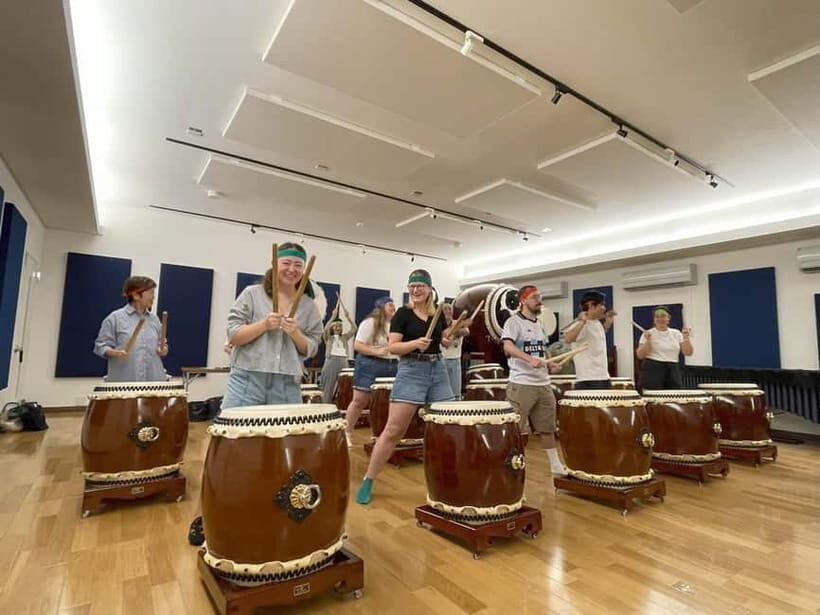
- Small-group taiko practice so you can learn the basics and still play together at the end.
- Culture first, then drumming, including a short taiko background lesson and calligraphy on a Hachimaki.
- A professional performance that shows the power and timing you are aiming for.
- A structured, friendly coaching flow, from movements to technique to a simple piece.
- Costume photo moment with Happi and Hachimaki, so you leave with more than just memories.
- English support plus a clear meet-up point at Kyoto Station (not the Shinkansen entrance).
Meeting at JR Kyoto Station and the quick hop to Osaka
Start your day at JR Kyoto Station, at the Central Ticket Gate on the north side of the station. This matters because Kyoto Station has multiple Central Exits and the wrong one can send you in circles. Your guide will be easy to spot, holding a banner for the taiko workshop.
You’ll want to arrive about 15 minutes early. The train schedule is fixed, so if you are late, the group leaves without you. If you are good at planning, Kyoto Station is manageable, but it is big, and you do not want to be sprinting while holding your schedule in your head.
From Kyoto, you take a short JR ride to Takatsuki Station (about 12 minutes). Then you transfer by the studio’s private car (often around 5–10 minutes). Taxi from Kyoto is not recommended, and the reason is simple: time and cost can creep up fast for a trip that already works well by train.
This setup is part of what makes the workshop feel like real Japan logistics. You are not just “getting there,” you are also traveling like locals: short rail hop, quick local connection, then you’re in the studio.
A few more Kyoto tours and experiences worth a look


Culture lesson first: taiko roots, calligraphy, and writing your wish
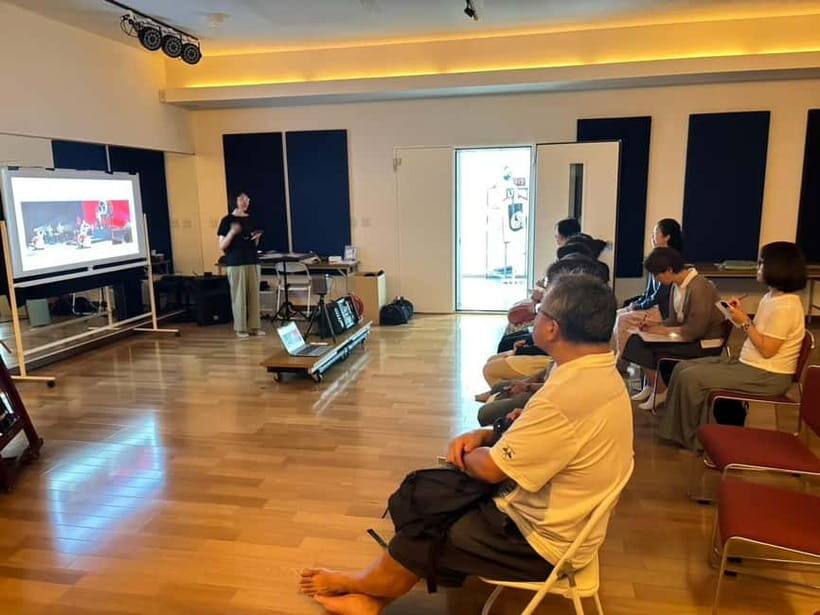
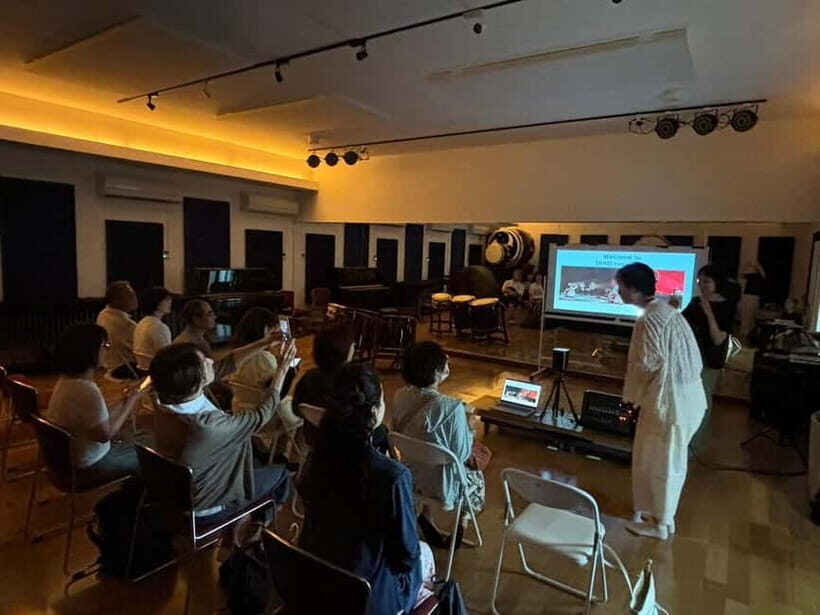
Before the drums come out, you get a brief explanation of taiko’s history and its role in Japanese life. Even if you only catch the highlights, the point is to give your playing a context: taiko is not random noise, it is structured rhythm tied to Japanese tradition.
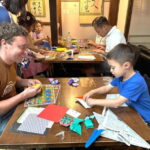
Then comes one of my favorite moments in the workshop: simple calligraphy. You write your wishes on a Hachimaki, a traditional headband. It turns the session from a one-time class into something personal, because you are literally putting your intent into an object you’ll wear during the later drumming and photo moment.
This part works especially well if you are traveling with kids or anyone who learns best through more than just repetition. You get a calm, hands-on cultural activity before the energy spikes. Also, it gives you something to look forward to besides just the drumming.
The pro performance that shows what you are actually practicing
Once everyone has the basics in their heads, you watch an amazing taiko demonstration by a professional player. This isn’t a distant show where you wonder what you should be noticing. It’s more like a live “spec sheet” for the techniques you are about to learn.
Focus on three things during the performance:
1) how the beats land together,
2) how power is produced without looking like chaos, and
3) how the drummer uses body movement, not only arm strength.
That matters because taiko technique is physical. If you go in thinking this is only about hands, you’ll feel the difference once the instructor starts teaching movements. Seeing it done well first helps you copy the right kind of intensity.
If you are the type who likes learning by watching, this demo is a big value boost. It gives you a clear target, and it makes the later practice feel more meaningful.
Learning the basics: instructor coaching and getting real drum time
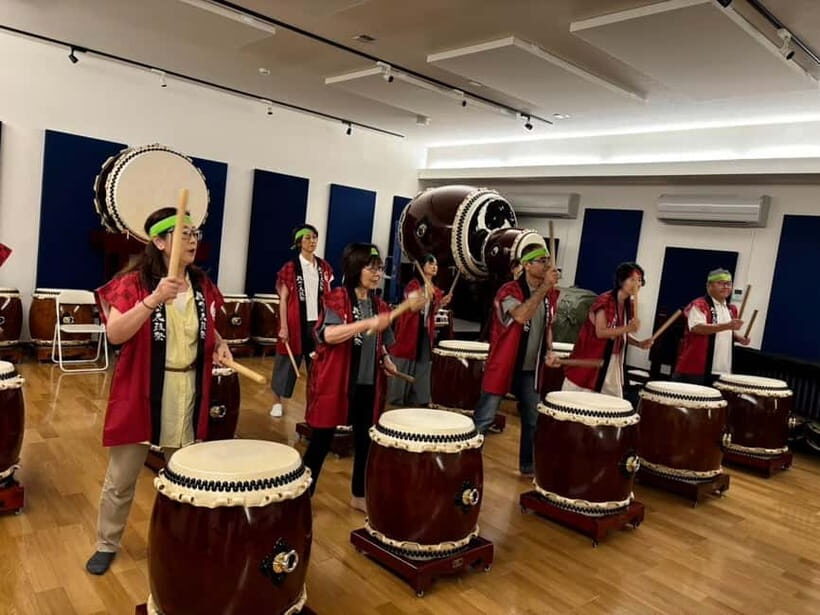
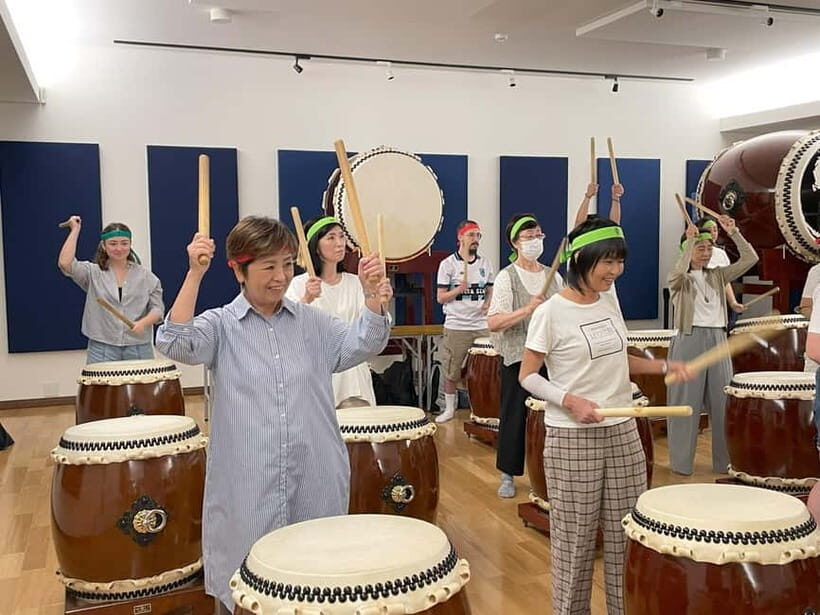
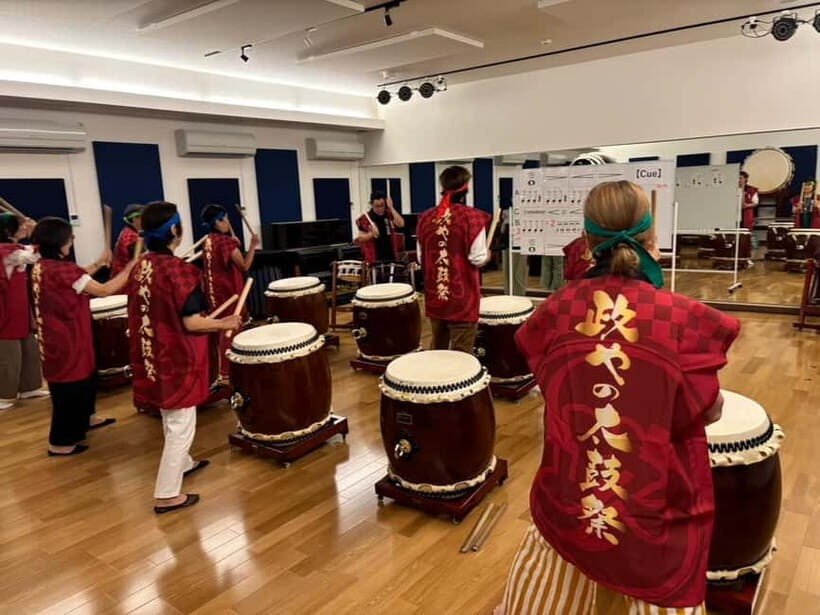
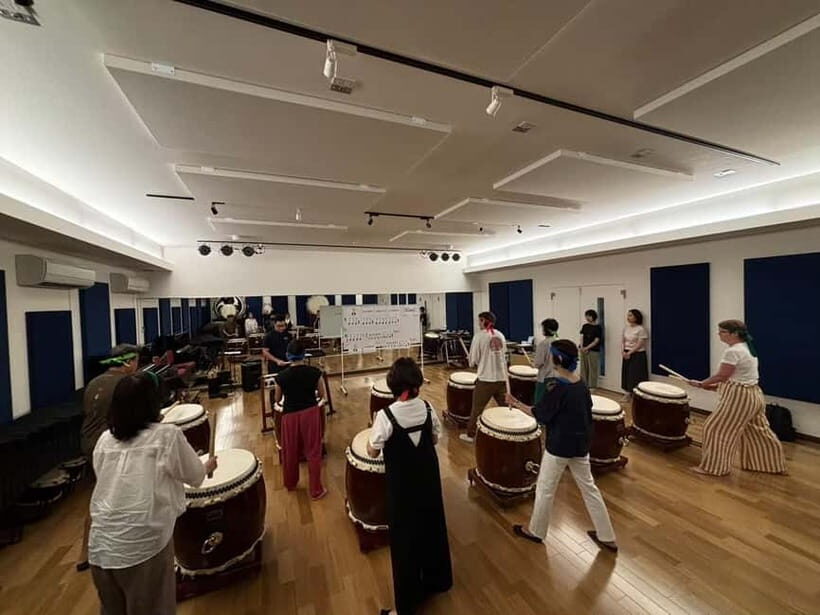
After the demo, a friendly instructor teaches you the basic movements and techniques. This is the part that makes the workshop accessible. You are not expected to already know taiko. The instruction is paced to get you from first hits to an actual playable piece.
If you want a hint for your mindset: treat it like learning a dance, not like taking a music exam. Your body needs the rhythm cues. You’ll likely practice the movements step-by-step, then start building toward a short music piece.
In small-group classes like this, the best moments are the ones where someone corrects your form before you lock in bad habits. The good news here is that the studio keeps the group limited (up to 15), which helps instructors spot issues and guide people without losing the flow.
I also like that the workshop focuses on participation. You end up playing the simple piece with your fellow participants, so you are not just watching while others play. Even if you do not become a taiko master by the end, you walk away knowing how to produce sound, timing, and basic coordination.
Your taiko finale and the costume photo you’ll remember
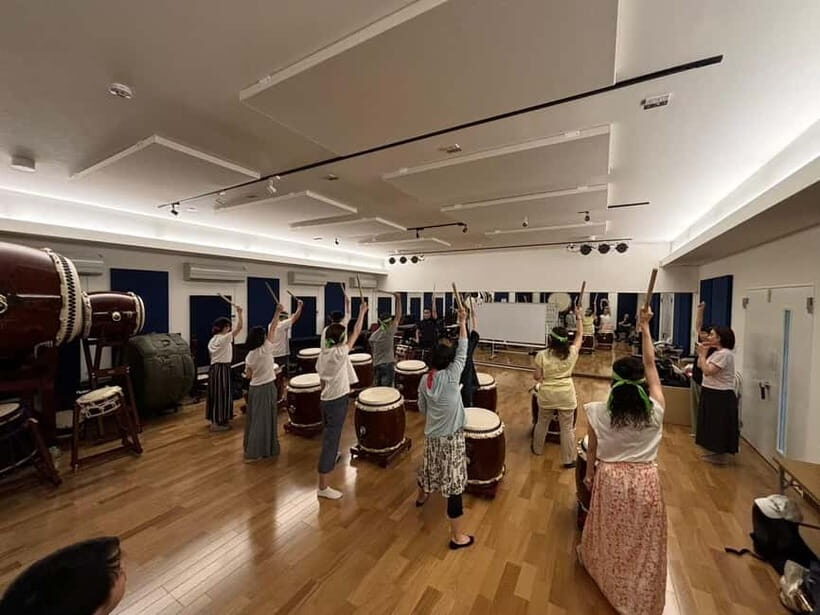
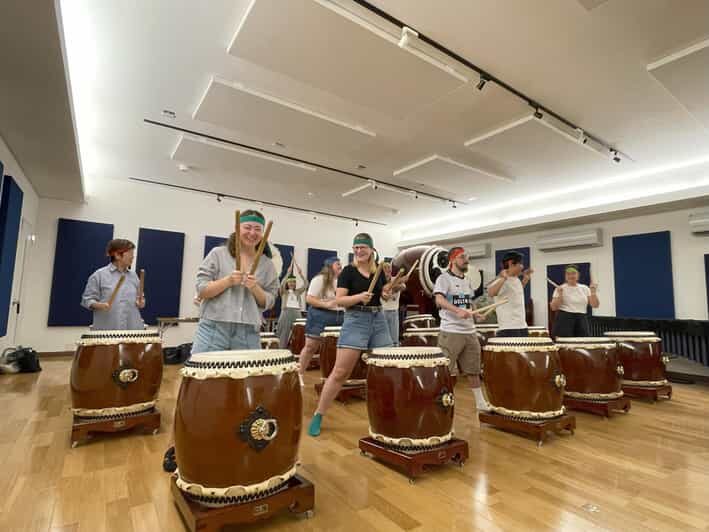
The workshop culminates with you playing a simple piece together. This is the payoff: the moment where everyone’s basic beats and moves click into something that feels like a song rather than separate efforts.
When the group plays in sync, you instantly understand why taiko is so loud and so communal. It is not about subtlety. It is about unity, energy, and shared timing. You’ll feel that whether you are an absolute beginner or someone who already plays a percussion instrument.
At the end, you get a commemorative photo in traditional Japanese costume, including a Happi and the Hachimaki you made earlier. This is not just for fun. It’s the kind of souvenir that actually helps you remember what you did that day, because you are wearing the proof of the experience, not just holding a ticket.
Some days also include a video setup so you can see the performance afterward. Even if you are not planning to watch it ten times, it’s a nice way to capture how far you progressed from first lesson to group finale.




Price, what you get, and whether it is good value
At $112 per person, this workshop is not a budget “do it in an hour” activity. But for a full cultural drumming session with instruction, transport, and included materials, it often feels fair.
Here is what you are paying for in practical terms:
- A real English guide for the day’s coordination and translation needs
- Taiko instructor coaching and a structured learning flow
- A professional taiko performance that sets the standard
- Your Hachimaki (the headband you write on and keep)
- JR one-way ticket from Kyoto to Takatsuki
- Private car transfers to and from the studio and station
Add it up and you get more than a “show.” You get time with drums, cultural context, and a souvenir you helped create. The small-group limit also matters. With fewer people, you spend more of your paid time actually playing.
If you are traveling on a tight schedule, the fixed train connection is also part of the cost. You’ll give up a chunk of your afternoon, roughly 2.5–3 hours total including travel. But if you want a hands-on cultural activity with clear value, taiko is a strong pick.
Who this is perfect for, and who may want to choose something else
This workshop is a great fit if you want to do something active that still feels traditional and grounded. If you enjoy hands-on learning, you’ll like the combo of cultural explanation, calligraphy, and drum practice.
It is also friendly for non-musicians. The goal is to teach you a playable piece, not test your skill. If you can follow basic directions and are willing to try, you’ll get something out of it.
Best matches:
- Adults who want a deeper feel for Japanese tradition beyond sightseeing photos
- Families with kids old enough to participate (children under 7 cannot join)
- Anyone who likes interactive cultural activities more than museum-style learning
Possible mismatch:
- If you hate structured schedules or you are often late, the fixed train timing will stress you out.
- If your travel style is purely low-effort, you might prefer something more passive than a full drumming workshop.
Also note that some days do not allow single-participant bookings. If you are solo, you may need to book and pay for two participants on those dates.
Tips to make your taiko day go smoothly
Do these and the experience feels effortless.
First, plan your meeting time around Kyoto Station complexity. Use the north side meeting point and look for the guide holding the banner for the taiko workshop. Get your bearings fast before you board the train.
Second, be early. Arrive 15 minutes ahead because the group cannot wait for late arrivals, and you cannot join after the start. If you are unsure where you are in the station, ask staff. It’s better to ask once than to waste five minutes wandering.
Third, treat the time block as a single commitment. The experience is about 150 minutes, and the total is closer to 2.5–3 hours once you include travel. I would not schedule something tight right after.
Finally, wear whatever lets you move easily. The workshop involves basic movements and technique coaching, so you’ll be happier if your clothes do not restrict your range.
Should you book this Kyoto-to-Osaka taiko workshop?
I recommend booking if you want a high-participation cultural activity with an actual teaching component, not just a performance. The combination of English guidance, a professional demonstration, calligraphy on a Hachimaki, and a group taiko finale makes it feel like a complete experience.
Skip it only if your schedule is fragile or you cannot reliably arrive on time. The transport is efficient, but it is also fixed, and the workshop does not slow down for late arrivals.
If your travel goal is to leave Japan with stories that feel physical and personal, this is the kind of class that delivers. You go in listening to taiko as sound. You leave knowing how it’s built.
FAQ
Where is the meeting point in Kyoto?
You meet at the Central Ticket Gate of JR Kyoto Station (not the Shinkansen Central Ticket Gate). The guide will be on the north side of the station where Kyoto Tower is visible.
How do I get there if I arrive by train?
Exit through the Central Exit, and go to the north side area near Kyoto Tower. Your guide will be holding a signboard for the taiko experience.
What if I arrive by subway?
Use Central 1 ticket gate, then take Exit 6 to the ground level. Walk along the Kyoto Station building until you reach the central ticket gate area on your left.
How long is the workshop and how long should I plan for travel?
The activity duration is about 150 minutes. Including travel, plan for roughly 2.5–3 hours total.
What does the group size look like?
It is a small group limited to 15 participants.
Is there an age limit?
Children under 7 cannot participate.
Do beginners need any prior music or drumming experience?
No. You’ll receive instruction on basic movements and techniques and then play a simple piece together.
What language is the guide?
The workshop is offered in English.
Is transport included?
Yes. Your JR one-way ticket to Takatsuki Station is included, plus car transfers to and from the studio and Takatsuki Station.
What happens at the end of the experience?
You play a simple piece together and then get a commemorative photo in traditional costume, including a Happi and the Hachimaki you made.