Kyoto in one day takes planning, and this tour does it for you. You get a tight route through UNESCO World Heritage sites like Nijō Castle, Kinkaku-ji, and Kiyomizu-dera, plus the Imperial Palace and Fushimi Inari. I especially like that the day is built around storytelling from a licensed English guide and that admission fees plus transportation are included, so you’re not constantly doing ticket math.
The big plus for me is the “hit the main stops” structure: you move efficiently, but each location still gets a real chunk of time. The main drawback to consider is the pace. This is a full day of walking and stair-climbing, and a few people noted the guide can be quick or hard to hear if you’re not near the front.
In This Review
- Key things to know before you go
- Why this route is so efficient for first-time Kyoto
- Getting on the bus: meeting point, timing, and comfort
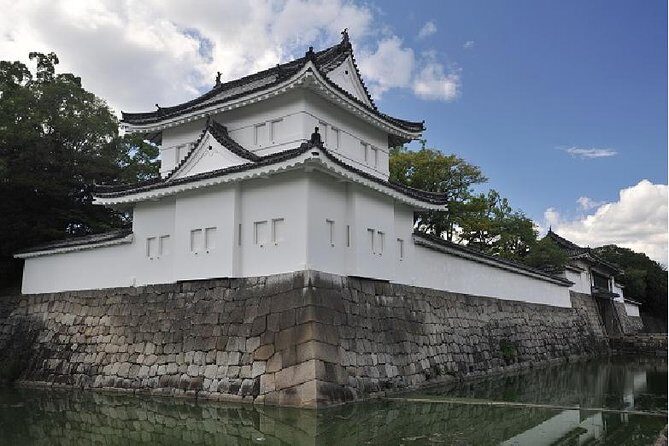
- Nijō Castle: short visit, high payoff
- Kinkaku-ji (Golden Pavilion): seeing the gold without losing the moment
- Kyoto Imperial Palace: court atmosphere with a closure-friendly swap
- Fushimi Inari Taisha: the torii walk, timed for highlights
- Sanjusangendo: 1,001 statues in a long wooden hall
- Kiyomizu-dera: terrace views plus the shopping lane
- Lunch options: Western set menu or vegetarian-friendly thali
- Western-style lunch (included only if selected)
- Indian thali lunch (included only if selected)
- If you choose no lunch
- Pace, group size, and hearing your guide
- Price and value: what $168.43 is really buying
- Who should book this Kyoto highlights tour
- Downsides you should plan around
- Should you book this Kyoto 1 Day Tour?
- FAQ
- What time does the Kyoto 1 Day Tour start and end?
- How long is the tour?
- Is admission included for all the stops?
- What happens if Kyoto Imperial Palace is closed?
- What happens if Nijō Castle is closed?
- What lunch options are available?
- Are halal or gluten-free meal requests available?
- Can I cancel for a full refund?
- What’s the maximum group size?
Key things to know before you go
- Early start, quick connections: 8:20 am departure helps you beat some crowds before the day gets heavy.
- Six major stops: Nijō Castle, Kinkaku-ji, Kyoto Imperial Palace (or an alternate), Fushimi Inari, Sanjusangendo, and Kiyomizu-dera.
- Admission included: You’re covered for tickets at the sites marked as included, not just shown around.
- Optional lunch is limited: Western-style set menu is available, but only vegetarian requests can be handled in advance; halal and gluten-free aren’t offered.
- Group cap is 40: Small enough to be manageable, but not a private experience.
- Alt stops happen on closure days: If Imperial Palace or Nijō Castle is closed, the tour swaps to named alternatives.
Why this route is so efficient for first-time Kyoto
Kyoto works best when you respect geography. Doing these spots in one day on your own can turn into buses, trains, and decision fatigue. This tour strings the classic sights together in a logical order, starting near Kyoto Station, then working through major landmarks you’d otherwise spend days trying to coordinate.
What makes it feel efficient is how the stops match the city’s “mood shifts.” You go from the power and ceremony of court-era spaces, to the visual shock of gold at Kinkaku-ji, to the spiritual tunnel of red torii at Fushimi Inari, and then to the big devotional hall at Sanjusangendo before ending with Kiyomizu-dera’s terrace views and the shopping street atmosphere.
You’re also not stuck guessing what matters. The tour is led by a national government licensed English guide interpreter, and names like KC, Miyuki, Yuki, Michi, and Yoshitaka Harada come up in the guide descriptions shared in the feedback data. Across those mentions, the common thread is clear explanations and a sense of humor that makes the history easier to track while you’re walking.
A few more Kyoto tours and experiences worth a look



Getting on the bus: meeting point, timing, and comfort
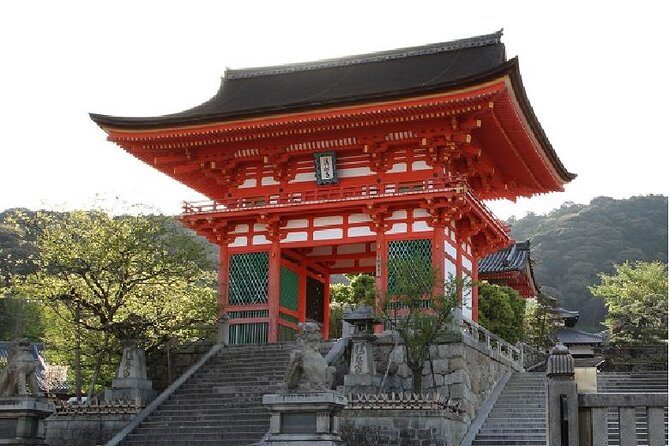
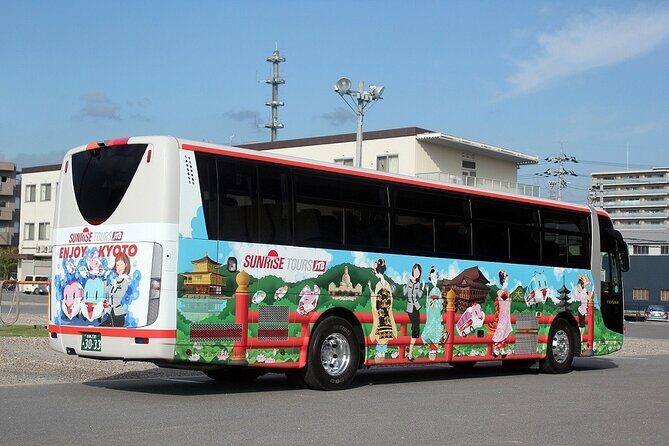
You start at the JTB SUNRISE TOURS DESK KYOTO desk, located in the Avanti building (B1F) near Kyoto Station, and you finish back at Kyoto Station around 5:30 pm. The tour begins at 8:20 am, so you’ll want to arrive early enough to find the meeting point without rushing.
The vehicle is described as air-conditioned and heated, which matters in Kyoto because weather can swing hard. Reviews also mention the bus experience as comfortable, and on very hot days the guide behavior gets praised as caring and watchful.
Two practical notes from the tour details:
- Seats may not be designated, so you’ll want to pick a spot where you can hear the guide well, especially during walking/transition segments.
- The group is guided around timing, and some people flagged that the guide’s pacing can be fast. If you’re the type who needs a moment to catch up, wear your most comfortable shoes and plan to move promptly.
Nijō Castle: short visit, high payoff
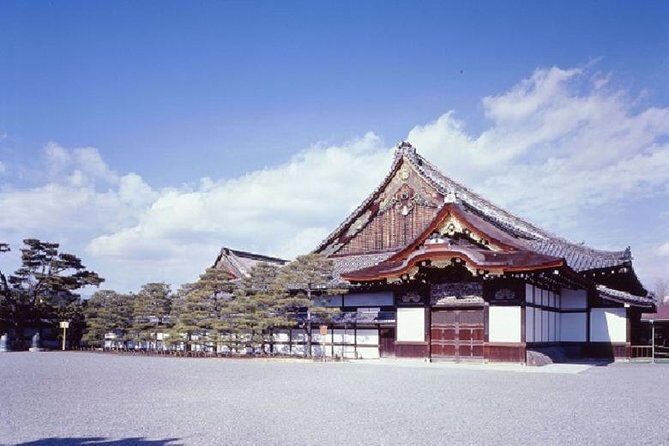
Your first big stop is Nijō Castle, a World Heritage site completed in 1626, tied to Tokugawa shogun residence and positioned as a “palladium” for Kyoto Imperial Palace. In about 50 minutes, you’re not touring every corner like a slow museum day. Instead, you’re there for impact: the ornate interiors, the craftsmanship, and the sense of power the place was built to project.
What to watch for in the time you get:
- Look closely at the elaborate carvings and the gold-leaf-like opulence inside.
- Pay attention to what the guide explains about why the castle was designed the way it was, not just what it looks like.
The best part of starting here is that it anchors the day in court-and-shogun context. Even if you’re already familiar with Kyoto, it helps you “read” later stops with more meaning.
One caution: Nijō Castle has closure rules (for example, some Tuesday closures in certain months). If it’s closed on your day, you’ll visit an alternative listed by the tour rather than getting a different castle from your choice.
Kinkaku-ji (Golden Pavilion): seeing the gold without losing the moment
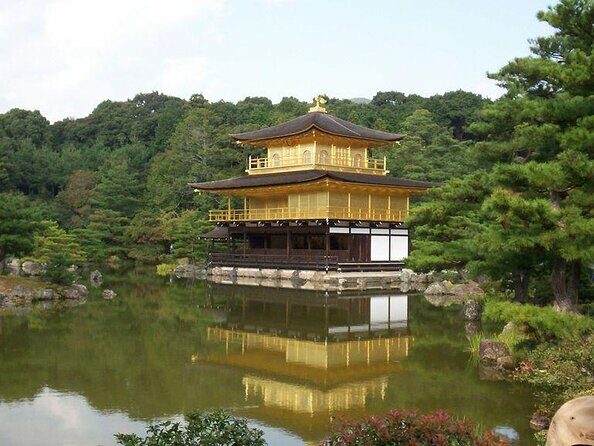
Next is Kinkaku-ji, another World Heritage site. The structure is covered in thin layers of pure gold and sits beside a pond, so the views can be dramatic whether the light is bright or muted.
You’ll get about 45 minutes here. That’s long enough to slow down at the waterline views, walk the garden paths, and take photos from a few angles without the “five-minute dash” feeling.
What this stop is really good at:
- It gives you a clear visual landmark for Kyoto. After you see Kinkaku-ji, other temple architecture starts to make more sense.
- The surrounding garden is part of the experience, not a side quest.
The drawback is that Kinkaku-ji can be busy. The tour structure helps because you’re not trying to decide where to go in real time. Still, come prepared to stand, move, and re-position quickly.
Kyoto Imperial Palace: court atmosphere with a closure-friendly swap
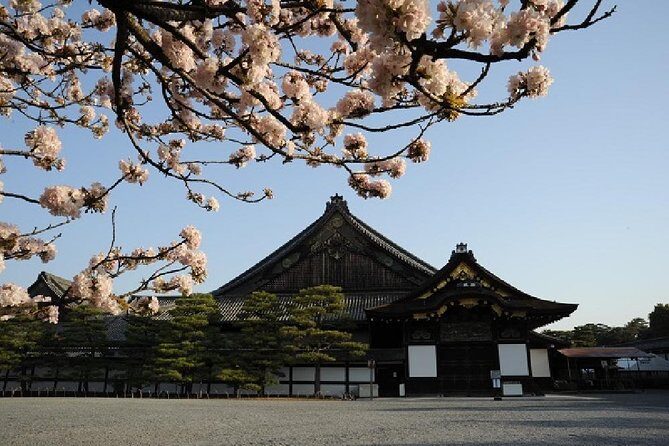
The Kyoto Imperial Palace stop is about 40 minutes, and it’s the kind of place where you understand the “spirit” of a location more than the physical drama. It was used as the Emperor’s residence until around 150 years ago. Even with the time limit, you can pick up why ceremonies and court culture mattered so much.
You should also know the closure rule: the palace is closed to visitors on Mondays (or the following day if Monday is a holiday) and on days when there’s an Imperial Household Agency event. If that happens, your itinerary swaps in Kitano Tenmangu Shrine. If the closed day falls on the 25th, the tour swaps to Nishi Hongan-ji Temple.
That matters for your planning because you’re not guaranteed the Imperial Palace itself. The tour still keeps the day “on track,” but your specific palace experience may vary depending on the calendar.

Fushimi Inari Taisha: the torii walk, timed for highlights
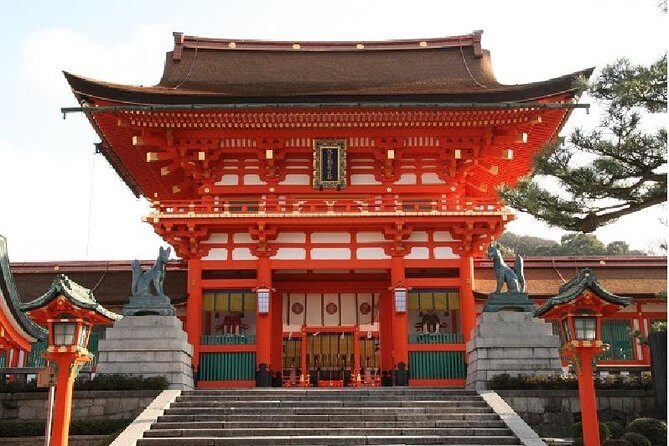
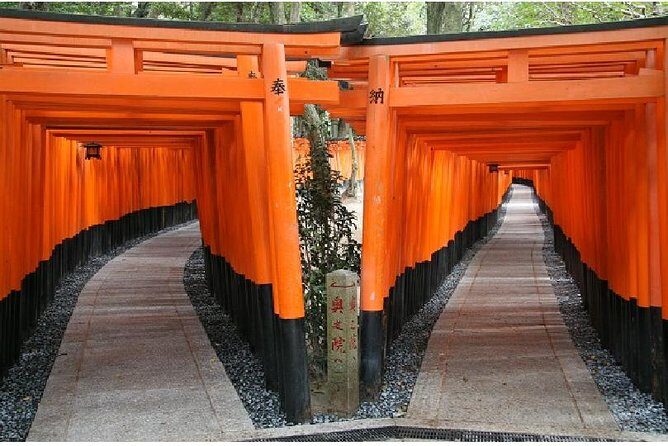
Fushimi Inari Taisha is famous for its bright red Senbon Torii gates and the head shrine status for about 40,000 inari-jinja shrines across Japan. You’ll spend about 30 minutes at the shrine area, but there’s an important detail: you walk from the parking lot to the shrine entrance for about 15 minutes one-way.
So your real time for the torii is not just a quick stop at the first gates. It’s closer to a “taste of the experience” segment. You’ll see enough to understand why the place is so iconic, but you won’t have time to do a full deep hike up into the upper paths if you’re aiming for the standard group pace.
What I’d do with this stop if you want the best photos:
- Move with the group at first so you’re not rushed back.
- If you find a viewpoint you love, take your photos quickly, then keep moving rather than getting stuck at one spot.
Sanjusangendo: 1,001 statues in a long wooden hall
Sanjusangendo Temple is one of those stops that sounds like a trivia fact until you see it. The hall is described as the world’s longest wooden structure and houses 1,001 life-size statues of Buddhist Kannon deities dating back to the 13th century.
You get about 30 minutes. That’s tight, but the point of this stop is the “aha” moment: the sheer number, the visual repetition, and the feeling of stepping into a space built for devotion rather than touring.
Practical tip: this is a good place to pause and just look. With a time cap, the temptation is to speed through to the next stop. Sanjusangendo rewards a slower minute, even if you can only afford a small pocket of time.
Kiyomizu-dera: terrace views plus the shopping lane
The day ends (after Sanjusangendo) with Kiyomizu-dera, a World Heritage site famous for its panoramic views from a lofty terrace. You’ll spend about 1 hour 10 minutes, which is a strong finish.
This is also where Kyoto’s street-life shows up. The tour description points out the historic shopping lane leading to the temple, and that’s the kind of extra texture that makes the end of the day feel more like Kyoto and less like a checklist.
What can slow you down here:
- Stairs and uneven footing.
- Crowds that force you to queue and re-route slightly.
You’ll likely be tired by this point, so wear shoes with grip and plan to take your time on the terrace area. If you’re sensitive to heights or crowds, keep an eye on where the group moves and don’t drift too far ahead.
Lunch options: Western set menu or vegetarian-friendly thali
Lunch depends on which option you choose when booking.
Western-style lunch (included only if selected)
It’s described as a Western-style set menu. Vegetarian meals can be requested if you inform the operator at reservation time. If requests aren’t provided in advance, same-day changes cannot be accepted. Also, halal and gluten-free and other meal requests are not available.
Indian thali lunch (included only if selected)
There’s also an Indian thali set menu suitable for vegetarians, listed with items like multiple curries (bean curry, vegetable curry, spinach and potato curry), vegetable pakora, plain yogurt, naan or roti, rice, salad, and a non-alcoholic drink. Requests for halal and gluten-free are also not available.
Important detail for your day: customers in the Indian thali option and Western-style option are served in separate dining areas, and you can’t change one lunch type to the other on the day.
If you choose no lunch
If you pick the No Lunch option, you’ll have free time to eat on your own in the Kyoto Station area.
My practical take: lunch on a tour is most valuable when it saves you time and removes decision stress. If you have strict dietary needs, you need to double-check that your requirement is actually supported, because the data here is clear that halal and gluten-free aren’t offered.
Pace, group size, and hearing your guide
This is a classic “major sights” day, not a slow wandering tour. The tour visits six core sites, some with transfers, plus guided context while you’re on the move. That can feel smooth when the group stays together, and it can feel stressful when the group spreads out.
Feedback includes praise for guides who keep the group moving well and provide excellent English commentary, with some guides getting described as funny, warm, and attentive in hot weather. Other feedback flags issues like:
- Walking speed that can feel fast.
- Audio volume that makes it hard to hear unless you’re near the guide.
- Late return to the bus when people don’t match the group pace, which can create pressure.
So here’s the advice I’d give you: treat the tour times like they matter. If the guide says get back on time, do it. If you’re traveling solo and want social mixing, be aware this is largely structured around paired bus seating and set meal timing, so you may not automatically bond with other solo guests during lunch.
Group size is capped at 40, which is manageable, but still means you’ll be navigating crowds and staying in sync.
Price and value: what $168.43 is really buying
At $168.43 per person, this is not a budget “just transport me” tour. The value comes from the bundle:
- Licensed English guide interpreter
- Admission fees at included stops
- Transportation
- An air-conditioned and heated bus
- A full-day route that reduces planning work
If you tried to reproduce the day yourself, you’d likely spend time managing transit between neighborhoods and still face ticket costs. The admissions you pay on this tour are a major part of the value equation, especially because the schedule includes multiple high-profile sites where you’d otherwise buy separate tickets.
Is it worth it? If you want the major Kyoto hits in one day and you don’t want to spend your limited time on logistics, this can be a good deal. If you hate group pacing or you want to linger at one temple for two hours, it’s harder to justify because your “free choice” time is limited.
Who should book this Kyoto highlights tour
This tour fits best if:
- You’re short on time and want the big Kyoto markers in one day.
- You like history context while you’re walking through sites, not after you get home.
- You’re comfortable with moderate-to-fast pacing and a lot of standing, stairs, and queueing.
It can also be a strong choice for families and groups who want structure. The size cap and comfort of the bus are practical positives.
If you’re the type who needs quiet, long temple time, or you’re very sensitive to crowds, you might prefer a slower, neighborhood-based plan instead of stacking everything in one day.
Downsides you should plan around
A few realities to keep in mind:
- Closures can change your exact stops (Imperial Palace on Mondays; Nijō Castle on specific Tuesdays during certain months). The tour uses named substitutes, and refunds aren’t issued when those substitutions happen.
- Lunch has restrictions. Western vegetarian is possible only with advance notice; thali is vegetarian. Halal and gluten-free aren’t offered.
- Pace varies by guide and day. Some guides are praised for being careful, humorous, and on schedule. Others have been criticized for speed or for audio clarity. Choose shoes and keep close to the group so you’re not fighting the timing.
- You may not get ideal solo downtime. The tour structure is built around group movement, so solo travelers should expect “on your own” moments only at the optional lunch-free time window or in Kyoto Station.
Should you book this Kyoto 1 Day Tour?
If this is your first Kyoto trip and you want the famous temples and shrines with less planning stress, I think this tour is a solid choice. The included admissions, the guided context, and the tight route make it a practical way to see a lot without turning your day into a logistics project.
But book with eyes open. This is a packed itinerary with walking and timing pressure. If your dream Kyoto day is slow, quiet, and flexible, you may find this too structured. If your goal is to get the highlights done right, this tour is the kind of day that pays off quickly.
FAQ
What time does the Kyoto 1 Day Tour start and end?
It starts at 8:20 am and returns to Kyoto Station around 5:30 pm.
How long is the tour?
The duration is about 9 hours 40 minutes.
Is admission included for all the stops?
Admission fees are included for the stops listed as included in the itinerary, and Kyoto Imperial Palace and Fushimi Inari have admission listed as free on the tour details. Sanjusangendo and Kiyomizu-dera are also marked as admission ticket included.
What happens if Kyoto Imperial Palace is closed?
If it’s closed (for example, on Mondays or on certain event days), the tour will visit Kitano Tenmangu Shrine instead. If the closed day falls on the 25th, the tour will visit Nishi Hongan-ji Temple.
What happens if Nijō Castle is closed?
Nijō Castle is noted as closed on Tuesdays in certain months. If it’s closed on your day, the tour will visit Ryoan-ji Temple instead.
What lunch options are available?
You can choose With Lunch (Western-style set menu) or an Indian thali option (vegetarian thali set menu). If you choose No Lunch, you’ll have free time to eat on your own in the Kyoto Station area.
Are halal or gluten-free meal requests available?
The tour information says halal, gluten-free, and other meal requests are not available.
Can I cancel for a full refund?
Yes. Free cancellation is available if you cancel up to 24 hours in advance for a full refund.
What’s the maximum group size?
The tour has a maximum of 40 travelers.