A full day in Kyoto can feel like a blur. This one stays focused, stacking big-name sights with a guide who helps you move fast and smart. I like that the route uses included admission tickets for the temples and monkey park, so you don’t waste time at counters. I also love the small-group pace, because you’re not forever stuck waiting for the slowest walker. The main drawback is simple: it’s a lot of steps and a short steep hike at Monkey Park, so you’ll want good shoes and sensible energy.
You’ll start at the JR Inari area, then wind through Fushimi Inari’s famous torii paths, slide into Arashiyama for bamboo and Tenryu-ji, get a panoramic payoff at Iwatayama Monkey Park, and end with the Golden Pavilion at Kinkakuji. Guides from Japan Tour Adventure often run with a lively, story-and-practice style, and the group stays small (up to 10 people). You’ll also get a mobile ticket and downloadable souvenir pictures.
In This Review
- Key highlights you’ll feel on the day
- A fast day plan built around Kyoto’s top hits
- How the 8-hour small-group format really works
- Start at JR Inari with the Kitsunezo fox statue
- Fushimi Inari’s torii gates: how to enjoy the climb
- Arashiyama bamboo grove plus Tenryu-ji (UNESCO Zen gardens)
- Arashiyama time on the main street and Togetsukyo bridge views
- Monkey Park Iwatayama: a steep hike with big payoff
- Kinkakuji Golden Pavilion: picture time at the end of the day
- Price and included value: what you’re really paying for
- Transportation reality: IC cards and trains, not a bus
- Who should book this Kyoto walk day
- Should you book this full-day Kyoto highlights walk?
- FAQ
- How long is the Kyoto walk tour?
- Are tickets for temples and Monkey Park included?
- What about transportation and lunch?
- Is this tour a bus tour?
- What if I don’t want to visit Monkey Park?
- Can I cancel for free?
Key highlights you’ll feel on the day
- Included tickets for Tenryu-ji Temple, Monkey Park Iwatayama, and Kinkakuji (Golden Pavilion)
- Guide-led navigation so you know where to go next and how much time to spend
- Small-group size (max 10) for a calmer pace and easier photo stops
- Start point is easy to find: the Kitsunezo fox statue at JR Inari Station
- Monkey Park optionality: skip the park and you’ll have free time around Arashiyama with a set meeting point
- Comfort matters: a short, steep 15–20 minute hike uphill at Monkey Park
A fast day plan built around Kyoto’s top hits
If you’re trying to see Kyoto without spending your vacation buried in maps, this tour makes sense. It’s designed to let you check off the big classics—Fushimi Inari, Arashiyama, Monkey Park Iwatayama, and Kinkakuji—in one coordinated sweep.
The secret isn’t that you somehow avoid crowds at every turn. It’s that the guide helps you move in the right order, with enough context to make each stop feel more than just a postcard. Even the transitions matter: you get the timing and the walking flow, instead of constantly stopping to figure out which bus/train line gets you there.
And yes, you’ll still work for your day. This is a walking tour with public transportation, not a bus tour. Plan for a full stretch of time and a lot of outdoor walking.
A few more Kyoto tours and experiences worth a look

How the 8-hour small-group format really works
The tour runs about 8 hours (give or take roughly 30 minutes). That matters because Kyoto rhythms change by time of day. If you’re often stuck on your own schedule, you might end up at the wrong time—too early with everything closed, or too late when lines are worse.
Here, the group stays small (up to 10). That usually means you can ask questions without yelling over a crowd, and your photo moments don’t feel like a race. It also helps at places like Arashiyama and the Golden Pavilion, where paths can get narrow and people surge.
You’ll also have real-world support right before you start. The guide contacts you via WhatsApp if needed, and you’ll want the app installed so you can handle any last-minute details quickly. On the day, you meet your guide at the fox statue (more on that below), wearing Japan Tour Adventure JTA uniform.
One practical note: you need to arrive 15 minutes early at the meeting point. If you’re late, you can’t join, and there’s no refund if you miss the start. So set yourself up for success with a little buffer time.
Start at JR Inari with the Kitsunezo fox statue
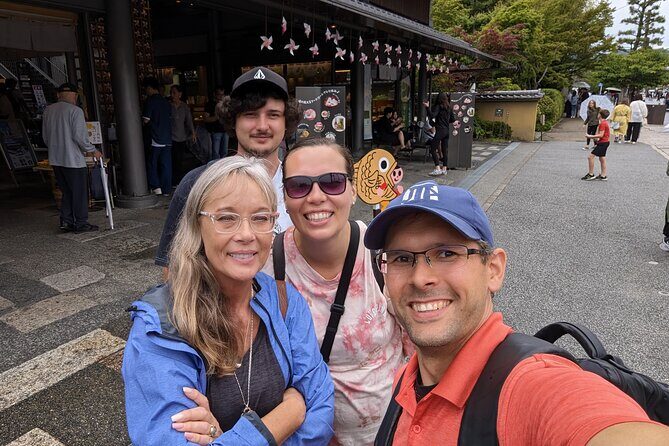
The day begins where Kyoto trips often get confusing: at Fushimi’s station area. Your meeting point is very specific—the Kitsunezo fox statue at the entrance area to Fushimi Inari Taisha, in front of JR Inari Station.
This is one of those details that makes your trip feel smoother. If you’ve ever arrived at a shrine area and then wandered around trying to confirm you’re in the right place, you’ll appreciate how clear this is. The guide is easy to spot in the JTA uniform, so you’re not playing hide-and-seek among tour groups.
Also, starting here sets the tone. Fushimi Inari is about the walk up and the feeling of being surrounded by torii gates. Instead of dropping you at a random entrance and hoping you figure out the route, you start in the right mental place: shrine first, torii walk next.
Fushimi Inari’s torii gates: how to enjoy the climb
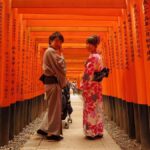
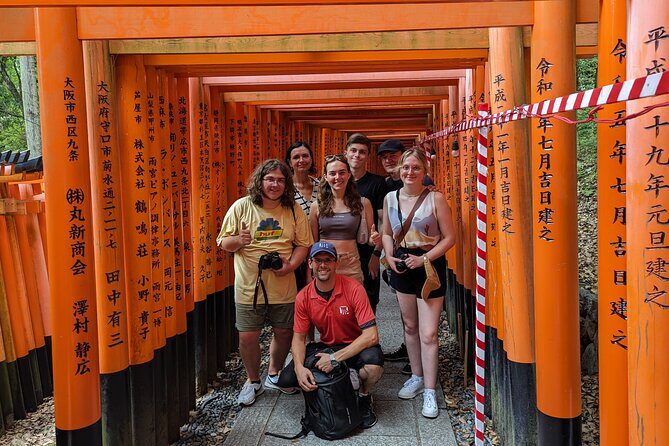
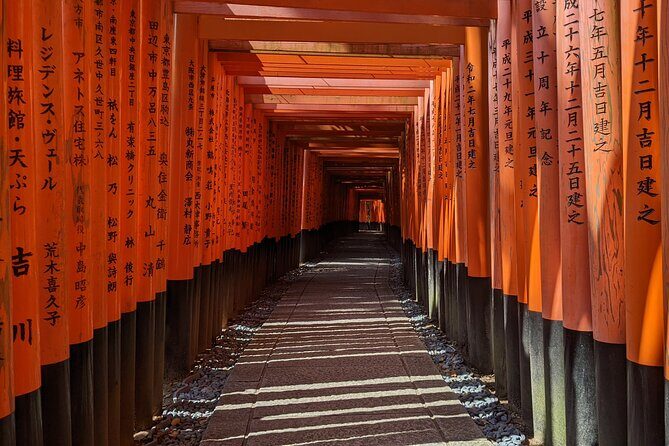
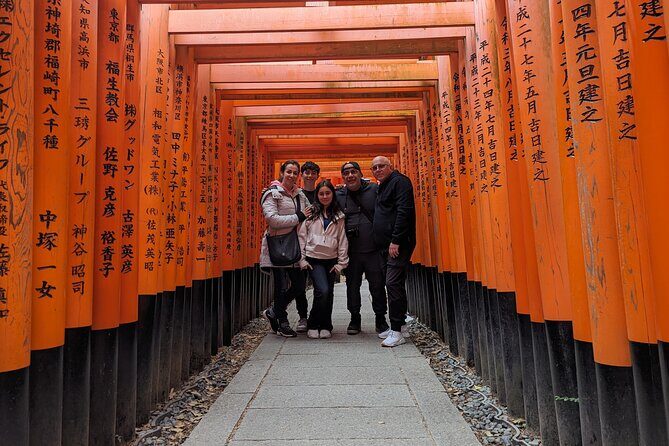
Fushimi Inari Taisha is the Kyoto shrine you’ve probably seen in photos—thousands of red torii gates climbing Mount Inari. What makes it special in person is the slow transformation of the space. Early on, it feels open and iconic. As you climb, it starts to feel more like you’ve stepped into a quiet tunnel of repeating shapes.
You’ll spend about 1.5 hours here. That time is important: enough to do the core torii experience without feeling like you’re rushing to a distant endpoint. The guide’s commentary helps too, because Inari’s role in Japanese culture is more than just a scenic backdrop.
Practical tip: bring your attention to the small things. Look for how the path curves, how the torii spacing changes, and where sightlines open up. Even if you don’t climb every possible way upward, you’ll still get the signature torii effect in a way that feels earned rather than automatic.
Arashiyama bamboo grove plus Tenryu-ji (UNESCO Zen gardens)
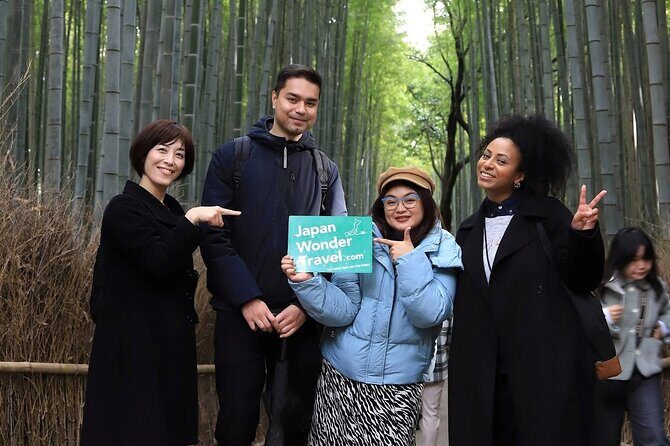
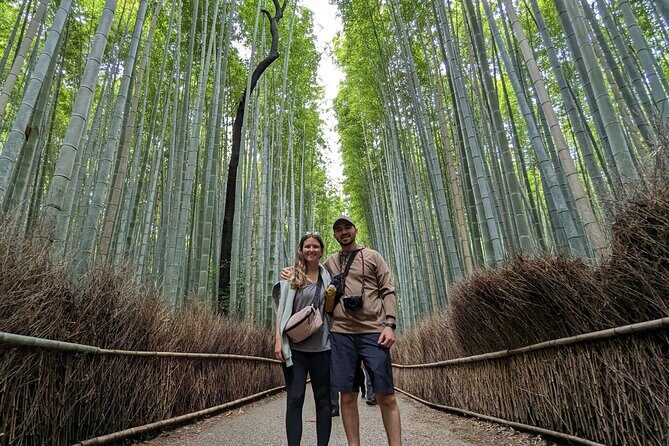
After Fushimi Inari, you shift gears into Arashiyama, and it’s a very satisfying contrast. First stop is the Arashiyama Bamboo Forest area. It’s about atmosphere: tall green stalks, a walkway that pulls you forward, and the way the light changes under the canopies.
You’ll have about 1 hour 20 minutes in the bamboo grove zone. That’s enough time to walk slowly, take photos without constant self-interruptions, and still have energy left for the next temple.
Next door is Tenryu-ji Temple, a UNESCO-listed Zen temple. You’ll spend around 40 minutes, and that shorter window is actually a good thing. In gardens, you can get overloaded if you’re there for too long without knowing what you’re looking for. In a compressed visit with guidance, you’re more likely to notice the intended viewpoints and the careful arrangement.
If you like Japanese garden design, this stop is a big win. Tenryu-ji’s setting helps you understand why people treat Zen gardens as more than decorative scenery.
A few more Kyoto tours and experiences worth a look

Arashiyama time on the main street and Togetsukyo bridge views
This part is intentionally lighter. You get roughly 45 minutes in Arashiyama’s main area, with built-in flexibility.
The tour gives you time to do things that make travel feel like travel: grab lunch at a restaurant with the guide’s help, rest, and refuel. Lunch isn’t included, so plan to purchase your own meal. But having a planned window means you’re not scrambling while hungry.
If you want a rest moment before the monkey park hike, this is where you take it. If you’re more energized, you can use the time for wandering around shops and streets—but don’t let shopping eat the whole slot.
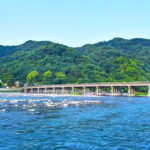
After that, you’ll cross Togetsukyo bridge for river views. It’s one of those Kyoto moments where you feel like you’re moving through the city rather than hopping between icons. The river and bridge perspective also helps break up the day mentally, so the second half doesn’t feel like nonstop sightseeing.
Monkey Park Iwatayama: a steep hike with big payoff
Now for the activity that changes the energy level on the tour.
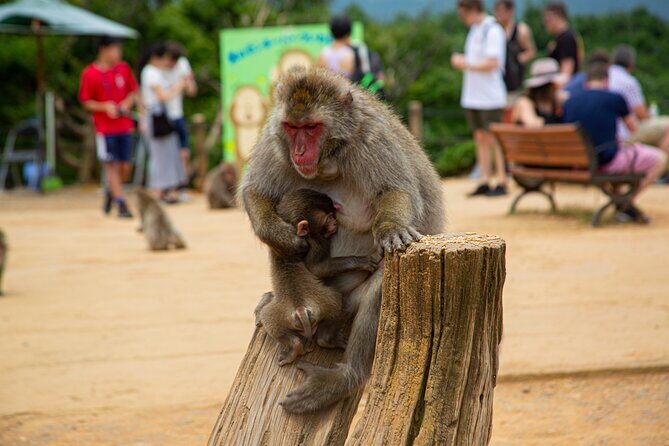
Monkey Park Iwatayama is reached by a short hike (about 15–20 minutes) up a steep path from the Arashiyama area. The park entrance ticket is included, but your legs are not. The tour is also not recommended if you have leg or knee problems.
The reward is twofold. You get a closer look at wild Japanese macaques, and from higher ground you get panoramic views over the area. This is also the stop where the day becomes playful. The macaques aren’t tame pets, so you’ll want to follow the guide’s rules and keep your behavior calm and respectful.
One helpful detail: you don’t have to do the park if you’d rather not. If you choose not to visit the monkey park, the tour provides free time around Arashiyama with a set meeting location and schedule to rejoin the group after the others finish. That’s a big plus for people who get nervous around animals, don’t want the steep hike, or simply want to keep the pace easier.
Practical advice: wear shoes with grip. Bring a bottle of water if it’s warm. And keep your phone secure while you’re moving along narrow paths—because the monkey “star power” can distract you.
Kinkakuji Golden Pavilion: picture time at the end of the day
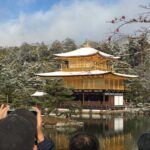
You finish with Kinkakuji Temple, the Golden Pavilion—famous for top floors covered in gold leaf and the mirrored look in the pond below. You’ll spend about 2 hours, which gives you time to settle in rather than just snap one quick photo and leave.
This is the stop where good pacing pays off. By the time you reach Kinkakuji, you’ve already seen the torii gates and bamboo textures. The Golden Pavilion feels like a visual climax: geometry, gold shine, and the stillness of the reflective pond.
Try not to treat this as a photo-only task. Use at least part of the time to watch how people move through the surrounding paths, then reposition for better angles. The guide’s help here is useful because Kinkakuji can be a tricky place to navigate in crowds.
Also, the tour ends back at Kyoto Station, but the schedule allows you to leave directly after the Golden Temple if you want to go earlier. That flexibility is handy if you’re catching onward trains later that evening.
Price and included value: what you’re really paying for
At $97.87 per person, this tour is priced like a practical day-planning service.
What you’re getting for the money:
- A bilingual local guide (English assured; other languages may vary)
- Admission tickets included for Tenryu-ji, Monkey Park Iwatayama, and Kinkakuji
- A smoother flow across multiple neighborhoods using public transport
- Souvenir pictures that you can download afterward from their Private Drive
- Mobile ticket access
What costs extra:
- Transportation (train/bus). The tour recommends using an IC card like Suica or ICOCA
- Lunch plus any food and drinks
- Shopping/souvenirs
Is it worth it? For me, it usually is when the day includes both navigation stress and paid-entry stress. Here, the big-ticket parts are covered (those temple and park admissions), and you don’t have to coordinate every connection on your own. If you already love DIY travel and you’re very confident with Kyoto transit, you might spend less by going alone. But you’ll spend more time figuring out logistics—and you’ll miss some of the story context that makes the stops feel connected.
Also, because it’s a walking tour, you’ll want to think of the guide as part translator and part route coach, not just a person telling you where to go.
Transportation reality: IC cards and trains, not a bus
This is a walking tour that uses public transportation, not a private bus. That means you’ll be using trains and buses along the way.
You should plan for that by:
- Getting an IC card (Suica or ICOCA) so you don’t slow down at every station
- Expecting some walking between stops
- Keeping your schedule flexible since transit timing can affect the day
The benefit is that you’re traveling like a local, not sealed inside a vehicle. You’ll also experience more of the route’s real Kyoto feel. The downside is less comfort than a bus tour, and you have to be okay with train/bus navigation.
Who should book this Kyoto walk day
This tour fits best if you:
- Have one full day and want to hit the core highlights
- Like guided context more than reading a guidebook alone
- Want to avoid ticket lines at the paid stops
- Are comfortable walking most of the day
It’s also great for couples and friends who enjoy staying together on a schedule.
I’d be cautious if you:
- Have knee/leg issues (the Monkey Park climb is steep)
- Prefer very slow sightseeing
- Hate the idea of public transportation hopping and outdoor walking
And if you want a middle path, the Monkey Park option is a smart feature. You can still enjoy Arashiyama while others do the macaque portion.
Should you book this full-day Kyoto highlights walk?
Yes, I think you should book it if your goal is to see Fushimi Inari, Arashiyama bamboo, Tenryu-ji, Monkey Park, and Kinkakuji in one clean day without turning Kyoto into a logistics project.
It’s especially good value because admission tickets for the three paid highlights are included, and the guide helps you navigate a route that can be annoying to piece together. Just be honest with yourself about walking and the steep hike. If you’re physically up for it (or ready to skip the monkey park), this is a strong way to spend a single day in Kyoto.
FAQ
How long is the Kyoto walk tour?
It runs approximately 8 hours, with timing that can vary by around 30 minutes before or after the estimate.
Are tickets for temples and Monkey Park included?
Yes. Admission tickets are included for Tenryuji Temple, Monkey Park Iwatayama, and Kinkakuji Temple (Golden Temple).
What about transportation and lunch?
Transportation is not included. Lunch and food and drinks are not included either, so you’ll pay for meals yourself.
Is this tour a bus tour?
No. It’s a walking tour that uses public transportation (trains and buses). The tour does not include a bus.
What if I don’t want to visit Monkey Park?
You can skip Monkey Park. You’ll have free time around Arashiyama with a specific time and meeting location to rejoin the group.
Can I cancel for free?
You can cancel for a full refund if you cancel at least 24 hours before the experience starts. If you cancel less than 24 hours before, the amount paid is not refunded.