Monkeys and mountains in one morning.
That’s the fun twist here: you start at Arashiyama Monkey Park Iwatayama, hike up for a Kyoto view, then feed Japanese macaques under supervision. Next you shift gears to Arashiyama’s signature sights—Tenryuji Temple and the bamboo grove—so you get nature, culture, and great photo timing in just 3 hours.
I especially liked how smooth it felt with a local English guide (people name Masa/Masahiko), plus the chance to get close to the monkeys without doing it the hard way. One possible drawback: the monkey park involves a 20-minute uphill walk, so if you’re not comfortable with steady climbs (or heights), this may not be your easiest Kyoto stop.
In This Review
- Key tour takeaways
- Why this Arashiyama + Iwatayama Monkey Park combo works
- Meeting at Hankyu-Arashiyama Station (and how to not waste time)
- Iwatayama Monkey Park: the uphill walk, the view, and feeding rules
- Feeding the monkeys (and what you’re allowed to do)
- What the monkeys are like in practice
- Tenryuji Temple: UNESCO Zen calm without the rush
- A good way to experience it
- Bamboo grove and Togetsukyo Bridge: classic Arashiyama, timed for good photos
- Togetsukyo Bridge over the river
- Small rules you’ll notice in the bamboo area
- A leisurely boat trip on the Oi River: slow views that finish the day well
- Price and value: what $38 includes (and what it doesn’t)
- Who this tour suits best (and who should think twice)
- What to pack and wear for a smooth Arashiyama morning
- Should you book this private tour?
- FAQ
- How long is the tour?
- Where do we meet the guide?
- Is the tour private and in English?
- Can I feed the monkeys, and where is it allowed?
- Is transportation included?
- What should I wear for the monkey park climb?
Key tour takeaways

- Safe monkey feeding rules: you feed from inside the rest area, not while wandering around
- A real workout for the view: a 20-minute uphill hike to reach the park viewpoint
- UNESCO Zen calm at Tenryuji: garden and temple time included
- Bamboo grove stroll during open hours: the bamboo path runs 9:00–17:00
- Arashiyama viewpoints on foot and by water: Togetsukyo Bridge plus a leisurely river boat ride
Why this Arashiyama + Iwatayama Monkey Park combo works

This tour is built around contrast. You go from playful monkeys and mountain air to quiet Zen spaces and classic Arashiyama river views. That mix is exactly what makes a short Kyoto trip feel like more than a checklist.
It also makes practical sense. Arashiyama can eat your time if you’re figuring it out alone—tickets, timing, where to stand for photos, and how to handle the climb. Having a guide means you can focus on enjoying the place, not solving the logistics.
The pacing is also friendly for a private tour. You’ll spend about 1 hour at the monkey park, then the rest of the time is shared across Tenryuji, the bamboo grove area, Togetsukyo Bridge, and a slow river ride.
A few more Kyoto tours and experiences worth a look
Meeting at Hankyu-Arashiyama Station (and how to not waste time)

You meet at Hankyu-Arashiyama St.—not Randen, not JR. The meeting spot is in the plaza just outside the station ticket gates, and your guide will be holding a sign with your name.
Why this matters: Arashiyama is confusing for first-timers because multiple rail lines and stations serve the area. Getting the right station first can save you a lot of time and stress, especially if you’re trying to hit the bamboo grove during daylight hours.
This is a private group with an English live guide. That usually means you can ask small questions as you go—what to photograph, how long to pause, and what to watch for on the trail.
Iwatayama Monkey Park: the uphill walk, the view, and feeding rules

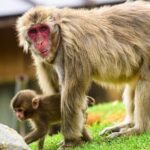
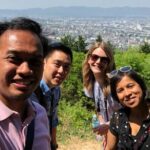
The monkey park part is the emotional headline of the tour. You hike up to Arashiyama Monkey Park Iwatayama, where Japanese macaques roam in a setting surrounded by mountain views. Expect monkeys along the trail as you climb, and more activity once you reach the top.
Plan for the main physical reality: you’ll do about a 20-minute uphill walk. Wear comfortable shoes and take it steady. In that stretch, the guide’s pacing matters—one review-style detail I liked from past experiences with guides here is how they keep the group from burning energy too fast.
Feeding the monkeys (and what you’re allowed to do)
Feeding is one of the best parts—up close, but still controlled. You can feed the monkeys only from inside the rest area, under supervision. You’ll also handle the feeding fee as part of the tour inclusions.
A helpful practical tip: bring water, and be ready for the idea that you won’t be allowed to bring food into the rest area. That rule keeps things safer for both people and animals. Also, the tour info notes not to bring food into the rest area, and not to touch plants.
What the monkeys are like in practice
This is not a show where animals perform on cue. The monkeys are free-ranging, so sometimes they come close and sometimes they’re farther back. That’s part of the charm, and it’s why you’ll want a guide who knows where to position you for safer, better viewing.
You should also keep expectations realistic with photos. You can get great shots, but you’ll still be competing with monkey behavior—when one hops into view, you’ll be ready because your guide is actively watching and guiding the timing.
Other private tours in Kyoto


Tenryuji Temple: UNESCO Zen calm without the rush

After the monkeys, you get a reset at Tenryuji Temple, a UNESCO World Heritage Site. This stop is the quiet counterbalance to the excitement above.
Tenryuji is famous for Zen garden design that’s meant to blend with the surrounding natural setting. The tone here is reflective: you’ll explore the temple area and gardens and get explanations of the history, architecture, and Zen philosophy that influenced Japanese culture.
What you gain from having a guide: you’ll notice details you might otherwise skip. A temple like this can look beautiful but still feel like random stones and structures unless someone helps you connect the dots.
A good way to experience it
Give yourself time to slow down. I like to do Tenryuji in a simple rhythm: first walk the garden paths at a relaxed pace, then circle back for photos only after you understand the layout.
If your legs are feeling the monkey park climb, Tenryuji is where you’ll appreciate the lighter pace and open spaces.
Bamboo grove and Togetsukyo Bridge: classic Arashiyama, timed for good photos

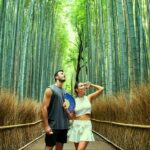
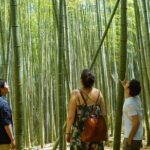
Next comes the Arashiyama Bamboo Grove. The bamboo path is free and open 9:00 to 17:00, and you’ll be walking through a corridor of tall bamboo with light filtering down through the stalks. It’s one of Kyoto’s most recognizable scenes, but it feels different depending on the time of day.
Because this tour lasts 3 hours, you’re not stuck wandering for half a day. You get the bamboo grove as a focused stroll, then you move to the river for the big view.
Togetsukyo Bridge over the river
Your next highlight is Togetsukyo Bridge, spanning the Oi River area as described for this experience. From the bridge and nearby spots, you’ll get that classic Arashiyama perspective: the water, the bridge line, and mountains/seasonal scenery in the background.
This is a great photo moment, and it’s also a good place to pause even if you’re not a camera person. The sound is calmer here than in the grove, and you can just watch the river flow at a human pace.
Small rules you’ll notice in the bamboo area
The tour notes a few practical “be mindful” items: wear comfortable walking shoes, skip high-heeled shoes, and don’t bring certain items like baby carriages/strollers. Also, keep hands off plants. The bamboo area is open, but the rules help keep it pleasant for everyone.
A leisurely boat trip on the Oi River: slow views that finish the day well

To wrap the highlights, you’ll enjoy a leisurely boat trip on the Oi River and see Arashiyama sights from the water. This part matters because it changes your perspective.
On foot, Arashiyama can feel like moving from one viewpoint to another. On a boat, you get a slower rhythm. The scenery sticks around longer, and you’re not constantly looking down for your next step or path.
If you’re planning a day packed with Kyoto highlights, this boat ride is a smart “pressure release.” It’s also a nice change after the monkey park climb—your legs get a break while your eyes keep working.
Price and value: what $38 includes (and what it doesn’t)
At $38 per person for a private 3-hour experience, the value comes from what’s built into the ticket.
You’re not only paying for a guide. Your inclusions cover:
- Admission to Arashiyama Bamboo Forest
- Admission to Iwatayama Monkey Park
- Opportunity to feed monkeys under supervision, plus the feeding fee
- Admission to Tenryuji Temple
Not included is transportation to/from the attractions and personal expenses. So you’ll still handle getting to the meeting point at Hankyu-Arashiyama Station, and you’ll pay for any snacks or drinks you want beyond what you bring.
In plain terms: this tour earns its price by handling the paid-entry parts and feeding logistics. If you want to do monkey feeding plus Tenryuji plus bamboo and river views in one smooth block of time, private guidance tends to be worth it.
Who this tour suits best (and who should think twice)
This experience is a good match if you want:
- Close-up animal time with safe feeding rules
- Arashiyama classics without planning stress
- A private pace with English guidance
From the provided guidance, it’s not suitable for:
- Pregnant women
- People with mobility impairments or wheelchair users
- People afraid of heights
- People with animal allergies
- People over 287 lbs (130 kg) or over 75 years
- People with low fitness
- People with lactose intolerance
Even if none of those apply, the uphill climb is still the practical factor. If you can handle steady walking but not a strenuous hike, you’ll likely be fine. If stairs and slopes are tough for you, consider skipping or asking for an alternative pace (this tour’s format is fixed by the monkey park approach).
What to pack and wear for a smooth Arashiyama morning
This is a walking-heavy outing, with one clear incline. You’ll be happier if you plan like that.
Bring:
- Rain gear (Kyoto weather can shift fast)
- Water and snacks (the tour info suggests having both)
- Comfortable walking shoes
Avoid:
- High-heeled shoes
- Baby strollers/carriages (not allowed)
- Touching plants
- Food into the rest area (feeding is restricted)
Also remember the monkey park feeding setup means you’ll be near a rest area for the feeding portion. Having water and dressing for rain helps you stay comfortable while you wait for good monkey moments.
Should you book this private tour?
I think you should book it if you want an efficient, guided Arashiyama day that includes the two big draws people come for: monkey park feeding and the Tenryuji + bamboo + river highlights. The private format and English guide make it feel calmer than figuring it out on your own.
You might skip it if you know the uphill walk won’t work for your body, or if animal interactions are a concern for health reasons. For everyone else, this is a solid way to see Kyoto’s most famous Arashiyama views in just 3 hours—with the added bonus of getting help navigating the tricky parts.
FAQ
How long is the tour?
It’s 3 hours total.
Where do we meet the guide?
Meet at Hankyu-Arashiyama St. in the plaza just outside the station ticket gates. The guide will hold a sign with your name.
Is the tour private and in English?
Yes. It’s a private group with a live English-speaking tour guide.
Can I feed the monkeys, and where is it allowed?
Yes, you can feed the monkeys under supervision. Feeding is only allowed from inside the rest area.
Is transportation included?
No. Transportation to and from the attractions is not included.
What should I wear for the monkey park climb?
Wear comfortable walking shoes. The walk to the monkey park includes about a 20-minute uphill section, and rain gear is recommended.