Night markets move fast.
This Kyoto Gion Local Food Tour turns a crowded neighborhood into an easy food night with 15 tastings spread across classic izakaya and restaurant stops. I like that you get ordering and translation help so you can focus on eating instead of decoding menus, and I also like the way the route threads together food with place-based stories. One thing to consider: the experience packs a lot into about 3 hours, and depending on the night, the early courses can lean heavy on chicken skewers.
You’ll start in lively Kawaramachidori, then move into Gion, finishing in the Gion Shirakawa area for sushi and tempura. It’s a small-group tour (up to 15), uses a mobile ticket, and the guide keeps the evening moving so you’re not stuck waiting or guessing where to go next.
In This Review
- Quick hits before you go
- A fast shortcut through Kyoto’s Gion food scene
- Meeting point and 6:30pm start at Doutor Coffee
- Stop 1 on Kawaramachidori: yakitori and izakaya-style bites
- The walking break: Shinto lantern stories near Yasaka shrine
- Stop 2 in Gion: tonkatsu and the comfort-food effect
- Stop 3 in Gion Shirakawa: sushi and tempura to finish strong
- Why the guide matters more than the menu
- Small-group pacing: 15 people max over 3 hours
- 15 dishes for $94: where the value really comes from
- Who should book this Gion food tour
- Potential hiccups to plan for (and how to avoid them)
- Should you book this Kyoto Gion Local Food Tour?
- FAQ
- How long is the Kyoto Gion Local Food Tour?
- How many dishes and drinks are included?
- Where does the tour take place?
- What foods can I expect to eat?
- Is there a local guide on the tour?
- What is the group size?
- Where is the meeting point and what time does it start?
- Is there a mobile ticket?
- What is the price?
- Is free cancellation available?
Quick hits before you go
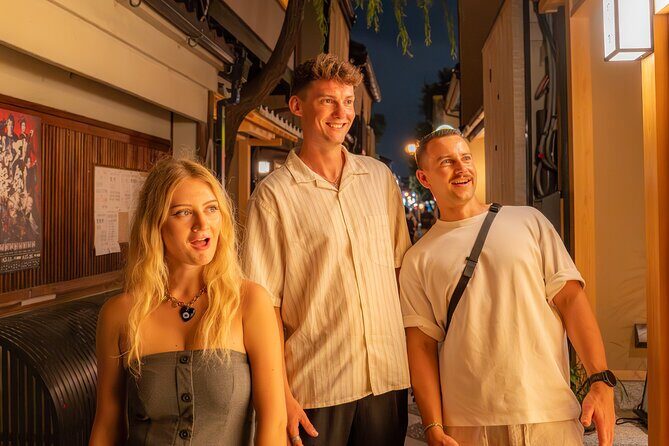
- 15 local dishes plus 2 drinks, all handled as part of the tour pacing
- Guide ordering and translation, built for language-barrier-free eating
- Three food stops across Kawaramachidori, Gion, and Gion Shirakawa
- Izakaya-style yakitori to tonkatsu to sushi and tempura, so you’re not eating the same thing
- Cultural storytelling mid-walk, including Shinto lantern details near Yasaka shrine (on some parts of the route)
- Small group max 15 for a more relaxed, friend-like vibe
A fast shortcut through Kyoto’s Gion food scene
Gion is gorgeous, but it can also be a little tricky when you’re hungry and menus are all Japanese. This tour is built for that moment. You’re not just walking around and hoping a place is good—you’re guided seat-to-seat, bite-to-bite, with a plan that keeps your stomach ahead of your schedule.
What makes it feel “local” is the mix: an izakaya-style start, a proper tonkatsu stop, then an ending built around two big-name Japanese foods—sushi and tempura. That structure matters because it gives you variety without the mental load of researching five separate restaurants.
A few more Kyoto tours and experiences worth a look

Meeting point and 6:30pm start at Doutor Coffee
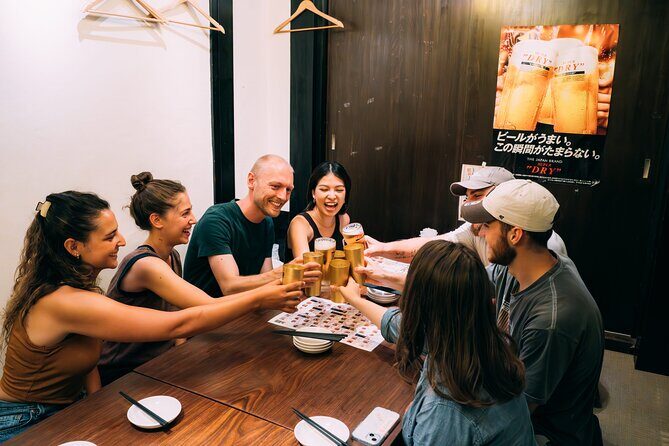
The tour meets at Doutor Coffee Japan in Nakagyo Ward, Kyoto, at:
391 Komeyachō, Kawaramachi New Tokyo Building 1F.
Start time is 6:30 pm, and it ends back at the meeting point.
Two practical tips from how these tours usually behave in real life:
1) Arrive a little early so you can match the correct entrance/building.
2) Keep your phone ready for messages, since some guides have used WhatsApp to update groups ahead of time.
Also note the tour uses a mobile ticket, which helps you avoid paper hassles in Japan.
Stop 1 on Kawaramachidori: yakitori and izakaya-style bites
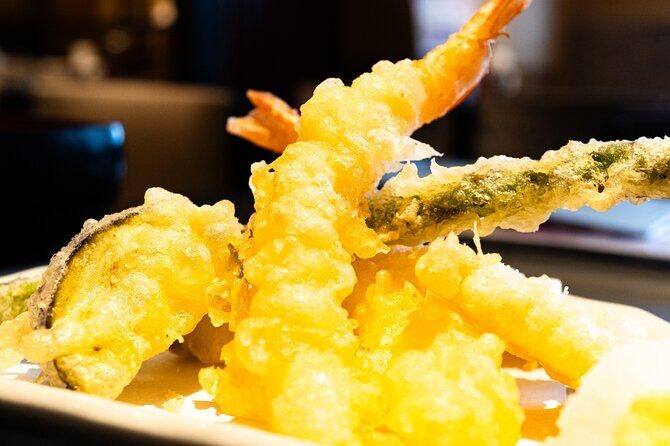
Your first stop is around Kawaramachidori, and the menu focus is classic yakitori (grilled chicken skewers) plus other izakaya-style favorites. This is usually the part of the night where you get oriented fast—what to order, how it’s served, and how the evening’s going to flow.
This stop runs about an hour, which is a good length for a tasting-style start. You’ll have time to try multiple pieces without the pressure of racing to the next restaurant. The only caution is taste preference: one critical review complained that the early portion leaned so chicken-forward that it felt repetitive. If you’re hoping for lots of seafood or non-chicken items from the very beginning, go in with flexible expectations.
The walking break: Shinto lantern stories near Yasaka shrine
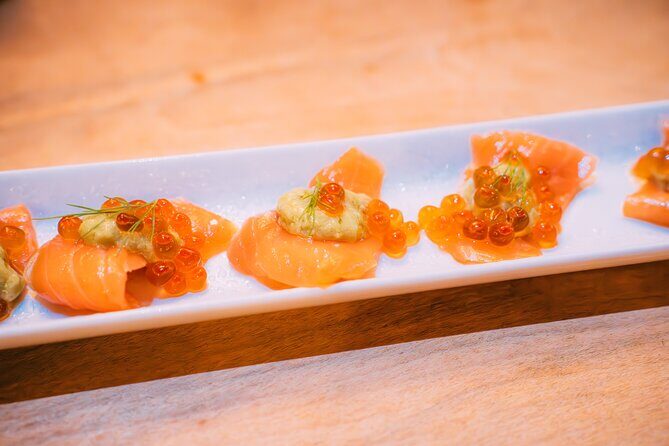
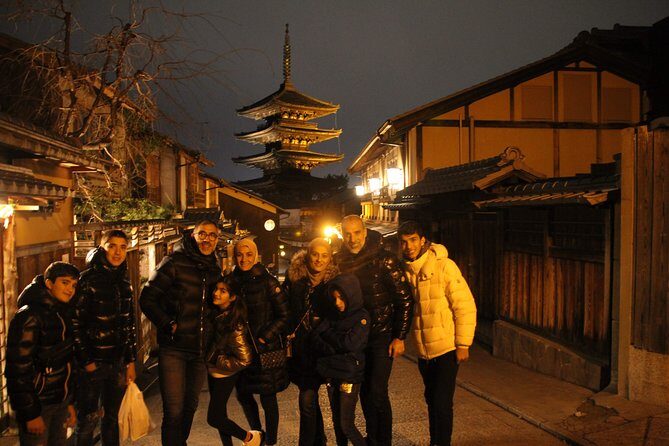
Between bites, you’ll be walking through the area. One of the most memorable parts is the guide’s storytelling around Shinto and the meanings of what you see—especially lantern writing—near Yasaka shrine.
This matters for two reasons. First, it turns a quick street walk into something you can pay attention to with your eyes, not just your feet. Second, it gives context for why people take their time in these neighborhoods, especially at night when Kyoto feels slow enough to notice details.
Stop 2 in Gion: tonkatsu and the comfort-food effect
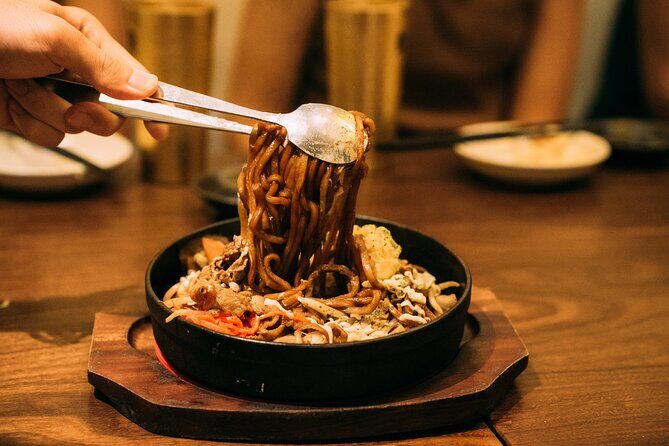
Next you head into Gion, where the focus shifts to tonkatsu—a crispy, savory deep-fried pork cutlet. This is the kind of dish that changes the texture of your night: you’ve got smoke and skewers first, then something hearty and crunchy that feels like a full meal.
This stop is also about an hour. That timing is smart because tonkatsu benefits from eating while it’s at its best. With a guide, you’re also not stuck trying to figure out which cut style or sauce variation is the right one for your palate.
What I like about having tonkatsu in the middle is that it balances the bite-size energy of yakitori. By the time you reach the last stop, you’re not running on empty or only on snack food.

Stop 3 in Gion Shirakawa: sushi and tempura to finish strong
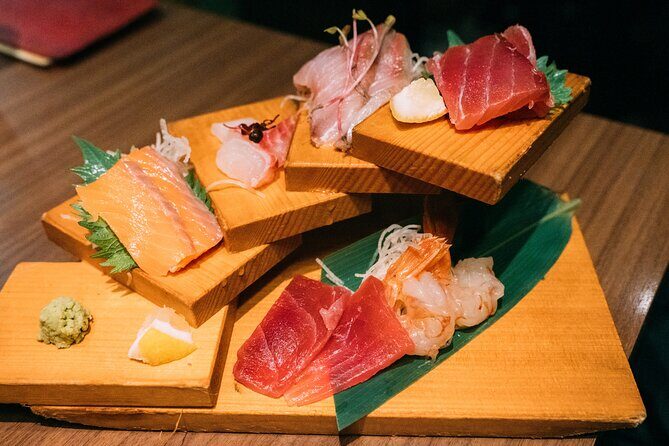
Your final stop is in the Gion Shirakawa area, where the tastings focus on sushi and tempura. This is the payoff section. Two iconic Japanese categories in one sitting means you can compare flavors and textures without hunting for two different restaurants.
This stop runs about an hour too, which keeps the evening from dragging. It’s also a practical way to manage appetite: you’re ending with foods that naturally pair well with the kind of light guidance a group tour provides, like what to dip, how to eat, and what’s different from one piece to the next.
You’ll also include 2 drinks total across the tour, and at least one guide experience mentioned sake alongside the sushi and tempura. Your exact drink may vary, but the key point is that you’re not just tasting food—you’re getting beverages built into the flow.
Why the guide matters more than the menu
The headline feature is easy: a local guide handles ordering and translation. In practice, that’s huge. Kyoto menus can be dense, and even if you can read a few words, you still might not know the right pairing or what a dish actually tastes like.
The best part is how guides show up in the experience. Names you might get include Ryu, Misaki, Jay, Leo, Yu, and Liu—and the common thread in their style is clear communication and real momentum. Some guides are especially strong at navigating crowded streets and making sure everyone stays included, and others have been described as flexible when the group needs time to settle into the next stop.
One extra touch that has shown up is proactive communication. A guide like Misaki was noted for updating early via WhatsApp, which can save you stress if you’re trying to find the first spot right at start time.
Small-group pacing: 15 people max over 3 hours
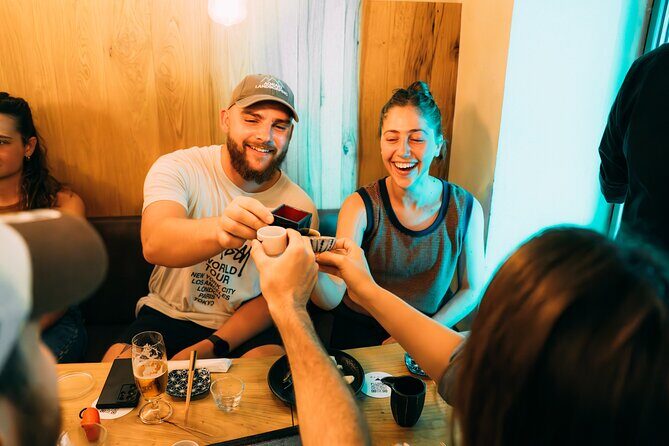
This tour caps at 15 travelers, which is the right size for a walking food experience. It’s big enough that you’ll meet new people, but small enough that you’re not just herded through like a stamp.
The whole thing takes about 3 hours, split across three stops. In that window, you’re tasting 15 dishes, plus drinks. That’s a lot of food, so plan on feeling like you ate a real dinner.
If you don’t love crowds, you’ll still be out in the most popular parts of Kyoto at night. But the structure reduces the worst kind of crowd pain: you’re not wandering, and you’re not trying to guess which line is the right one.
15 dishes for $94: where the value really comes from
At $94 per person, you’re paying for more than food. You’re paying for coordination, access, and translation—plus a planned route that hits multiple styles in a short evening.
If you try to do this on your own, costs add up fast: a few drinks here, a set of skewers there, then a tonkatsu meal, then sushi and tempura somewhere else. Add the time spent searching and the language effort, and the total can creep higher than you expected.
Here’s the balanced truth: some people will love the “everyday local foods” approach, and others will want more premium variety. One strongly negative review felt the early dishes were too chicken-skewers heavy, even though the tour is advertised as tasting across 15 dishes. That doesn’t mean you’ll dislike it, but it does mean you should be okay with Kyoto’s comfort-food rhythm—especially in an izakaya-heavy start.
Who should book this Gion food tour
This is a great fit if you:
- Want an organized Kyoto night out without doing restaurant research
- Like the idea of tasting a wide range of dishes rather than one long meal
- Appreciate a guide explaining what you’re eating and what you’re seeing nearby
- Travel with limited Japanese and don’t want to wrestle menus all evening
It may be less ideal if you:
- Are extremely picky about what proteins you want early in the night
- Dislike the possibility of a crowded walking route through central Kyoto
- Expect a totally flawless, never-changing sequence in every situation (small tours can face small hiccups)
Potential hiccups to plan for (and how to avoid them)
A couple of lower ratings pointed to real-world problems like meeting-time or meeting-point confusion and, in one case, missing the first stop. None of that has to ruin your trip, but it’s smart to show up prepared.
Do these simple things:
- Take a screenshot of the meeting address and compare it against what you see on maps.
- Be ready at start time for the group to move.
- If you get messages from the operator or guide, respond quickly and follow them.
With good timing and a bit of flexibility, this tour tends to deliver what it promises: an easy, guided path through Kyoto’s food culture in Gion.
Should you book this Kyoto Gion Local Food Tour?
I’d book this if you want a smooth, guided food night where you can eat 15 dishes without menu stress. The combo of yakitori-style izakaya bites, Gion tonkatsu, and a finish with sushi and tempura is a solid way to sample Kyoto flavors in one evening.
The decision comes down to your expectations about variety. If you’re okay with an izakaya-style start that may include plenty of chicken skewers, you’ll likely have a fun, satisfying night. If you want a strict balance of seafood and non-chicken dishes from the very beginning, you may want to compare with a different tour option.
FAQ
How long is the Kyoto Gion Local Food Tour?
It runs for about 3 hours.
How many dishes and drinks are included?
You’ll try 15 local dishes and get 2 drinks.
Where does the tour take place?
You’ll visit areas including Kawaramachidori, Gion, and Gion Shirakawa in Kyoto.
What foods can I expect to eat?
The tour includes classic items like yakitori (grilled chicken skewers), tonkatsu, and a final stop featuring sushi and tempura.
Is there a local guide on the tour?
Yes. A local guide is included and helps with ordering and translation.
What is the group size?
The tour has a maximum of 15 travelers.
Where is the meeting point and what time does it start?
It starts at 6:30 pm at Doutor Coffee Japan, 391 Komeyachō, Kawaramachi New Tokyo Building 1F, Kyoto. It ends back at the meeting point.
Is there a mobile ticket?
Yes, the tour includes a mobile ticket feature.
What is the price?
The price is $94.00 per person.
Is free cancellation available?
Yes. You can cancel up to 24 hours in advance for a full refund.