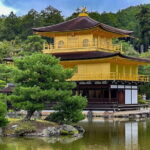
Kyoto’s lanes are easy to get wrong.
This tour is built for an evening-style flow through the parts of Kyoto that feel like a time machine: Gion (with the Shirakawa Canal) and the famous Fushimi Inari torii gates, plus major sights later on. You’ll walk the streets that cars can’t reach and rely on a licensed local English guide to connect the dots—especially around Gion’s geisha culture. One guest even singled out their guide Mari san for making the history click fast and clearly.
I love two things most: you get real context, not just directions, and the group stays small enough to actually hear your guide. A lot of the fun is learning the difference between Maiko and Geiko and why Gion looks the way it does—then spotting details as you go.
One thing to consider: this is a walking-heavy tour, and a couple of the big-ticket temple stops have admission fees not covered by the tour.
In This Review
- Key things to know before you go
- Why this route works: Gion + Fushimi Inari without the guesswork
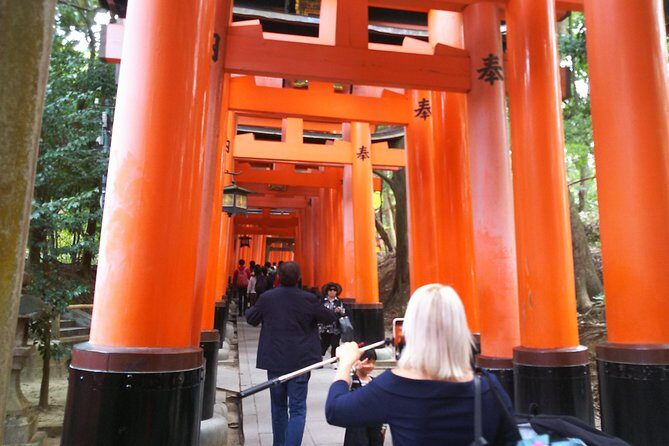
- Entering Fushimi Inari: torii gates and trail logic
- Gion, Shirakawa, and the edges of Pontocho/Miyagawacho
- Shirakawa Canal: the view you remember
- Yasaka Shrine and Tatsumi Daimyojin: quick stops with real meaning
- Kiyomizu-dera: big iconic temple time (and entrance planning)
- Kennin-ji Temple: a calmer finish near Hanamikoji and Shijo
- Your licensed guide: why this tour can feel worth it
- Price and value: what you’re really paying for
- Walking pace and logistics you should plan for
- Who should book this tour (and who might not)
- Should you book it?
- FAQ
- FAQ
- How long is the tour?
- How large is the group?
- What are the main places you visit?
- Is admission included for all temples and shrines?
- Where do we meet, and where does the tour end?
- Is this tour mostly walking?
- Can I cancel for a full refund?
Key things to know before you go

- Licensed local guide, small group (max 10): easier listening and a calmer pace on crowded streets.
- A tight evening route: you cover Gion plus Pontocho/Miyagawacho areas in one outing, instead of piecing it together yourself.
- On-foot navigation through back streets: your guide helps you take the pedestrian-friendly paths that feel more Kyoto.
- Geisha history explained clearly: you’ll get practical cultural background, including Maiko vs Geiko.
- Most big sights are quick stops: great for first-timers, but not the choice if you want to linger for hours at each place.
- Free admission where noted, paid admissions at two temples: plan for those entrance tickets (not included for Kiyomizu-dera and Kennin-ji).
Why this route works: Gion + Fushimi Inari without the guesswork
Kyoto can be a maze on your first trip. Streets split, lanes twist, and the best views are often around the corner—behind a shrine gate, next to a canal, or down a side alley you’d never notice alone. This tour solves that problem by putting a licensed guide in front of you and a route on paper (or a phone ticket) so you can relax and look.
What I like about this itinerary is that it mixes two kinds of Kyoto magic. You start with Fushimi Inari’s famous torii gates—one of those places that’s hard to understand until you’re inside the gate network. Then you switch gears to the human-scale Kyoto of Gion, where the details matter: the canal, the ochaya area, and the small shrines that shape daily life and tradition.
And because it’s a walking experience, you’re not just checking boxes from a distance. You get the feeling of moving through neighborhoods, which is where Kyoto usually rewards you most.
A few more Kyoto tours and experiences worth a look

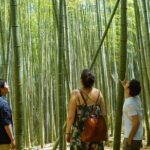

Entering Fushimi Inari: torii gates and trail logic

Fushimi Inari-taisha is the main event for a reason. It’s a Shinto shrine known for its thousands of vermilion torii gates, and the gates don’t just sit there like decorations—you’ll understand how the trail system works once you start following the route. The tour allows about 1 hour, which is usually enough to see why this place is so famous without exhausting yourself.
Here’s the practical tip: when you’re standing amid thousands of torii, it’s easy to feel overwhelmed. Your guide helps you make sense of where to go, what you’re looking at, and why the shrine layout matters. Admission at Fushimi Inari is free, so you can spend your money on other priorities later in the day.
It’s also a great warm-up for what comes next. After Fushimi Inari, Gion can feel less like a random tourist district and more like part of Kyoto’s lived culture—religion, tradition, and neighborhood life all woven together.
Gion, Shirakawa, and the edges of Pontocho/Miyagawacho

Gion is the name people know, but what you really want is the full feeling. The tour’s Gion section is designed to show you not only the main zone around Shijo Avenue and the Kamo River area, but also Shirakawa, the canal area lined with willow trees and high-class restaurants/ochaya.
If you’ve ever watched Kyoto videos where everything looks beautifully calm, remember this: Gion is also busy. The advantage of a guide is that you don’t waste time stuck at dead ends or walking the same crowded stretch over and over. You follow a route that keeps you moving while still letting you enjoy the atmosphere.
This is where the cultural explanation pays off. One of the tour’s strongest points is geisha history, including the practical differences between Maiko and Geiko. The value isn’t just trivia. It changes how you read what you see—how people dress, how roles work historically, and why Gion has such specific traditions tied to seasons and place.
One guest even mentioned spotting Maiko and Geiko unexpectedly during their walk. That’s not something you can schedule, but the tour route and timing tend to put you in the right neighborhoods to notice things.
Shirakawa Canal: the view you remember
Shirakawa’s appeal is straightforward: canal + willows + old-style Kyoto buildings. Even when you can’t predict what you’ll see, the canal walk is a reliable payoff. This is also the area where you’ll understand why certain streets feel narrow and why foot traffic is the whole story. The tour aims to get you into those pedestrian-only zones, where cars can’t spoil the scene.
Yasaka Shrine and Tatsumi Daimyojin: quick stops with real meaning

Not every Kyoto stop needs to be long to be useful. Two of the short shrine moments here are Yasaka Shrine (about 10 minutes) and Tatsumi Daimyojin Shrine (also about 10 minutes).
Yasaka Shrine is one of Kyoto’s best-known shrines, founded over 1,350 years ago. It sits between the Gion area and Higashiyama, so it’s naturally tied into the story of how the Gion neighborhood developed around sacred space. In a short time, you’ll get enough context to see it as more than a photo background.
Then there’s Tatsumi Daimyojin Shrine, located near Shira-kawa (the ochaya/geisha activity area). The tour includes time near its torii—enough to feel the local texture and understand why these smaller shrines are part of the daily geography of places like Gion.
These short stops help you avoid a common first-timer mistake: treating Kyoto like one long checklist. Instead, you get “anchor points” of tradition in between neighborhood walks.
A few more Kyoto tours and experiences worth a look






Kiyomizu-dera: big iconic temple time (and entrance planning)

Next comes Kiyomizu-dera, which the tour treats as a major stop at about 1 hour. It’s a temple founded over 1,250 years ago, and it sits halfway up Mt. Otowa in Kyoto’s Higashiyama mountain range.
If you’ve only seen Kiyomizu-dera from screenshots, plan for the fact that scale can hit you fast. A one-hour visit is good for getting the essentials, but it isn’t enough for someone who wants to spend the whole day exploring every path and viewpoint.
One important value note: Kiyomizu-dera admission is not included in this tour. You should budget for the entrance fee separately, and you’ll be happier if you plan to buy tickets quickly and keep moving with the group.
Still, this is a strong addition to a Gion-focused evening. It adds that classic Kyoto temple dimension right when your feet might start to feel it—meaning the payoff stays high.
Kennin-ji Temple: a calmer finish near Hanamikoji and Shijo

To close, you’ll reach Kennin-ji Temple, listed as very close to Hanamikoji and Shijo streets. The grounds are described as expansive and pleasant to walk, and the standout feature mentioned is the karesansui (dry landscape) gardens.
Kennin-ji isn’t positioned as a long, slow temple meditation. Based on the timing, think of it as a structured stop with a chance to see the gardens and absorb the temple’s quieter side after the busier neighborhood stretches.
Also, Kennin-ji admission is not included. If you’re trying to predict your total cost, this is the second temple fee you should expect (in addition to Kiyomizu-dera).
Your licensed guide: why this tour can feel worth it

A government-licensed local guide is not just a nice-to-have in Kyoto—it’s the difference between walking and understanding what you’re walking past. The tour is explicitly designed so you won’t get lost, and it also gives you the cultural framing that makes Gion make sense.
Here’s what I take from the way guests describe their experience:
- Guides do more than point. They explain.
- The difference between Maiko and Geiko is taught in a way that helps you recognize what you might see.
- The group size is small enough that it’s not just a loud marching band.
The best part is that your guide’s explanations match the streets you’re on. That’s why learning sticks. You’re not stuck with a lecture while you stand still—you’re moving, looking, and getting meaning at the same time.
And when the tour goes well, you’ll feel like you’re taking pictures for a reason, not just for proof. One guest specifically enjoyed getting great photos while learning the neighborhood context.
Price and value: what you’re really paying for

At $154.37 per person for about 6 hours, this isn’t a cheap stroll—but it also isn’t just you buying a seat and hoping for luck.
You’re paying for:
- A licensed local English-speaking guide
- A route designed to cover multiple areas in a single outing (Fushimi Inari + Gion/ Shirakawa + big temples)
- Small group size (max 10)
- A mobile ticket (less hassle on your end)
On a day with big crowd magnets like Fushimi Inari and Gion, having someone who can manage flow—where to stand, how to read space, how to connect stories—can save time and reduce frustration. That has real value, especially if it’s your first Kyoto visit.
One small caution: the tour includes free admission for some stops, but does not include entrance tickets for Kiyomizu-dera and Kennin-ji. So the all-in day cost will be a bit higher than the base tour price.
A final value signal: this is popular enough that it’s commonly booked about 89 days in advance. If your travel dates are firm, book early and then plan your temple admission budget.
Walking pace and logistics you should plan for
This is a walking tour. Even if the guide manages transitions, you should expect time on your feet in Gion’s narrow lanes and around shrine/temple areas.
A couple logistics details you’ll want to know up front:
- You meet on foot at Tatsumi-jinja Shrine (Tatsumi Dai-myojin) in Higashiyama Ward, Kyoto (address is provided by the operator).
- The tour ends back at the meeting point.
- Pickup/drop-off is on foot, and the route is near public transportation.
That matters because you don’t want to waste your evening trying to figure out where to regroup. When you walk, you lose time faster than you think.
Also, your group is capped at 10 travelers, which helps with hearing the guide and not getting separated. Still, wear comfortable shoes. Kyoto stones and temple paths are not forgiving.
Who should book this tour (and who might not)
This tour is a great fit if:
- You’re seeing Kyoto for the first time and want a route that makes sense.
- You care about geisha culture and want history explained (not just sightseeing).
- You prefer a guided plan for crowded areas like Gion and Fushimi Inari.
- You like walking, and you’re okay with shorter temple visits instead of long explorations.
You might skip it if:
- You want a deep, unhurried temple day with lots of free time to wander.
- You hate walking and would rather use taxis or trains most of the time.
- You’re hoping for a geisha performance experience. This tour is focused on sights and cultural context, not an included show.
Should you book it?
If your goal is to see the real Gion-and-shrines Kyoto combo in one evening-style outing, I’d book this. The biggest strength is the pairing of neighborhood context (Gion, Shirakawa, the geisha story) with landmark structure (Fushimi Inari’s torii and major temple stops). The licensed guide and small group size make the walk smoother and the sights more meaningful.
If you’re price-sensitive, just factor in the two temple admissions not included (Kiyomizu-dera and Kennin-ji). If you’re okay with that and you want a guided path through Kyoto’s most memorable areas, this is a solid value choice.
FAQ
FAQ
How long is the tour?
The tour is about 6 hours.
How large is the group?
The group size is capped at a maximum of 10 travelers.
What are the main places you visit?
You’ll cover Fushimi Inari-taisha, Gion (including the Shirakawa area), Yasaka Shrine, Tatsumi Daimyojin Shrine, Kiyomizu-dera, and Kennin-ji.
Is admission included for all temples and shrines?
Not all of them. Fushimi Inari-taisha, Yasaka Shrine, and Tatsumi Daimyojin Shrine are listed as free admissions. Kiyomizu-dera and Kennin-ji admission tickets are not included.
Where do we meet, and where does the tour end?
You meet at Tatsumi-jinja Shrine (Tatsumi Dai-myojin) in Kyoto, and the tour ends back at the same meeting point.
Is this tour mostly walking?
Yes. It’s described as a walking tour, and the pickup/drop-off is also on foot.
Can I cancel for a full refund?
Yes. There is free cancellation if you cancel at least 24 hours before the experience start time.