Gion feels personal fast. In two hours, this tour strings together Gion street history and a maiko apprentice performance into one easy evening plan, and the small group size keeps it conversational instead of crowded. Guides like Ai Iwata (and others, depending on the day) can point out what you’d otherwise miss, so your photos and your questions actually make sense.
Two things I really like: the hour-long walk through Gion with an English guide who knows how to explain the area without turning it into a lecture, and the hands-on moment where you share tea, watch the dance, then play a traditional fan game with the maiko apprentice. It’s a rare mix of culture and participation, and it doesn’t feel like a scripted performance with no interaction.
One consideration: this is a tight 2-hour format, so it’s not the best choice if you want to wander Gion at your own pace for hours. Once the tour ends at Hangesho, you’ll be ready to head out, not still be in “let’s keep walking” mode.
In This Review
- Key points before you go
- Gion in Two Hours: Why This Tour Works
- Finding the Group: Izumo-no-Okuni Statue and a Simple Setup
- Hour One in Gion: History You Can Actually Use
- The Maiko Apprentice Show: What You’ll See and Why It Matters
- Tea, Q&A, and the Traditional Fan Game With Your Maiko
- Small Group Up to 6: The Personal Part of the Value
- Price and Value: Is $108 Worth Two Hours?
- Practical Etiquette Tips (So You Don’t Feel Awkward)
- Who This Tour Fits Best
- Should You Book This Gion Maiko Tour?
- FAQ
- What is the duration of the Gion walking tour and show?
- Where does the tour start?
- Where does the tour finish?
- How big is the tour group?
- Is the tour in English?
- What’s included in the price?
- What happens during the first hour?
- What happens during the second hour?
- Is free cancellation available?
- Is food included beyond tea and snacks?
Key points before you go
- Small group (up to 6) means more time for questions during the show
- One hour walking in Gion gives context for what you’re seeing right away
- Maiko apprentice dance plus Q&A turns watching into understanding
- Tea and Japanese snack included keeps the experience comfortable and paced
- Traditional fan game with the maiko adds a fun, memorable, participatory twist
- Meeting at Izumo-no-Okuni Statue (above Gion-Shijo Station) is straightforward to find
Gion in Two Hours: Why This Tour Works
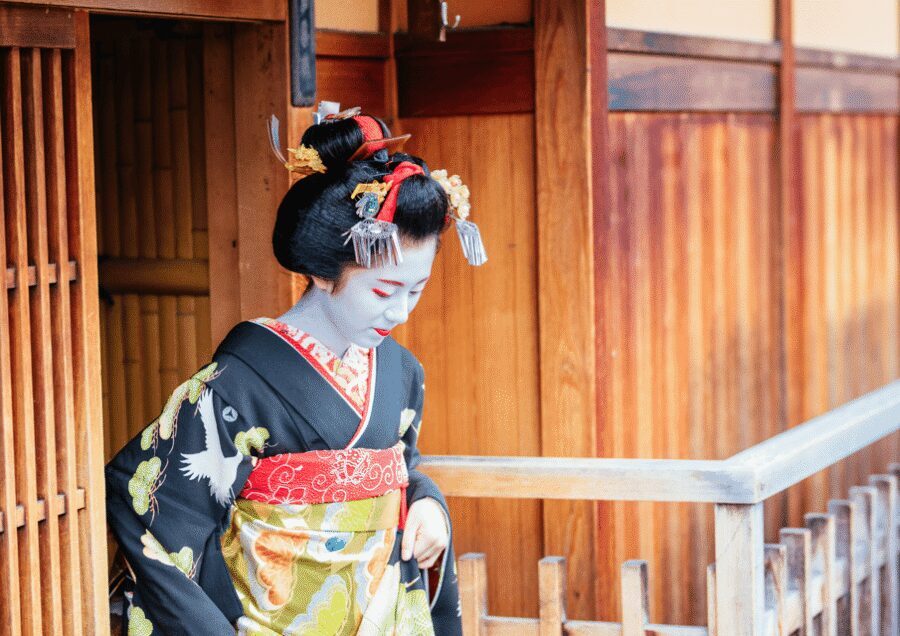
Kyoto’s Gion can feel like a movie set—beautiful, famous, and easy to get lost in. What I like about this tour is how it gives you a fast, guided starting point before you even see the performance, so the details don’t slide off your brain.
You’re also not paying for a big bus-style sightseeing loop. The plan is short, focused, and hands-on: a guided walk, a close maiko apprentice dance, time for questions, then a traditional fan game. In other words, you get both story and interaction, not just photos from the sidewalk.
And because the group is limited to 6, your guide can actually respond to your questions. In Gion, that matters. Even one extra minute of context can turn a “pretty street” into a place you can read.
A few more Kyoto tours and experiences worth a look


Finding the Group: Izumo-no-Okuni Statue and a Simple Setup
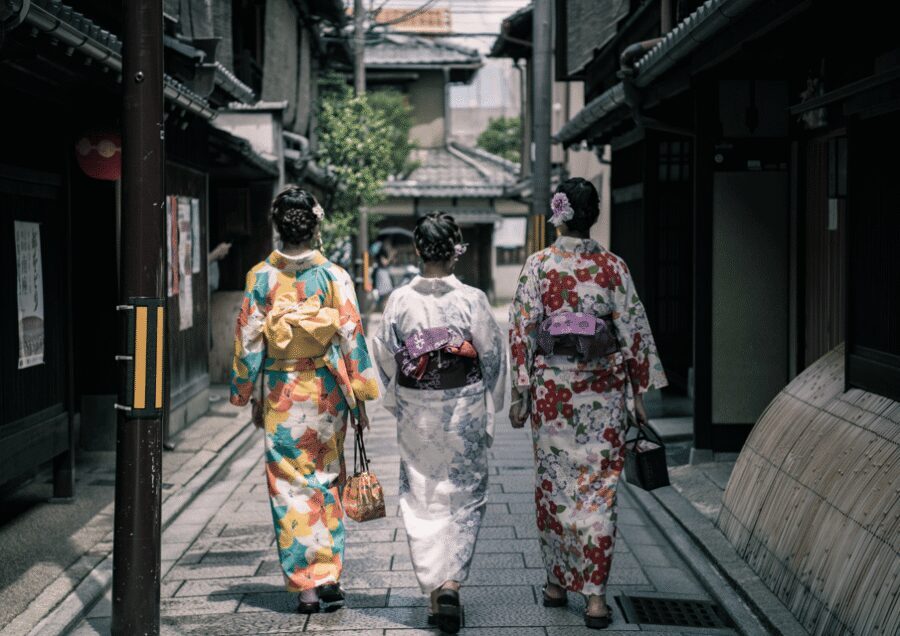
You meet at the Statue of Izumo-no-Okuni right above Gion Shijo Station. The guide holds a white board that says GuideMe Japan, so you’re not stuck guessing who’s “the right person” in a sea of commuters and tourists.
That meeting point is practical for two reasons. First, it’s near transit, so you can arrive without stressing about navigating Kyoto. Second, it positions you right where the vibe of Gion starts to take over—alleys, small streets, and those classic district details you’ll want to recognize later.
Wear comfortable shoes. Even though it’s only two hours, Gion walking adds up quickly because you’ll slow down to look, ask, and listen. If you’re planning to wear anything restrictive or fancy, this might be the day to choose comfort over fashion.
Hour One in Gion: History You Can Actually Use
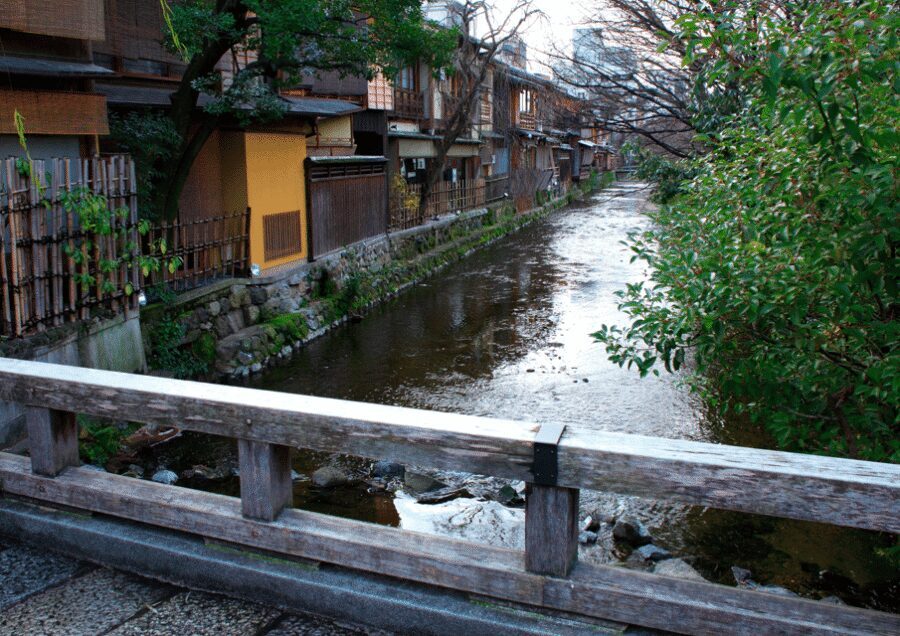
The first hour is a guided walk around the main area of Gion. This part isn’t just “look left, look right.” The goal is to understand what you’re seeing and why it matters, so your second hour (the performance) lands harder.
A good guide will also manage etiquette in real time—when to pause, how to behave in a geisha district, and how to take photos at the right moment. Several guides in past sessions (like Rin and Ai Iwata) are described as being attentive about etiquette, including advising when photos are okay. That’s not just polite; it helps you feel confident and not like you’re intruding.
You may also notice that the route can shift depending on the day and the guide’s approach. Some guides steer the group toward less crowded side streets so you can see details without the constant wall of people. If your priority is atmosphere, that style of routing is a win.
One more useful thing: this walk helps you ask better questions later. When you hear the background in the first hour, your Q&A in the second hour becomes about specific meaning, not just general curiosity.
The Maiko Apprentice Show: What You’ll See and Why It Matters
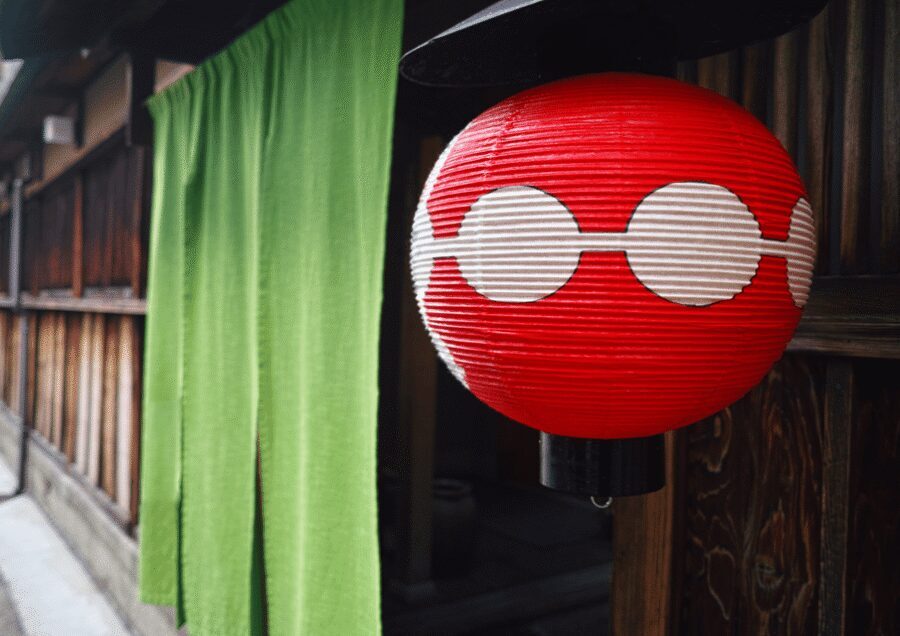
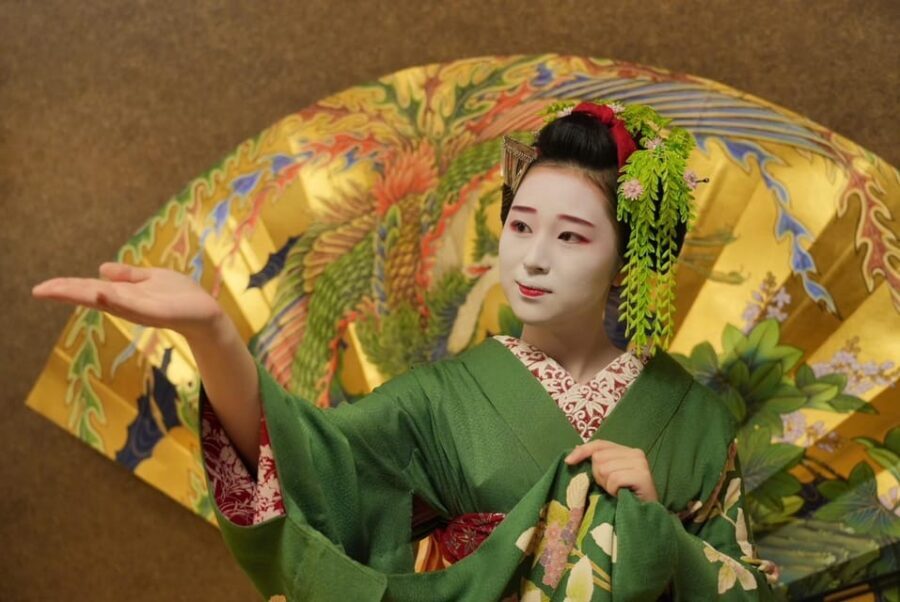
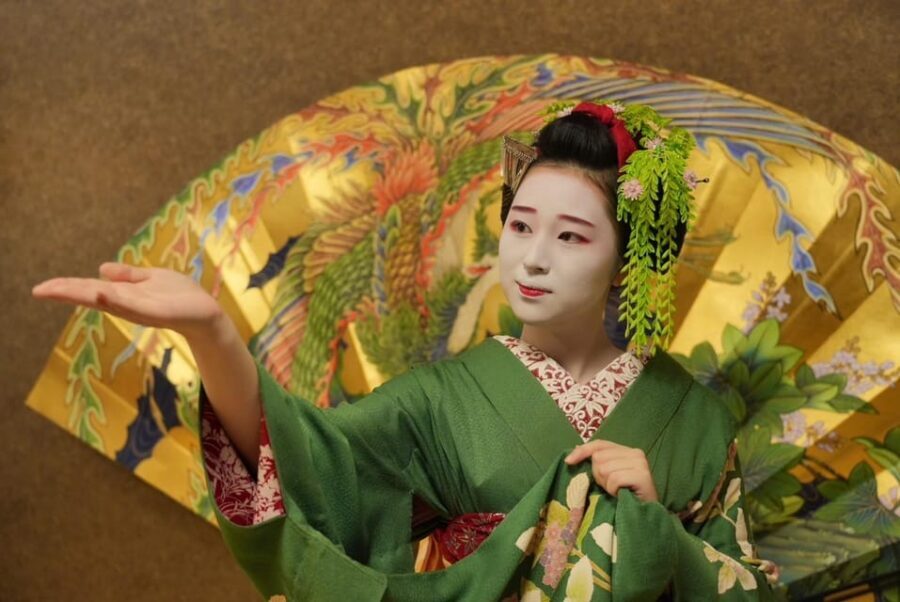
The second hour centers on a maiko (a geisha apprentice) show. You’ll watch her dance, then you’ll have time to ask questions about her current life. The structure is simple: performance first, then interaction.
In practical terms, this format is powerful because it answers the biggest problem people have with cultural performances in general. Watching without context can feel distant. Here, you’re given context right before, then you get direct human answers right after.
Also, this is close. The group size stays small, which means you’re not shouting over noise or craning your neck. That closeness matters with dance, where hand movement, posture, and pacing carry meaning.
And yes, it’s normal to feel a little speechless when you’re sitting there and the dance starts. But you won’t be left with silence. The tour is designed with the Q&A portion built in, and your guide will help you communicate in English.
If you’re curious about the art of geisha culture in Kyoto, this is the moment where your curiosity becomes understanding. The dancing shows the discipline; the questions show the human side.
Tea, Q&A, and the Traditional Fan Game With Your Maiko
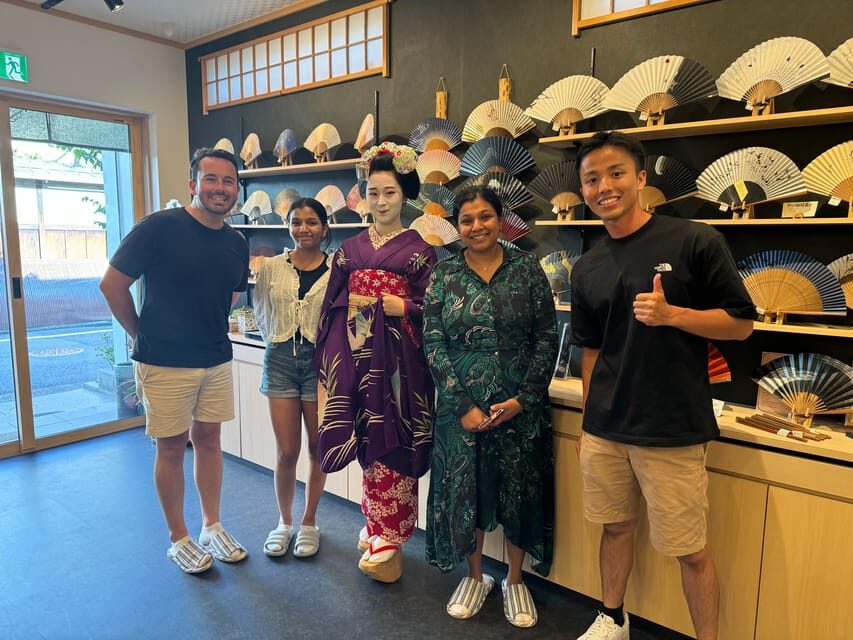
After the walk, tea and a Japanese snack are included, so you’re not just rushing from sightseeing to a show. This matters more than you’d think. A calm start helps you actually watch the performance instead of thinking about when you’ll eat again.
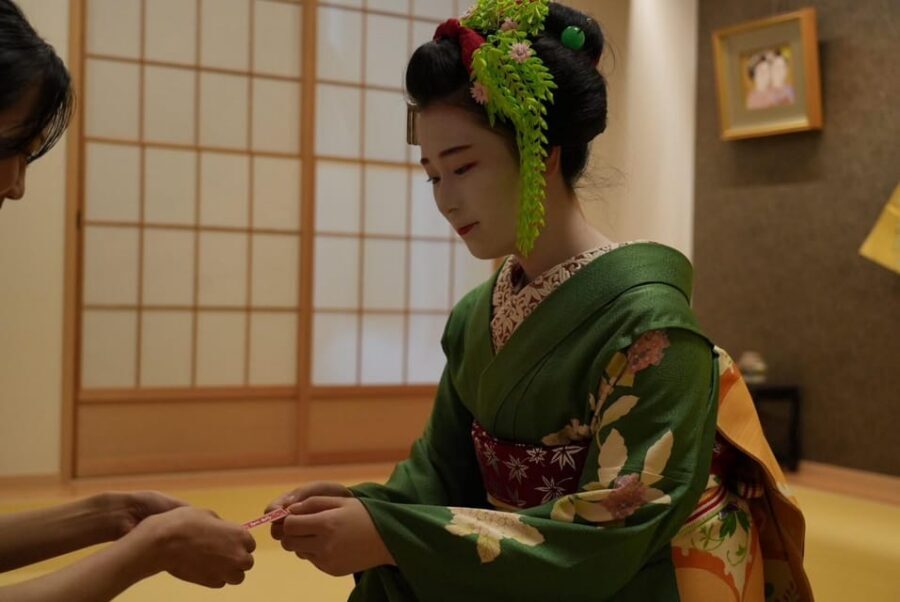
Then comes the fan game. The idea is delightfully straightforward: after the dance and Q&A, you get to play a traditional Japanese fan game with the maiko apprentice. This isn’t a passive souvenir experience. It’s hands-on, a bit competitive, and—if you’re anything like me—instantly turns into a story you’ll tell later.
There’s a cultural reason this is such a smart pairing. Games and crafts like this are part of the everyday discipline around performance and presentation. When you play, you learn the rhythm in your body, not just your head. Even if you’re not great at it, the fun comes from doing it with her and seeing how she explains it through your guide.
Photos are another practical piece. Past participants highlight that guides advise on etiquette and when it’s okay to take pictures. So don’t assume you’ll just start photographing at any moment. Watch for your guide’s cues, and you’ll feel more respectful—and more relaxed.
Other walking tours we've reviewed in Kyoto






Small Group Up to 6: The Personal Part of the Value
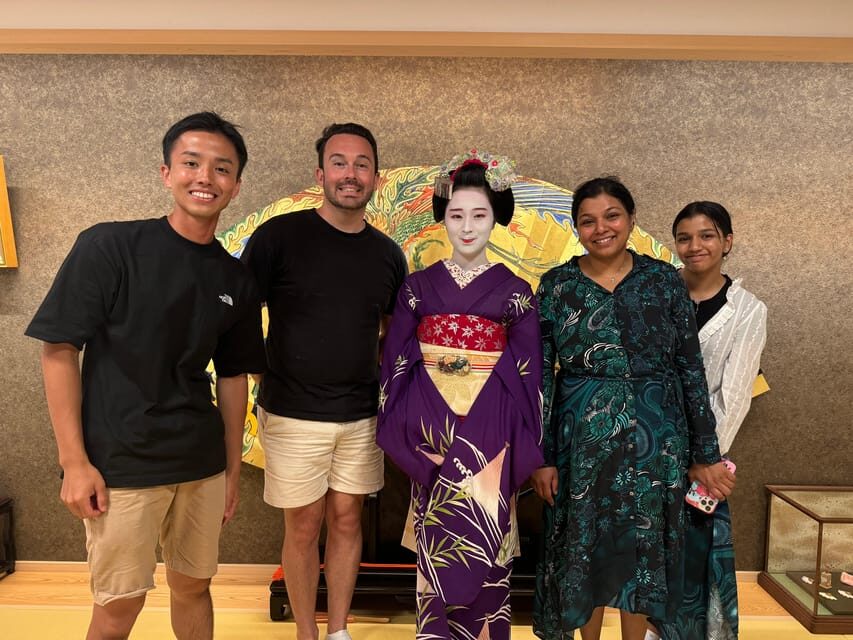
A tour capped at 6 changes how the experience feels from the start. With a smaller group, you get:
- Better hearing during the walk and show
- More natural pacing (less waiting)
- Real chance to ask questions during the maiko portion
This tour is designed so the group can have a more personalized interaction during the show and Q&A. That also means your guide can adapt on the spot—steering conversation toward what you’re most curious about rather than sticking rigidly to a script.
It’s also less stressful. When you’re not packed into a large group, you can focus on what the guide says, then look for it immediately in the street. That’s the kind of loop that makes travel stick.
Price and Value: Is $108 Worth Two Hours?
At $108 per person for a 2-hour experience, you’re paying for three things that are hard to replicate on your own: a guided walk with English interpretation, a structured maiko apprentice show with time for questions, and the traditional fan game plus tea and a snack.
If you tried to do this independently, you’d likely spend time figuring out where to go, then still face the problem of access and etiquette. A lot of people can visit Gion and take photos. Fewer people get a guided, respectful, interactive cultural moment where they can ask questions and then play a game with the performer.
Is it expensive? On paper, yes, especially compared to a free walking tour style option. But the value is in the specific access you get during the second hour. You’re not just watching; you’re participating.
Also, the included tea and Japanese snack help justify the pacing. You’re not paying extra mid-tour just to stay comfortable, and the break makes the show feel like part of one coherent experience.
Practical Etiquette Tips (So You Don’t Feel Awkward)
The tour is set up to keep you respectful, but you still play a role. Here’s what to remember based on how guides handle the experience and what participants note about photo etiquette.
First, follow your guide’s directions on when it’s okay to take photos. In a setting like Gion, timing matters, and the guide’s guidance is your safest route to doing it right.
Second, keep your questions clear and simple. If you learned something during the first hour, use it. Ask about the maiko’s life and what the dance training means, rather than asking broad questions that could take forever.
Third, be ready for a quiet, focused moment during the show. The fan game comes right after, but the dance itself is a time to watch and appreciate.
This kind of cultural interaction feels best when you treat it like meeting someone’s craft—not like consuming content.
Who This Tour Fits Best
This is a great match if you:
- Want a focused, two-hour experience in Kyoto without long planning
- Like asking questions and learning in small-group settings
- Are specifically curious about maiko/geisha arts and Gion’s cultural context
- Prefer hands-on cultural fun, like the traditional fan game
It’s also a strong choice for first-time Kyoto visitors who feel overwhelmed by where to start. The meeting point is easy to find, the time window is short, and the structure keeps you from wandering aimlessly.
On the other hand, if you want to spend the entire evening slowly roaming Gion on your own, this may feel like it ends “too soon.” You’re getting a complete experience, not a start-and-continue at your leisure situation.
Should You Book This Gion Maiko Tour?
If your goal is an up-close, structured introduction to Gion and geisha culture—plus a maiko performance, Q&A, tea, and a traditional fan game—then yes, I’d book it. The small group size and the interaction pieces are the core reasons this feels memorable instead of generic.
If you’re mainly chasing photos, and you don’t care about questions or the fan game, you might find cheaper options more aligned with your style. But if you want to understand what you’re seeing and participate in the moment, this $108 price starts to look like a fair trade for access and time.
If you’re the kind of person who likes learning as you go, this is one of those Kyoto experiences that turns attention into a story you’ll keep.
FAQ
What is the duration of the Gion walking tour and show?
The tour lasts 2 hours total.
Where does the tour start?
Meet at the Statue of Izumo-no-Okuni right above Gion Shijo Station.
Where does the tour finish?
The tour finishes at Hangesho.
How big is the tour group?
The group is limited to a small group of up to 6 participants.
Is the tour in English?
Yes, the tour is guided in English.
What’s included in the price?
Tea and a Japanese snack are included, along with a 1-hour walking tour of Gion, a 1-hour maiko apprentice show, and a traditional Japanese fan game with the geisha apprentice.
What happens during the first hour?
You’ll walk around the main area of Gion with a guide, learning historical insight.
What happens during the second hour?
You’ll watch a maiko apprentice dance show and have time to ask questions about her current life.
Is free cancellation available?
Yes. You can cancel up to 24 hours in advance for a full refund.
Is food included beyond tea and snacks?
Additional expenses such as food are not included. The tea and Japanese snack are included.