Lanterns in Gion change everything. This short evening walk is built for people who want real atmosphere fast: illuminated backstreets, classic architecture, and the chance to hear how geiko and maiko culture fits into Kyoto today. I especially like the small-group feel and the Hanamikoji Street at night moments that make the whole district click.
One key consideration: this is a walking tour, and it isn’t suitable for people with mobility impairments or certain health conditions (heart problems, respiratory issues), so plan around that.
In This Review
- Key Highlights You’ll Care About
- Gion at Dusk: Why This 3-Hour Format Works
- Where You Start: Kyoto Kawaramachi Garden and Finding Your Guide
- Kyoto Minami-za to Hanamikoji Street: The Classic Main Drag, With Context
- Offbeat Temples, Scenic Stops, and “Oh, That’s Why” Moments
- Maruyama Park: A Pause Where the Neighborhood Breathes
- Yasaka Shrine at Night: The Spiritual Anchor of Gion
- Local Snack Break: A Small Bite, a Real Taste of the Evening
- Pontocho by Lamplight and the Finish at Sanjo Bridge
- Guides and Group Size: Small Group Power
- Price and Value: What $22 Buys You in Kyoto
- Who Should Book This Gion Sunset Walk
- Should You Book This Tour?
- FAQ
- Where is the meeting point?
- How long is the tour?
- Is it a small group tour?
- What languages are available?
- What’s included in the price?
- Is seeing geiko or maiko guaranteed?
- What should I bring?
- How early should I arrive?
- Is this tour suitable for everyone?
Key Highlights You’ll Care About
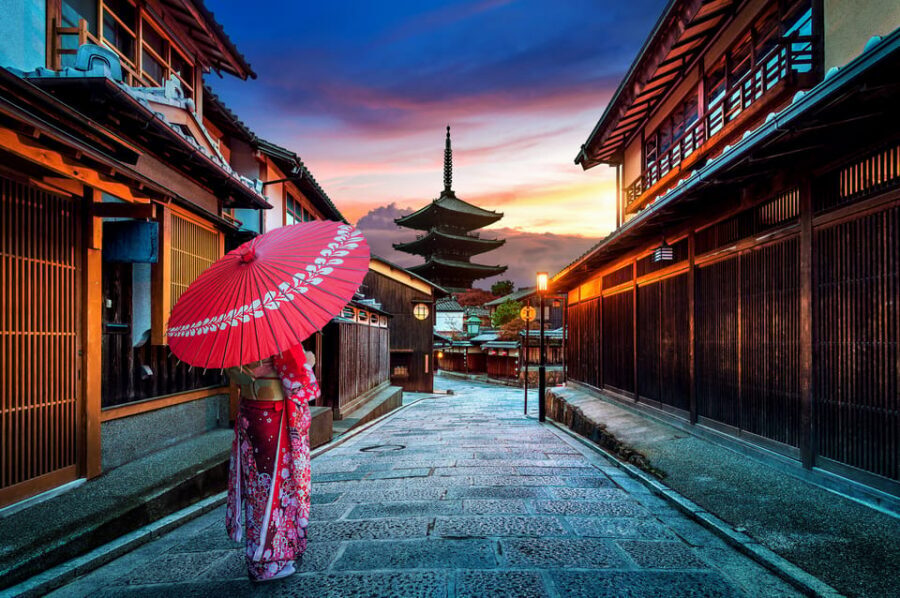
- A max-9-person group keeps the pace friendly and the questions actually get answered
- Hanamikoji Street and Yasaka Shrine after dark feel like a different Kyoto than daytime
- Offbeat temples and shrines on the route give you more than the usual photo stops
- Geiko/maiko sightings are possible but not guaranteed, so you’re chasing atmosphere, not a promise
- A local snack stop adds a tasty break without turning the tour into a meal marathon
Gion at Dusk: Why This 3-Hour Format Works
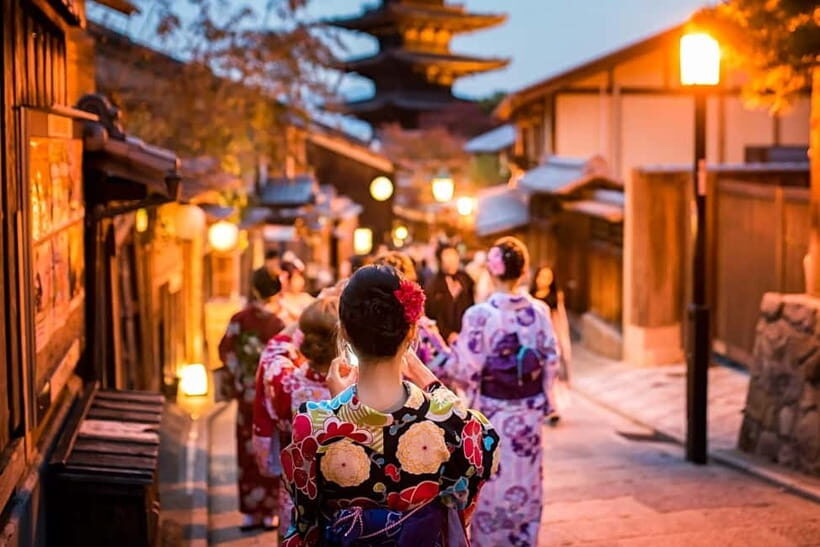
Kyoto has a habit of making you slow down. Gion just speeds that up. As the sun drops, the streets soften: lanterns come on, alleyways look more intimate, and the mood shifts from sightseeing to storytelling. That’s why this tour’s length matters. Three hours is long enough to connect the dots, but short enough that you’re not exhausted before you even reach the best light.
The route also makes smart use of time. You’re not only staring at famous landmarks—you’re walking between them while a guide explains what you’re seeing: where the buildings come from, how the neighborhood’s traditions are maintained, and why certain streets became the stage for the geiko/maiko world. If you’ve only got one evening in Kyoto Minami or you want an early night to recharge, this kind of timing is perfect.
A few more Kyoto tours and experiences worth a look

Where You Start: Kyoto Kawaramachi Garden and Finding Your Guide
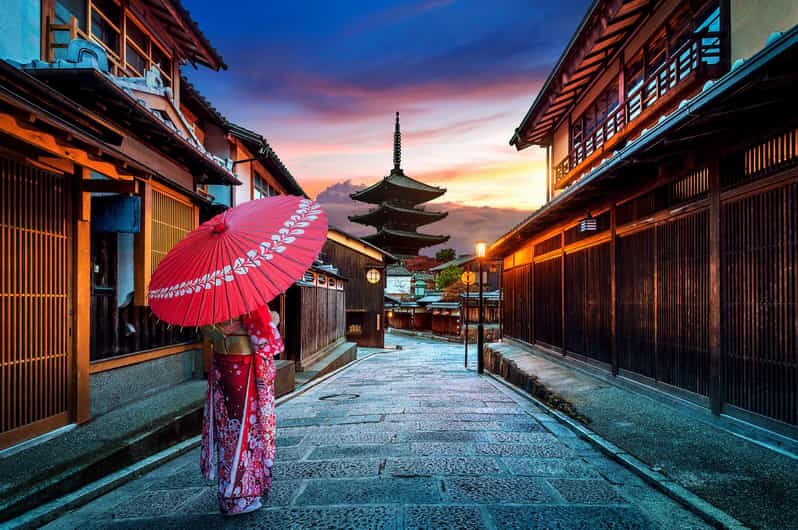
You meet at Kyoto Kawaramachi Garden, right at the corner in front of the big black world map. It’s easy to spot, which matters because you’ll be starting promptly. Your guide will be wearing a TripGuru shirt or holding a TripGuru sign.
Also note the practical rule: the guide waits up to 10 minutes before moving on to the next stop. That’s not unusual in Japan, but it can feel strict when you’re still figuring out trains, street crossings, and where you’ve accidentally wandered. Build in a little buffer so the tour stays smooth for everyone.
Language support is strong. English is offered, and you may also find Spanish or French guides depending on availability. In the experience, guides like Jasmine and Raphael have been singled out for clear communication and friendly energy—so you’re not stuck deciphering a lecture.
Kyoto Minami-za to Hanamikoji Street: The Classic Main Drag, With Context
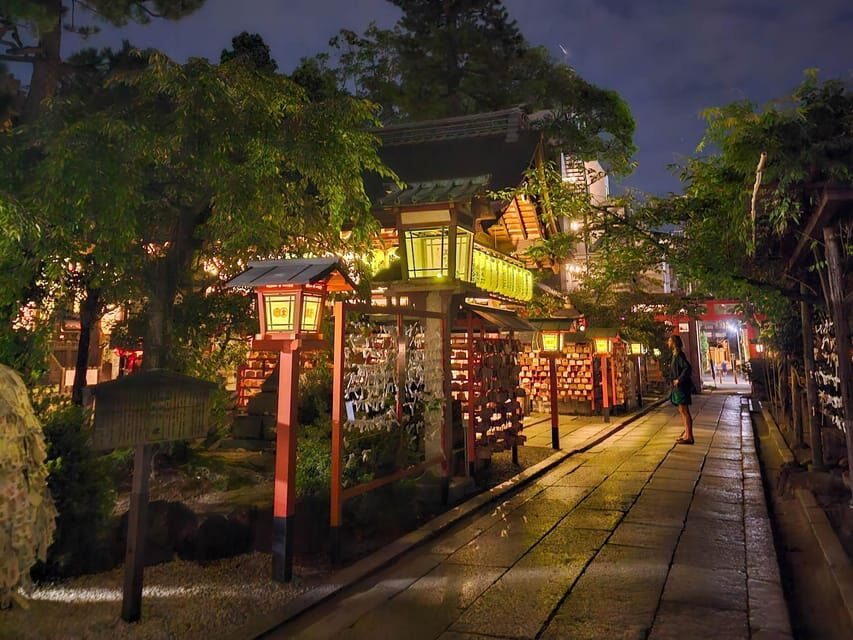
Right after starting, you pass Kyōto Minami-za. It’s a quick stop, but it’s a useful one because it points you toward how Kyoto’s arts culture sits right inside everyday life. Even when you’re moving fast, your guide can frame what you’re looking at instead of letting it blur into background noise.
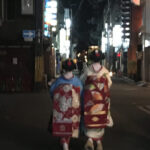
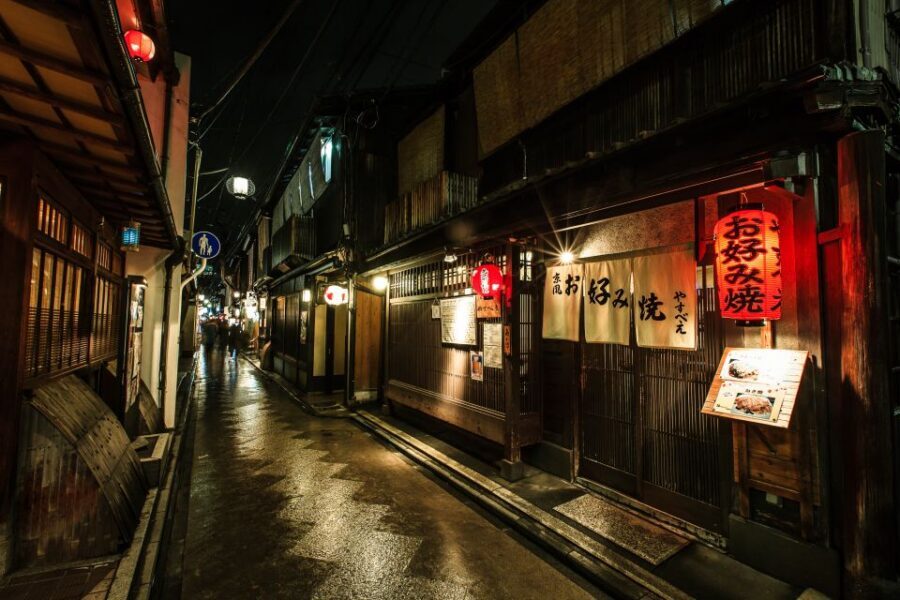
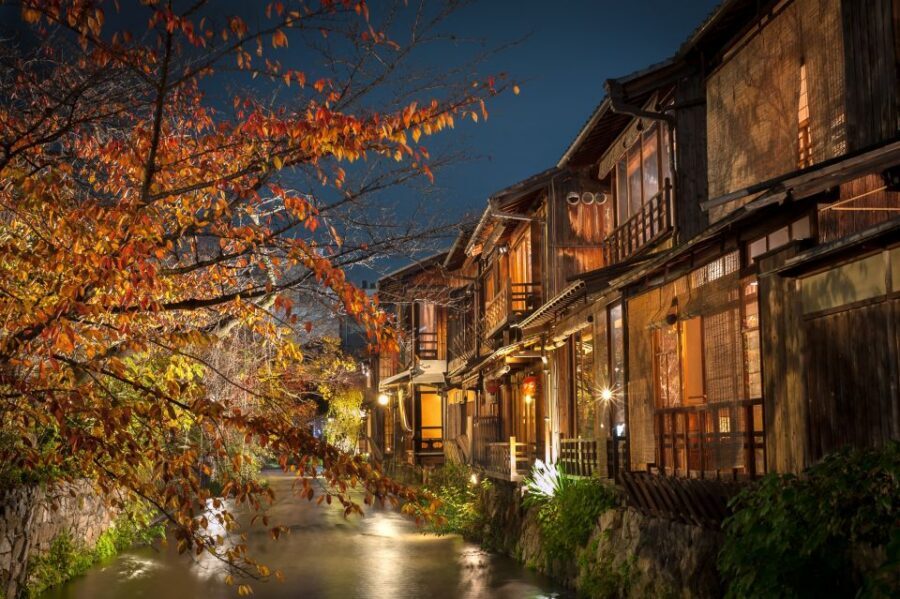
Then comes Hanamikoji Street—the centerpiece for a reason. This is one of the best-preserved historic streets in the area, and at night it feels extra cinematic. Lantern glow bounces off the street and storefronts, and the narrow layout makes you slow down without being told. It’s also the stretch where you’re most likely to catch a glimpse of traditional life in motion, including geiko or maiko on their way to appointments. Just remember: sightings are not guaranteed. Your win here is the atmosphere and the stories, not a sure thing.
A detail I like: some guides (for example, Jasmine and Alex/Alejandro) are praised for pointing out small cues you’d otherwise miss—like how a street’s shape, signage, and building fronts hint at the neighborhood’s rhythm. That’s the difference between walking through Gion and understanding what you’re passing.
Offbeat Temples, Scenic Stops, and “Oh, That’s Why” Moments
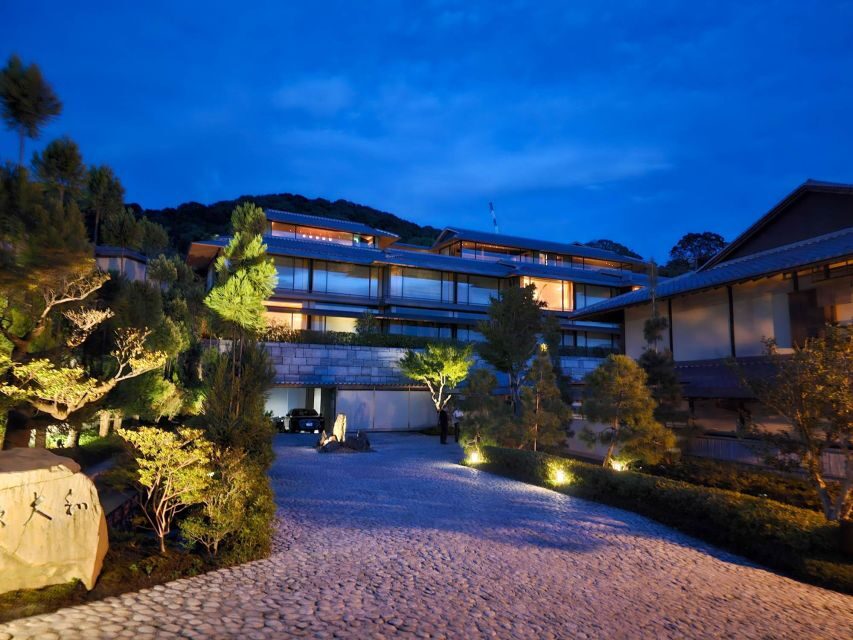
After Hanamikoji, the tour keeps moving through the maze. You’ll spend additional time on guided walk sections focused on scenic views and guided context. This is where the tour tends to feel more “Kyoto local” than “tour bus.” You’re not just checking boxes—you’re being led through corners and paths that help explain the district’s spiritual and cultural layers.
The highlights here are the offbeat temples and shrines along the way. Even if you’ve seen Kyoto’s religious sites during the day, night adds a different tone. Shadows make architecture feel sharper. Stone steps and shrine gates look more solemn. And because the group is small, your guide can slow down when questions pop up.
If you get a guide like Raphael (praised for balancing history with practical tips) or Naoki (from the area, with answers that actually stay detailed but clear), this portion can turn into those “wait, I never thought about it like that” moments. It’s the kind of storytelling that makes Gion feel lived-in, not staged.
Maruyama Park: A Pause Where the Neighborhood Breathes
You’ll hit Maruyama Park, with a shorter guided stop. This is the breathing room in the middle of the walk—useful if you’re trying to keep energy for the rest of the evening. You get a sense of how Gion’s scenic edges connect with wider Kyoto life.
At night, parks can feel quieter than the streets around them. That quiet makes it easier to hear your guide and look around without feeling like you’re constantly dodging crowds. It’s also a good place to reset your brain before the shrine portion, which is more ceremonial in feel.
If you’re sensitive to noise, this break helps. And if you love photos, it offers a different angle than the lantern alleys—more space, more sky, more soft night light.
Other walking tours we've reviewed in Kyoto




Yasaka Shrine at Night: The Spiritual Anchor of Gion
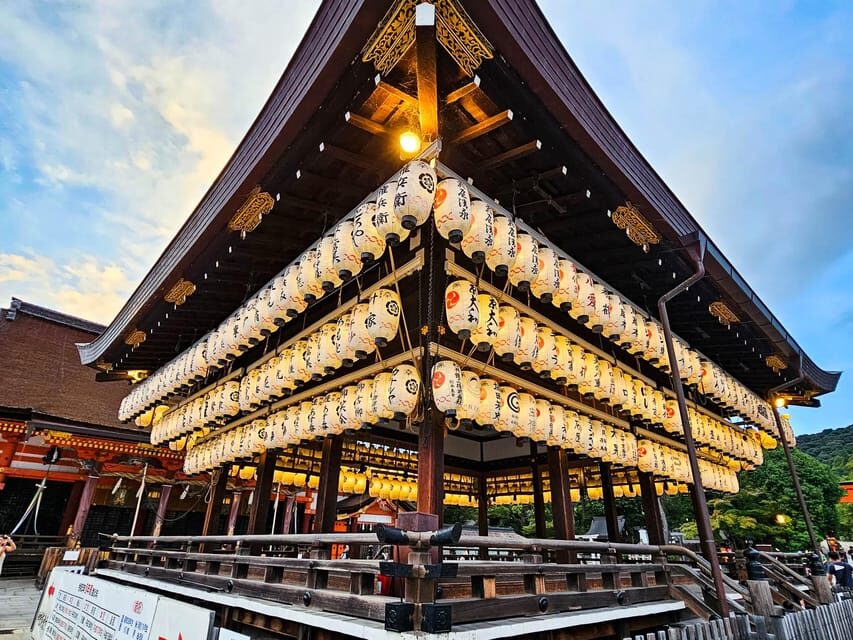
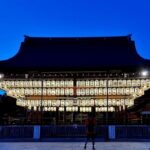
Next up is Yasaka Shrine, guided for about 20 minutes. This stop matters because it’s not just a pretty background. It’s a spiritual anchor that helps you understand why this area has always carried a sense of tradition. When the lighting is lower, shrine details become easier to focus on—gates, pathways, and the flow of people moving through the space.
Guides tend to use Yasaka as a turning point in the story: how local customs connect to everyday behavior, why certain rituals show up in place after place, and how Gion’s public face relates to private lives behind the scenes. If you’re lucky enough to have a guide like Vicent/Vincent (often praised for Geisha-era context and calm pacing) or Gustavo (praised for linking culture, religion, and neighborhood mechanics), you’ll leave with a cleaner mental map of the district.
One practical note: shrine areas can have uneven ground and more foot traffic at certain moments. Wear shoes you’d be happy walking in for a while.
Local Snack Break: A Small Bite, a Real Taste of the Evening
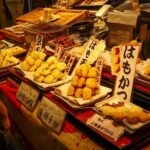
You get a local snack stop included in the price. This is usually around 20 minutes—long enough to refuel without derailing the schedule. The snack isn’t just “free food.” It’s a chance to see how a local break looks in real life: quick, casual, and very much part of the night rhythm.
From guide experiences shared by past guests, this stop can include items like matcha desserts. Your guide may also offer options depending on what’s available that evening. Either way, the big value is that the guide handles the choice and gets you back onto the route without stress.
Your tour also includes a camera tip in spirit: you’ll be photographing under mixed lighting (dark alleys, warm lanterns, darker shrine corners). The snack stop is a good time to check settings and wipe your lens if needed.
Pontocho by Lamplight and the Finish at Sanjo Bridge
Near the end, you walk through Pontocho, guided for about 20 minutes, then you finish at Sanjo Bridge. Pontocho is famous for a reason: it feels like Kyoto’s nightlife filtered through wood, stone, and river-adjacent atmosphere. Even if you don’t plan to eat or drink there, it’s a strong final act.
This is also a natural moment to reflect on what you learned earlier. The geiko/maiko world is private, but the surrounding neighborhood has layers—arts, religion, daily living. Pontocho helps tie those layers together visually. The evening feels complete instead of randomly stitched.
Ending at Sanjo Bridge is convenient because it’s a familiar landmark zone, so you’re not stuck wandering for the right way back.
Guides and Group Size: Small Group Power
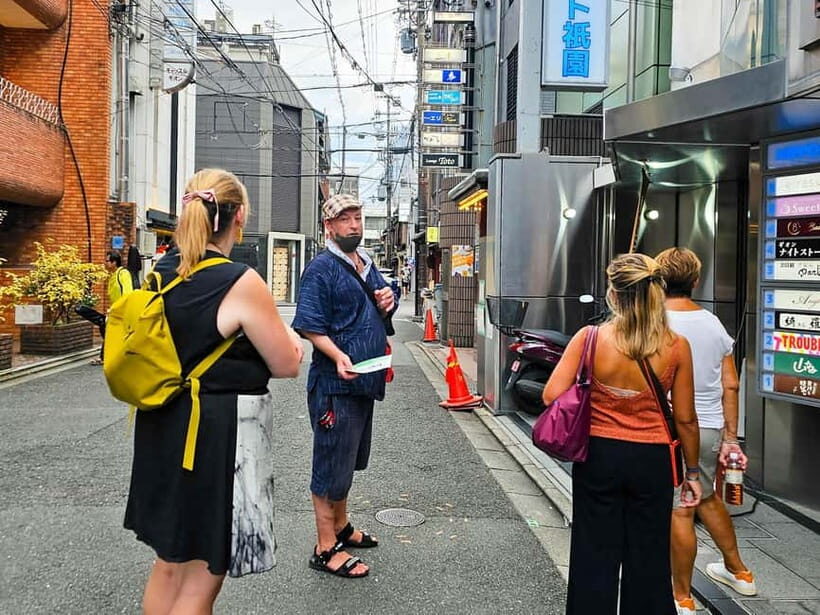
A big part of the tour’s success is the size. It’s a small group, no more than 9 people. That changes everything. You don’t get lost in the herd. The guide can answer questions without rushing. And when someone needs a slower pace, the group usually flexes.
This shows up in the way certain guides were described. Raphael was praised for adjusting pace for an older couple. Jasmine was praised for friendliness and excellent English, plus taking photos when asked. Alex/Alejandro and Karl were praised for answering lots of questions without turning the tour into one long monologue.
So if you like interactive travel—talking, asking, learning—you’ll probably feel comfortable. If you prefer quiet, that’s also okay; the guide can usually read the room.
Price and Value: What $22 Buys You in Kyoto
At $22 per person for about 3 hours, this is priced like a solid evening activity rather than a premium production. What you’re really paying for is not just route time. You’re paying for:
- an English-speaking local guide
- a guided walking route through Gion’s key lanes and cultural anchors
- an included snack
- a small-group format that keeps your evening efficient
You also avoid common Kyoto headaches. No need to figure out which streets actually have staying power at night. No need to guess what to notice when you walk past Yasaka Shrine or along Hanamikoji Street. A good guide turns your camera walk into a story walk, and that’s what makes this kind of tour good value.
And one more thing: the tour accepts booking at various times and even allows last-minute reservations. That flexibility is real value when your schedule slips from day to day.
Who Should Book This Gion Sunset Walk
I’d book this if you:
- want an easy win for your first evening in Kyoto
- like walking tours but want them under control (3 hours, not half a day)
- care about cultural context, not just photos
- want a chance to see geiko or maiko without stress
You might skip it if:
- you need an all-transit, no-walking plan
- you have mobility or health limits listed as not suitable for the tour
- you’re in a super-scheduled rush and can’t manage punctual starts
Also, bring a little respect for etiquette. The tour specifically encourages being considerate when photographing geiko and maiko. Use distance, avoid blocking paths, and keep the moment quiet.
Should You Book This Tour?
Yes, if your ideal Kyoto evening includes lantern-lit streets, shrine atmosphere, and learning from a guide who can explain what you’re seeing in plain language. The small group size makes it feel personal, and the route hits the places that define Gion—Hanamikoji Street, Yasaka Shrine, and Pontocho—without stretching your day too long.
If you’re worried about walking or your health situation makes stepping out of reach risky, don’t force it. But for most people, this is one of those practical Kyoto choices that turns a few hours into a real understanding of the neighborhood.
FAQ
Where is the meeting point?
Meet at Kyoto Kawaramachi Garden corner, in front of the big black world map. Your guide will be wearing a TripGuru shirt or holding a TripGuru sign.
How long is the tour?
The tour is about 3 hours.
Is it a small group tour?
Yes. It’s a small group with a maximum of 9 people.
What languages are available?
The live guide is offered in English, Spanish, and French (depending on availability).
What’s included in the price?
The price includes an English-speaking tour guide, the walking tour itself, and a snack.
Is seeing geiko or maiko guaranteed?
No. You may catch a glimpse of geiko or maiko, but it’s not guaranteed.
What should I bring?
Bring comfortable shoes, a camera, and cash.
How early should I arrive?
Be at the meeting point at least 10 minutes early. The guide waits a maximum of 10 minutes before moving to the next stop.
Is this tour suitable for everyone?
It’s not suitable for pregnant women, people with mobility impairments, people with heart problems, or people with respiratory issues.