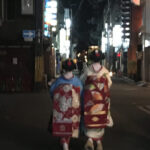
Gion at night hits different. This 2-hour walk takes you through Kyoto’s best-known geisha area after the daytime rush, with a guide to keep you moving and your bearings straight. I like that it’s built for people who don’t want to study maps, and you get insider context along the way, not just pretty streets.
Two things I especially like: you get small-group attention (max 15), and the tour focuses on how geisha culture works, including practical pointers on spotting geisha and maiko. A guide named Ryu is singled out in reviews for explaining the tradition and practice in a clear, respectful way.
One possible drawback to consider: seeing a geisha isn’t guaranteed. It’s a night walk, the lighting is low, and if you’re locked in on photos, you may find it harder than you hoped to capture anything clearly.
In This Review
- Key highlights in a nutshell
- Lantern-lit Gion Without the Map: What the 2-Hour Walk Really Feels Like
- Hanamikoji Street and Shirakawa Canal: Ochaya Views and Canal-Side Alleys
- Tatsumi Daimyojin Shrine Stop: A Quiet Backstreet Moment
- How to Spot Geisha and Maiko (and When You Probably Won’t)
- Kawaramachidori and Shijo-Kawaramachi: Machiya Houses, Bars, and Modern Kyoto Contrast
- Eats and Night Energy: Using the Guide’s Food Tips the Right Way
- Price and Value at $25, Plus the Small-Group Advantage
- Who This Gion Night Walk Is Best For
- Should You Book This Kyoto Gion Night Walking Tour?
- FAQ
- How long is the Kyoto Gion night walking tour?
- What does the tour cost?
- How many people are in the group?
- Where do I meet for the tour?
- Does the tour include admission for the stops?
- Is a mobile ticket used?
- Is it guaranteed that I will see a geisha or maiko?
- What is the cancellation policy?
Key highlights in a nutshell
- Hanamikoji Street on foot: the heart of Gion’s geisha district with traditional teahouses (ochaya)
- Shirakawa Canal + red bridges: stone-paved alleys and willow-lined canal views
- Tatsumi Daimyojin Shrine tucked in backstreets: a smaller cultural stop you’d likely miss alone
- Geisha and maiko spotting tips: what to look for and how to set expectations
- Kawaramachidori backstreets: cozy bars, eateries, and old machiya houses near Shijo-Kawaramachi
Lantern-lit Gion Without the Map: What the 2-Hour Walk Really Feels Like
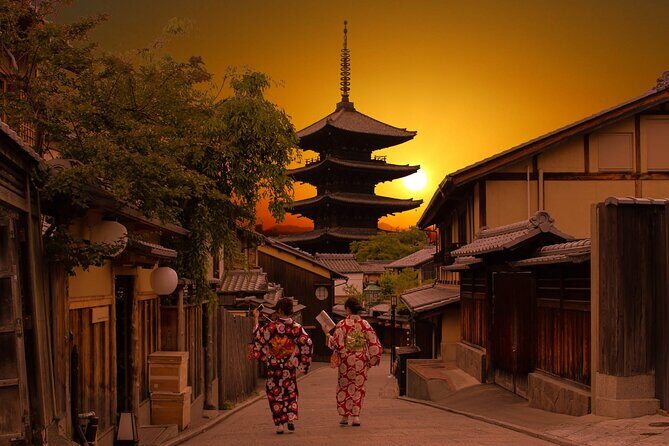
Kyoto’s Gion is gorgeous, but it can also be disorienting. This tour solves the big problem fast: you show up, meet your guide, and the group keeps a smooth walking rhythm through the district. A mobile ticket makes entry simple, and you don’t waste time figuring out where to go next.
The timing matters, too. A night walk helps you dodge the heaviest daytime crowds, so the streets feel more like old Kyoto and less like a parade route. You’ll still be in a popular area, but the mood is calmer, with more lantern-lit atmosphere and evening street energy.
Small group size is a real advantage here. With up to 15 people, you can actually hear the guide, ask questions, and follow along without turning into a slow-moving blob. You’ll also get better “where to look” guidance when the conversation turns to geisha culture.
A few more Kyoto tours and experiences worth a look

Hanamikoji Street and Shirakawa Canal: Ochaya Views and Canal-Side Alleys
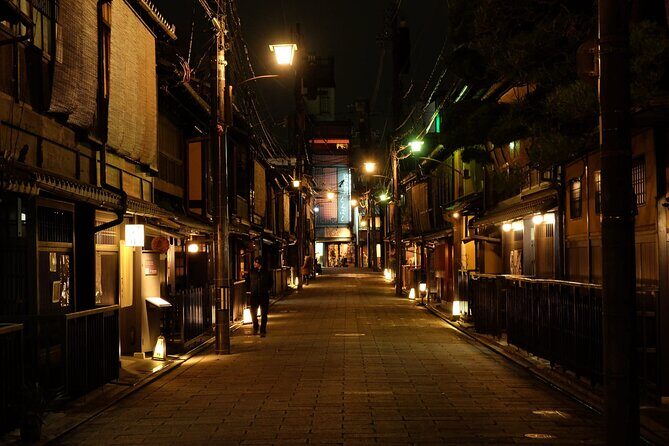
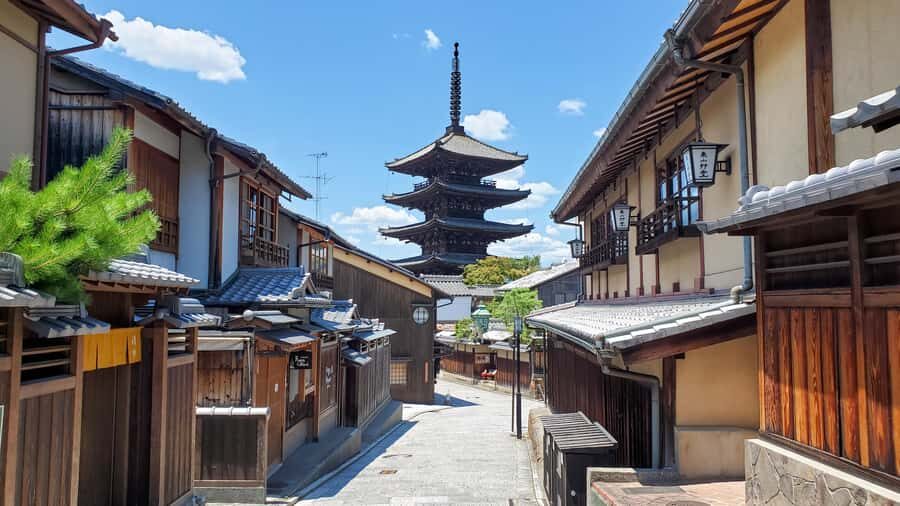
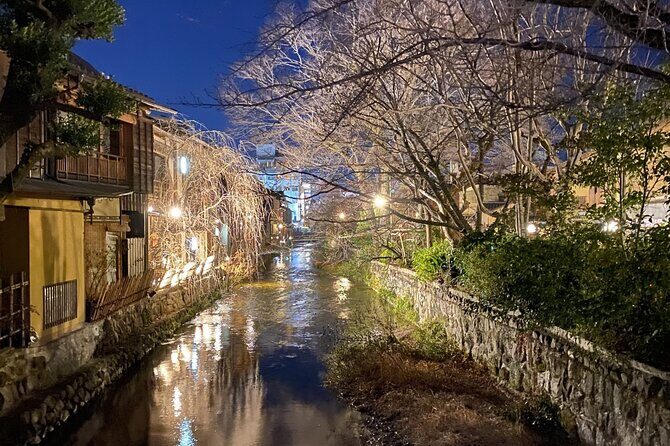
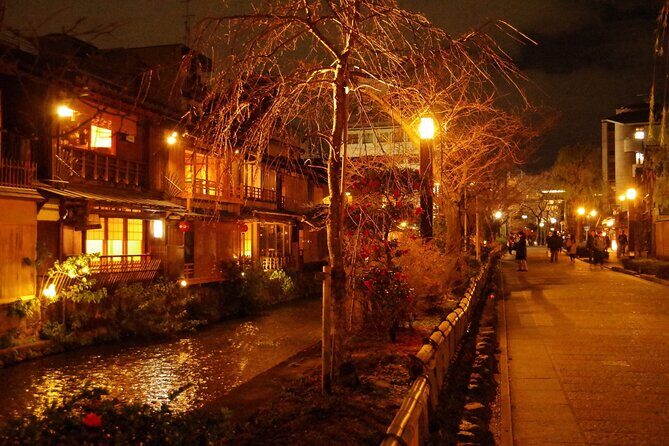
Your first real taste of Gion centers on Hanamikoji Street. This is the classic corridor people picture when they think of geisha Kyoto: traditional wooden teahouses (ochaya) line the way, and the street feels purpose-built for lingering. Even if you’ve seen photos before, walking it at night changes the feel—less sightseeing checklist, more atmosphere.
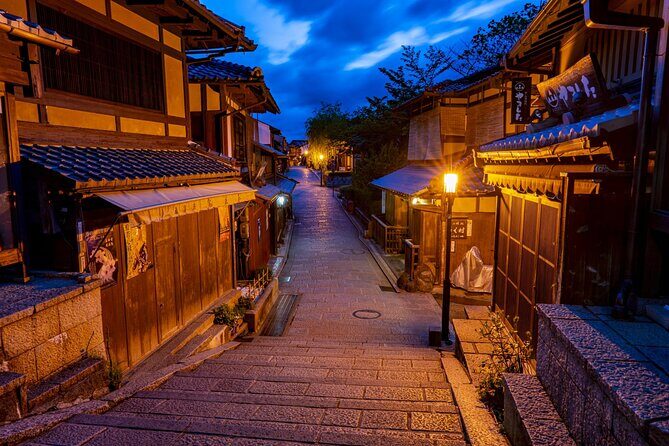
Then you shift to the Shirakawa Canal area, which is where the scenery gets more intimate. Expect stone-paved alleys, red bridges, and willow trees that make the canal walk look like a scene pulled from a storybook. The layout is part of the charm: you’re not just looking at a landmark; you’re moving through small streets that open up to the canal in quick reveals.
What I like about this section is that it balances spectacle with flow. Hanamikoji gives you the “here’s Gion” moment, while Shirakawa gives you the calmer, slightly tucked-away feeling. If you’re the type who loves Kyoto’s details—wood textures, alley angles, and small changes in lighting—this part is your payoff.
Possible downside: because it’s at night, you’ll be walking in low light. That’s great for mood, but it can be tough for crisp photos. If your plan is to shoot everything like a daytime cityscape, you’ll likely need to manage expectations.
Tatsumi Daimyojin Shrine Stop: A Quiet Backstreet Moment
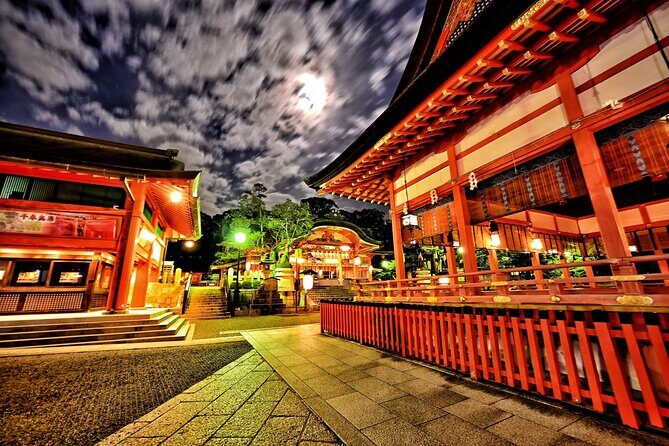
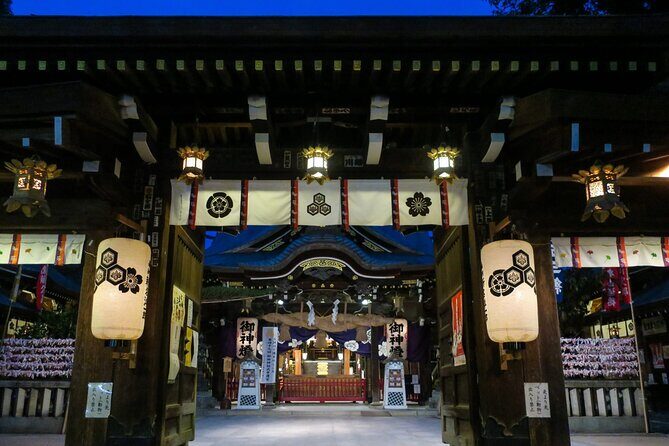
Between the bigger-name sights, you get a more tucked-away stop: Tatsumi Daimyojin Shrine. It’s described as small, but culturally significant, and it’s tucked into the backstreets rather than sitting right on a main road. That makes it a useful contrast to the “postcard streets” you’ll walk right before it.
This kind of stop is exactly why a guided night walk can be worth it. When you travel alone, you often end up orbiting the obvious streets that every map app pushes you toward. Here, the guide helps you take the less-obvious turn, and the shrine becomes a breather in the middle of the evening.
Drawback to note: you won’t spend a long time here. The tour is about movement and coverage, not lingering in one place. If you love slow shrine time, plan extra independent wandering later.
How to Spot Geisha and Maiko (and When You Probably Won’t)
This tour’s culture lesson is the heart of the experience. You’ll learn how to spot real geisha and maiko, and the guide explains what to look for and how to interpret what you see (or don’t see). A review specifically calls out Ryu for explaining geisha tradition and practice, and that kind of context is what makes the walking tour more than just sightseeing.
Here’s the honest part: seeing a geisha isn’t guaranteed. The tour frames it as something you might catch with luck—like seeing someone heading to an evening appointment. That’s important, because if your expectations are set to geisha sightings on demand, you can end up frustrated.
One review also points out a disappointment that hits close to home: the group learned very early that it was unlikely to see a geisha, and the lighting made it hard to take photos. That doesn’t mean the guide wasn’t trying; it means you should treat geisha spotting as a bonus, not the mission.
My practical advice:
- Go for the learning and the atmosphere, not a guaranteed sighting.
- Keep your phone/camera ready, but accept that night lighting can limit what you capture.
- If you do spot something, be respectful and don’t crowd or block the path.
Kawaramachidori and Shijo-Kawaramachi: Machiya Houses, Bars, and Modern Kyoto Contrast
After you’ve absorbed the Gion side, you shift to Kawaramachidori and the Shijo-Kawaramachi intersection area. This is where the tour shows you another Kyoto layer: modern city life stacked alongside old-town structures. The contrast is the point—you see how historic elegance and lively street activity overlap in real time.
From there, you’ll venture into hidden backstreets and alleys that aren’t the first stop on most tourist routes. You might notice cozy bars, places to eat, and old machiya houses, all tucked a short walk away from busier streets. It’s the kind of wandering that’s hard to replicate on your own because you’re not just looking for sights—you’re following a route that makes sense with a local guide.
This second half also tends to feel more narrative. The guide shares stories about how the area has evolved, which helps you understand why certain streets look the way they do and why Kyoto blends old and new so naturally. It turns your walk into a “why does this look like this?” experience.
Other walking tours we've reviewed in Kyoto




Eats and Night Energy: Using the Guide’s Food Tips the Right Way
The tour includes insider recommendations for places to eat, and that’s a big deal because Kyoto is a trap for decision fatigue. When you’re hungry after walking, you don’t want to research from scratch or settle for something random near your hotel. These recommendations are built for people who want good meals without wasting the night.
The key is how you use the tips. Ask your guide for practical guidance based on what you like—snacks versus a real dinner, quieter spots versus lively ones, and what to expect for timing. Since it’s a night tour, your best meal window may be tied to where you end up at the end of the walk.
Also remember: you’re still in neighborhoods people actually live in. Keep your pace respectful. If a side street looks narrow or crowded, step aside and let foot traffic move.
If your goal is to build a simple evening plan, this tour does that well: it shows you the atmosphere, teaches you the culture, and then points you toward food that fits the night you just had.
Price and Value at $25, Plus the Small-Group Advantage
At $25 per person, this is priced for value, not luxury. The math is pretty straightforward: you’re paying for a guide, a route designed to reduce getting lost, and culture context—plus recommendations that can save you time later. Two hours passes quickly, but it’s long enough to cover both the classic Gion streets and the Kawaramachidori side without rushing every single stop.
The max group size of 15 is part of the value equation. Smaller groups usually mean better hearing, more chances to ask questions, and less “tour herd” energy. That matters especially on a night walk where the guide may be pointing out subtle details.
A practical note on flexibility: you can cancel for free up to 24 hours in advance for a full refund. If the minimum traveler count isn’t met and the tour cancels, you’ll be offered another date or a full refund. That makes it easier to book early and adjust if your Kyoto schedule shifts.
Who This Gion Night Walk Is Best For
This tour is a strong match if you want Kyoto at a slower pace and you’re curious about geisha culture beyond the usual headlines. You’ll enjoy it most if you like walking, looking closely, and learning how local traditions fit into everyday city life.
It’s also a good fit for:
- First-timers to Kyoto who want smart coverage in a short time
- People who don’t want to navigate Gion alone at night
- Travelers interested in cultural context, not just landmark photos
One thing to be aware of if you’re very photo-focused: low light can limit how well you can capture shots. If you’re the kind of photographer who needs consistent brightness, plan to shoot earlier in the day too.
On the participation side, it says most travelers can join, which suggests it’s broadly doable for typical walking visitors. Still, wear shoes you’re comfortable in, because you’re spending the evening walking.
Should You Book This Kyoto Gion Night Walking Tour?
I’d book it if you want an efficient night plan that blends Gion’s famous streets, canal scenery, a cultural shrine stop, and geisha insight from a real guide. The $25 price feels fair for the combination of route expertise and geisha/maiko context, and the small-group size is a real quality marker.
I would think twice if your top priority is a guaranteed geisha sighting or getting perfect night photos. This tour treats geisha spotting as luck, and the lighting is part of the atmosphere—so it’s not set up as a photography workshop.
If your goal is to understand Gion while enjoying an evening walk that keeps you from getting lost, this one is a solid choice.
FAQ
How long is the Kyoto Gion night walking tour?
The tour lasts about 2 hours.
What does the tour cost?
It costs $25.00 per person.
How many people are in the group?
The tour has a maximum of 15 travelers.
Where do I meet for the tour?
You meet at Tanaka Coffee GionJapan, 605-0085 Kyoto, Higashiyama Ward, 新地末吉町993.
Does the tour include admission for the stops?
The itinerary lists admission ticket included for the scheduled stops.
Is a mobile ticket used?
Yes, it’s a mobile ticket.
Is it guaranteed that I will see a geisha or maiko?
No. The tour teaches how to spot them and notes that with luck you might see one, but sightings aren’t guaranteed.
What is the cancellation policy?
You can cancel for free up to 24 hours in advance for a full refund. If you cancel less than 24 hours before, the amount paid is not refunded.