Kyoto is easier when someone else maps it.
This half-day highlights tour is built for time-tight travelers: a smooth, small-group walk through the kind of places you’d normally spend days researching. You’ll start in Gion, move through classic Higashiyama sights, then finish at Fushimi Inari-taisha with a guide who explains what you’re looking at and why it matters. Marie (often written as Mari in guest notes) leads the group with upbeat commentary, plus practical on-the-ground guidance so you don’t waste minutes figuring out where to go next.
I like two things a lot. First, the route is efficient—you’re constantly on the move, but the pace stays laidback. Second, you get that “why this place looks like this” context from a real guide, not just signage. You’ll also get included admission along the way, so at least one key stop won’t be a scramble.
One possible drawback: this is a walking-focused plan, so comfortable shoes matter. If you’re not used to steady walking (even at a relaxed pace), your feet will feel it by the end.
In This Review
- Key Takeaways Before You Go
- Where the Tour Starts at Gion-Shijo Station (and How That Helps)
- Gion: The Geisha District Walk You Can Do Without Stress
- Yasui-Konpiragu Shrine: A Short Stop With a Big Character
- Hokan-ji Temple (Yasaka Pagoda): The 46-Meter Viewpoint Moment
- Ninenzaka and Sannenzaka Slopes: The Walk to Kiyomizu-dera
- Kiyomizudera: Included Admission and That Famous Terrace View
- Fushimi Inari-taisha: Torii Tunnel Time (and the Route Up)
- Marie’s Guide Style: Fun Facts, Flexible Pacing, and Better Photos
- How Much Walking Is Involved (Plan for Your Feet)
- Cost and Value: $50 Plus Transit, With Admission Covered at One Key Stop
- Timing at 3:00 pm: Weather Matters, and Humidity Can Be Real
- Who Should Book This Tour (and Who Might Prefer DIY)
- Should You Book This Kyoto Half Day Highlights Tour?
- FAQ
- How long is the Kyoto Half Day Highlights Tour?
- What is the meeting point for the tour?
- Where does the tour end?
- What time does the tour start?
- What is included in the price?
- Is public transportation included?
- Is admission included at all the stops?
- How big is the group?
- Do I need to be in good physical shape?
- Does the tour require good weather?
Key Takeaways Before You Go

- Small-group size (max 12) keeps the tour from feeling like a stampede
- Marie’s storytelling adds meaning to geisha district streets, shrines, and pagodas
- Included admission at Kiyomizudera saves time and money versus a DIY plan
- Fushimi Inari’s torii tunnel path is the big visual payoff, right at tour’s end
- 3:00 pm start can work well for softer light and a calmer feel than peak mornings
Where the Tour Starts at Gion-Shijo Station (and How That Helps)

The meeting point is at Gion-Shijo Station, with the exact pin near 1 Chome Miyagawasuji in Higashiyama Ward. The tour starts at 3:00 pm, and you’ll be greeted at the designated spot.
That matters because Kyoto’s neighborhoods can feel like a maze when you’re tired or jet-lagged. Starting in Gion also makes sense: it’s central to what you want later. Once you’re oriented, the walk down toward Higashiyama and up toward Inari becomes much easier to enjoy rather than survive.
The tour ends at Inari Station / in front of Fushimi Inari Shrine, near the JR and Keihan connections. That’s a smart finish. You don’t have to backtrack across Kyoto just to catch transit.
If you're still narrowing it down, here are other tours in Kyoto we've reviewed.


Gion: The Geisha District Walk You Can Do Without Stress
Your first stop is Gion, the famous geisha district. You’ll begin with a leisurely walk through the historic streets, guided from the start so you aren’t wandering in circles trying to find the right lanes.
What makes this part worth doing is not just the name Gion. It’s the pacing and the way a guide helps you notice details. A lot of Kyoto sightseeing is easy to “look at,” but harder to “understand.” With commentary, you start connecting street layout, traditional architecture, and the role of shrines and temples nearby.
You’ll also get the benefit of time structure. Even though this is a half-day tour, the first leg gives you that immediate sense of place—so the next stops feel like a logical progression instead of separate attractions.
Practical note: Gion can be busy, but the small-group setup tends to keep things from getting chaotic. Still, go with the expectation that you’ll be walking through a popular area.
Yasui-Konpiragu Shrine: A Short Stop With a Big Character

Next comes Yasui-Konpiragu Shrine, a peaceful pocket in the Higashiyama area. The stop is short—about 10 minutes—but it’s designed to be memorable.
The centerpiece here is the shrine’s famous “power stone” and its symbolic passageway. Even if you’ve never heard of this stop before, it’s exactly the kind of Kyoto detail a guide can point out in a way that makes it feel meaningful rather than random.
Because the stop is brief, it’s also a good breather. After Gion, you get a quieter change of pace without losing momentum in the overall itinerary.
Hokan-ji Temple (Yasaka Pagoda): The 46-Meter Viewpoint Moment

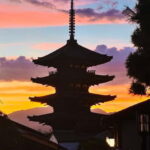
After the shrine, you’ll visit Hokan-ji Temple, also known as Yasaka Pagoda. This is another stop built for quick impact—about 10 minutes—but it’s packed with identity.
The pagoda is 46 meters tall and is described as the last remaining structure of a 6th-century temple complex. That single fact turns the stop into more than a photo opportunity. You start seeing the pagoda as a survivor from an older Kyoto, not just a pretty silhouette.
In a half-day plan, I think this “fast and important” style works well. You get the big landmarks, but you also get a sense of depth—how much history can be standing right in front of you.
Ninenzaka and Sannenzaka Slopes: The Walk to Kiyomizu-dera

Then you shift into the postcard lanes: Ninenzaka and Sannenzaka, the historic stone-paved slopes leading toward Kiyomizu-dera Temple in Higashiyama.
This is where the tour starts to feel like a journey. You’re not just visiting temples; you’re walking through Kyoto’s preserved street style. These slopes are often the “in-between” part that people skip when they try to cram too much into one day, but here they’re given about 20 minutes—enough time to enjoy the scenery without turning into a slow stopover.
In practical terms, this is also a useful timing buffer. By the time you reach Kiyomizu-dera, your body has warmed up, and your eyes are in sightseeing mode instead of switching on mid-ride.




Kiyomizudera: Included Admission and That Famous Terrace View

Your biggest temple block is Kiyomizudera Temple, with about 45 minutes and admission included. This is the stop that justifies the guided timing: you’re not rushing in for a quick look, but you also aren’t stuck so long that the rest of the afternoon suffers.
Kiyomizudera is known for its wooden terrace and views over Kyoto. As you wander the grounds, you’ll also pass by pagodas and sacred waterfalls tied to temple tradition.
What I like about having a guide at this point is simple: it keeps you from treating the visit like a checklist. When someone narrates what you’re seeing—how the terrace and pathways are arranged and what features are considered significant—you move through the grounds more confidently. You’re not wondering what matters; you’re noticing it.
This is also the place to take your time with photos, because it’s both visually striking and emotionally memorable. If you’re traveling with a camera, this is the moment to slow down.
Fushimi Inari-taisha: Torii Tunnel Time (and the Route Up)

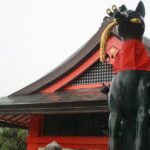
The grand finale is Fushimi Inari-taisha Shrine, scheduled for about 1 hour. Admission is listed as free on this tour, and this is where the big show happens.
You’ll walk through the iconic torii gate tunnels—thousands of gates stacked along paths. The shrine is dedicated to the god of rice and prosperity, which gives the tunnels extra meaning beyond their famous orange look.
The route winds upward, following paths that climb the mountain. That means you’ll get a sense of momentum: it starts as a walk, then becomes a gentle ascent as you follow the torii corridor.
If you want one clear tip: pace yourself. The gates look “endless,” and you’ll be tempted to keep going because it feels like you’re always arriving at the next section. Give yourself permission to follow the main loop at a comfortable speed. You’ll still come away with the big visual memory.
Ending here is a smart choice for another reason: once the tour finishes at Inari Station / in front of the shrine, you can transition to dinner or transit without backtracking through Kyoto.
Marie’s Guide Style: Fun Facts, Flexible Pacing, and Better Photos

A half-day highlights tour lives or dies by the guide, and that’s where this one earns consistent praise. Marie’s style is described as informative and fun, and she’s known for adding local stories and small details that make stops feel connected.
One of the practical advantages: she helps people get photos without awkward positioning. That matters in Kyoto, where crowds can make it hard to frame shots without standing in the wrong place.
She’s also described as flexible when timing gets thrown off—like if someone is late due to travel mishaps. Even more impressive, some groups say she adjusts the plan to match who’s on the tour, which is a good sign for a mixed ability level.
The common thread is that Marie doesn’t just point at famous places. She ties them to customs—geisha district background, Shinto shrine context, and Buddhism-adjacent storytelling—so you’re not leaving with names only.
How Much Walking Is Involved (Plan for Your Feet)
This tour is listed as needing moderate physical fitness level, and the duration is about 3 hours 30 minutes. You’ll be moving continuously through different neighborhoods and slope areas.
That’s not a reason to skip it. It is a reason to prepare. If you go, wear shoes that you trust for long stretches—Kyoto walking adds up fast, especially with stone slopes like the Ninenzaka and Sannenzaka sections.
Bring a small amount of water if you can, even though snacks aren’t included. The itinerary doesn’t suggest long sit-down breaks, so your comfort matters.
Cost and Value: $50 Plus Transit, With Admission Covered at One Key Stop
The price is $50.00 per person, and you’ll typically see groups booking around 54 days in advance. For a city like Kyoto, that advance booking timing often means you’ll want a confirmed spot rather than hoping something is available on short notice.
What you’re paying for is not just access. You’re paying for:
- a curated route that avoids navigation headaches
- guided commentary that makes landmarks easier to understand
- admission included at Kiyomizudera Temple
- the small-group feel with a guide who stays hands-on
Public transportation isn’t included: ¥220 per person is listed as separate. So think of the tour budget as $50 plus a small transit add-on. If you were doing this solo, you’d still spend time figuring out directions and transit, and you’d likely spend your mental energy instead of enjoying the evening.
Overall, it’s a strong value if you want maximum payoff per hour.
Timing at 3:00 pm: Weather Matters, and Humidity Can Be Real
This tour starts at 3:00 pm, and it’s noted that the experience requires good weather. That’s typical for walking tours, especially ones that include long exterior routes and hillside paths.
Kyoto weather can swing, and humidity can be tough in warmer months. If you’re sensitive, plan to travel lightly and dress for comfort rather than style.
The upside of the afternoon start is that you often get a slower rhythm than a rushed morning plan. You’re also positioning yourself to end at Fushimi Inari with enough daylight to see the torii tunnels clearly.
Who Should Book This Tour (and Who Might Prefer DIY)
This is best for you if:
- you have limited time in Kyoto
- you want a guided “best-of” route instead of planning every connection
- you’d rather pay for clarity and commentary than spend hours mapping
It may be less ideal if:
- you hate walking or you need lots of breaks
- you prefer fully self-paced wandering without any structure
If you’re a solo traveler, it can work especially well because the group size stays small and the guide naturally keeps you on track. If you’re traveling with friends who need a clear plan, it’s also a good way to avoid decision fatigue.
Should You Book This Kyoto Half Day Highlights Tour?
Yes, I’d book it if your goal is simple: see the must-sees in a way that feels organized and meaningful. The included admission at Kiyomizudera, the guided explanations, and the logical route from Gion to Inari make it a practical choice when you’re short on time.
I’d especially choose it if you want more than photos—if you want to understand why the places matter and what to notice while you’re there. Just do yourself a favor: wear comfortable shoes and be ready to walk.
If you’re already confident navigating Kyoto on your own, you could DIY. But if you want to spend your energy on the sights instead of logistics, this tour is the efficient, friendly way to do it.
FAQ
How long is the Kyoto Half Day Highlights Tour?
It runs for about 3 hours 30 minutes.
What is the meeting point for the tour?
The tour starts at Gion-Shijo Station (near 1 Chome Miyagawasuji, Higashiyama Ward, Kyoto).
Where does the tour end?
It ends at Inari Station / in front of Fushimi Inari Shrine (Fukakusa Inari-onmaecho, Fushimi Ward, Kyoto).
What time does the tour start?
The start time is 3:00 pm.
What is included in the price?
The tour includes guide service and an admission fee (with Kiyomizudera Temple admission included on the itinerary).
Is public transportation included?
No. Public transportation is not included and is listed as ¥220 per person.
Is admission included at all the stops?
On the itinerary, admission is listed as free for several stops, and Kiyomizudera Temple admission is included. (So not every stop has a paid admission.)
How big is the group?
The tour has a maximum of 12 travelers.
Do I need to be in good physical shape?
The tour requires moderate physical fitness and includes walking, so comfortable shoes are a good idea.
Does the tour require good weather?
Yes. The experience requires good weather. If it’s canceled for poor weather, you’ll be offered a different date or a full refund.