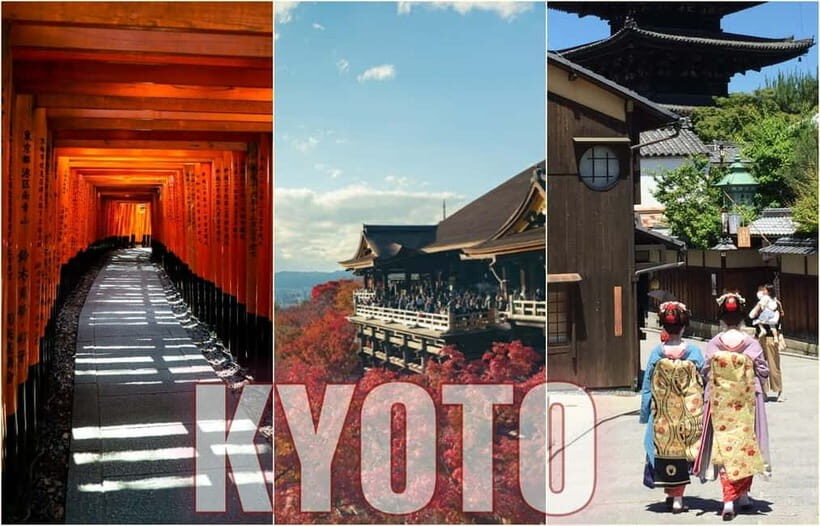
Kyoto can feel like a movie set. This tour helps you read the scenes instead of just watching them. You’ll hit Fushimi Inari Taisha and Kiyomizu-dera, learn what Shinto and temple beliefs mean on the ground, and walk through the famous torii gate trails and the old-street lanes toward Gion.
I especially liked the way Roberto explains the “why,” not just the “what.” It also felt great to have someone take photos for us so I could actually enjoy the temples and streets. One thing to consider: it’s a lot of walking and some stairs, so it’s not a good match if you have mobility limits or low fitness.
In This Review
- Key highlights you’ll feel right away
- Meeting Roberto at 7-Eleven by Kyoto Station
- Fushimi Inari Taisha: Shinto, origins, and the torii-gate trail
- What it feels like on the ground
- A practical tip
- Possible drawback
- Kiyomizu-dera: power spots for love, longevity, and school success
- Entrance fee note
- Where the walking gets real
- Ninen-zaka and Sannen-zaka: old Kyoto lanes with merchant-shop charm
- What I liked about this segment
- A small consideration
- Gion: geisha and maiko facts, plus ochaya and machiya context
- Why this part is worth paying for
- Getting to your hotel after
- Price and value: what $90 buys in a 4-hour private tour
- Who this tour is best for (and who should skip it)
- Photo help and iPad explanations: small touches that really matter
- Should you book this Kyoto half-day tour?
- FAQ
- Where do we meet for the tour?
- Is the tour private, and what languages are offered?
- How long is the tour, and does it use public transportation?
- Are entrance fees included?
- What should I bring?
- Can I cancel for a full refund?
Key highlights you’ll feel right away
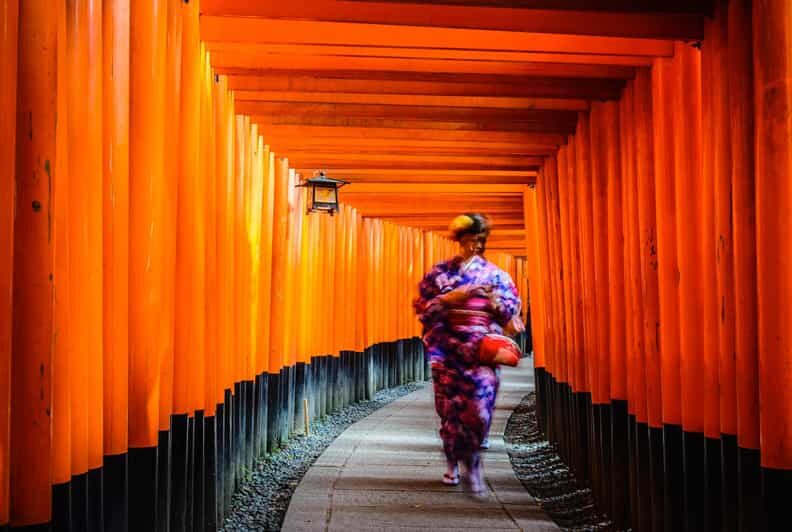
- Fushimi Inari’s 1,000 vermilion torii gates explained with the Shinto context that gives the walk meaning
- Kiyomizu-dera power spots tied to blessings for love, longevity, and academic success
- Geisha and maiko facts (not myths), plus how ochaya and machiya fit into daily culture
- Ninen-zaka and Sannen-zaka old-street walking with traditional merchant lanes and wooden buildings
- Roberto’s photo help and iPad explanations so you don’t miss key points while moving
Meeting Roberto at 7-Eleven by Kyoto Station
Start is simple and easy to find: meet in front of the door at 7-Eleven Heart-In, JR Kyoto Station Building 1F. Use the Kyoto Tower side exit, and you’ll see Roberto holding an iPad and a red card with the words RBRT.
This matters more than you’d think. Kyoto sites are spread out, and a calm start helps you avoid wasting time figuring out trains, entrances, and walking routes. The tour also uses public transport—city bus and train—so you’ll feel like you’re traveling with a local plan, not just hopping between stops.
You’ll be in a private group, and the guide supports English and Spanish. If you’re the type who likes structure, this tour gives it. If you want flexibility, private pacing helps you keep moving at a comfortable speed—still within the 4-hour time frame.
A few more Kyoto tours and experiences worth a look


Fushimi Inari Taisha: Shinto, origins, and the torii-gate trail
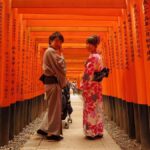
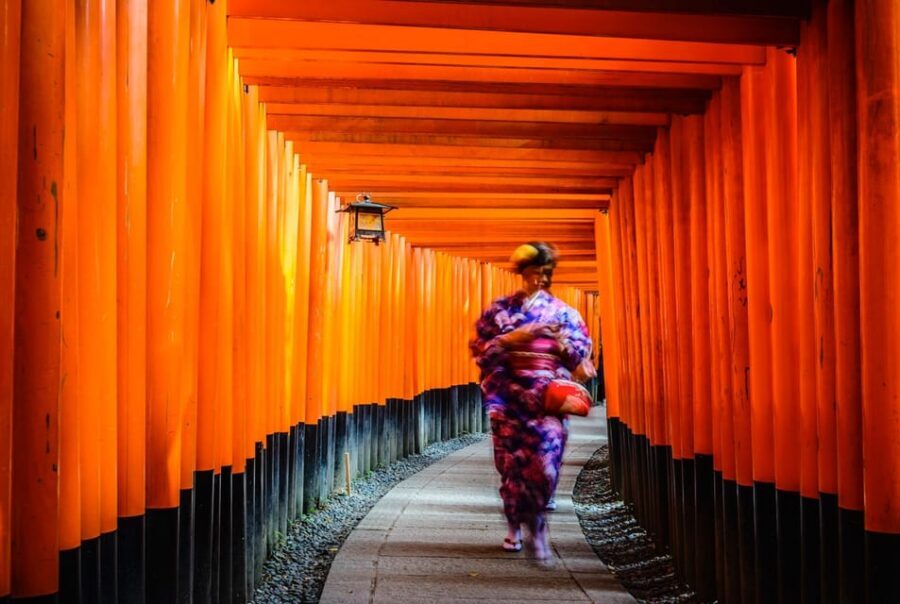
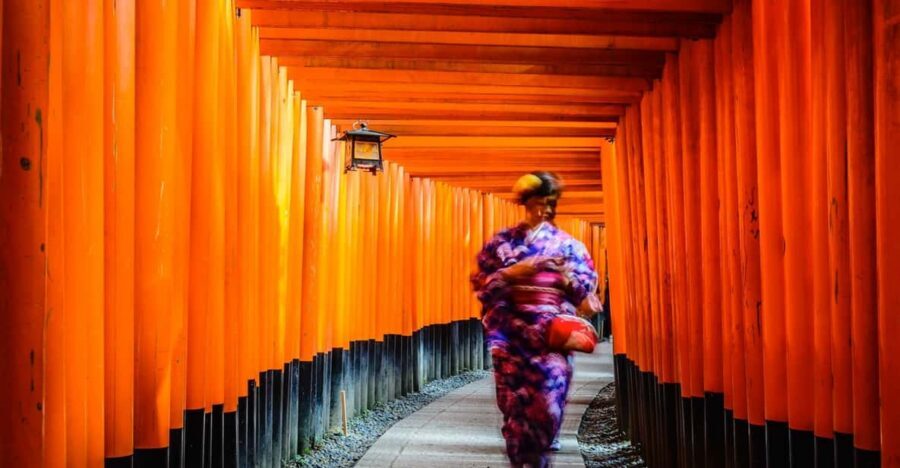
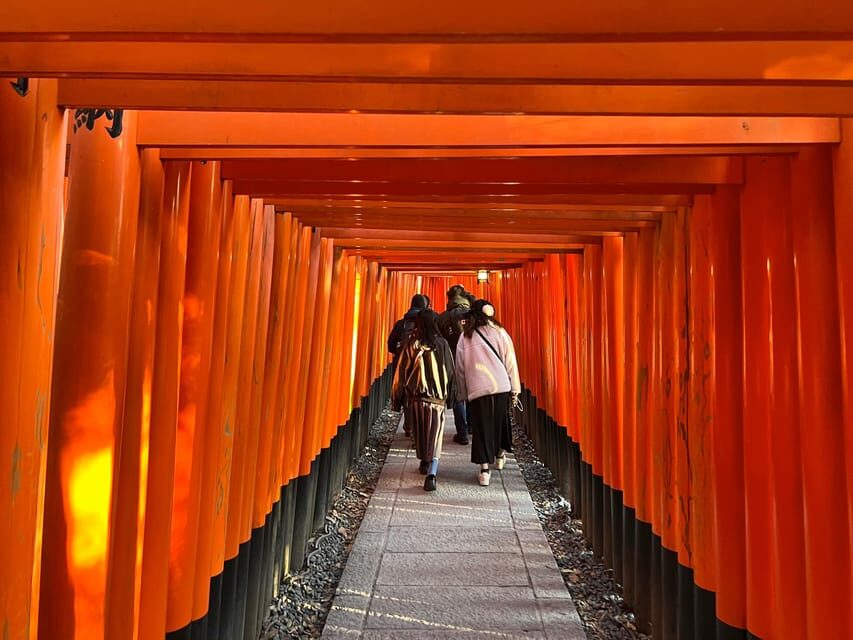
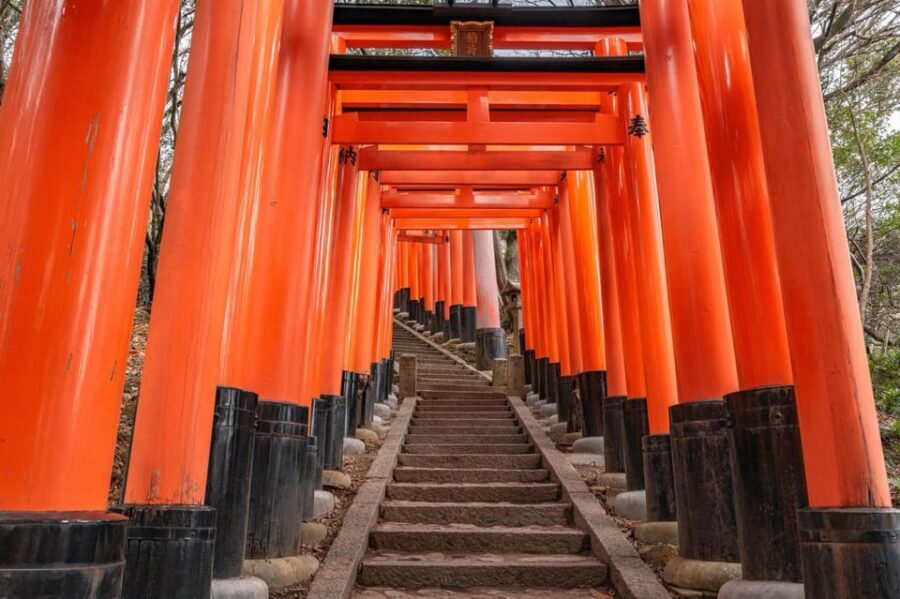
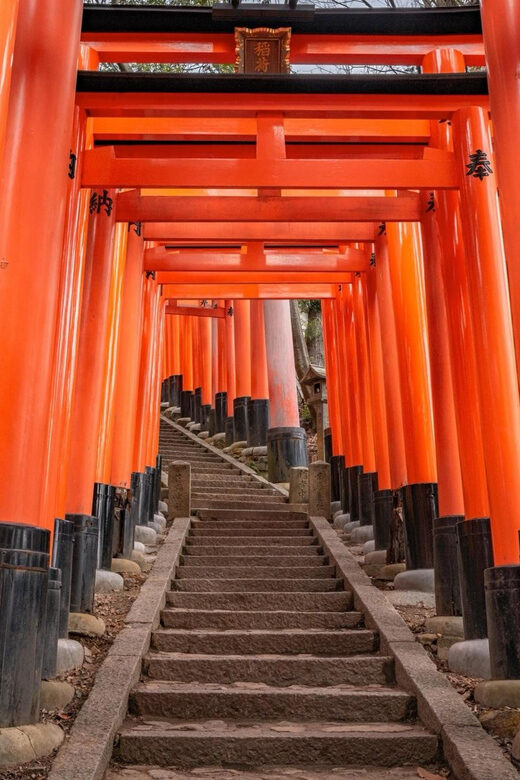
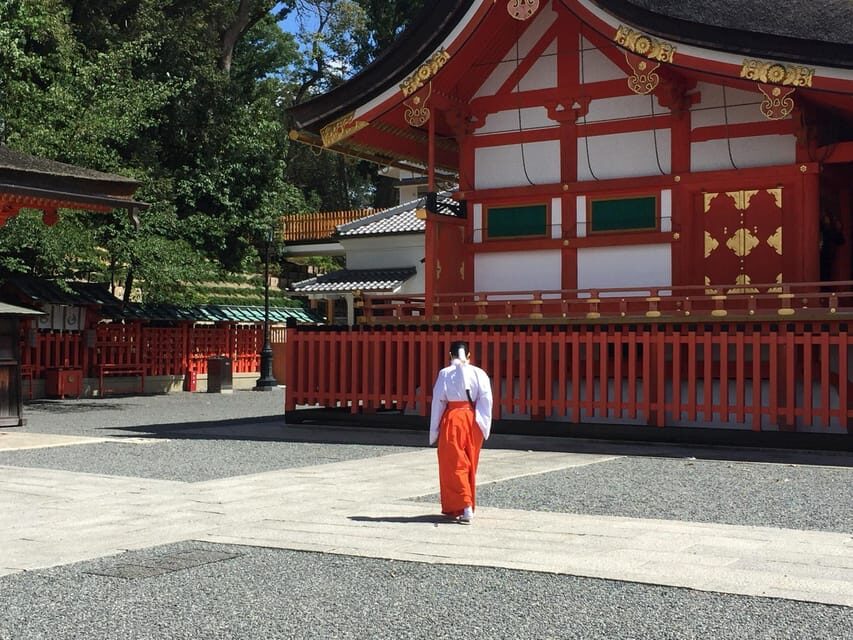
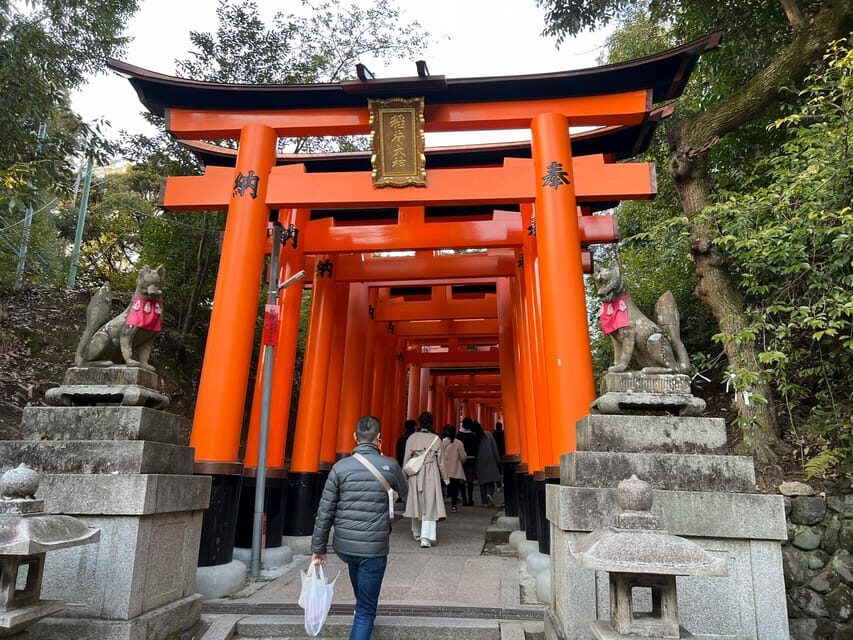
Fushimi Inari Taisha is one of those Kyoto places where photos can never fully capture the sensation. The real win here is the guided walk through the trail of 1,000 vermilion torii gates—but with the meaning explained as you go.
The guide focuses on the shrine’s ancient origins and what it represents in Shinto. That background changes the walk. You stop seeing it as just a pretty tunnel of red gates and start noticing the rhythm of the path, the way visitors flow through sacred space, and why the torii gates are more than decoration.
What it feels like on the ground
Even with a short stop here, you’ll get time to walk the route at a temple-walk pace. Expect more steps and turning than you might guess from pictures. Shoes matter. If you’re carrying a big bag, leave it behind—this tour doesn’t allow luggage or large bags.
A practical tip
Have water ready. You’ll be on your feet, and the walking builds over the full half day (Fushimi Inari, then Kiyomizu-dera, then old streets and Gion).
Possible drawback
The most famous torii gate sections can involve crowding. You’re not “escaping” that part—this is Kyoto—but the guide’s commentary helps you stay focused on what you’re seeing instead of just trying to get out of foot traffic.
A few more Kyoto tours and experiences worth a look






Kiyomizu-dera: power spots for love, longevity, and school success
Next comes Kiyomizudera (Kiyomizu-dera), one of Kyoto’s headline temples. The best part of this stop on a guided tour is that you don’t just stand and look—you learn the temple’s “power spots” and what people traditionally go there to pray for.
You’ll get explanations tied to deities associated with love, longevity, and academic success. That sounds simple, but it’s actually useful. When you understand what people are focusing on, you can choose how you want to participate—whether that’s a quiet moment for personal hopes, or just appreciating the cultural logic of why a spot is meaningful.
Entrance fee note
Kiyomizudera has an entrance fee of 500 yen (about US$3.10) that isn’t included in the tour price. Plan for cash. (You’re also told to bring cash, which is a hint that ATMs and card readers aren’t something you should rely on at each turn.)
Where the walking gets real
Even though the guide schedule keeps things efficient, this is still temple terrain: stairs, uneven areas, and a steady uphill feel in places. This tour isn’t a good fit if you have back problems or mobility impairments, and it’s not suitable for wheelchair users or people with low fitness.
If you’re generally healthy and used to walking, you’ll likely find this stop very rewarding—especially with a guide pointing out the “why this place matters” details.
Ninen-zaka and Sannen-zaka: old Kyoto lanes with merchant-shop charm
After Kiyomizudera, you’ll walk through Sannenzaka and Ninenzaka, two of Kyoto’s most photographed old streets. The tour keeps it timed (about 10 minutes each area), but that’s enough to feel the mood.
This is where Kyoto starts to look like the Kyoto you imagined before you arrived. Wooden buildings, traditional merchant shops, and narrow lanes make it feel like you stepped into the old capital instead of just entering another tourist area.
What I liked about this segment
A short walk like this is perfect for switching gears. You go from temple significance and blessings to everyday-looking streets with a slower feel. Even if you don’t shop, the lanes help you understand how much of Kyoto is designed around atmosphere, not just landmarks.
A small consideration
Because it’s a walk through popular streets, it can be busy at times. Stay aware of uneven pavement and don’t assume you can stop anywhere for photos without getting in someone’s way.
Gion: geisha and maiko facts, plus ochaya and machiya context
The tour finishes in Gion, Kyoto’s most well-known geisha district. You’ll walk through the area for about 15 minutes, with time for the main sights and the cultural orientation that makes Gion more than a postcard.
The guide explains facts about geisha and maiko—what they do, how entertainment works in this setting, and how traditional teahouses fit in. You’ll also learn about ochaya (teahouses) and see the kind of old merchant houses—machiya—that shape Gion’s look and feel.
Why this part is worth paying for
Gion is easy to misunderstand if you only see it through pop culture. With a real explanation, you start spotting details more intelligently: the architecture, the street structure, and why certain spaces exist.
It also helps that Roberto’s approach is not pushy. You get context, then you’re free to walk on your own once the tour ends. That’s a good way to keep the day from feeling like a sprint.
Getting to your hotel after
When the tour ends in Gion, you can take a city bus or taxi to your hotel. Since transportation fees aren’t included, keep that in mind for budgeting.
Price and value: what $90 buys in a 4-hour private tour
At about $90 per person for a 4-hour private experience, the value comes down to what’s included: an official Kyoto City Certified Tourist Guide, iPad-based explanations with images, and photo support.
Here’s how I’d think about it:
- You’re paying for interpretation. Temple visits and torii walks are impressive on their own, but they’re also confusing if you don’t know what you’re looking at. The guide’s explanations turn the walk into a story you can follow.
- You get practical help. Public transport takes coordination. A guide reduces that stress and keeps you moving efficiently.
- You’ll likely save time and energy. With a tight half-day schedule, you don’t want to spend your precious hours figuring out routes and entrances.
What’s not included:
- Transportation fee (public transport is used, but fares are on you)
- Kiyomizudera entrance fee of 500 yen
- Food and drinks
So yes, the “sticker price” isn’t the full cost. But it’s still strong value if you want an organized, meaningful tour rather than a self-guided checklist. If you already speak Japanese and enjoy planning every detail, you might not need a guide. If you’re new to Kyoto, you’ll feel the difference fast.
Who this tour is best for (and who should skip it)
This is a good match if:
- you like temples and religious sites but want the cultural meaning explained
- you want photos without trying to be your own photographer
- you’re okay walking and handling stairs at a normal tourist pace
- you want a private format with English or Spanish support
This is not a good match if:
- you have back problems or mobility impairments
- you use a wheelchair
- you have low fitness
- you’re over 75 years old (as noted for suitability)
- you’re visually impaired
Also note: smoking is not allowed, and luggage or large bags aren’t permitted. If you’re traveling light, you’re set.
Photo help and iPad explanations: small touches that really matter
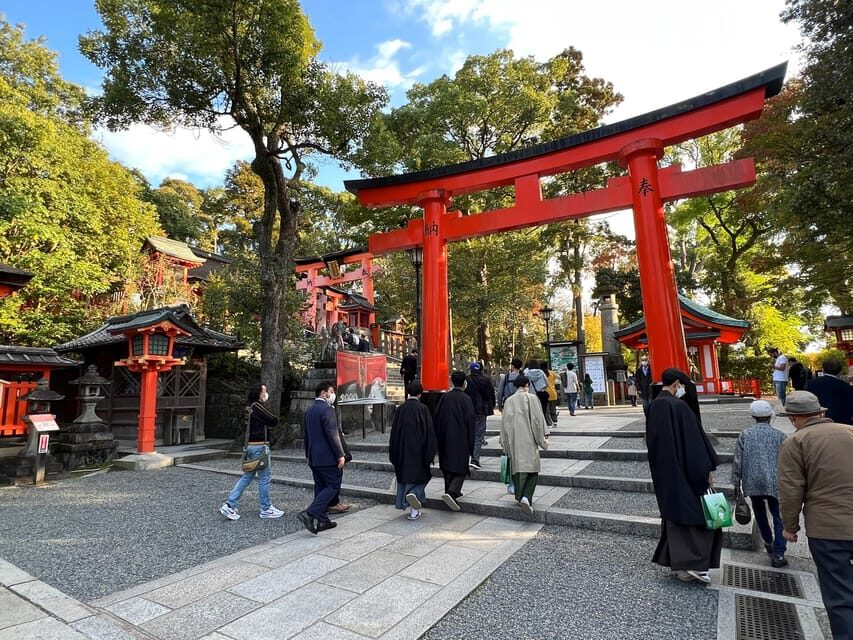
One of the most praised parts of this experience is how guide support shows up in real moments. Roberto can take as many pictures of you as you want. That’s not just a convenience—it changes how you enjoy a place. Instead of timing your photos around every step, you can pause and actually look.
The iPad explanations with images help too, especially when you’re walking past details that are easy to miss at street speed. It’s one of those tools that makes the day feel smoother and more understandable, even if you’re tired.
Should you book this Kyoto half-day tour?
If you want to see the big names—Fushimi Inari, Kiyomizudera, Sannenzaka/Ninenzaka, and Gion—and you care about learning what you’re seeing, this is a smart choice. You’ll get the most out of torii gates and temple stops because the meaning is explained as you walk, not after you’ve already moved on.
Book it if:
- you’re visiting Kyoto for the first time
- you’d rather follow a plan with a certified guide than self-navigate
- you want help with photos and cultural context
Skip it if:
- you can’t handle stairs or sustained walking
- you want zero structure and no public-transit coordination
- you’re trying to minimize all extra costs beyond what you already planned (because transportation fares and Kiyomizudera entry are separate)
FAQ
Where do we meet for the tour?
Meet in front of the door of 7-Eleven Heart-In at JR Kyoto Station Building 1F, using the Kyoto Tower side exit. Roberto will hold an iPad and a red card that says RBRT.
Is the tour private, and what languages are offered?
Yes, it’s a private group. The live guide offers English and Spanish.
How long is the tour, and does it use public transportation?
The tour runs for about 4 hours and uses public transportation (city bus and train).
Are entrance fees included?
Entrance fees aren’t included. Kiyomizudera’s entrance fee is 500 yen (approx. US$3.10).
What should I bring?
Bring comfortable shoes, water, comfortable clothes, and cash.
Can I cancel for a full refund?
Yes. You can cancel up to 24 hours in advance for a full refund.