Geisha culture feels close-up here.
What makes the Kyoto Gion walking tour with a maiko and retired geiko stand out is the mix of street-level context and a private, rare inside-the-ochaya moment. I especially like that you walk Gion with a local guide who puts the district into perspective, and I also like that the highlight is not just watching a performance but having time for Q&A and chat in a controlled, respectful setting. One possible drawback: it’s a walking tour with stairs at the performance venue, and a couple of guests found translation and sound volume could be hard to catch, so you’ll want to pay attention early and sit/position well during the show.
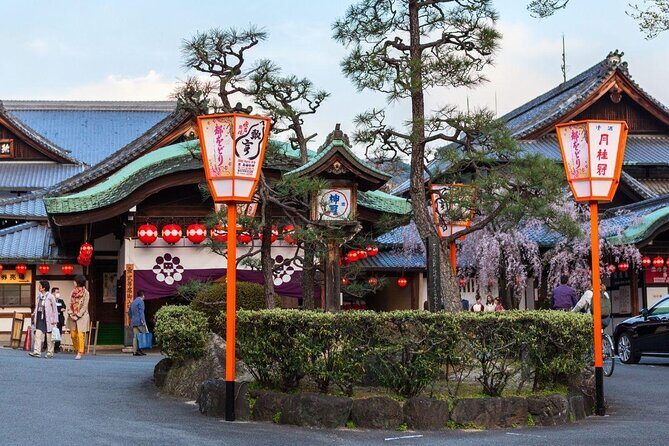
If you’ve ever wandered Gion and wondered what you’re missing, this tour is designed for that exact problem. You get a sequence of iconic spots—Gion Shirakawa, Hanamikoji Street, and the Miyagawasuji tea house—then you go from sightseeing mode to real cultural participation.
In This Review
- Key Highlights You’ll Actually Feel
- Why This Gion Tour Is More Than Geisha Spotting
- Price and Value: What $109.43 Buys in Kyoto
- The 3-Hour Route Through Gion: How Each Stop Earns Its Place
- Gion Shirakawa: Where the Lifestyle Is the Lesson (Stop 1)
- Tatsumi Daimyojin Shrine and Tatsumi Bridge: Small Sacred Details (Stop 2 and the Bridge Moment)
- Hanamikoji Street: The Famous Main Drag, Explained (Stop 3)
- A Zen Temple Precinct Walk: No Inside Access, Still Worth It
- Miyagawasuji: The Tea House Performance That’s the Real Reason to Book (Stop 4)
- The Ochaya Performance: What You Can Expect Inside
- Photo Rules and Etiquette: How to Respect the Moment (and Get Good Results)
- Walking Tour Reality Check: Shoes, Pace, and Stairs
- Who Should Book This Tour (and Who Might Skip It)
- Should You Book the Kyoto Geisha Maiko with Gion Walking Tour?
- FAQ
- How long is the Kyoto Gion geisha maiko tour?
- What does the tour cost?
- What is the group size limit?
- Where do you meet for the tour?
- Is the performance held in a tea house or something else?
- Do I need socks for the performance?
- What happens on rainy days?
- Is there walking involved?
- Is the performance on the ground floor?
- Are photos and videos allowed?
- Can I cancel and get a refund?
Key Highlights You’ll Actually Feel
- Private ochaya access: an off-limits setting where a maiko performs and you can talk, not just peek from the sidewalk
- Gion context, not random stops: guided storytelling as you move through Shirakawa, Hanamikoji, and back-alley scenery
- Live performance at a traditional tea house: plus translation so you can follow what’s happening
- A conversation with a maiko and retired geiko: the kind of interaction most visitors never manage
- Small-group pace (up to 30): generally easier to hear and ask questions than big bus tours
- Respectful etiquette matters: socks, umbrellas on rainy days, and photo rules that keep the moment dignified
Why This Gion Tour Is More Than Geisha Spotting
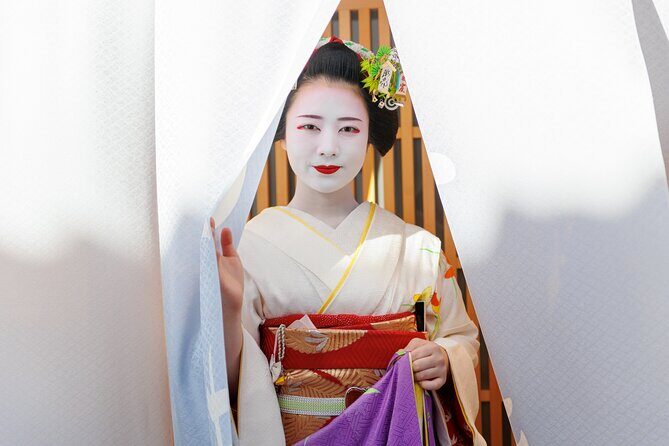
Gion is famous for a reason, but it can also make visitors act like they’re hunting for a glimpse. This tour flips the script. Instead of chasing geiko and maiko down busy lanes, you get a guided walk that explains what you’re seeing and why it matters—then you meet the artists in the place where they actually perform and receive guests.
Two things I’d underline from how this experience is structured:
First, it’s built around a real ochaya visit. That word matters. An ochaya is not a generic tea shop. It’s a traditional, invitation-oriented venue in Kyoto’s geisha districts, and access for first-time visitors is limited. This tour gives you that rare inside view.
Second, the performance portion includes interaction, not just a show. You’re translated for, and there’s a chance to ask questions and chat after or during the program, guided by staff and the hosts.
The trade-off is time and rules. It’s still a 3-hour walking itinerary, and the performance is held upstairs with stairs. Add the socks requirement, and this is best suited for travelers who are willing to follow house etiquette without treating it like a casual museum stop.
A few more Kyoto tours and experiences worth a look


Price and Value: What $109.43 Buys in Kyoto
At about $109.43 per person for roughly 3 hours, you’re paying for something that costs money to organize: a professional guide, a structured Gion walk, translation support, and entry to a private traditional venue with live artists.
Is it cheaper than doing Gion on your own plus a generic cultural show? Yes—by a lot. But you’re not paying just for sightseeing. You’re paying for:
- Exclusive access to a private ochaya setting
- A maiko performance plus conversation
- A tailored explanation of geisha-maiko culture while you’re walking the district
Some people judge value by price-per-minute, and this isn’t a quick stop. A few reviews also mention that the walking portion can feel longer or more repetitive than expected. So, if you’re the type who wants max time at the venue and minimal walking, you’ll want to go in knowing the walk is part of the experience, not filler.
The 3-Hour Route Through Gion: How Each Stop Earns Its Place
This tour moves through Gion like a story, not like a checklist. Expect short stops, guided explanations, and then a shift toward the performance venue.
Gion Shirakawa: Where the Lifestyle Is the Lesson (Stop 1)
You start at Miyagawasuji (meeting point), then the first major stop in the walk is Gion Shirakawa for about 30 minutes.
This is one of those places where the streets look pretty even before you know the context. With the guide, you’ll get a sense of how geisha in Kyoto historically fit into the social and arts world—who they are, what daily life looks like, and how training and tradition shape performance.
Why it works: the guide helps you read the district. Instead of “nice old buildings,” you start noticing the patterns: the rhythm of machiya houses, the old-town geometry, and the feeling of a working entertainment district rather than a theme park.
Tatsumi Daimyojin Shrine and Tatsumi Bridge: Small Sacred Details (Stop 2 and the Bridge Moment)
Next is Tatsumi Daimyojin Shrine for around 5 minutes, followed by a look at Tatsumi Bridge.
This part is short on purpose. The shrine gives a quick grounding in Kyoto’s layers—Shinto protection and good fortune tied to everyday life and travelers’ safety. The bridge is the opposite: tiny, photogenic, and cinematic. It’s the kind of spot where you feel like you stepped into a film set because the streets and wooden houses keep their traditional character.
Practical note: the tour includes these smaller moments, but you’re still moving. Wear shoes you’re comfortable walking in for the full route.
Other walking tours we've reviewed in Kyoto






Hanamikoji Street: The Famous Main Drag, Explained (Stop 3)
You’ll spend about 10 minutes on Hanamikoji Street, one of Gion’s best-known streets, lined with traditional machiya houses, tea houses, and shops.
Here’s the trick: this street is famous, so it can feel like it’s all surface-level photography. With the guide, it becomes different. You’ll learn how the district is organized and what the traditions mean behind the scenes—why certain spaces function one way for locals and another way for visitors.
You’ll also likely pass by cultural venue context around the area, including Gion Corner, a place that showcases traditional art performances. Even if you don’t sit for a full show there, it helps you understand what “Kyoto arts” can look like in practice.
A Zen Temple Precinct Walk: No Inside Access, Still Worth It
You’ll also walk through an area tied to the oldest Zen Buddhist temple in Kyoto near the Gion district. The plan is not to enter buildings—just to move through the precinct like locals.
This is a smart change of pace. After geisha talk, you get a calmer lens on Kyoto. It keeps the day from becoming only performative spectacle. You’re not being rushed through history; you’re getting atmosphere and a sense of how different traditions coexist in one neighborhood.
Miyagawasuji: The Tea House Performance That’s the Real Reason to Book (Stop 4)
The final stop is Miyagawasuji for about 1.5 hours, and this is the heart of the tour.
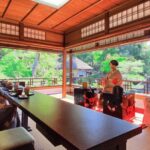
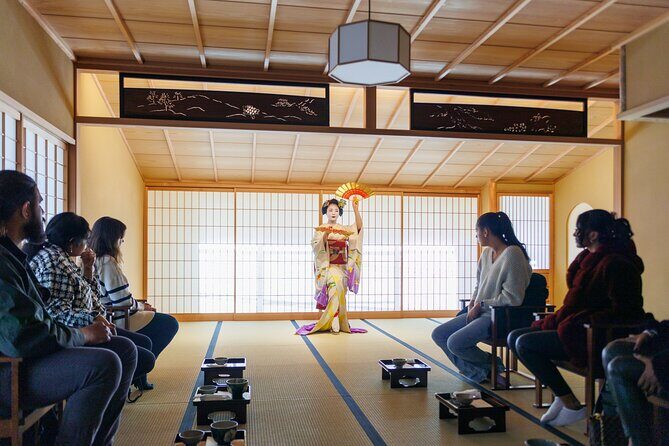
You’ll watch a professional performance at a traditional tea house, with the guide translating so you can follow the meaning and cultural background. Importantly, there’s also time for conversation with the maiko, and you’ll have a chance to ask questions in an orderly setting.
A few details you should take seriously because they affect comfort:
- The performance is held on the 2nd floor, and stairs are involved
- You must wear socks at the venue of the performance
- On rainy days, wet clothes and wet socks aren’t allowed at the venue
If it’s raining, the tour gives you the idea: umbrella during the walk, and be ready to change your routine so you’re not arriving soaking wet.
The Ochaya Performance: What You Can Expect Inside
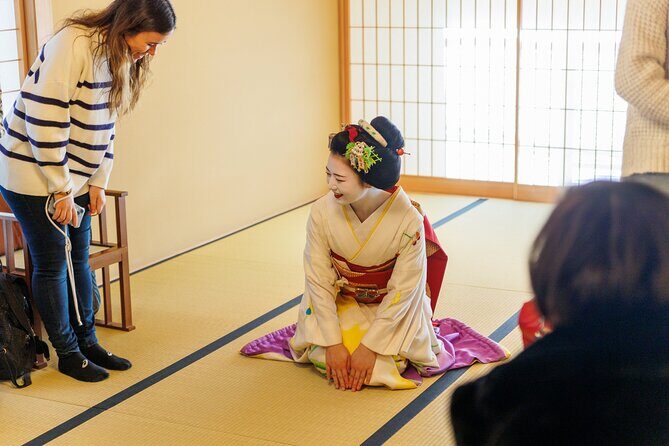
This part is designed to feel intimate and human. You’re not just watching from a distance.
Based on the structure of the experience, here’s what to expect:
- A live segment featuring a maiko
- Interaction with the maiko and a retired geiko
- Translation support so the conversation lands
- Time for questions, meaning you’re not stuck listening silently the whole way
Multiple named guides show up in excellent feedback: Haruki, Takuma, Miko, Ayako, Mika, Yoko, Ellie (Eriko), Chiko, and Naomi. The common thread is strong interpretation of culture and how the hosts explain what you’re seeing.
One caution: a few guests reported that translation or audibility didn’t work perfectly for them. That’s not your fault, but it is your hint to choose your spot well and keep your attention during the explanation portions.
Photo Rules and Etiquette: How to Respect the Moment (and Get Good Results)
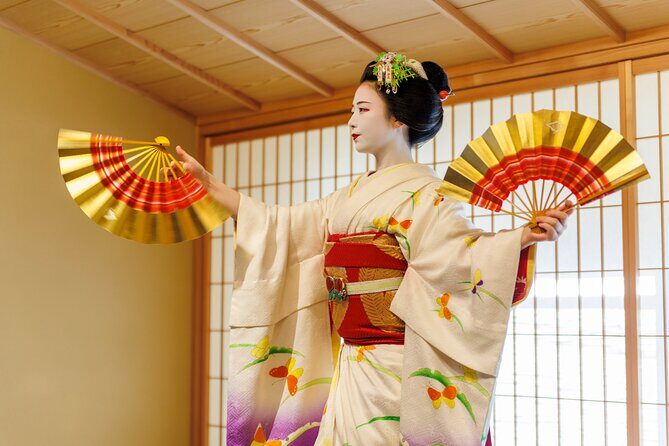
If you’re planning to take pictures, read the rules carefully. They’re there to protect the artists and the privacy of the venue.
Here’s what the tour specifies:
- Photography and video are allowed only during the performance and the photo session
- If you want to upload photos to social media, you must get direct permission from the maiko first
For me, that’s a fair trade. The experience is rare because it’s controlled and respectful. If you follow the timing and ask permission for social posting, you’ll look and act like the kind of guest the ochaya wants to host.
Also, keep your behavior aligned with the sock requirement and rainy-day constraints. Those details are part of etiquette, not petty rules.
Walking Tour Reality Check: Shoes, Pace, and Stairs
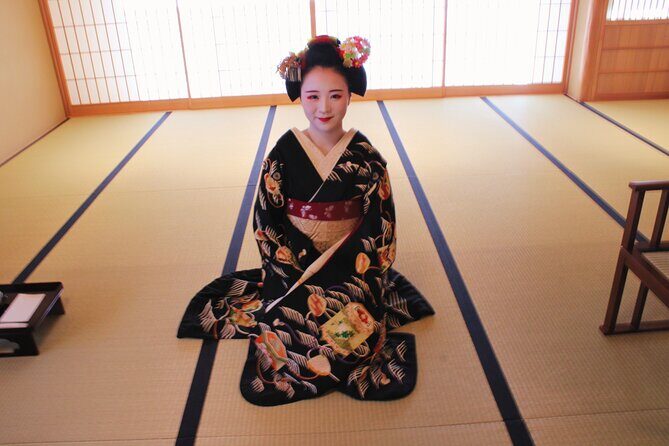
This is a walking tour with a moderate physical fitness level recommended. Expect:
- A few stops totaling around the full 3-hour duration
- Continuous movement through Gion lanes
- Stairs at the tea house (2nd-floor performance area)
A couple of reviews mention the walking segment can feel like more time than some people expected, including comments about feeling like the group moved around in a circle and focused on the fronts of buildings. That doesn’t mean it’s bad—part of the point is to help you read the neighborhood—but it’s good to know so you don’t show up expecting only one focused highlight.
Practical tip: bring patience, wear supportive shoes, and plan to enjoy the guide’s narration as the main “activity” while walking.
Who Should Book This Tour (and Who Might Skip It)
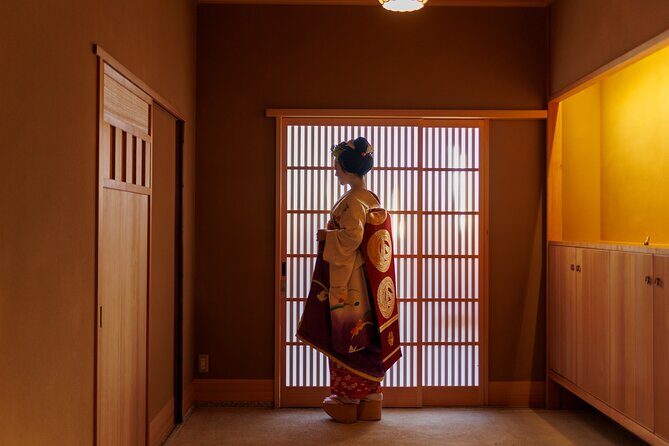
This tour is a strong fit if you want:
- A guided understanding of geisha culture, history, and arts
- A serious look at Gion through the eyes of a local guide
- A rare indoor meeting and performance with a maiko and retired geiko
- Translation support so you can actually follow the program
It’s also a good option for people who don’t want to play guessing games in Gion. You’ll get structured access rather than wandering hoping to see someone.
You might think twice if:
- You dislike walking tours and would rather spend your whole time inside a venue
- You’re very sensitive to sound/translation issues and need perfect mic clarity
- You have trouble with stairs or don’t want socks-and-rain etiquette constraints
Should You Book the Kyoto Geisha Maiko with Gion Walking Tour?
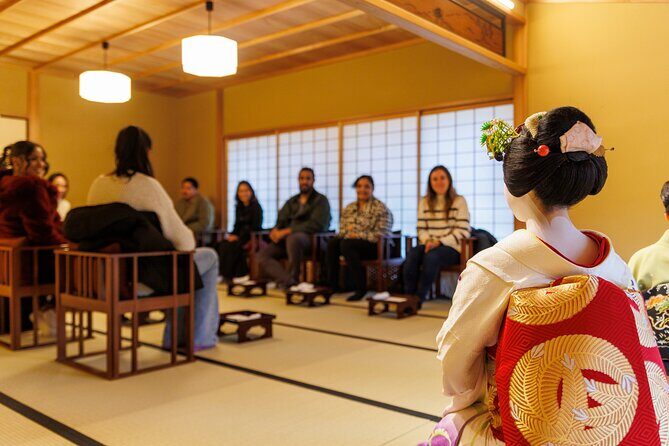
I’d book it if your goal is to experience Gion in a way that doesn’t depend on luck. The private ochaya access and the chance to speak with a maiko and retired geiko are exactly the kind of “only in Kyoto” cultural moment that most visitors never get.
I’d hesitate if you’re price-friction sensitive and expect a performance-only outing. This tour includes a walk with multiple city stops, so it works best when you enjoy cultural context as much as the show.
If you go, go prepared: comfortable shoes, socks, and a calm, respectful attitude. That’s what makes the experience land the way it’s meant to.
FAQ
How long is the Kyoto Gion geisha maiko tour?
It runs for about 3 hours (approx.), including a walking route and the tea house performance.
What does the tour cost?
The price is $109.43 per person.
What is the group size limit?
The tour has a maximum of 30 travelers.
Where do you meet for the tour?
The meeting point is Miyagawasuji, Higashiyama Ward, Kyoto, 605-0801, Japan.
Is the performance held in a tea house or something else?
The performance takes place at a traditional tea house venue (an ochaya/private venue as part of the experience).
Do I need socks for the performance?
Yes. You must wear socks at the venue of the performance.
What happens on rainy days?
The tour runs rain or shine. During rainy days, wet clothes and wet socks are not allowed at the venue, so you should use an umbrella during the walk.
Is there walking involved?
Yes. It’s a walking tour, and comfortable walking shoes are recommended. The route is best for travelers with moderate physical fitness.
Is the performance on the ground floor?
No. The maiko performance is held on the 2nd floor, and you can only access it via stairs.
Are photos and videos allowed?
Photography and video recording are allowed only during the performance and the photo session. For uploading photos to social media, you must obtain direct permission from the maiko beforehand.
Can I cancel and get a refund?
Free cancellation is available up to 24 hours in advance for a full refund. If you cancel less than 24 hours before the start time, you won’t receive a refund.