One Kyoto morning, two ways to move.
This tour uses a private rickshaw to cut time in the Arashiyama Bamboo Forest, then switches to walking so you can see the machiya side streets up close. I like that you get guided stops designed for photos and real context, not just a scenic drive. I also like the small “choose-your-own” feel with the optional walk into bamboo areas the rickshaw can’t reach. The main thing to plan for is extra walking and a slope, plus temple admissions you’ll likely pay separately.
The route is timed well for a focused 3-hour outing, and it ends right back at the meeting spot. Expect rickshaw photo pauses, a visit inside a traditional Kyoto-style machiya house at Kyoto City Sagatoriimotocho Nami Preservation Hall, and a stop at Otagi Nenbutsu-ji with its famous handmade figurines. Guides can speak English and Japanese fluently, and in some cases you may also get conversational Spanish, Chinese, or Korean.
In This Review
- Key things to know before you go
- Arashiyama by rickshaw: faster bamboo photos, then real neighborhood walks
- Meet at Sagatenryūji Susukinobabachō: start close to the action
- Machiya house time at Sagatoriimotocho Nami Preservation Hall
- Bamboo Forest rickshaw photo track: where the driver helps most
- Otagi Nenbutsu-ji: the figurine temple stop
- Haiku poet cottage, shrine in the bamboo grove, and preserved old streets
- Photo tips that matter: stopping for angles, not just sightseeing
- Private tour setup: you control the pace
- Language support: English and Japanese, plus other options
- Price and value: why $228.62 can work out well in Arashiyama
- Who should book this tour, and what to plan for
- Should you book Kyoto Sagano Insider: Rickshaw and Walking Tour?
- FAQ
- Where does the tour start and end?
- Is the rickshaw private or shared?
- How long is the tour?
- Are temple and garden admission fees included?
- Will there be walking and slopes?
- How does cancellation work?
Key things to know before you go
- Private rickshaw route beats bamboo chaos with a driver who knows where to position you for photos
- Machiya house stop is truly inside a traditional home-style building (and that admission part is free)
- Otagi Nenbutsu-ji is the figurine temple stop, with admission not included
- Optional extra bamboo walking may help you reach areas a rickshaw can’t go
- You’ll cover slopes on foot, so comfortable shoes matter
Arashiyama by rickshaw: faster bamboo photos, then real neighborhood walks
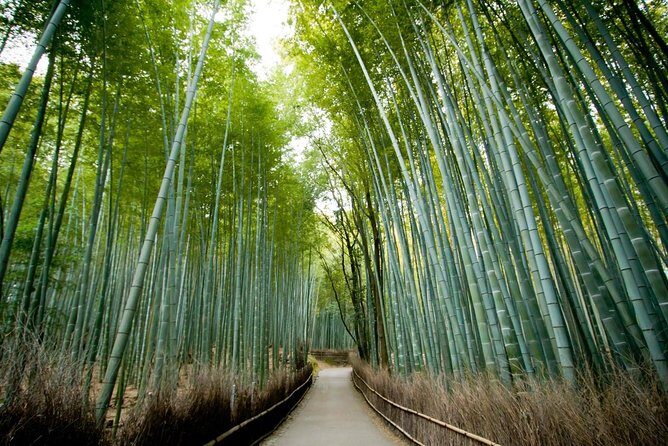
Arashiyama can feel like two different places in one day. There’s the bamboo forest mood—misty, photo-heavy, slow-moving—and then there’s the quieter Kyoto you only notice when you walk: side streets, preserved old lanes, and those narrow townhouses with small details you’d miss from the roadside.
This tour is built around that split. The rickshaw gets you through the part of Arashiyama where speed and positioning matter most. Then you switch to walking for the areas that feel more local and less like a theme park. You’re not stuck in a long stroll from one end to the other, and you’re not locked into a slow ride where you never get out to look around.
Other walking tours we've reviewed in Kyoto

Meet at Sagatenryūji Susukinobabachō: start close to the action
Your tour starts and ends back at 1-1 Sagatenryūji Susukinobabachō, Ukyo Ward, Kyoto. That round-trip setup is a convenience win in Kyoto, where getting “one more” train or bus connection can turn into an extra hassle.
It’s also described as near public transportation, which matters because you don’t need a hotel pickup to make the timing work. If you’re trying to stack this with other Arashiyama plans (or just keep your afternoon flexible), the location makes it easier.
Machiya house time at Sagatoriimotocho Nami Preservation Hall
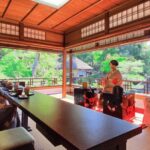
One of the most satisfying stops here is the brief inside visit at Kyoto City Sagatoriimotocho Nami Preservation Hall. It’s set up as a traditional Kyoto-style machiya house experience, and the ticket for this specific stop is listed as free.
Why this matters: bamboo photos are fun, but they’re also easy to overdo. A machiya visit reminds you that Arashiyama isn’t only postcards. It’s a living style of architecture—wooden structure, townhouse proportions, and the kind of space that shaped how people cooked, hosted, and lived. Even though the stop is about 20 minutes, it’s a nice reset before the temple and the more animated bamboo area.
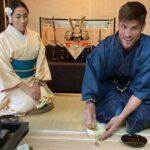
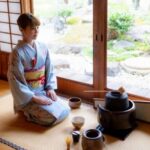
The tour also includes the possibility of going into a tea house with your guide. That’s the sort of detail that turns a “walking tour” into a “Kyoto moment,” especially if you like small cultural breaks instead of constant sightseeing.
Bamboo Forest rickshaw photo track: where the driver helps most
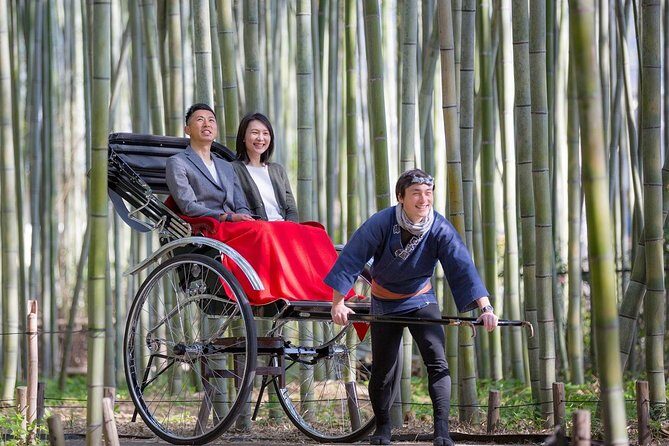
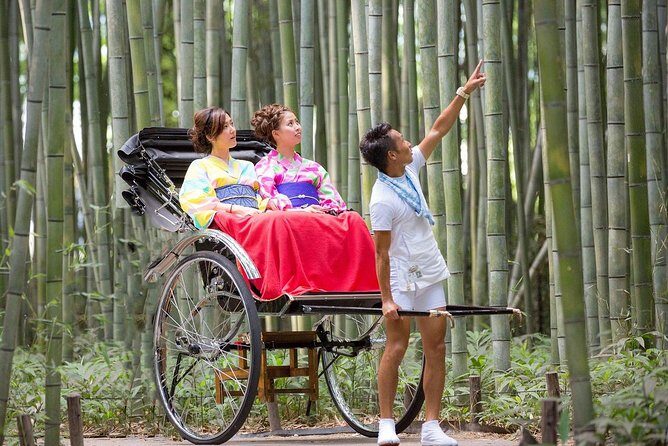
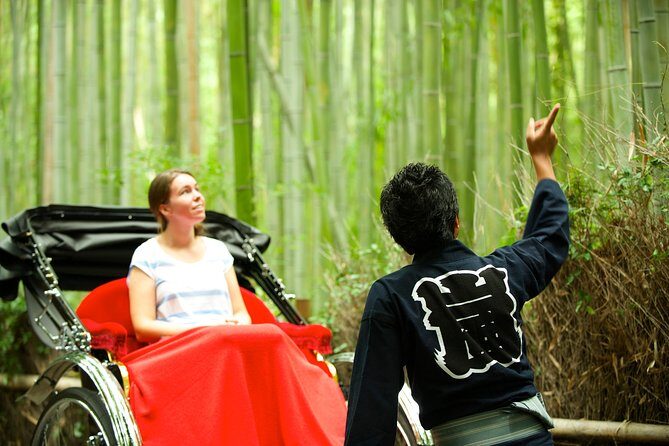
The heart of this experience is the Arashiyama Bamboo Forest rickshaw ride. You’ll pass through the bamboo area and have photo stops along the way.
Here’s the practical advantage: when bamboo crowds are thick, the scenery is the same but your time isn’t. Walking can mean detours, bottlenecks, and getting pushed into the background for photos. With a driver, you can slow down at the right spots without needing to fight for position. You also get “travel time” inside the experience instead of using energy to navigate.
There’s also an optional choice. The rickshaw passes through bamboo, and there’s an option to get off and walk inside a portion of the bamboo forest that’s not accessible by rickshaw. If you want more quiet and texture, taking that option can be worth it. If you prefer to conserve energy—especially with slopes included in the tour—staying with the ride portion is totally reasonable.
If you’re planning your own photos, this is the key mindset: bring your camera, but also be ready to let the guide choose the angles. Many guides are good at stopping where the bamboo lines up cleanly and where you’re not standing in someone else’s flow of foot traffic.
Otagi Nenbutsu-ji: the figurine temple stop
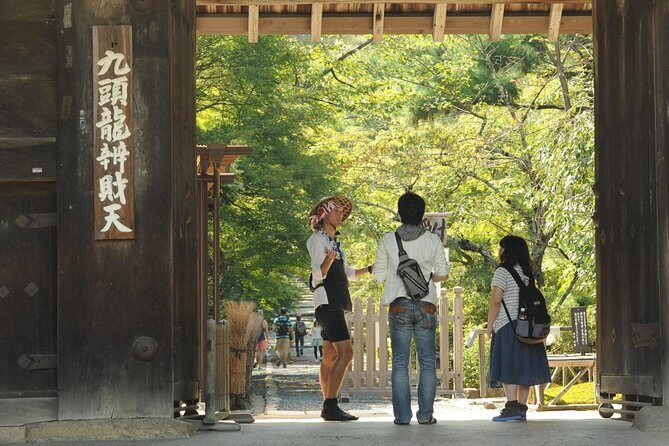
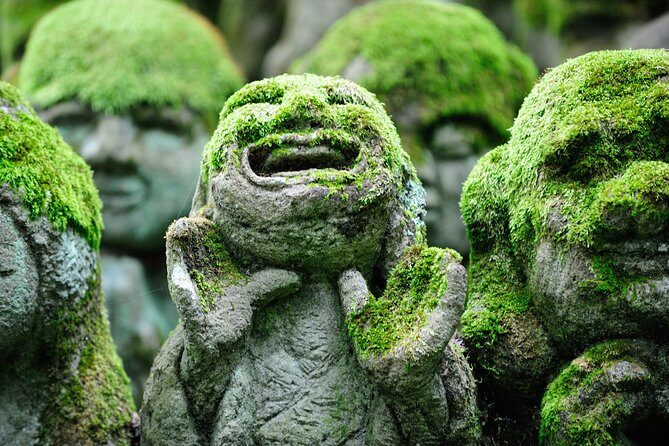
Next up is Otagi Nenbutsu-ji Temple, which you’ll enter and visit for about 30 minutes. The big draw here is that you’ll see the temple’s quirky handmade figurines.
Admission fees for temples and gardens are listed as not included, so expect to pay for this stop if you’re doing the full visit. That said, the time window fits the theme: long enough to look, short enough to keep the day from feeling heavy.
Why I think this stop works well on a rickshaw-and-walk combo: it shifts you from “repeatable scenery” to something more specific. The bamboo is iconic, but it’s also familiar to many first-timers. Otagi is different—odd, detailed, and memorable. It gives the tour a personality.

Haiku poet cottage, shrine in the bamboo grove, and preserved old streets
After the bamboo ride and the main temple stop, the route moves through a sequence of smaller, high-feel stops that make the area feel like a real neighborhood.
You’ll see:
- An old traditional cottage with a straw-thatched roof, described as the former home of one of Japan’s famous haiku poets
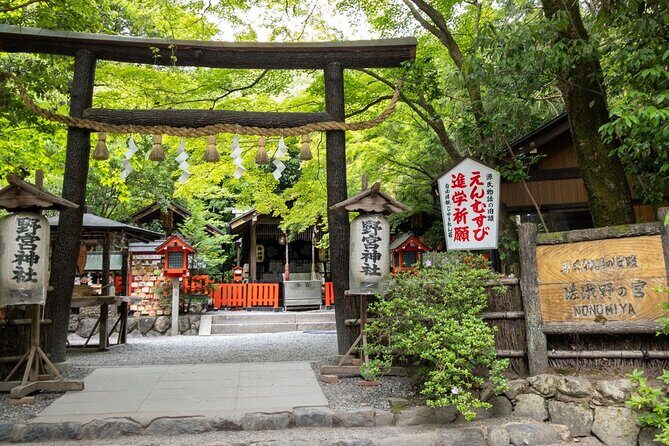
- A Shinto shrine nestled in the bamboo grove
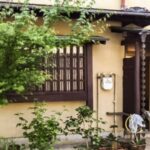
- Typical Arashiyama-style townhouses, neighborhoods, and side streets
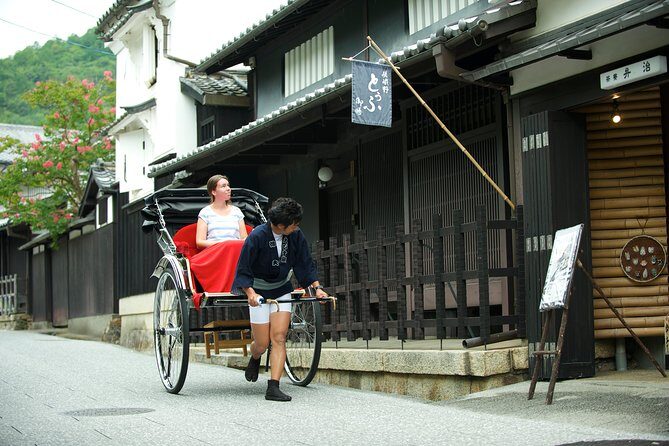
- A preserved district, including an old pilgrim path lined with traditional wooden townhouses that you won’t find in downtown Kyoto
This is where the walking part really earns its keep. From the rickshaw, you get motion and quick views. On foot, you get the “small scale” of Kyoto: the way lanes curve, the shift from main street noise to tucked-away calm, and the wooden textures that look different up close.
One small caution: because the tour includes walking up and down a slope, those preserved paths and old-lane corners can feel more tiring than you expect. Comfortable shoes are the unglamorous hero here.
Photo tips that matter: stopping for angles, not just sightseeing
This tour is explicitly built around photo stops at instagrammable spots, and that’s not just marketing. On rickshaws, the driver can control where you pause and how quickly you move to the next best frame.
In the guiding style shown in past experiences, the best guides also act like photographers. Names that have come up include Takumi, Atsu, Yoshii, Shota, and Yuya—and the common thread is clear: they’re friendly, they stop at good spots, and they help you get images without turning the experience into a constant picture scramble.
My practical advice: pick one or two “must-have” photo moments before you go. Then let the guide handle the rest. If you try to micromanage every stop, you’ll spend more energy directing than enjoying.
Private tour setup: you control the pace
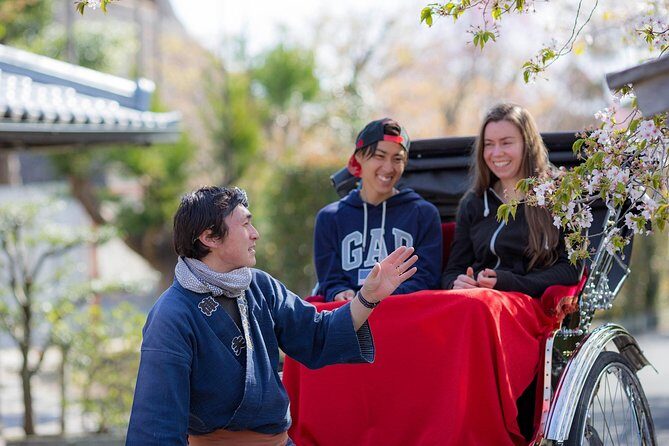
The tour is private, meaning you do not share the rickshaw with strangers. That matters because bamboo photo stops can be awkward if you’re mixed with other groups. With your own group, your timing stays yours—faster when you want it, slower when you want to linger.
It also helps you focus on the walking portions. When you’re in a crowd, it’s easy to follow the group and miss details. Here, your guide’s rhythm is easier to match.
If you’re traveling as a couple, this format can be especially good value. The seating is described as 74 cm wide, and it can accommodate up to two adults side by side.
Language support: English and Japanese, plus other options
Communication is part of the value on a tour like this, because Arashiyama works best when you understand what you’re seeing.
The tour offers:
- English and Japanese speaking guide (fluent)
- Chinese/Korean/Spanish (conversational level) based on availability
So if you’re not fully comfortable with Japanese, you should still get clear context about the historical buildings you pass and the stories behind the stops.
Even on the riding portions, the guide’s narration can help you spot what matters—why a lane is preserved, what makes a shrine feel tucked into the bamboo, and why Otagi’s figurines are such a signature.
Price and value: why $228.62 can work out well in Arashiyama
The listed price is $228.62 per person for an experience around 3 hours 10 minutes.
At first glance, rickshaw tours can feel pricey. But here’s where the value math shifts:
- You’re buying time-saving transportation through one of Kyoto’s most crowded areas
- You’re getting a private vehicle plus guide narration
- You’re pairing rickshaw travel with walking access to places the rickshaw can’t reach
- Some admissions are covered at least for the machiya house stop (that specific ticket is listed as free), even if other temple fees are extra
Also consider group flexibility. The features mention group discounts, so if you’re traveling with more people, the per-person experience can improve.
That said, not everything is included. Admission fees for temples and gardens aren’t covered, and you should budget for that. Also, there’s no hotel pickup, which is fine if you can reach the meeting point easily, but not ideal if you’re counting on door-to-door service.
If you’re the type of traveler who likes Kyoto to feel personal and story-driven—not only scenic—this price starts to make more sense.
Who should book this tour, and what to plan for
This tour suits you if:
- You want to see Arashiyama Bamboo Forest without spending your whole visit in congestion
- You like guided context (historic buildings, preserved streets, and the meaning behind stops)
- You enjoy photo moments, but you also want cultural stops beyond bamboo
It may not fit as well if:
- You strongly dislike slopes or extra walking on uneven preserved paths
- You’re expecting all temple admissions to be included (they are not)
- You prefer to fully control your own route without guided timing
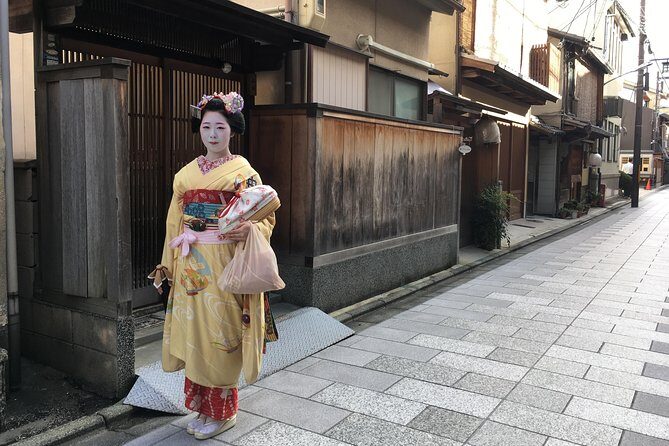
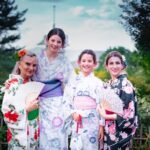
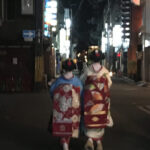
One more practical tip: if you’re tempted by kimono photos, this area is popular for it. A lot of the charm is in the visual pairing of bamboo and traditional clothing, and the tour format supports that because it includes a ride and short guided walk stops. (Just make sure you can move comfortably in whatever outfit you choose, especially with the slope.)
Should you book Kyoto Sagano Insider: Rickshaw and Walking Tour?
Book it if you want a smart mix of bamboo speed and on-foot Kyoto details in about three hours. The private rickshaw component is the biggest strength, and the walking sequence through machiya streets, preserved districts, and Otagi Nenbutsu-ji keeps it from feeling like a one-note bamboo photo stop.
Skip or rethink if your priority is self-guided wandering with zero structure. This tour has a set route and timed stops, and it includes walking up and down slopes. Also budget for temple admissions you’ll pay yourself.
If you want Arashiyama that feels efficient, guided, and photogenic without losing the neighborhood texture, this is one of the better ways to do it.
FAQ
Where does the tour start and end?
It starts at 1-1 Sagatenryūji Susukinobabachō, Ukyo Ward, Kyoto and ends back at the meeting point.
Is the rickshaw private or shared?
This is a private tour/activity, so only your group participates and you do not share the rickshaw.
How long is the tour?
The duration is listed as about 3 hours 10 minutes.
Are temple and garden admission fees included?
Temple and garden admission fees are not included. The machiya house stop at Kyoto City Sagatoriimotocho Nami Preservation Hall is listed as free, but Otagi Nenbutsu-ji admission is not included.
Will there be walking and slopes?
Yes. The tour includes walking up and down a slope, and there’s also an optional additional walk inside part of the bamboo forest that’s not accessible by rickshaw.
How does cancellation work?
You can cancel up to 24 hours in advance for a full refund. If you cancel less than 24 hours before the start time, you don’t get the refund.