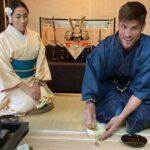
You’ll meet tradition up close. This Kyoto experience pairs a tea ceremony with a Maiko with a live explanation of daily life, plus hands-on matcha, a Q&A, and performances. It’s the kind of cultural stop where you’re not just watching—you’re doing, asking, and photographing.
I especially like two parts: first, the matcha lesson where you actually make your own cup, and second, the Q&A that gives context to what you’re seeing (kimono details, training, routines). One thing to consider: the setting is not a traditional tatami ochaya house, so the experience can feel more like a well-run cultural program than a deeply old-school tea room.
This is also a “closer than you expect” experience. You’ll sit near the Maiko for photos and a few interactive moments, and that proximity is where the magic happens—assuming you’re comfortable sharing a small space and staying engaged for the full 90 minutes.
In This Review
- Key moments
- Maiko and Matcha: What You Really Get in 90 Minutes
- Finding the Venue Near Gojo Station (and Why Timing Matters)
- Tea Ceremony with a Maiko: Matcha, Sweets, and a Guided Cup
- The Q&A Session That Turns a Show into Understanding
- Photo Time and the Senjyafuda Lucky Charm
- Dance Performances and Interactive Games (Why Premium Is Worth It)
- The Room Itself: Not Ochaya, Still Relaxed
- Price and Seat Options: How to Choose the Right Value
- Who Should Book This Kyoto Experience (and Who Might Not)
- Should You Book This Kyoto Maiko Tea Ceremony Premium?
- FAQ
- How long is the Kyoto Tea Ceremony with Maiko Premium?
- Where is the meeting point?
- What is included in the price?
- Do I get to make matcha myself?
- Is there a photo opportunity with the Maiko?
- Will it be a Maiko for sure?
- Is the venue a traditional ochaya house?
- Is there English translation available?
- Is the experience held in a room with elevators?
- Are children allowed?
Key moments
- Make your own matcha with guidance, not just a demo
- Direct Q&A so you can ask about training and daily life
- Close-up photo time right beside the Maiko, with the Senjyafuda lucky charm
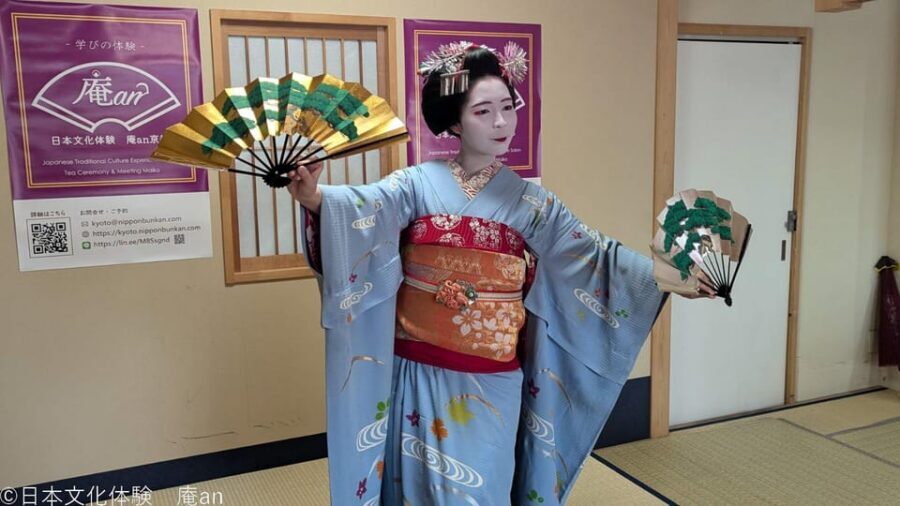
- Two traditional dance performances tied to seasons, love stories, and everyday life
- Interactive games where you can clap, cheer, and even join in
- Maiko or Geiko surprise depending on the day’s schedule
Maiko and Matcha: What You Really Get in 90 Minutes
At $50 per person for about 90 minutes, the price makes sense because you’re not buying one activity. You’re buying a full package: instruction, tastings, conversation, photos, performances, and games. A lot of “culture tickets” stop at watching. This one keeps moving.
The core idea is simple. You meet a Maiko, you learn how matcha works, and you see how elegance looks when it’s trained and repeated every day. The Maiko doesn’t just perform; she explains what things mean and lets you ask questions.
You should also know what the program is designed to cover. Even if you’ve seen tea ceremonies before in Japan, you’re still getting a Maiko’s perspective—where the clothing, etiquette, and training connect to the tea and the dances.
A few more Kyoto tours and experiences worth a look
Finding the Venue Near Gojo Station (and Why Timing Matters)
Your meeting point is a quick walk: about 1 minute from Exit 1 of Subway Karasuma Line Gojo Station. The entrance faces the main street (Gojo-dori), so it’s not hidden.
Two practical notes that affect your comfort:
- There’s no elevator, so you’ll take stairs to reach the venues.
- The event needs everyone’s timing to line up, because the program won’t be held for delays.
If you’re the type who likes good photos, arrive a bit early. One useful tip: you may be able to spot the Maiko arriving by taxi as part of the lead-in moments, which can help you get oriented before the group starts.
Tea Ceremony with a Maiko: Matcha, Sweets, and a Guided Cup
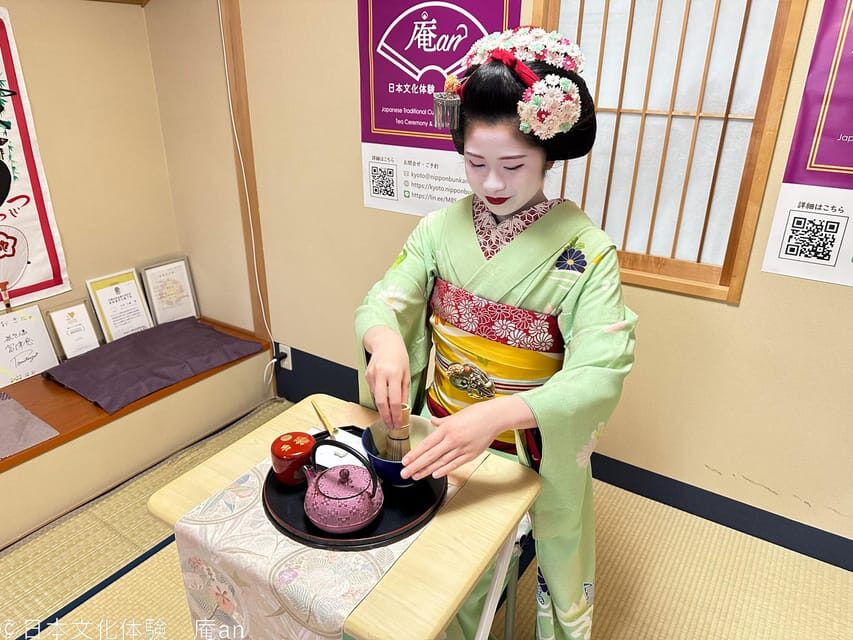
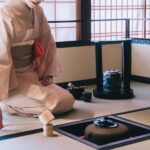
This experience starts with a greeting from the Maiko, then moves into the tea ceremony part. The matcha section is hands-on: Maiko shows you how to make matcha tea, then you make your own tea.
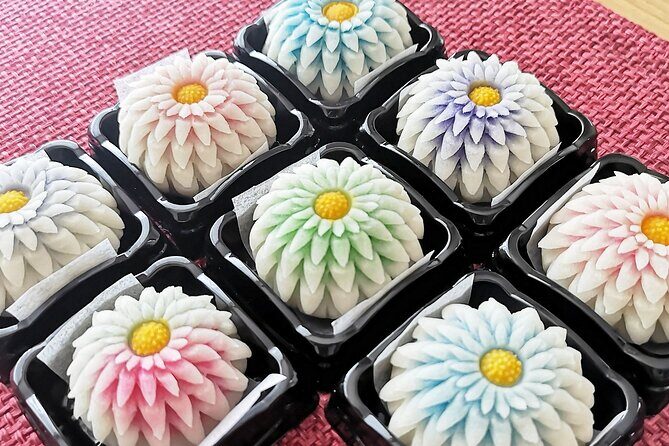
You also get 2 Japanese sweets with the matcha. They’re described as dried-type sweets, and in practice that usually means less fuss and a cleaner pairing with the tea than very delicate items. Either way, it’s a built-in snack break that keeps the program from feeling like only instruction.
Even if you already know the basics of matcha, pay attention to the Maiko’s teaching style. These moments are often about rhythm—how to handle the tools, how to pause, and how etiquette shows up in the smallest movements. That’s what makes the experience feel more personal than a standard tea tutorial.
The Q&A Session That Turns a Show into Understanding
The biggest upgrade here is the question-and-answer session. You’re not only looking at a Maiko; you’re asking directly and learning how she sees her own world.
This is where you’ll likely notice how the Maiko’s training ties into everything you’re watching:
- Why the kimono and hairstyle are more than “costume”
- How the daily routine supports performance and discipline
- What it’s like to be in the role where grace is practiced, not improvised
A note on language: the instructor is Japanese, and English translation is provided as much as possible if you request it. If English is important to you, it’s smart to plan ahead when you book.
If you freeze when it’s time to ask questions, don’t worry. Some people simply ask about something they noticed—like a detail in the kimono or a technique used in matcha—and that’s usually the easiest way to get a great answer.
Photo Time and the Senjyafuda Lucky Charm
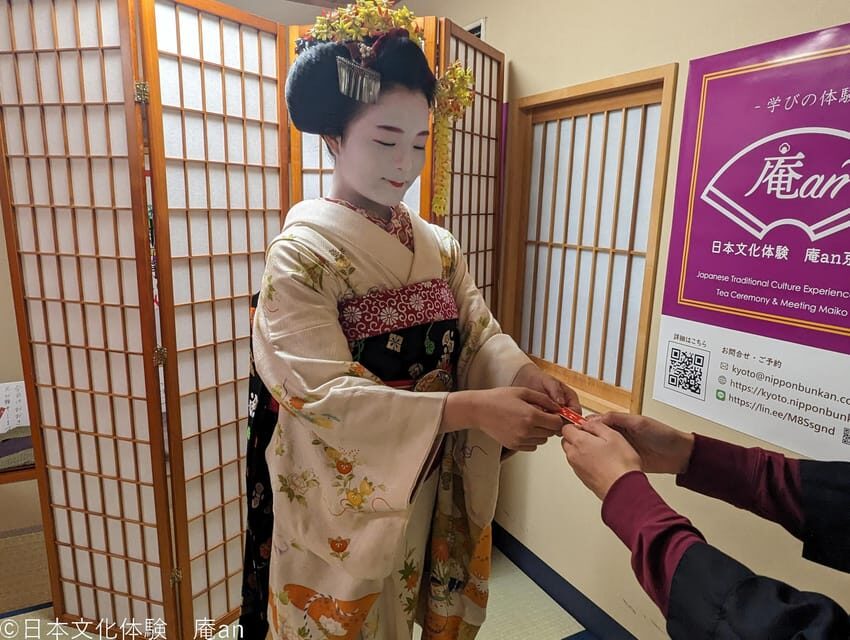
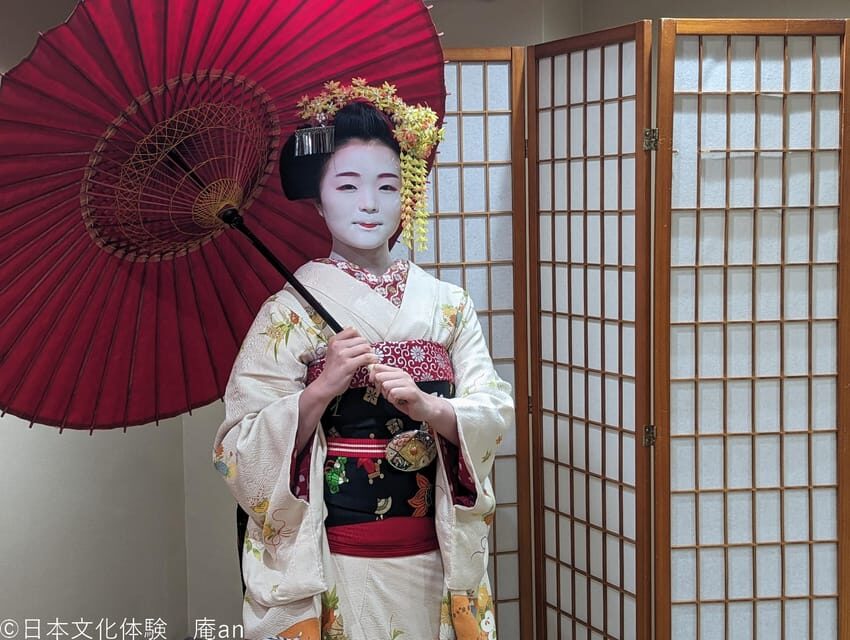
After tea and Q&A, there’s a photo opportunity right beside the Maiko. It’s not a distant performance view. You get closer and you get a commemorative photo, which is exactly what most people want from a “meeting the Maiko” experience.
Then comes the lucky charm moment: the Maiko presents a Senjyafuda. It’s the kind of small, symbolic gift that makes the experience feel complete rather than transactional.
Photo advice, based on what to expect from the space:
- This is held in a building venue, not a traditional tea house setting.
- Some backgrounds may include visible signage or promotional elements.
So if photos matter, lean in on angles where the Maiko and her gestures fill the frame. Let the background be boring.




Dance Performances and Interactive Games (Why Premium Is Worth It)
The Premium package matters because you’re not just getting tea. You’re also getting two traditional dances plus an interactive game section.
The dances are described as expressions of Japan’s seasons, love stories, or everyday life. You’ll often feel the difference between dance that’s performed for a crowd and dance that’s part of lived training. It’s disciplined, measured, and very controlled—like the body has memorized elegance.
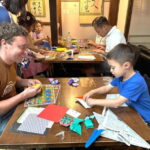
Then there’s the game with the Maiko. These are usually simple but lively, and you’re encouraged to clap and cheer. You might join in if volunteers are called. If not, watching is still a big part of the fun.
Also keep an eye out for a schedule surprise: depending on the situation, the program may invite Geiko instead of Maiko. The experience aims to keep the same structure, but who you meet could differ.
The Room Itself: Not Ochaya, Still Relaxed
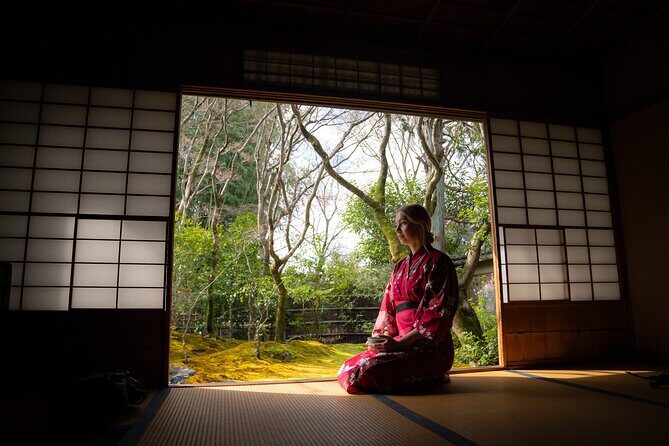
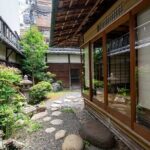
This venue is not an ochaya, and it’s not a traditional Japanese house. It’s located in a building, and the space can feel more modern and functional than atmospheric.
From what you should plan for:
- You’ll likely be seated at tables and stools rather than on tatami.
- The Maiko sits behind a small table during parts of the program.
- There may be a simpler backdrop than what you’d see in a classic tea house setting.
So here’s the balanced take: the cultural content is still real, and the Maiko’s presence still feels special, but the room won’t give you that postcard-perfect “walk into a hidden traditional world” look.
If you’re picky about ambiance for photos, show up early, choose your seat thoughtfully, and accept that this is a program designed for interaction more than set design.
Price and Seat Options: How to Choose the Right Value
Your base price is about $50 per person for a 90-minute experience. That cost includes a lot more than matcha alone: tea ceremony with the Maiko, two sweets, matcha-making, Q&A, the photo chance, Senjyafuda, dance performances, and interactive games, plus free snacks and drinks.
There are also optional seat upgrades:
- SS seat (first row): 3,300 JPY
- S2 seat (second row): 2,200 JPY
- S3 seat (third row): 1,100 JPY
If you’re there primarily for close-up photos, paying for the front rows is usually worth considering. If you’re there for the dialogue and learning, the exact row matters less. Either way, you’re paying for the whole show, not just “a view.”
One more value note: some people mention that the tea ceremony isn’t staged like a super formal tatami-only ritual. That can be a drawback if you’re chasing strict tradition. But as a trade-off, you get more back-and-forth, games, and Q&A—things that make the experience feel less scripted.
Who Should Book This Kyoto Experience (and Who Might Not)
Book this if you want a meeting that’s:
- Personal, with time for questions
- Hands-on, including making matcha yourself
- Performance-based, with dances and interactive moments
- Family-friendly in the sense that kids can participate and enjoy the game and spectacle
It’s also a strong choice if you’re short on time in Kyoto. Ninety minutes is realistic, and it gives you a concentrated look at Maiko/Geiko culture without committing to hours of travel and long evening schedules.
You might think twice if:
- You need a fully traditional tatami ochaya setting for the experience to feel authentic enough.
- You’re extremely sensitive to photo backgrounds and signage.
- You want the quiet, slow pace of a classic private tea room. This one is structured, social, and scheduled.
Should You Book This Kyoto Maiko Tea Ceremony Premium?
I think you should book it if you want the best “meets the Maiko” format that still includes real tea learning. The value is in the combination: matcha you make, questions you ask, dances you watch, and a photo plus Senjyafuda you take home.
If you’re okay with a modern building venue and you treat the ambiance as secondary, this is a high-impact Kyoto experience. For many people, it becomes one of the more memorable cultural stops precisely because you’re close enough to feel the training and hospitality in real time.
FAQ
How long is the Kyoto Tea Ceremony with Maiko Premium?
The experience runs about 90 minutes.
Where is the meeting point?
You meet about 1 minute walk from Exit 1 of Subway Karasuma Line Gojo Station. The entrance faces Gojo-dori.
What is included in the price?
It includes the tea ceremony with the Maiko, matcha-making, 2 Japanese sweets, Q&A, photo time, Senjyafuda, two dance performances, interactive games, and free snacks and drinks.
Do I get to make matcha myself?
Yes. The Maiko teaches you how to make matcha, and you make your own tea during the session.
Is there a photo opportunity with the Maiko?
Yes. You take a commemorative photo right beside the Maiko, and she presents a Senjyafuda lucky charm.
Will it be a Maiko for sure?
Not always. Depending on the situation, the program may invite Geiko instead of Maiko.
Is the venue a traditional ochaya house?
No. The venue is located in a building and is not described as a traditional ochaya-style house.
Is there English translation available?
English translation is provided as much as possible. If you want it, you should contact the operator to request it.
Is the experience held in a room with elevators?
No elevator is available in the building, so you’ll need to use stairs.
Are children allowed?
Children under 2 years old are free of charge (if a seat or meal is needed, the same fee as 1 person applies). Children who do not participate are not allowed to enter.