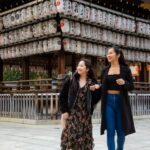
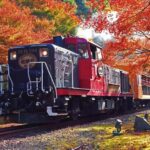
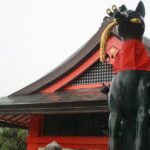
Kyoto looks different from a car window. This private van route strings together temples and nature stops across the city, then pushes into the mountains and countryside so you get variety in just about 6 hours. You also travel with a local Japanese guide in fluent English, so the stops make sense, not just look pretty.
I like two things a lot. First, you get smart pacing: big-name sites like Kinkakuji and Fushimi Inari happen, but you also spend real time at quieter places like mossy gardens and small hillside temples. Second, the guide-led flow cuts down the stress of transit, with hotel-area pickup and drop-off inside Kyoto City, so you can focus on seeing and listening.
One thing to consider: some temple stops involve short walks and stairs, and at places that are known to draw crowds, you may have to accept a bit of foot traffic depending on the day and season. If you need step-free routes, it’s worth asking your guide before you go.
In This Review
- Key highlights worth planning for
- A private van route that actually saves your energy
- Kinkakuji, the Golden Pavilion: the classic start with a smoother approach
- Arashiyama bamboo, plus the moss-and-garden side you’ll remember
- Arashiyama-Takao Parkway: seasonal mountain color from the road
- Two quick mountain breaks: Mt. Ogura Observatory and Hozukyo gorge
- Sacred trees and Shinto-style reverence at local shrines
- Geisha district street views from the van: easier photos, less crowd pain
- Heian Jingu’s huge torii and then Fushimi Inari’s gate walkway
- Price and what you’re really buying for $230.61
- How well this tour fits different travelers
- Should you book this Kyoto highlights and nature private van tour?
- FAQ
- How long is the Kyoto private van tour?
- What time does the tour start?
- Is pickup and drop-off included?
- Are temple and shrine admission tickets included?
- Is this a private tour?
- Will I have an English-speaking guide?
- Do I need to walk or climb stairs?
- What is the cancellation policy?
Key highlights worth planning for
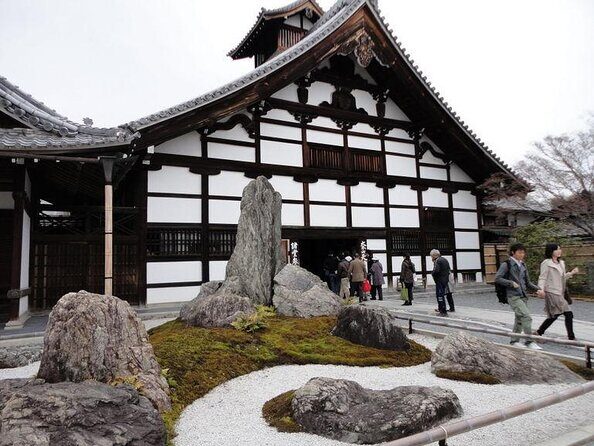
- Private van pickup and drop-off anywhere in Kyoto City, so you skip the usual “bus scramble”
- Arashiyama bamboo forest plus quieter Arashiyama temple stops, not just the main strip
- Mountain/countryside viewpoints like Mt. Ogura and Hozukyo for that Kyoto-meets-nature feel
- Shrines and sacred giant trees, including a cedar you can touch for spiritual meaning
- Secret-feeling cedar platform trees at Kitayama, accessed by a narrow cliff road
- Fushimi Inari timed within an afternoon route, giving you a calmer gate-walk than a full-day crush
A private van route that actually saves your energy
Kyoto is famous for being beautiful and famous for being… crowded. The best part of a private van tour is simple: you spend less time in lines, platforms, and schedules, and more time at the sites themselves. For this experience, the pickup and drop-off are within Kyoto City, which matters if you’re staying outside the most central areas or you’d rather not figure out bus transfers mid-trip.
The tour also starts at 1:00 pm, which is a smart window. You get part of the afternoon, then the day drifts toward early evening, when some temple areas feel less packed than peak daytime hours. Add in air-conditioned comfort and a safe, steady driver, and it’s a day that feels manageable rather than frantic.
Other guided tours in Kyoto


Kinkakuji, the Golden Pavilion: the classic start with a smoother approach
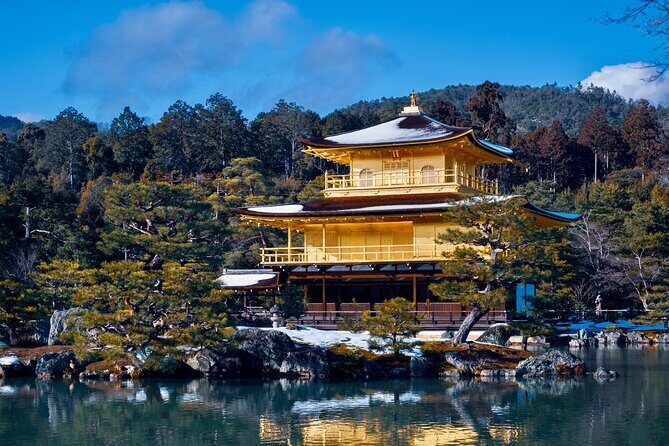
Kinkakuji (the Golden Pavilion) is one of those Kyoto stops that deserves its reputation. Even if you’ve seen photos, in person you feel the site’s balance: the pavilion, the reflections, and the carefully framed views.
In this route, Kinkakuji gets about 45 minutes, and you arrive by car. That time budget is important. You’re not rushing across a crowd hoping to catch the perfect photo. Instead, you can walk the perimeter calmly, pause for views, and take in the atmosphere without feeling like you’re sprinting to the next transfer.
Practical tip: Admission is not included (plan for the overall temple admission budget), so check your totals early. Also, this is a “go early or plan smart” kind of place—your private-car approach helps, but it’s still Kinkakuji, so you should expect some busy energy.
Arashiyama bamboo, plus the moss-and-garden side you’ll remember
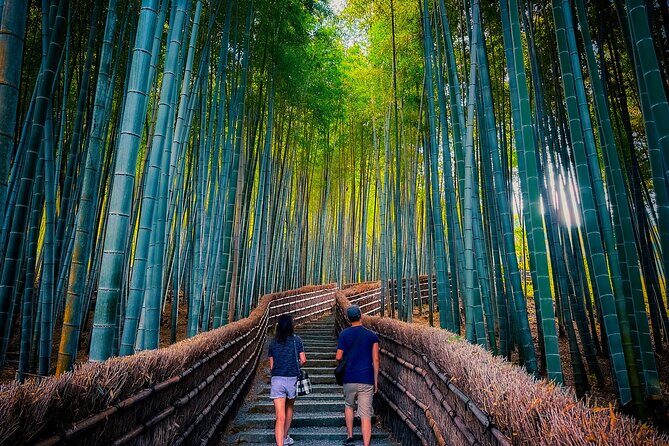
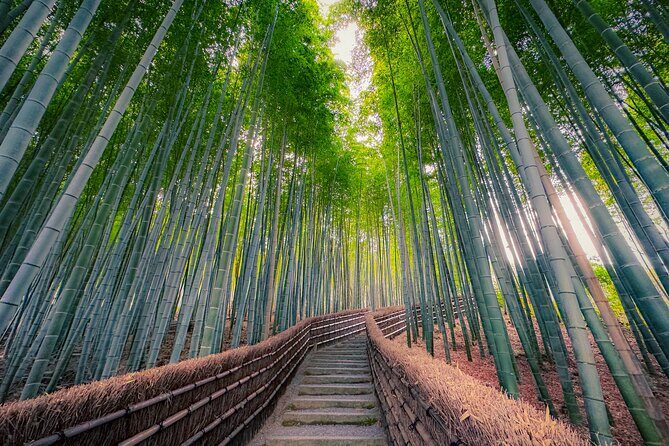
Arashiyama is Kyoto’s nature-culture zone, and it’s famous for the bamboo forest. The tour stops there for about 15 minutes, which is exactly right for a first pass. You get the iconic walk and the soundscape, then you’re out before you feel stuck in the bottleneck.
But the real value here is what wraps around the bamboo.
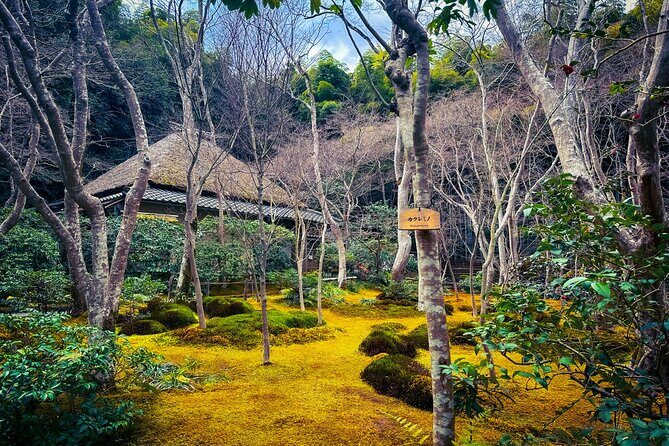
- Gio-ji Temple is presented as small and scenic, with a moss-covered garden and a modest thatched hut setting, surrounded by bamboo. This is the kind of place where Kyoto’s quieter spiritual aesthetic shows up clearly.
- Otagi Nenbutsu-ji Temple adds that “old Kyoto” feel in an area that’s less swamped than the main Arashiyama flow. It’s a short stop, but it changes the texture of your day from postcard moments to lived-in atmosphere.
Even when the main bamboo area attracts crowds, you’re not stuck doing only the headline. That’s why this day feels more “Kyoto” than “tourist checklist.”
Arashiyama-Takao Parkway: seasonal mountain color from the road
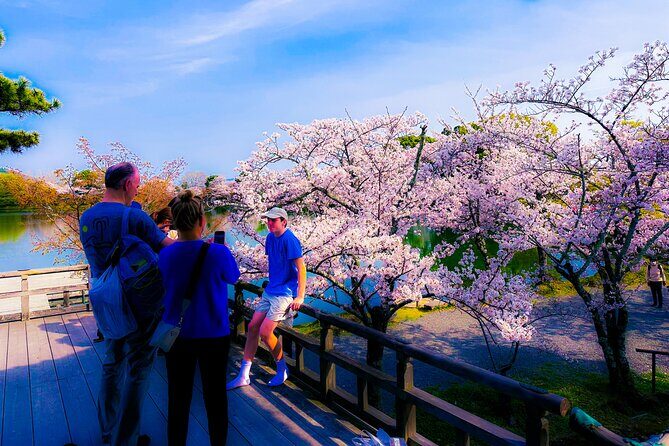
After the Arashiyama area, you get a scenic road segment: Arashiyama-Takao Parkway. You’ll spend about 45 minutes here, and it’s described as a road lined with cherry-blossom trees in April and maple trees in November. That seasonal framing matters because it turns travel time into sightseeing.
This stop is also listed as admission included, which is one less cost surprise and often a benefit on days with many timed checkpoints. Expect you’ll see mountains and countryside views, with the road itself doing a lot of visual work.
Why it’s worth it: Even if you don’t travel in peak blossom or fall season, the route-to-route scenery helps you understand how Kyoto stretches between hills, not just along temple streets.
Two quick mountain breaks: Mt. Ogura Observatory and Hozukyo gorge
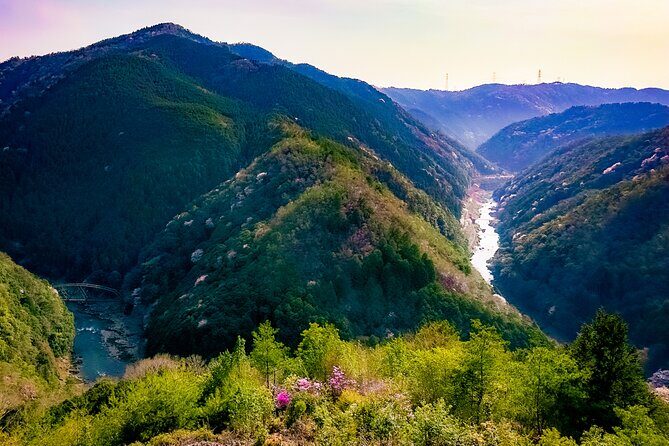
Not every viewpoint needs a long hike. This route gives you short, focused breaks in the mountains.
- Mount Ogura Observatory is about 5 minutes and is pitched as a spot where you can see the whole city of Kyoto from up high.
- Hozukyo Observatory is another 5-minute nature view, linked to the Hozu Gorge and traditional hard-stream boat rafting in the area.
These are “arrive, look, absorb, move” stops. That can sound too short on paper, but in a 6-hour plan, short viewpoints help you reset without losing momentum.
How to use this time well: Don’t treat it like a quick photo stop only. Take a breath. The city-from-above perspective helps you connect later stops—especially the shrine and forest areas—with the wider geography of Kyoto.
Other private tours in Kyoto



Sacred trees and Shinto-style reverence at local shrines
This is where the nature side becomes personal. Kyoto isn’t only temples on hills. It’s also ongoing local worship in outdoor spaces, and this tour leans into that.
One short stop is Nakagawa-hachimangū Shrine. It’s described as a local guardian shrine with an oldest Japanese cedar tree in the area. You’re invited to touch the tree and feel the spiritual meaning tied to that act.
Then you get Kitayama Big Daisugi, described as a secret spot reached via a narrow cliff road with a less-traveled approach. The reward is the view of giant platform cedar trees—a setup that feels unusually raw and “local” compared with the big-name photo zones.
What I like about these stops: They’re short enough to fit the day, but they still give you the sense that people live with these places, not just pass through them.
Consideration: If you’re sensitive to uneven terrain (even without a long hike), these “secret access” roads and shrine approaches may feel more rugged than a flat tourist promenade. If that matters to you, tell the guide and move at your pace.
Geisha district street views from the van: easier photos, less crowd pain
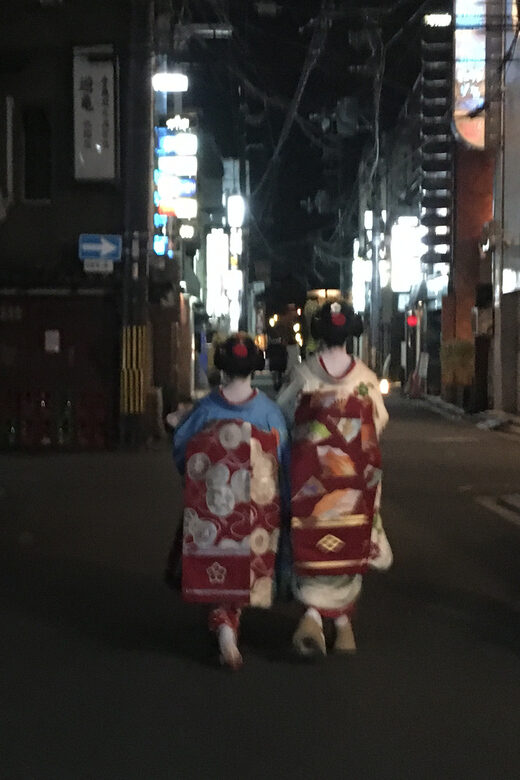
The route includes time to experience a 600-year-old street known for geishas, and the plan is to do this by car so you can avoid walking in heavy crowds and get photos from the vehicle.
Two important notes. First, photos of geishas require permission. Second, car views can still work great for understanding the street rhythm and atmosphere without you getting stuck in the thickest areas.
This is a good example of how private routing can respect your time. You get the look, you don’t burn energy navigating crowd choke points, and you still keep the day moving.
Heian Jingu’s huge torii and then Fushimi Inari’s gate walkway
From the mountains-and-shrines side, the tour brings you back into Kyoto’s iconic shrine architecture.
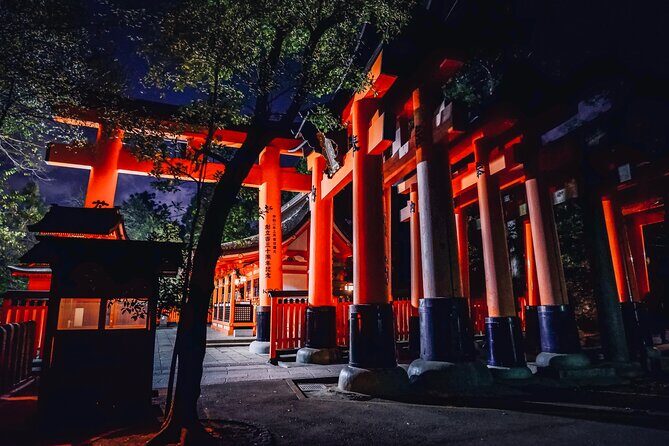
At Heian Jingu Shrine Otorii, you’ll see the big torii gate built for Heian Jingu Imperial Shrine. It’s listed at 24.4 meters, about 80 feet, and that scale is the point. The stop is brief, but it’s one of those “you get it only when you see it” moments.
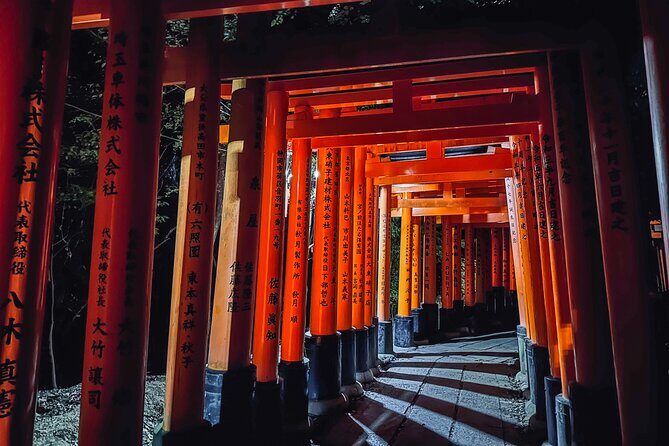
Then it’s on to Fushimi Inari-taisha, the shrine famous for its thousands of vermilion gates (SenbonTorii) and its long gate walkway. You’ll spend about 40 minutes here, and admission is free for the site.
How to plan your mindset at Fushimi Inari:
- The magic is in the repetition and the shift in light as you move deeper into the gate corridors.
- The crowd level changes hour by hour, but your afternoon start helps you avoid some of the harshest peak surges compared to early morning-only plans.
- Shoes matter because you’ll walk more than you expect even if you stay within a manageable route.
Price and what you’re really buying for $230.61
At $230.61 per group (listed as up to 1), this isn’t a budget bus tour. But it’s priced for convenience, comfort, and guide time—things that add up quickly in Kyoto if you try to recreate it yourself.
Here’s where the value comes from:
- Private van + fuel/toll/parking fees included means you’re not doing complicated logistics to cover the distances.
- Pick-up and drop-off anywhere in Kyoto City reduces wasted time and makes the day easier to manage.
- The guide is doing more than reciting facts. English explanations on Buddhism, history, and what to notice at each stop change how you experience the temples.
The main cost to plan for is admission. Total entry fees are listed as approximately ¥1,400 per person, not included. So your true “cash day” will be tour price plus that admission amount.
One more practical reality: at least one private group booking example shared that pricing worked out per vehicle rather than strictly per person. That’s not something you should assume for every booking, but it’s a fair thing to ask when you’re budgeting for a family or small group.
How well this tour fits different travelers
This tour is a strong match if you:
- Want a high-quality overview without day-long transit
- Like your Kyoto with a nature component (mountain views, countryside drives, tree-focused stops)
- Appreciate cultural context from a guide who can explain what you’re seeing
It can be less ideal if you:
- Prefer fully independent exploring with zero structure
- Want long time at only one or two major sites (this itinerary is built for variety, not deep single-location immersion)
- Need guaranteed step-free access at every stop. The route notes that some temples require walks and stair climbing. Ask your guide if avoiding stairs is necessary for you.
A final note on the guide experience: multiple people reference Daiki specifically, praising his friendly, easygoing style and the fact that the day stayed fun even when weather or conditions were less than perfect. Some also mention the day felt flexible to interests and that the van ride stayed comfortable and air-conditioned.
Should you book this Kyoto highlights and nature private van tour?
I’d book it if you want a stress-light Kyoto day that still feels authentic—temples plus countryside, major landmarks plus quieter corners, with a guide shaping the story for you. The private van approach is the real win: it turns “getting between places” into part of the sightseeing, not downtime.
I would pause and check details before booking if you’re price-sensitive and want to spend a lot of time at only one highlight, or if stair avoidance is a must. In those cases, you can still book, but you should confirm which stops are flexible and what the walking levels look like for your group.
If you’re aiming for the best of Kyoto without the logistics headache, this is a solid plan.
FAQ
How long is the Kyoto private van tour?
The tour is listed as 6 hours (approx.).
What time does the tour start?
The start time is listed as 1:00 pm.
Is pickup and drop-off included?
Yes. The tour includes pick-up and dropping off at anywhere in Kyoto City.
Are temple and shrine admission tickets included?
No. Admission is not included. Total entry fees are listed as approximately ¥1,400 per person.
Is this a private tour?
Yes. It’s described as private, and only your group participates.
Will I have an English-speaking guide?
Yes. The guide is described as fluent in English.
Do I need to walk or climb stairs?
Some temple stops require walking and stair climbing. The tour notes that you should ask the guide if you need to avoid stairs.
What is the cancellation policy?
You can cancel for a full refund up to 24 hours before the experience’s start time.