Kyoto in one long, smart day. This private tour is built around you making the calls—choose what to emphasize, or lean on your driver’s suggestions while you move through the city in an air-conditioned vehicle. I especially like having a chauffeur who can explain what you’re seeing in clear English (I’ve seen guides like Yasiru, Rashi, and Mike noted for easy communication), so the day feels less like a checklist and more like a guided stroll.
Two big wins here: first, the itinerary stacks the big hitters—Arashiyama, Golden Pavilion, Gion, Fushimi Inari, Nishiki Market, plus Nijo Castle. Second, the logistics are handled well: you get to your stops without worrying about parking, and you’re not stuck figuring out where to go next. The main drawback to watch is that “private driver” can mean different levels of explanation—some people feel they got less commentary than expected—so it’s worth setting expectations early.
In This Review
- Key Things I’d Notice Right Away
- Why This Works Better Than DIY in Kyoto
- The Day’s Route: How the Timing Really Plays Out
- Stop 1: Arashiyama (Bridge + Bamboo Groves)
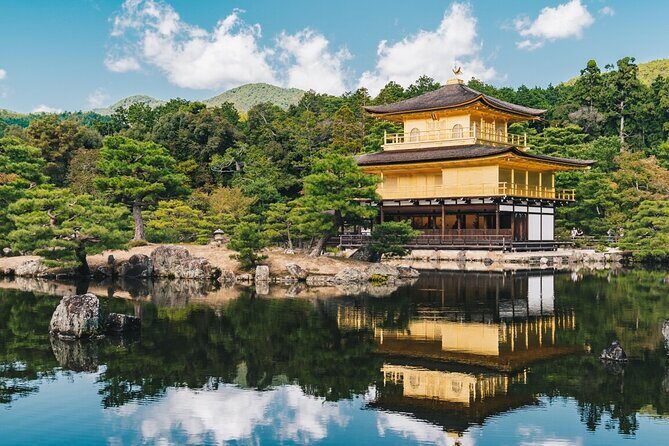
- Stop 2: Kinkakuji (Golden Pavilion)
- Stop 3: Gion (Old Streets and Traditional Neighborhood)
- Stop 4: Ginkakuji (Silver Pavilion)
- Stop 5: Fushimi Inari-taisha (Thousands of Torii Gates)
- Stop 6: Nishiki Market (Kyoto Kitchen for Food + Souvenirs)
- Stop 7: Kyoto Imperial Palace Area (Gosho Grounds)
- Stop 8: Nijo Castle (Architecture and UNESCO-level structure)
- Stop 9: Kyoto Prefecture = Transfer/Timing Buffer
- The Driver Factor: When It’s Great, It Feels Effortless
- Tickets and Costs: What to Budget Beyond the $500
- How Much Customization You’ll Actually Feel
- Who This Tour Is Best For
- Simple Tips to Get More From Your One-Day Kyoto
- Should You Book This Private Kyoto Tour?
- FAQ
- How long is the Kyoto tour with an English-speaking chauffeur?
- What’s the group size for this private tour?
- Are entrance tickets included for Kinkakuji and Ginkakuji?
- Do I need tickets for Nijo-jo Castle?
- What sites are included in the itinerary?
- Is pickup included, and how much is it from other cities?
- What’s included in the tour price besides the car?
- What if the weather is bad?
Key Things I’d Notice Right Away
- Private, English-speaking chauffeur: you’re not sharing the experience with strangers.
- Extra time built in for traffic delays, so your schedule doesn’t feel constantly rushed.
- Prime Kyoto lineup: Arashiyama, Kinkakuji, Gion, Ginkakuji, Fushimi Inari, Nishiki Market, Imperial Palace area, Nijo Castle.
- Tickets cost extra for Kinkakuji and Ginkakuji, plus Nijo Castle—plan a small on-the-spot budget.
- Parking and tolls included, which matters in Kyoto.
- Mobile ticket so you’re not scrambling for paperwork.
Why This Works Better Than DIY in Kyoto
Kyoto is one of those cities where the sights are close together on a map, but far apart in real life. Traffic, slow bus transfers, and the constant need to re-route can turn a “one-day” plan into a stress test. This tour pays for the calm: you ride door-to-door in an air-conditioned car, and someone else handles the hard parts like parking and getting you to the right entrance.
The best version of this day feels efficient without feeling robotic. You’ll be able to spend your time where you care most—temples, streets, markets—without burning energy on transit. And if you’re arriving in Kyoto after travel fatigue, this style of day can feel like a gift: you can sit, recharge a bit, and still hit the major icons.
A few more Kyoto tours and experiences worth a look
The Day’s Route: How the Timing Really Plays Out
This tour runs about 9 to 11 hours, with roughly 2 hours used for pick-up and drop-off depending on where you’re starting and ending. That means your sightseeing time is concentrated into a tight, well-paced loop. Here’s how the stop order typically shapes the flow.
Stop 1: Arashiyama (Bridge + Bamboo Groves)
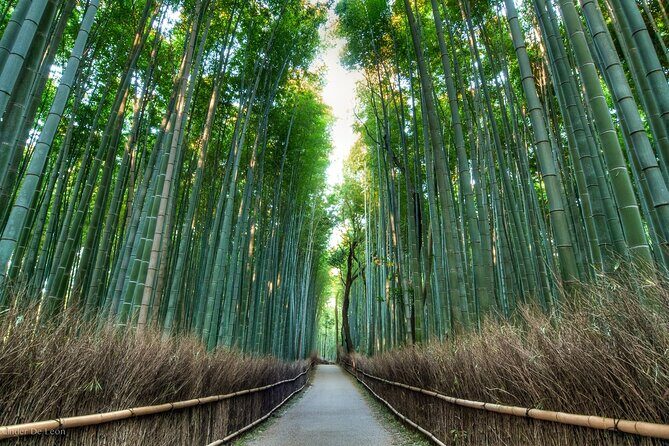
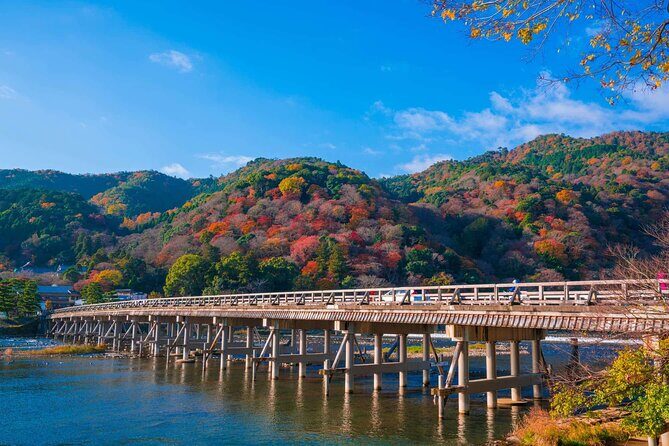
You start in Arashiyama for a classic Kyoto mix of scenic views and that famous bamboo atmosphere. The tour includes time for Togetsukyo Bridge—the kind of place where you naturally pause because the mountain-and-river views do most of the work—and also a chance to walk through the bamboo groves.
Practical note: bamboo areas can be crowded. Going early helps, but even if it’s busy, the walk is still worth it. Your driver’s job here is handy: they can get you parked and pointed in the right direction so you don’t waste time hunting.
Stop 2: Kinkakuji (Golden Pavilion)
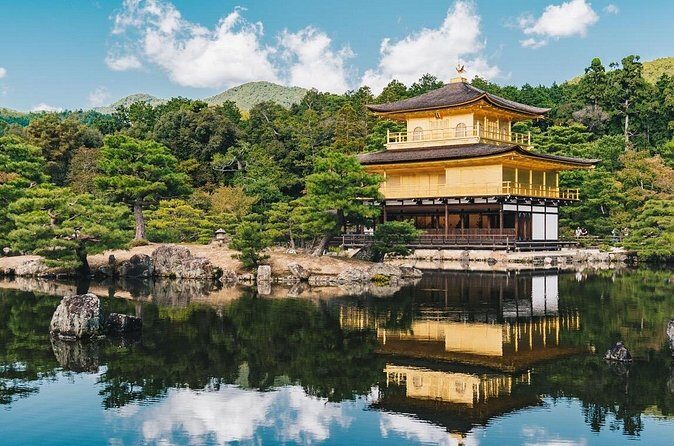
Next is Kinkakuji, the Zen temple famous for its gold-leaf look and three-story silhouette. The good news: the tour gives you about 1 hour, which is usually enough to see it properly and take a few photos without rushing. The admission isn’t included, so you’ll need to pay on-site (the tour lists ¥500 per person).
This is one of those stops where timing matters. If you want photos that don’t look chaotic, arrive a bit early in your allotted time window and don’t be afraid to change your viewing angle once or twice.
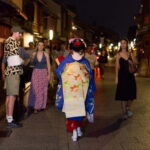
Stop 3: Gion (Old Streets and Traditional Neighborhood)
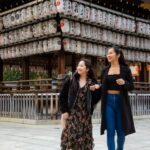
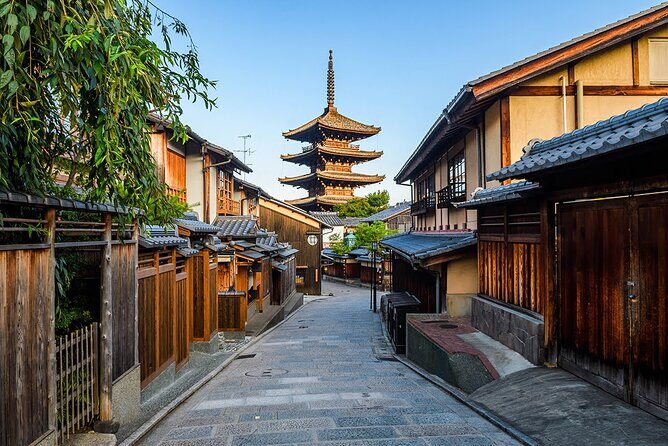
Then you slide into Gion, Kyoto’s most iconic historic district, known for preserved traditional streets and tea house areas. You get about 1 hour, which is enough for a slow walk and people-watching.
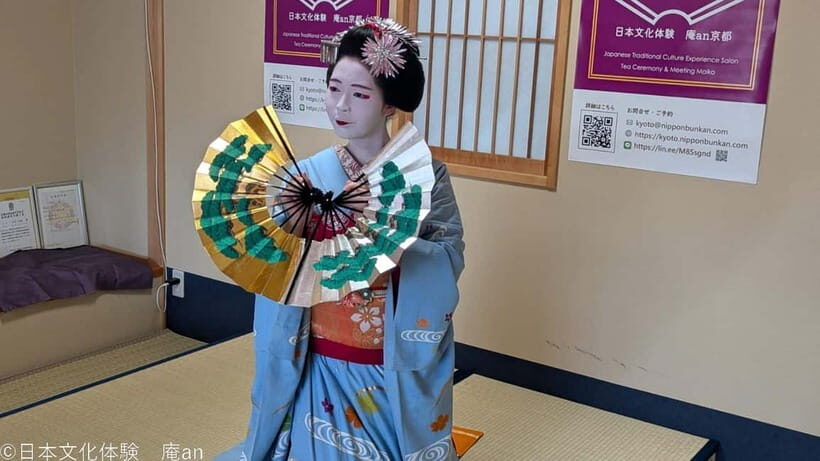
What to expect: the vibe is very Kyoto—wooden machiya-style streets, stone paths, and the sense that the area is meant for wandering. If you’re hoping to see geiko or maiko, keep your expectations realistic; this is still mostly about the streets and atmosphere. Either way, it’s a great reset between temple stops.



Stop 4: Ginkakuji (Silver Pavilion)
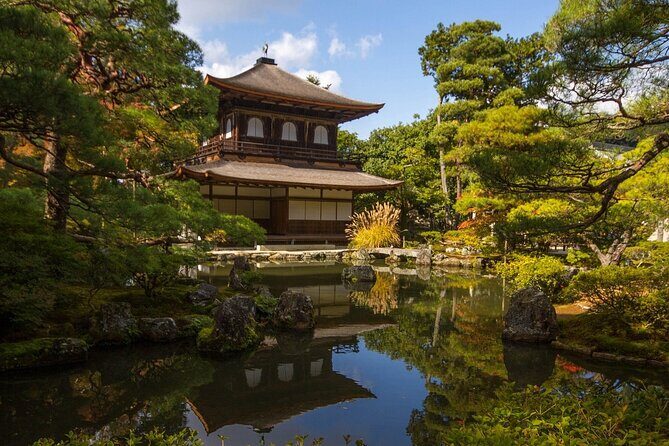
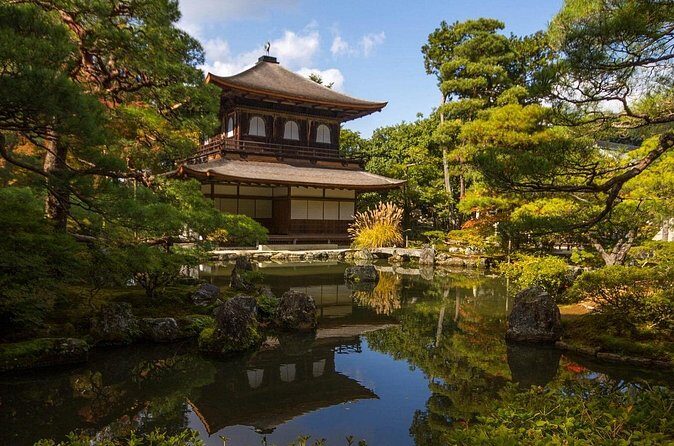
After Gion, you head to Ginkakuji, the Silver Pavilion. It doesn’t have the obvious silver exterior people expect, but it’s known for its minimalist, calm setting and gardens. You’ll get about 1 hour here too, and admission is not included (again ¥500 per person listed for the entrance).
If you like quiet corners and structured gardens, this is the stop where you can slow down. If you’re not a garden-temple person, don’t worry—you still get the key sights without losing the whole day.
Stop 5: Fushimi Inari-taisha (Thousands of Torii Gates)
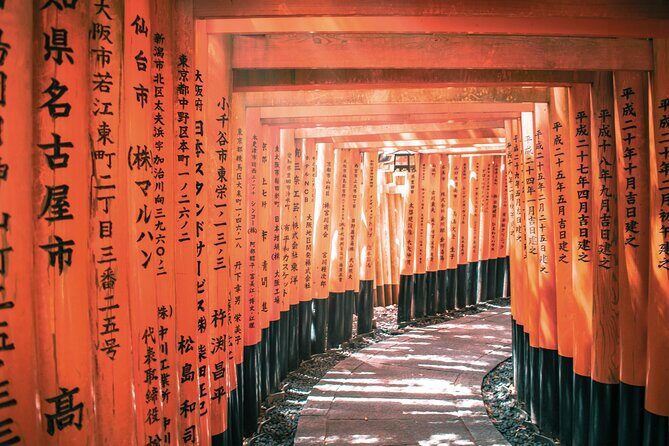
Then comes Fushimi Inari-taisha, home to the thousands of vermillion torii gates. You’ll have about 1 hour.
This is the most “walky” part of the loop. Wear comfortable shoes and plan for crowds. The torii path can feel endless, so decide in advance how far you want to go (you can always turn back earlier and still get the full effect).
Stop 6: Nishiki Market (Kyoto Kitchen for Food + Souvenirs)
From temple walking to street-level flavor: Nishiki Market. You get about 1 hour 30 minutes, and it’s a great place to sample snacks, browse, and pick up small gifts. Admission is free for market entry, but the tour also lists no food and beverage included, so bring cash or a payment method you can use easily.
This is where the “customizable” part can matter. If you’re not food-focused, you might use your market time for quick browsing and then swap back out to a more scenic viewpoint on the next leg—depending on your chauffeur’s flexibility.
Stop 7: Kyoto Imperial Palace Area (Gosho Grounds)
Next is Kyoto Imperial Palace (Kyoto Gosho) with about 1 hour. This area is centered in a park-like compound with walls and traditional layout. Admission is listed as free.
Even if you’re not into imperial history details, the setting helps. It’s a calmer pause before you head into the more architectural stop.
Stop 8: Nijo Castle (Architecture and UNESCO-level structure)
Then Nijo Castle. You’ll have 1 hour, and admission isn’t included (listed as ¥1,300 per person). Nijo Castle is a UNESCO World Heritage Site and is known for its grand buildings and historic construction.
This is worth it if you like buildings more than gardens. If your group is very temple-heavy, you can still get a lot from Nijo in an hour by focusing on the main areas your driver points out.
Stop 9: Kyoto Prefecture = Transfer/Timing Buffer
Finally, there’s about 2 hours allocated for pick up and drop off, and the pace depends on your specific start/end location. This “hidden” portion can be either smooth or slightly long, depending on where you’re staying and traffic.
The Driver Factor: When It’s Great, It Feels Effortless
The biggest praised aspect across the feedback is how smoothly the day runs when the chauffeur actively helps. People highlighted chauffeurs who are on time, professional, and willing to handle the messy parts—parking, guiding you toward the entrance, and giving quick context so you know what you’re looking at.
You’ll also see examples of excellent English communication. Names that came up include Rashi, Yasiru, and Mike, each noted for clear English and a friendly style. That matters because Kyoto can be confusing fast: if you don’t know what matters, you end up taking photos of the wrong angle and missing the most interesting view.
One caution, based on differing experiences: if you want lots of site-by-site explanations, don’t assume that’s automatic. The tour description emphasizes a “private driver” who can recommend and guide, but the amount of commentary can vary. A simple message before your pickup—what level of explanation you want—can save you from disappointment.
Tickets and Costs: What to Budget Beyond the $500
The headline price is $500 per group (up to 5 people). That’s usually where the value comes from: you’re buying a whole private ride and a full-day route, not just entrance tickets.
Included costs:
- Air-conditioned vehicle
- Fuel surcharge
- Parking fees
- Highways/toll roads
Not included costs you should plan for:
- Kinkakuji: ¥500 per person
- Ginkakuji: ¥500 per person
- Nijo-jo Castle: ¥1,300 per person
- Food and beverage (you’ll pay yourself)
- Pick-up from Osaka: ¥15,000
- Pick-up from Kobe: ¥25,000
If you’re visiting both Kinkakuji + Ginkakuji + Nijo Castle, that’s ¥2,300 per person in listed temple/castle admissions, on top of the tour price. In other words, the $500 covers the “move you around Kyoto” part very well; your extra spend is mainly the sites you choose that day.
How Much Customization You’ll Actually Feel
The tour is set up as customizable, which is helpful because Kyoto rewards small adjustments. For example, you might want:
- extra time for Fushimi Inari if your group loves walking
- less time at one temple if your energy is low
- more focus on market browsing rather than palace grounds
The tour also mentions extra time provided if traffic slows things down. That’s a big deal in Kyoto. It helps keep the day from turning into a scramble where you rush through the most important stop just because the city is doing city things.
The bottom line: this is a good fit when you want structure (a great route) but also want to steer your own attention.
Who This Tour Is Best For
This private Kyoto tour is a strong choice if:
- you want maximum sightseeing with minimal transit hassle
- your group has different interests and you want to negotiate the pacing
- you value English-friendly communication so you can understand what you’re seeing
- you’d rather pay for convenience than fight parking or routing
It may be less ideal if:
- you want a very deep, lecture-style guide for every stop
- your group prefers public transit and don’t mind planning routes yourself
- you’re trying to keep costs ultra-low (because key admissions are extra)
Simple Tips to Get More From Your One-Day Kyoto
- Wear comfortable shoes for Fushimi Inari. Even with time limits, it’s a lot of steps.
- Keep a small budget ready for paid entrances (especially Kinkakuji, Ginkakuji, and Nijo Castle).
- If you care about explanations, tell your chauffeur what kind you want at the start.
- Use the Gion and Nishiki blocks for slower wandering, not frantic photo missions.
And one more thing: Kyoto rewards calm. The “private car” format helps you create that calm, even when the schedule looks full on paper.
Should You Book This Private Kyoto Tour?
If your priority is a low-stress, high-impact Kyoto day with door-to-door comfort and an English-speaking chauffeur, this is a smart purchase. The route hits the big-name sights people actually travel for, and the included parking/tolls and extra time for traffic make the experience feel practical, not just fancy.
I’d book it when you want structure plus control. I’d hesitate only if you’re the type who expects heavy commentary at every stop no matter who the driver is—because the level of information can vary. If that’s you, message ahead and set your expectations, then you’ll get the smooth day you’re paying for.
FAQ
How long is the Kyoto tour with an English-speaking chauffeur?
The tour lasts about 9 to 11 hours.
What’s the group size for this private tour?
It’s priced per group for up to 5 people, and it’s private, meaning only your group participates.
Are entrance tickets included for Kinkakuji and Ginkakuji?
No. Tickets for Kinkakuji and Ginkakuji are not included and are listed at ¥500 per person for each.
Do I need tickets for Nijo-jo Castle?
Yes. Nijo-jo Castle tickets are not included and are listed at ¥1,300 per person.
What sites are included in the itinerary?
The day includes Arashiyama, Kinkakuji, Gion, Ginkakuji, Fushimi Inari-taisha, Nishiki Market, Kyoto Imperial Palace, and Nijo Castle.
Is pickup included, and how much is it from other cities?
Pickup is offered. The tour lists additional pickup fees from Osaka at ¥15,000 and from Kobe at ¥25,000.
What’s included in the tour price besides the car?
The price includes an air-conditioned vehicle, fuel surcharge, parking fees, and highways/toll roads.
What if the weather is bad?
The experience requires good weather. If it’s canceled due to poor weather, you’ll be offered a different date or a full refund.
![Kyoto: Personalize, private tour (3h, 5h, 8h) [W/Car Option] - Picking your start point: lodging, Disney Store, or Sanjo-Ohashi Starbucks](https://kyotoguide.info/wp-content/uploads/2026/05/kyoto-personalize-private-tour-3h-5h-8h-w-car-option.jpg)