Clay, ogres, and a roof guardian in 2 hours.
This workshop at Kawarakoubouyouya turns an old roof-tile tradition into something you can actually hold in your hands. I love how Yuya guides you step by step through shaping a small onigawara by hand, even if you feel uncoordinated. I also love the meaning behind it: these carved guardian tiles with fearless faces have protected Japanese rooftops from evil and rainwater for centuries.
One thing to consider: you do not leave with a finished tile that day. After firing in a kiln, your onigawara will take about 1–2 months to change to the traditional silver color and arrive by shipping.
In This Review
- Why Onigawara Feels Like Real Japanese Roof Magic
- Entering the Kawarakoubouyouya Workshop in Honshu
- Making Onigawara by Hand: Clay, Faces, and a Step-by-Step Guardian
- The Ogre Face: Why This Design Matters Beyond Looks
- Drying Time and the Kiln: What Happens After You Leave
- Shipping and Final Cost: The Part to Plan For
- Price and Value: Is $90 Worth It?
- Finding the Right Fit: Who Should Book This Workshop
- Practical Tips Before You Go
- Should You Book Kawarakoubouyouya’s Onigawara Workshop?
- FAQ
- How long does the onigawara experience take?
- What does the $90 per person price include?
- When will I receive my finished onigawara tile?
- Do I need sculpting experience?
- What should I wear?
- What languages are used during the class?
- What is the cancellation policy?
Why Onigawara Feels Like Real Japanese Roof Magic
Onigawara (those end-of-roof guardian tiles) have a very practical job. They sit along the main roof ridge, carved with ogre and gargoyle faces, meant to ward off trouble and help with water. The tradition connects around 1,400 years of roof culture in Japan, where ancestors built meaning into everyday architecture.
In this class, you do not just learn the story. You help create the tile. The process is slow enough to feel thoughtful, but guided enough to feel doable. And yes, you’ll hear the poetic side too: a soul is gradually imbued into a lump of soil as the guardian takes shape.
It is also a break from typical sightseeing. You’ll get time where your hands focus, your brain quiets, and you get that satisfying feeling of making something that looks like it belongs on a real roof.
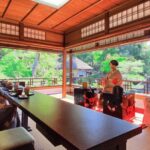
Entering the Kawarakoubouyouya Workshop in Honshu
You meet at KAWARAKOUBOUYOUYA MY shop. Search on Google Maps, but don’t treat it like perfect satellite truth. One helpful note: the GPS can be off by about 40 meters to the west, so if you’re hunting and nothing matches, walk about 40 meters east and look again.
The workshop setup matters. You are not crammed into a factory line. It’s a small group format, limited to 5 participants, which helps you actually ask questions and adjust your technique while the clay is still workable.
Also, the host speaks English and Japanese, so communication doesn’t have to be stressful. If you’re traveling solo, this kind of small-group pace can feel calmer than bus tours that move like a conveyor belt. And it’s listed as wheelchair accessible, which is a real advantage for people who need a smoother physical setup.
If you're still narrowing it down, here are other tours in Kyoto we've reviewed.


Making Onigawara by Hand: Clay, Faces, and a Step-by-Step Guardian
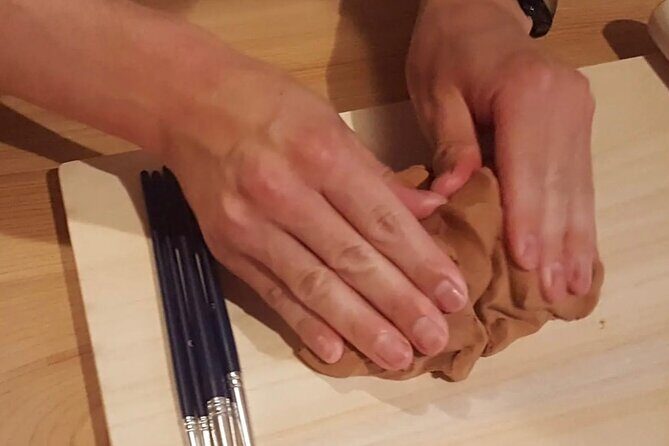
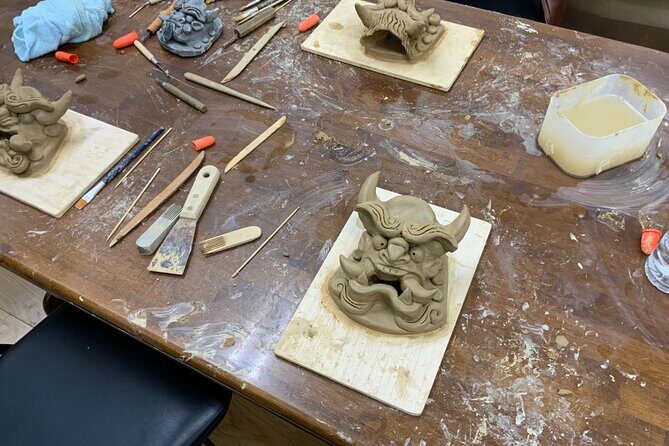
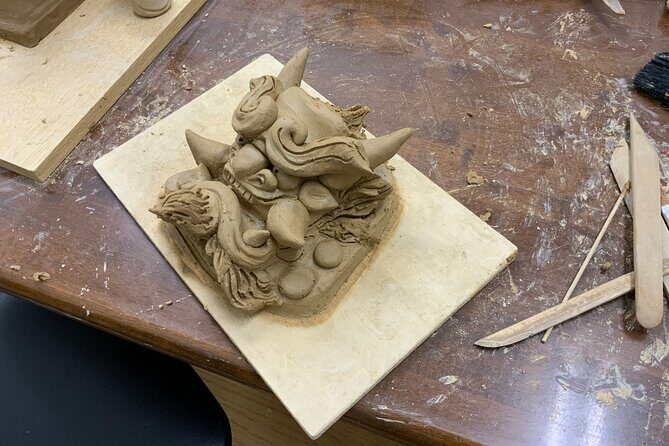
This is the heart of the experience: you make your own small, simple onigawara tile using a hand-built approach tied to traditional kawara roof-tile methods.
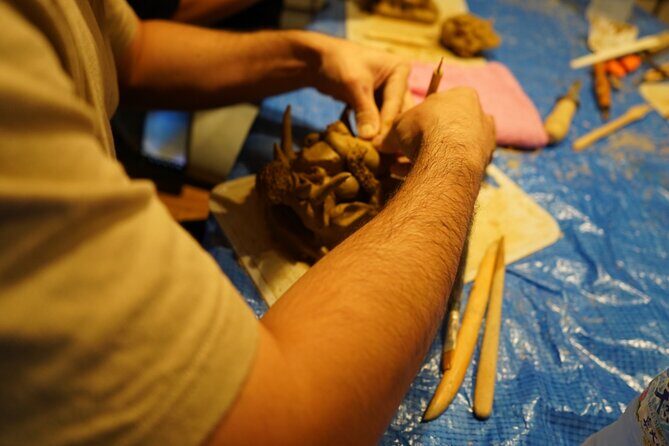
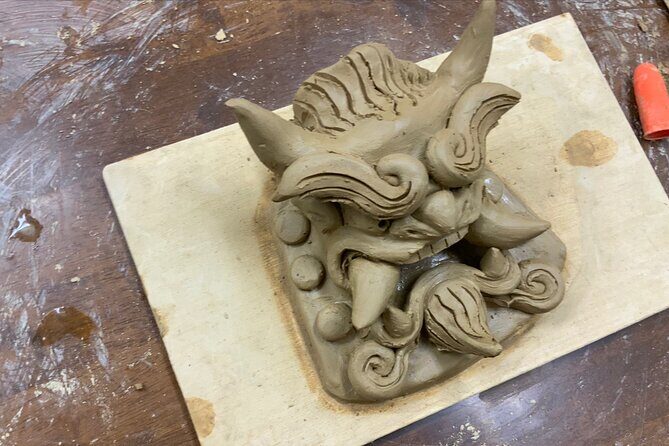
Yuya has you start with soil and build up the tile and the face details. The experience is designed around that moment when it stops being a lump and becomes a character. You’ll shape parts, assemble pieces, and refine the look so it matches the demon-face style that gives onigawara its protective vibe.
Two things make this part work well for real travelers:
First, you get help with the hands-on technique. The tile is usually difficult in traditional methods, but Yuya uses his own developed procedure so the class is not only for expert sculptors. The goal is that kids, adults, and people with clumsy hands can still produce something that looks like an onigawara.
Second, the pace is step-by-step. You’re not thrown into a blank page. You’re guided through making multiple parts and putting them together carefully. That structure matters, because onigawara is detailed work even when the design is kept “small and simple.”
Practical note: because this uses soil, you should wear clothes that can take a little mess. Think of it like a pottery class—comfortable shoes and something you don’t mind getting dusty are the smart play.
The Ogre Face: Why This Design Matters Beyond Looks
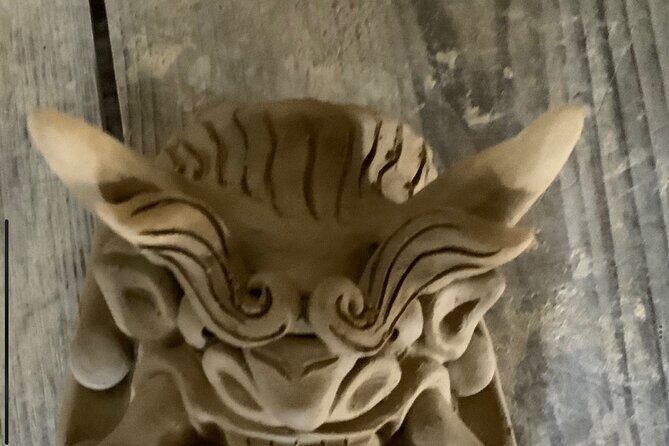
The face design is not random decoration. Onigawara tiles traditionally feature fearless expressions—ogre and gargoyle-like faces carved into the tile, meant to protect rooftops from evil and rainwater.
When you craft the face yourself, you start to understand why the placement and shape matter. The tile is meant to look intimidating from the right angles on a roof ridge line. You’re building that impression at a small scale, and that makes the design feel less like an art souvenir and more like an object with a job.
This is also where the experience becomes more meaningful for travelers who are curious about Japan beyond shrines and temples. It’s a craft tied to the built environment—houses, weather, and how communities handled everyday threats.
And it’s why the class is about more than “making something cute.” You’re participating in a tradition where function and symbolism meet.
Drying Time and the Kiln: What Happens After You Leave
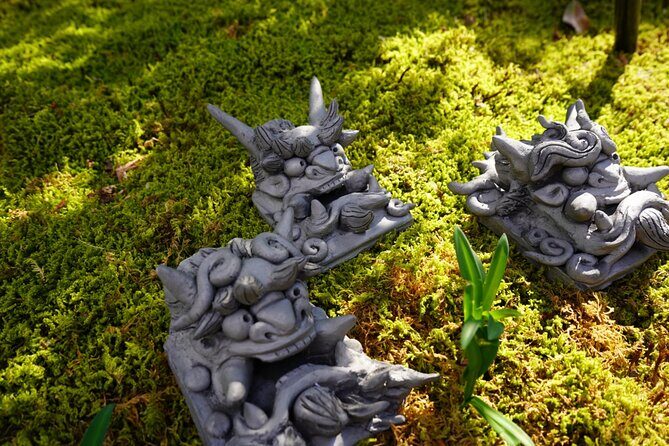
Once your onigawara is formed, Yuya will fire the tile in a kiln at the factory. That part happens off-site, after your work is done.
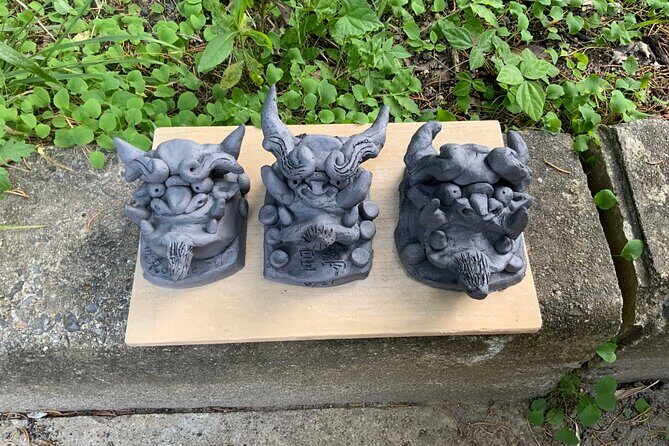
What you take away is the knowledge that your tile is still evolving after you leave. In fact, after 1–2 months, it will change to the traditional silver color and then arrive at your home.
That waiting period is a real consideration. If you love instant gratification, you might feel the delay. But if you like the idea of receiving something made by your own hands later, it becomes a fun timeline event: you make it today, then months later your guardian arrives looking properly finished.
Also, the color change is part of the tradition. You’re not simply paying for a workshop; you’re paying for the full craft cycle, including firing and the transformation process.
Shipping and Final Cost: The Part to Plan For
The price is $90 per person. Shipping is not included in that amount.
You’ll pay the shipping fee separately on the day. After firing, the workshop will send your tile to your home. The exact postage depends on where you are getting it delivered, so plan for an extra day-of payment for logistics.
Here’s the practical mindset I’d use: treat $90 as the class fee, and treat shipping as the variable cost. If you want a smooth trip budget, I’d mentally add “shipping cost” even before you arrive.
If you need your tile by a specific date, the 1–2 month window matters. This is not the experience for last-minute gifting that needs to land next week.





Price and Value: Is $90 Worth It?
For $90 you’re buying more than two hours of clay play. You’re paying for:
- Instruction in making a roof-guardian tile by hand
- The firing process in a kiln
- The transformation into the traditional finished color
- A small-group setup (max 5 participants) that keeps the experience personal
What keeps it good value is that you’re not rushed and you’re not watching someone else do the craft. Even the making process is supported with a procedure that aims to make onigawara possible for most people, not just experienced artists.
And because shipping is extra, you’re also not stuck paying an inflated “bundle” price that hides real costs. You can adjust shipping based on your destination.
Finding the Right Fit: Who Should Book This Workshop
This class is a strong match if you want something hands-on and culturally grounded in Japan’s building traditions. It’s especially good for:
- People who enjoy crafts and want to make a real object, not just a photo
- Families and children, since the class is designed so that kids can participate
- Anyone who worries they are not “artsy” enough, because Yuya’s procedure is built to make the process achievable
It may be less ideal if:
- You need a finished souvenir the same day
- You’re sensitive to getting your clothes dirty (soil is involved)
- You don’t want to plan around a 1–2 month shipping timeline
That said, the workshop’s structure and small-group size make the experience feel thoughtful rather than stressful.
Practical Tips Before You Go
Here are the small things that can make your class smoother.
Wear clothes you can get dirty. Soil is part of the process, and it’s better to dress for that than to worry the whole time.
Bring patience for drying and firing. Your work is not immediately ready when you’re done shaping it. You’re part of a process that continues after you leave.
Use the meeting point carefully. If Google Maps seems wrong, use the practical fix: go about 40 meters east from where it initially points you.
And if you’re traveling with mixed comfort levels in a group, this workshop is still a good idea. The pace and guidance are aimed at making the craft possible even for people who feel awkward with their hands.
Should You Book Kawarakoubouyouya’s Onigawara Workshop?
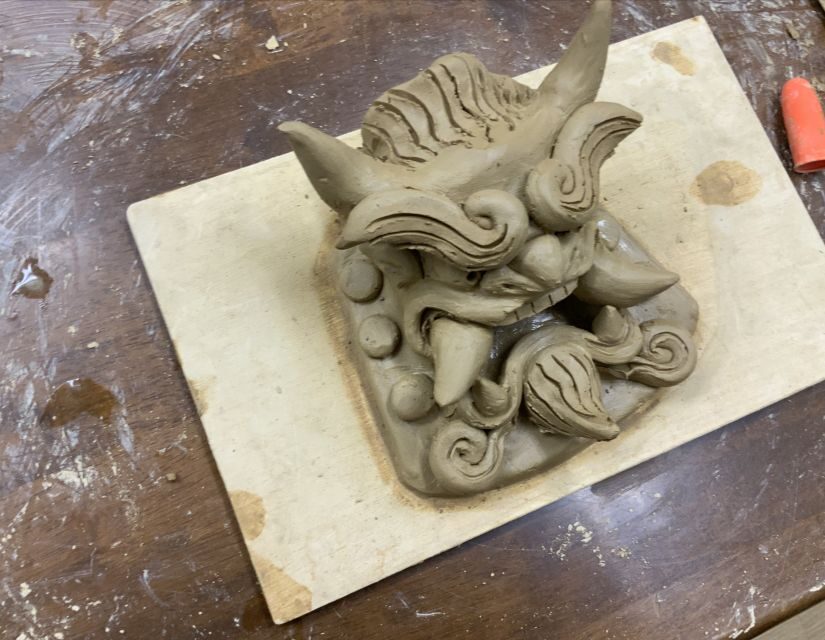
If you want a Kyoto-style cultural activity that’s not only about looking, this is an easy yes. You’ll create a real onigawara tile in the classic ogre-face style, learn why it mattered for centuries, and experience the satisfying shift from soil to guardian.
The trade-off is waiting: your finished silver tile arrives later, after firing and a color change over 1–2 months, and shipping is an extra cost paid separately. If that timeline works for you, this is the kind of craft memory you’ll remember every time you think about Japanese rooftops and the practical, symbolic way people protected their homes.
FAQ
How long does the onigawara experience take?
The experience lasts about 2 hours.
What does the $90 per person price include?
The workshop price covers the onigawara making experience. Shipping is paid separately, on the day.
When will I receive my finished onigawara tile?
After firing, it will be shipped to your home. It will change to the traditional silver color after about 1–2 months and then arrive.
Do I need sculpting experience?
No. The procedure is designed so that even children and people with clumsy hands can make an onigawara.
What should I wear?
Wear clothes that may get dirty, since the activity uses soil.
What languages are used during the class?
The host or greeter can speak English and Japanese.
What is the cancellation policy?
Free cancellation is available up to 24 hours in advance for a full refund.