Kyoto gets quieter in Sagano.
This private walking tour threads together old-aristocrat Kyoto sights and the Arashiyama bamboo forest path—plus the kind of street-level context you only get with a local guide. You start near Saga-Arashiyama, move through calmer temple stops, then hit the bamboo and river area without rushing.
I especially love the mix of places: Seiryōji (Saga Shakadō) and the traditional Saga Toriimoto preservation area give you an off-the-main-road Kyoto feeling before the crowds. I also like the private format with personalized attention, so you can ask questions and adjust the pace instead of marching in a herd.
One consideration: the bamboo forest is famous for a reason, and it can feel crowded, especially mid-morning. Go with realistic expectations, use the guide’s timing, and protect your peace.
In This Review
- Key things to know before you go
- Entering Sagano: the aristocrat-era Kyoto vibe you can still feel
- Private guide and simple flow: how the 4-hour format works
- From Saga-Shakadō to old highway lanes: Seiryōji and the Saga Toriimoto area
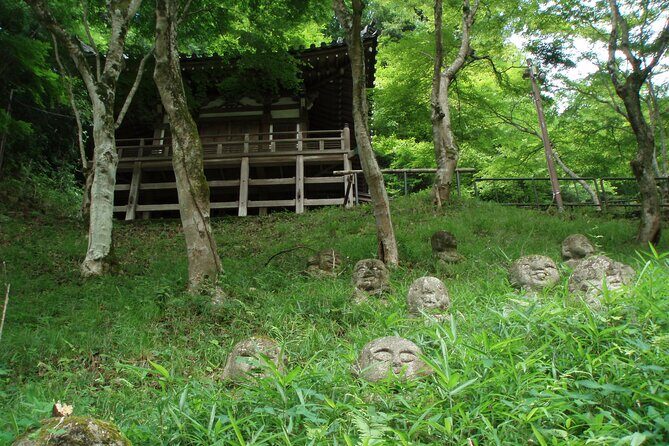
- Otagi Nenbutsu-ji: 1200 hand-carved Rakan statues in a peaceful setting
- Bamboo Forest Street in Arashiyama: how to enjoy it even when it’s packed
- Tenryu-ji Zen garden: world heritage calm after the bamboo photos
- Togetsukyō Bridge: Moon Crossing Bridge views and a quick story break
- Price and value: what $85.87 buys you in real time
- Who should book this tour (and who might skip it)
- Simple packing list for a bamboo-and-temple morning
- Should you book this private Sagano walking tour?
- FAQ
- How long is the private walking tour?
- Where does the tour start and end?
- What is included in the price?
- Are temple entrance fees included?
- Is this tour private?
- Is 9:00am a good time to visit the bamboo forest?
Key things to know before you go
- A 9:00am start helps with bamboo crowding and gives you a better shot at calmer photos.
- Sagano’s aristocratic past shows up fast at Seiryōji and the Toriimoto historic lanes.
- Otagi Nenbutsu-ji is a statue obsession (in a good way) with 1200 Rakan figures.
- Tenryu-ji adds Zen garden time at a world cultural heritage site.
- Togetsukyo Bridge is short, scenic, and story-filled with the Moon Crossing name.
- Budget for a couple of temple tickets since some entrances aren’t included.
Entering Sagano: the aristocrat-era Kyoto vibe you can still feel
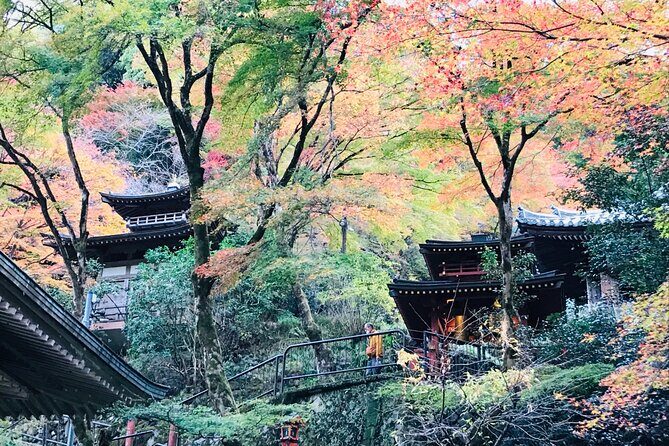
Sagano is one of those Kyoto areas where the scenery feels like it was arranged by history, not by an algorithm. You’ll be walking in a part of Kyoto tied to aristocrats and old leisure culture, and that context quietly changes how you experience the temples and paths.
What I like about starting this way is that you don’t jump straight into the most photographed bamboo moment. You get a runway of quiet, traditional stops first, so when the bamboo shows up, it feels like an event, not a letdown.
You’ll also be in good walking shape: the tour is about 4 hours at an easy pace with short stays at each stop. If you’re the type who likes to look up, read signs, and ask why something matters, this fits your style.
A few more Kyoto tours and experiences worth a look

Private guide and simple flow: how the 4-hour format works
This is a private experience, meaning it’s only your group. That matters in places like Arashiyama, where being stuck behind strangers can ruin the calm you’re chasing.
The tour is booked with a mobile ticket, and it runs at 9:00am. You meet at Saga-Arashiyama Station (11-1 Sagatenryūji Kurumamichichō, Ukyo Ward) and the walk ends at Togetsukyō Bridge (1-5 Sagatenryūji Susukinobabachō), near Monkey Park. Ending here is handy because you can keep exploring right away.
One thing to keep in mind: transportation to and from attractions isn’t included. That doesn’t mean it’s hard—you just need to plan your own train/walk links. The payoff is that you get to spend the guided time actually walking and learning, not sitting in a vehicle.
From Saga-Shakadō to old highway lanes: Seiryōji and the Saga Toriimoto area
Stop 1 is Seiryōji (Saga Shakadō), a historic temple known as one of Kyoto’s oldest. It was built as a villa for an aristocrat back in the 9th century, so you’re not just visiting a place of worship—you’re stepping into a site shaped by elite life.
Admission here is listed as free, which is nice because the morning starts strong without ticket friction. Even if you’re not a temple superfan, I think this stop is a great way to adjust your eyes to the area’s scale and design.
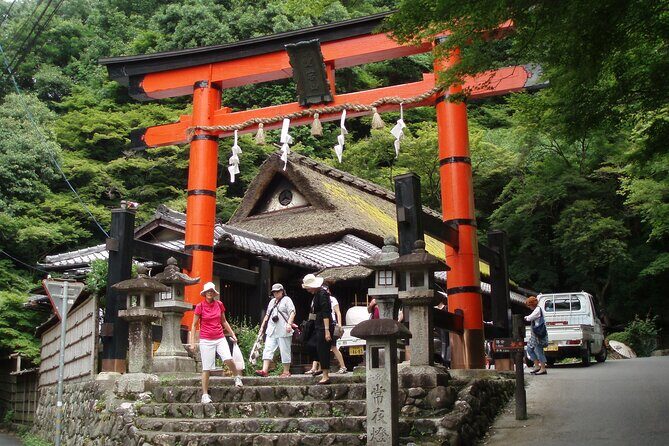
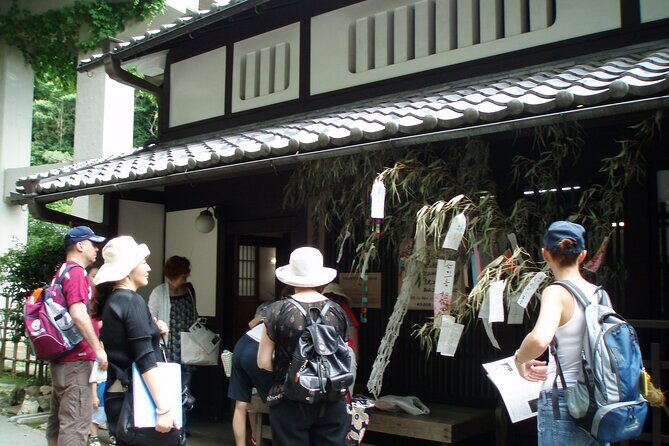
Stop 2 brings you to Saga Toriimoto Traditional Buildings Preservation Area, designated as one of Kyoto’s town preservation areas. You’ll also hear how this old route connects to the Atago highway, an historic road leading toward Mt. Atago, where there’s a Shinto god of fire prevention.
This is one of those “quiet Kyoto” zones where traditional streets and preserved structures do the talking. It also gives your camera a break from the bamboo look, which helps later when you want photos to feel varied, not repetitive.
Otagi Nenbutsu-ji: 1200 hand-carved Rakan statues in a peaceful setting
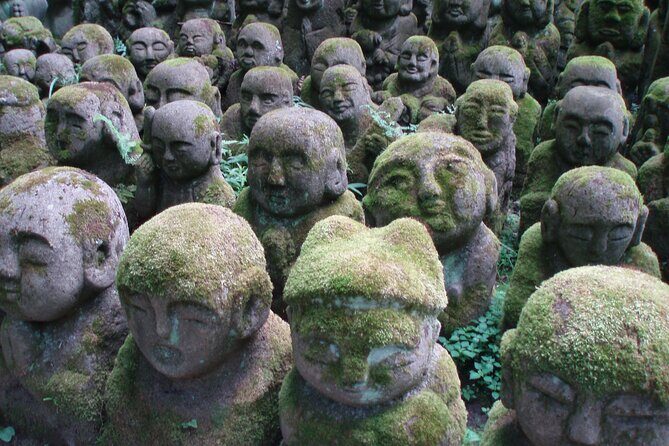
If you like a strong visual theme, Otagi Nenbutsu-ji delivers. This temple is famous for 1200 stone statues of Rakan—disciples of Buddha. The details get even better: the statues were hand carved by 1200 individuals, so the number isn’t just a marketing fact; it’s part of the identity.
Your time here is around 20 minutes, and the goal is calm. The statues are clustered in a way that makes the area feel meditative, like you’re wandering through a gallery built for quiet attention.
Entrance fees aren’t included for this stop, so expect you’ll pay at the gate if you want to go inside. You’re not paying for novelty; you’re paying for a very specific, very unusual sculptural experience.
Bamboo Forest Street in Arashiyama: how to enjoy it even when it’s packed
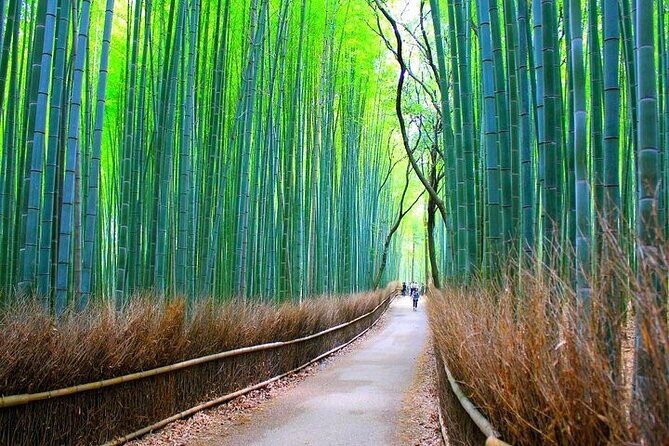
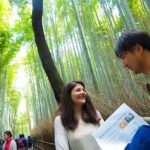
Now for the reason most people come: Bamboo Forest Street. You’ll walk through the famous bamboo grove path in Arashiyama, and the guide’s commentary adds more than just photo tips. You’ll learn about bamboo as a plant and how it’s been cherished and used in Japan—so the experience isn’t only visual, it’s contextual.
Timing is everything here. Even with a private tour, the bamboo path is still shared public space. Reviews (and common sense) point to the same issue: it gets very crowded during the day, and crowds can squeeze the serenity out of the moment.
What helps: starting at 9:00am. That gives you a head start before the biggest wave arrives. You’ll still see people, but you’ll have more breathing room for photos and slower looking.
Also: bring bug spray. One practical note from past visitors is that insects can be a problem in the bamboo area. That’s easy to fix, and you’ll enjoy the walk more if you’re not dealing with bites.
One more tip: this path is wide enough for people to move, but it’s also built for selfies. Plan your shots fast, then step back and let the tall stalks do their job. It’s a “stand there and look up” kind of place.
A few more Kyoto tours and experiences worth a look


Tenryu-ji Zen garden: world heritage calm after the bamboo photos
After bamboo, the tour shifts into calmer, slower mode at Tenryu-ji Temple. This is a Zen Buddhist temple founded in the 14th century and listed as a World Cultural Heritage site.
This stop is about 20 minutes, and it’s all about the garden feel. The guide frames it as a place that supports Zen-like quiet—so instead of treating it like a checklist temple, you’ll want to pause and actually look.
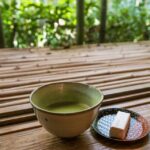
Entrance fees aren’t included here either, so keep your wallet ready. In the same general area, some visitors note paying around 500 yen and getting something small like tea and a biscuit before garden time. I can’t promise that exact refreshment will be part of your visit, but it’s a good idea to be ready for a short paid entry experience and a slower garden walk.
If you came for bamboo only, this is the part that often surprises people in a good way. Bamboo is all height and drama. Tenryu-ji gives you shape, reflection, and that quiet “Kyoto goes still” sensation.
Togetsukyō Bridge: Moon Crossing Bridge views and a quick story break
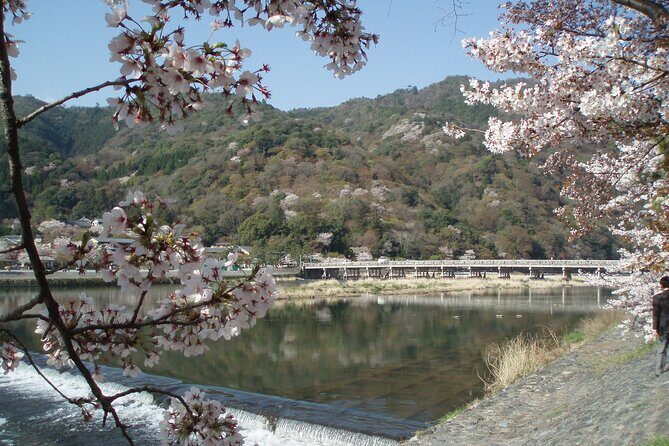
To wrap up, you’ll reach Togetsukyō Bridge. This one’s quick—around 5 minutes—but it’s worth it because it ties the river, the temple area, and a bit of legend together.
The bridge was built to get to the temple across the river. And it has a poetic name: an ancient emperor called it Moon Crossing Bridge when he saw the moon as if it were crossing the bridge.
Best part for practical travelers: it’s a perfect “reset” point after you’ve been walking. You can stand, look at the river, grab a final photo, and then keep moving on your own. Since the tour ends here near Monkey Park, you have an easy next option without needing to re-plan transport.
Price and value: what $85.87 buys you in real time
At $85.87 per person for roughly 4 hours, this is not a bargain-bus tour. It’s a private guiding option, so the value comes from how you use your time.
Here’s where it pays off:
- You get a professional guide who can explain what you’re seeing as you walk, not after you’ve left.
- The stops include both free-entry sites and the big-name temples, so you’re not stuck paying for everything without context.
- A private pace can reduce frustration in crowded areas, even if crowds can’t be erased.
Where you’ll want to plan extra money: temple admissions aren’t included across all stops. Otagi Nenbutsu-ji and Tenryu-ji are listed as ticketed, while several other parts of the route are free (including the Seiryōji temple stop, the preservation area, bamboo forest street, and the bridge).
In other words: you’re paying for guidance and time, not just for tickets. If you’re traveling with someone who enjoys learning while walking, this price can feel very fair.
Who should book this tour (and who might skip it)
This tour fits best if you:
- Want a calmer, context-rich Arashiyama morning instead of wandering alone.
- Like a mix of temples, historic streets, and nature.
- Prefer a private group where you can slow down and ask questions.
You might reconsider if you:
- Hate crowds with a passion. Bamboo is famous, and it draws people.
- Only want one attraction. This tour is designed as a connected Sagano day, not a single-stop photo session.
Also, if you’re the kind of traveler who can walk 4 hours with short stops, you’ll be happy. If your legs get tired fast, you can still do it, but you’ll want to be honest with your guide about pacing.
Simple packing list for a bamboo-and-temple morning
This is the kind of walk where small items matter. I’d bring:
- Comfortable shoes with grip (stone paths and mixed surfaces).
- A small bottle of water.
- Bug spray (worth it in bamboo areas).
- A light layer for temple shade and garden breezes.
- Your phone camera or a real camera with space for a lot of bamboo photos.
If you’re prone to sunburn, add sunscreen. You’ll be outside for most of the morning, and Kyoto can go from mild to strong quickly.
Should you book this private Sagano walking tour?
I’d book it if you want a Kyoto day that feels like real living space, not just a set of famous stops. Starting with Seiryōji and the Toriimoto preservation lanes gives you a heady sense of place. Then you get the bamboo and the Zen garden, with a guide translating what you’re seeing into something you can actually remember.
I wouldn’t book it with the idea that the bamboo forest will be peaceful and empty. Even at 9:00am, you’ll still share the space with other visitors. But the private guiding helps you manage your time and focus, so you come away with the beauty and not just the frustration.
If your goal is photos only, you can do Arashiyama on your own. If your goal is learning, pacing, and a smoother day, this is a solid pick.
FAQ
How long is the private walking tour?
It runs for about 4 hours.
Where does the tour start and end?
You start at Saga-Arashiyama Station and the tour ends at Togetsukyō Bridge.
What is included in the price?
A professional guide is included. The tour also uses a mobile ticket.
Are temple entrance fees included?
No. Entrance tickets are not included for Otagi Nenbutsu-ji Temple and Tenryu-ji Temple. Some other stops on the route are listed as free.
Is this tour private?
Yes. It’s a private tour, so only your group participates.
Is 9:00am a good time to visit the bamboo forest?
It helps. The tour starts at 9:00am, and bamboo forest areas can get very crowded later in the day, so earlier timing usually makes the experience more enjoyable.