One-on-one shamisen lessons in Kyoto can feel magical. This private shamisen experience swaps sightseeing for hands-on music training with English guidance, taught by Jack-san, a professional player who also makes the lesson personal. You’ll learn the basics and then play along using traditional elements, ending with a practical mini-jam that makes the instrument click.
I especially like two things: the lesson is beginner-friendly with one-to-one attention, and the flow includes both instruction and a relaxed tea break. The one possible drawback: it’s short (about 1 hour 30 minutes) and it replaces sightseeing time, so if you’re hoping to see a lot of Kyoto during this slot, plan your day around it.
In This Review
- Key Points You’ll Care About Before Booking
- Swapping Sights for Sound: What This Private Lesson Really Gives You
- Meeting in Kita Ward: Getting There Without Stress
- 90 Minutes With Jack-san: How the Lesson Typically Unfolds
- English-Friendly Basics: Tuning, Posture, and First Notes
- The Tea Break Isn’t Extra: It Sets the Tone
- Learning a Traditional Song (and Then Playing Along)
- What You Bring Home: Souvenir and Real Practice Momentum
- Price and Value: Is $99.10 for 1.5 Hours Reasonable?
- Who This Is For (and Who Should Think Twice)
- Quick Reality Check: Logistics That Matter
- Should You Book This Shamisen Experience in Kyoto?
- FAQ
- FAQ
- Do I need any shamisen experience to join?
- Is the lesson taught in English?
- What happens during the lesson?
- Is it a private lesson or shared with others?
- Does the experience include tea?
- Will I get a souvenir gift?
- Is there support for left-handed players?
- Where does the activity meet?
- What’s the cancellation window?
Key Points You’ll Care About Before Booking

- Private, undivided attention with Jack-san, not a crowded class
- English instruction designed for people with no shamisen experience
- Tea break included, with calm conversation during the lesson
- Jam session moment using traditional scales and guided melody play
- You can learn core basics like tuning and proper seating/posture
- Left-handed shamisen available if you play that way
Swapping Sights for Sound: What This Private Lesson Really Gives You
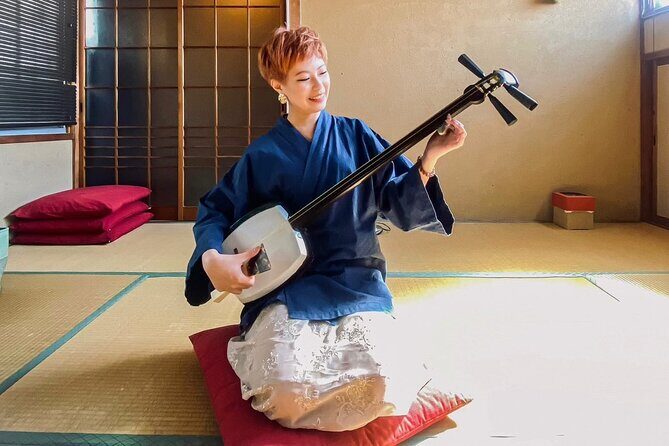
This isn’t a performance you watch. It’s training where you pick up real skills in a single sitting. The hook for me is how the lesson is structured so you don’t need prior knowledge—your time goes toward the stuff you can use right away.
Because it’s private, you’re not stuck waiting your turn or copying what everyone else is doing. You get immediate feedback, which matters a lot with a three-string instrument where posture, hand position, and timing make everything sound right—or sound messy. Here, that learning happens fast, and you’re guided through it step by step.
Other private tours in Kyoto


Meeting in Kita Ward: Getting There Without Stress
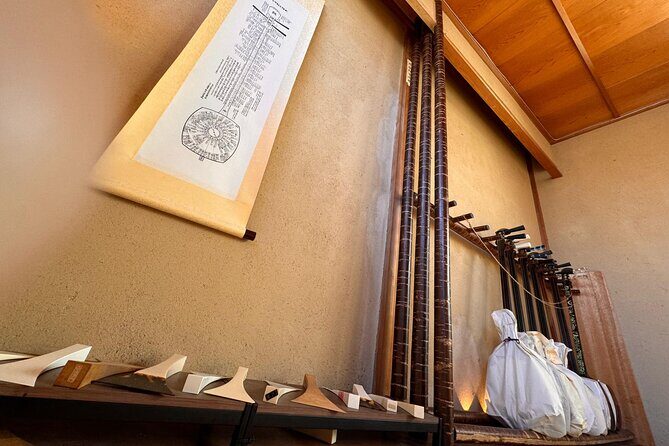
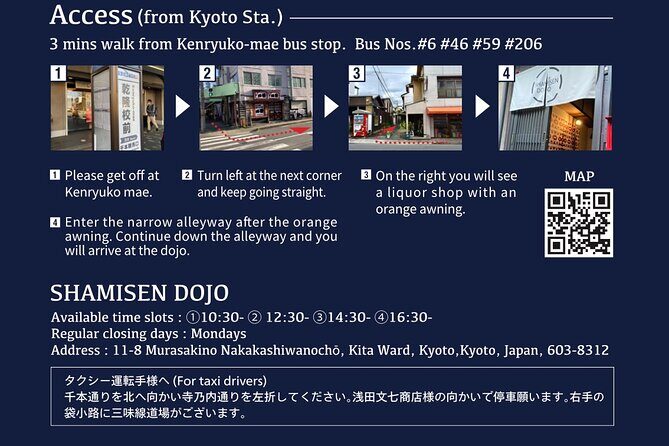
The lesson starts at Murasakino Nakakashiwanocho, Kita Ward, Kyoto (603-8312) and ends back there. It’s listed as near public transportation, so you shouldn’t have to plan a complicated route.
This matters because shamisen lessons work best when you’re not rushed. If you arrive early, you can settle in and let your hands and shoulders relax before you start tuning and playing. Plan a little buffer if you’re using trains and walking, especially on a busy day in Kyoto.
90 Minutes With Jack-san: How the Lesson Typically Unfolds
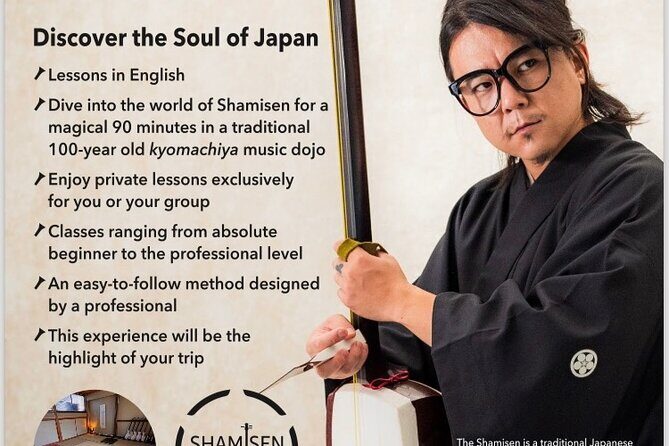
Think of this as a guided path: learn the basics, hear the instrument correctly, then play a traditional song with support.
A realistic way your time may feel:
- You’ll be welcomed and set up with the instrument.
- You’ll get practical basics like tuning and seating/posture.
- You’ll learn a beginner-friendly version of a traditional piece.
- You’ll finish with a jam session where Jack-san guides you using traditional scales, encouraging you to play melodies more freely.
Even with a short duration, the lesson is paced so you’re not just collecting information. You’re producing sound quickly, and the instructor helps you adjust in the moment.
English-Friendly Basics: Tuning, Posture, and First Notes
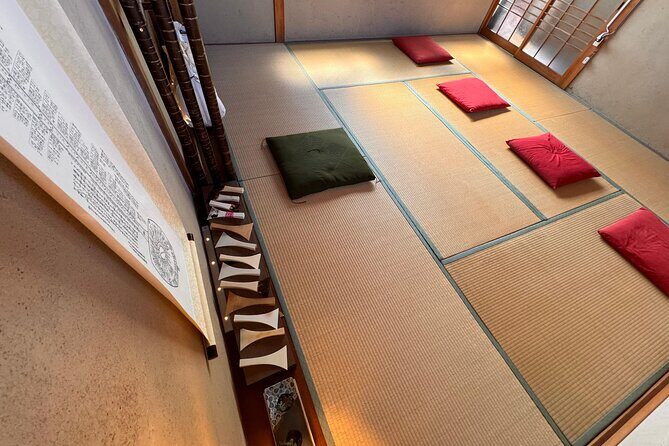
One of the strongest selling points here is that the lesson is taught in English. That might sound like a logistics detail, but for music, language changes everything. When you understand the instruction clearly—especially around how to hold and position yourself—you can actually apply it instead of guessing.
You’ll also get help with the practical mechanics. In particular, the experience includes learning how to tune the shamisen and the seating and posture used to play properly. Those are the kinds of fundamentals that can take beginners weeks to figure out alone. Getting them in one session means your first “real attempt” is more likely to land close to the right sound.
The Tea Break Isn’t Extra: It Sets the Tone
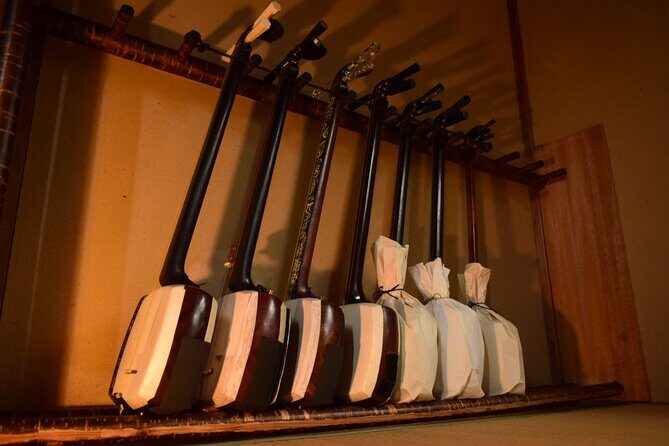
You’ll be offered Japanese tea during the lesson, and the vibe is relaxed. That tea break isn’t just a nice touch—it gives you a chance to talk, ask questions, and slow down after you’ve started handling the instrument.
Jack-san is described as personable and fluent in English, so you’re not stuck in silence between explanations. If you’re the kind of person who likes to understand what you’re doing, this conversation time can make the mechanics feel meaningful rather than mechanical.






Learning a Traditional Song (and Then Playing Along)
The highlight isn’t only learning a piece. It’s that you get to play while Jack-san accompanies you. The lesson centers on traditional Japanese melody work, and the instructor encourages you to express yourself rather than treating the instrument like a strict puzzle.
That’s where the jam session comes in. You’ll use traditional Japanese scales as a framework, with Jack-san guiding you while you try melodies on your own. This is usually the moment that turns “instruction” into “I can actually do this.”
If you’ve ever taken a workshop where you leave knowing facts but still can’t reproduce the sound, this is the opposite. The structure pushes toward actual playing—fast.
What You Bring Home: Souvenir and Real Practice Momentum
The experience includes a special gift—a souvenir to remember your time with shamisen. That’s a fun part, but the better take-home is the practice momentum you leave with.
Because you learn fundamentals like tuning and proper posture, you’re not starting from zero if you buy or borrow a shamisen later (or if you keep studying). Even if you don’t continue immediately, you’ll understand what “good form” feels like, which is more useful than memorizing a single song version.
Also, there’s a left-handed shamisen available. If you play left-handed, you won’t have to force a right-handed setup. That’s one of those small details that can make the difference between feeling comfortable and constantly fighting the instrument.
Price and Value: Is $99.10 for 1.5 Hours Reasonable?

At $99.10 per person for about 1 hour 30 minutes, you’re paying for something you can’t easily replicate on your own: private coaching from a professional musician, in English, with the instrument basics and a guided play-along.
If you’ve ever tried to learn traditional instruments from videos, you already know the hidden cost: time spent correcting mistakes on your own. This lesson compresses that correction into a single session, and it includes multiple key elements—tuning, posture, a traditional song, tea, and a guided jam—all delivered one-to-one.
The private format is also a real value. Group classes can be cheaper, but the learning payoff drops when you’re waiting for attention. Here, you’re set up for feedback as you go, which is exactly what beginners need.
One practical consideration: since the experience replaces a chunk of sightseeing, you’ll want to put it on a day when you’re okay trading “another temple stop” for hands-on culture. If you’re already planning a packed day, you might feel the squeeze.
Who This Is For (and Who Should Think Twice)
This works best if you’re curious about traditional Japanese culture but want something more hands-on than a museum visit. You don’t need prior musical experience, and the beginner-friendly curriculum is designed so you can make sound quickly and confidently.
It’s also a great choice if:
- you like music and want a skill you can talk about afterward
- you want a calm indoor-style activity in Kyoto (especially on less-perfect weather days)
- you travel with questions and appreciate patient, clear teaching
You might think twice if you:
- want a full sightseeing day with minimal switching plans
- need a very long lesson to feel properly “started”
- prefer a purely observational experience rather than active participation
Quick Reality Check: Logistics That Matter
You’ll get a mobile ticket, which keeps things simple day-of. Confirmation is provided at booking, and the meeting point is specific: Murasakino Nakakashiwanocho, Kita Ward.
Because this is a private activity, you’re booking for only your group. That’s part of the value: fewer people, more attention, and less awkward time waiting while others go through the same steps.
Should You Book This Shamisen Experience in Kyoto?
If you want an authentic Kyoto memory that’s not just photos, I’d book it. The combination of private English instruction, tea, and a guided jam session makes the experience feel like you actually learned something, not just watched a demo.
Choose it when you:
- want a hands-on cultural activity with a professional teacher
- prefer one-to-one guidance (especially as a total beginner)
- want a musical souvenir that comes with real skills like tuning and posture
Skip it if your day already runs tight and you’re chasing maximum sightseeing. In that case, the lesson’s value may feel a bit squeezed by time.
FAQ
FAQ
Do I need any shamisen experience to join?
No. The lesson is designed for beginners, so you can participate even if you’ve never played before.
Is the lesson taught in English?
Yes. The experience is specifically described as a lesson in English.
What happens during the lesson?
You’ll learn beginner basics like tuning and seating/posture, practice a traditional song, and finish with a guided jam session using traditional scales.
Is it a private lesson or shared with others?
It’s private. Only your group participates, so you get undivided attention.
Does the experience include tea?
Yes. Japanese tea is included during the lesson, alongside relaxed conversation.
Will I get a souvenir gift?
Yes. You receive a special gift to remember the experience.
Is there support for left-handed players?
Yes. A lefty shamisen is available.
Where does the activity meet?
The meeting point is Murasakino Nakakashiwanocho, Kita Ward, Kyoto (603-8312, Japan), and it ends back at the same location.
What’s the cancellation window?
You can cancel for a full refund up to 24 hours in advance of the experience’s start time. If you cancel less than 24 hours before, the amount paid is not refunded.