One day, two ancient capitals. This private Kyoto–Nara tour strings together the big-hitters in a tight schedule, with hotel pickup and drop-off so you lose zero time wrangling trains. I like the packed variety (temples, shrines, deer, bamboo) and the “do it your way” pacing that still keeps you moving. The main catch: you’ll pay extra for major temple admissions, and the depth of narration depends on whether you booked a host-style guide or a fully licensed national guide.
If you want a stress-free highlight reel with a calm, door-to-door rhythm, this tour fits well. It runs about 6 to 10 hours, typically starting at 8:30 am, and it uses an air-conditioned vehicle with parking and tolls covered. Just remember it’s a full day, so comfortable shoes and a light breakfast go a long way.
In This Review
- Key things to know before you go
- How the Kyoto–Nara private day works (8:30 am start to drop-off)
- Todai-ji Temple: the Big Buddha stop (and the entrance fee you’ll need)
- Nara Park deer feeding: short time, big energy
- Fushimi Inari-taisha: the shrine walk that quietly eats time
- Kinkaku-ji (Golden Pavilion): worth it, but plan the fee
- Arashiyama Kimono Forest and the bamboo area: quick art stop then a cool escape
- Price and value: what you’re paying for (and what you’re not)
- Private pace is the real win (when your host meets your style)
- Best fit: who should book this Kyoto–Nara day trip
- Should you book this tour?
- FAQ
- What does the tour include?
- Which major temple fees are not included?
- How long is the tour and when does it start?
- Is this a private tour or will I be grouped with strangers?
- Does the tour run in bad weather?
- How much time do I get at each main stop?
Key things to know before you go
- Hotel pickup and drop-off save you from public-transport stress across two cities
- Todai-ji + Kinkaku-ji tickets cost extra, so budget cash for temples
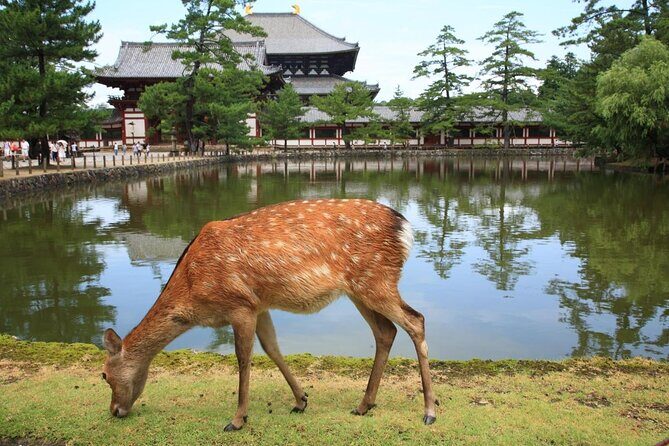
- Nara deer feeding is quick (about 30 minutes), so don’t plan to linger too long
- Fushimi Inari is free, but the steps add up fast—plan for breaks
- Arashiyama starts with a quick photo stop at Kimono Forest, then the bamboo area
- Guide depth can vary unless you request a licensed national guide
How the Kyoto–Nara private day works (8:30 am start to drop-off)
This is a true private setup: only your group rides together in the air-conditioned vehicle. You’re picked up near public transportation and then taken through the day’s route with a driver/host in English. The tour is designed to minimize wasted time, which matters on a day like this—Kyoto and Nara both have their own flow, and public transport can eat up your hours.
The schedule is built around set stops, but the “private” part usually shows up in small ways: you’re not stuck matching the pace of a large group. Many guides also use real-time adjustments when rain hits (you might even see someone show up prepared with umbrellas, depending on your guide). If you’re traveling with kids, or you want fewer photo-stop marathons, tell your host early and you’ll likely get a better rhythm.
Also, you’re looking at a long day. With multiple 1–1.5 hour segments plus driving, it’s not the right choice for a half-day mindset. Think full-day walking and waiting outdoors.
A few more Kyoto tours and experiences worth a look
Todai-ji Temple: the Big Buddha stop (and the entrance fee you’ll need)
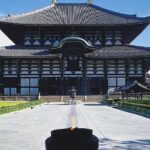
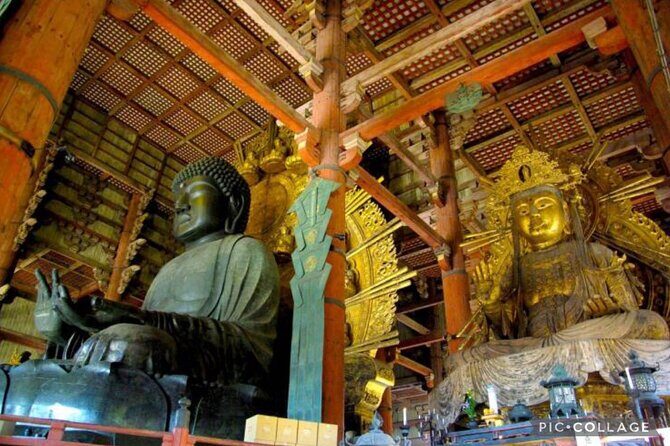
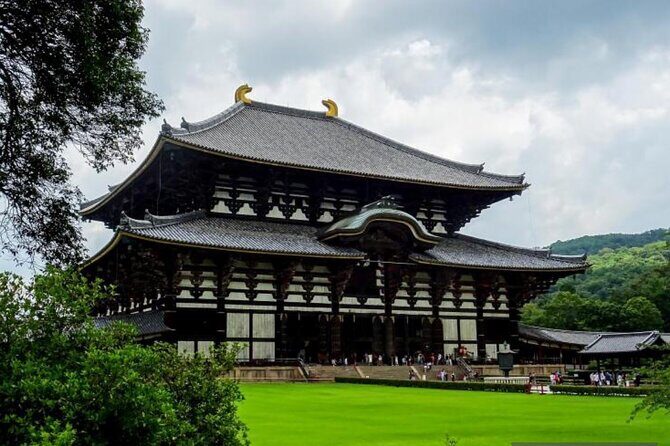
Todai-ji is the first “wow” moment on the itinerary. It’s a Buddhist temple complex and a UNESCO World Heritage Site tied to the Historic Monuments of Ancient Nara. The site is historically significant—founded in 738—and it’s famous for the Great Buddha hall, one of Japan’s most imposing temple spaces.
Your time here is about 1 hour 30 minutes. That’s enough to see the key areas without feeling like you’re sprinting, but it’s not a “wander for hours” visit. One important practical note: admission for Todai-ji is not included, and the fee listed is ¥600 per person.
If you’re trying to get the best photos, go in with a plan for your priorities. The first rooms can feel intense in the best way, so don’t spend your whole time just trying to find the perfect angle. Let the building do its job, then take a second pass if the crowd thins.
Nara Park deer feeding: short time, big energy
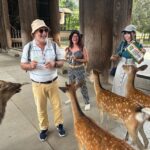
Next is Nara Park, known for free-roaming deer and the cluster of major sights around it. Your park stop is about 30 minutes, and it’s designed as a quick hit: deer, photos, and then back out.
The best use of this short block is to be decisive. If you want deer feeding time, don’t spend the first 15 minutes wandering to find the perfect spot. When the deer are active, they tend to come to you faster than you think. Also, keep your hands and pockets controlled. Deer are curious, and you don’t want your snacks turning into a tug-of-war.
Nara Park is also a good place to reset your legs. If the rest of the day feels like a march, this is a small breather—just don’t expect “deep exploration” on a 30-minute clock.
Fushimi Inari-taisha: the shrine walk that quietly eats time
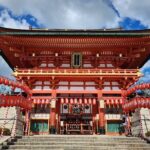
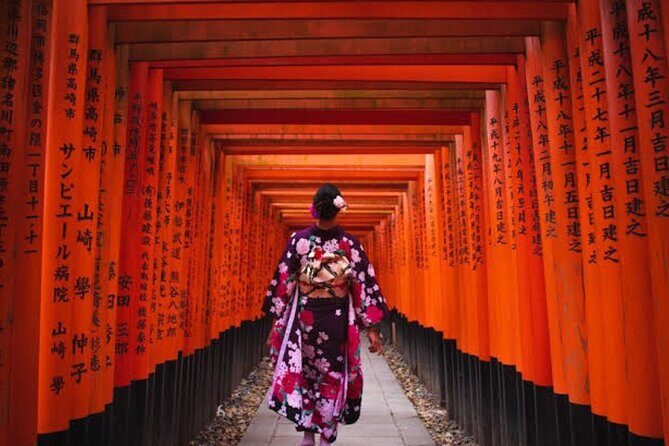
Fushimi Inari-taisha is one of Kyoto’s most iconic places, and you get about 1 hour 30 minutes here. Admission is free, which helps, but the real cost is effort. The famous torii-gate paths go uphill and into a long walking loop, so even if you’re not doing the full hike, your legs will notice.
Here’s a detail that makes the place click: the main shrine building contains five shrines, and the five pillars are named for the virtues of Inari Okami. That context makes the walk feel less like a photo corridor and more like a spiritual route.
For practical pacing, decide in advance how far you want to go. If you’re trying to protect energy for later stops like Kinkaku-ji and Arashiyama, you don’t need to chase the farthest points. Walk until you feel satisfied, then head back. The best days are the ones where you don’t arrive at the next stop already exhausted.
Kinkaku-ji (Golden Pavilion): worth it, but plan the fee
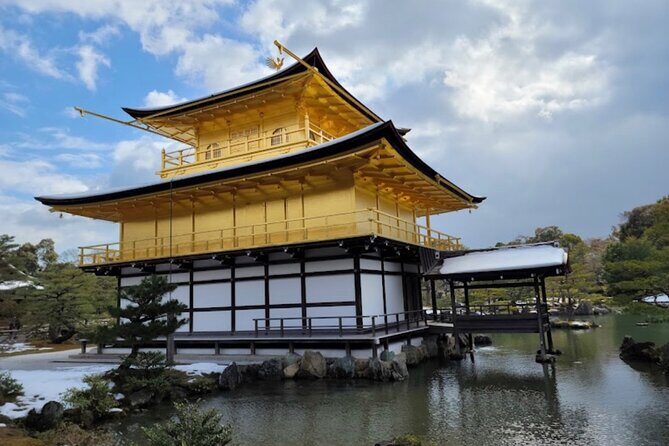
Kinkakuji Temple, also called Kinkaku-ji or the Golden Pavilion, is next with about 1 hour on site. This is another major ticket item. Admission is not included, and the fee listed is ¥600 per person (adult pricing shown).
One helpful way to frame Kinkaku-ji: the Golden Pavilion is actually a pagoda built to house sacred relics of the Buddha. That detail changes how you look at the structure—it’s not just a shiny exterior, it’s a relic hall shaped by ritual.
You’ll likely want a mix of shots: the classic frontal view, then angles that show the surrounding garden. Since you’re on a tight day, don’t spend too long “hunting.” Take your must-have photo, do a calm second look, then move on.
Other private tours in Kyoto


Arashiyama Kimono Forest and the bamboo area: quick art stop then a cool escape
Arashiyama is where the schedule shifts from temples and shrines to scenic Kyoto. The itinerary includes two linked stops.
First is Arashiyama Kimono Forest, a public art installation near the Arashiyama terminal of the Keifuku Randen Tram Line. It’s made of 600 clear acrylic cylinders, each about 2 meters tall. It’s free and the stop is about 30 minutes—perfect for a quick reset and photos without major ticket lines.
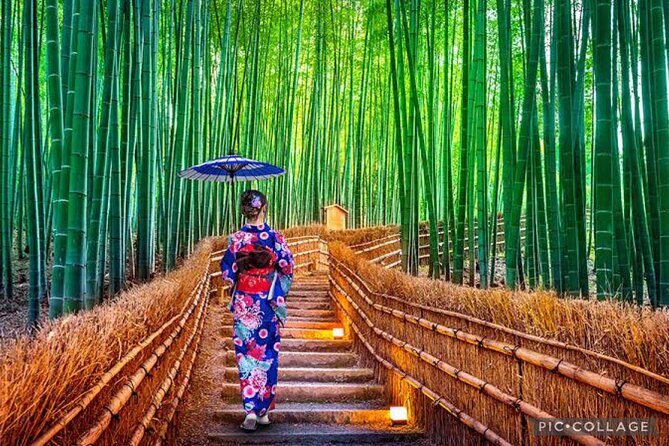
Then you head to the Arashiyama Bamboo Forest for about 1 hour. Admission is free here too. Bamboo can be hot in full sun, but the area also gives that soothing, breezy feel as you walk through. It’s a great “cool down” after temples.
My practical advice: treat the bamboo forest as a walk, not a checklist. You’ll get more enjoyment by slowing down, looking up, and letting the place change with the light. If it’s crowded, don’t fight the crowd flow—step aside, wait for a gap, and take your time in the calmer moments.
Price and value: what you’re paying for (and what you’re not)
At $350.16 per person, this tour is priced as a convenience and time-saver. You’re not paying mainly for included admissions—you’re paying for private transportation, an air-conditioned vehicle, and the ability to connect Kyoto and Nara in one day without you figuring out routes, transfers, and timing.
What’s included:
- private transportation, parking fees, fuel surcharge, and toll fees
- an English-speaking driver/host
- air-conditioned vehicle
- private group setup
What’s not included:
- lunch
- admissions for Todai-ji and Kinkaku-ji (each listed at ¥600 per person)
- plus any other site fees if your guide adds them (the ones listed here are the two big ticket items)
So the value equation depends on your priorities. If you hate logistics and you want a full-day plan done for you, the price can feel reasonable. If you’re cost-focused and you’re comfortable with trains and buses, you may feel the private premium.
There’s also a big reason some people call this overpriced: they expected a full licensed guide experience. The tour listing you’re using includes an English-speaking driver/host, and the level of storytelling can range. In the operator’s clarification, the difference is clear:
- an experience guide/host tends to share general information
- a national licensed tour guide provides more in-depth, professional detail
If you want the second kind of guide, you should ask about adding a national licensed guide and plan to request it ahead of time, not last minute.
Private pace is the real win (when your host meets your style)
In the best versions of this day, the guide makes the whole experience feel personal. People have mentioned guides like Dan, Ben, Christine, Reo, Yui, and Dave for making the day smoother, more fun, and more tailored.
What that tailoring looks like in real life:
- flexible pacing when rain or kids change the plan
- adjustments if you want more time at a stop or shorter transitions
- help finding lunch that fits your mood (soba came up as a favorite)
- extra patience with slower movement, including guests using a cane
Even small touches can matter when you’re moving fast. One account described a guide waiting with umbrellas after sudden rain, which is exactly the kind of practical help that keeps a day from turning into a misery-fest.
That said, if you’re the type who wants a running lecture at every stop, don’t assume you’ll automatically get that. If you want deep context for every shrine and structure, confirm you’re getting the licensed-guide level.
Best fit: who should book this Kyoto–Nara day trip
I’d book this if you:
- want the highlights of Kyoto and Nara in one day without navigating trains
- like a planned route but still want some flexibility
- are traveling with limited time and need efficiency
I’d hesitate if you:
- expect everything to be fully included, including temple admissions and lunch
- want a highly detailed guide at every site and haven’t arranged for the licensed-guide option
- are sensitive to high prices and would rather spend that money on extra nights or independent travel
If mobility is a concern, this tour can still work, but it pays to communicate your needs early. Some guides have shown flexibility, but your experience will depend on the person driving and hosting that day.
Should you book this tour?
Book it if your goal is simple: see Todai-ji, Nara Park, Fushimi Inari, Kinkaku-ji, and Arashiyama bamboo with hotel pickup and an easy day plan. You’re paying for time saved and for not having to coordinate two cities on the fly.
Don’t book blindly if you want full-on expert narration. Your safest move is to ask directly about the guide type—English-speaking driver/host versus national licensed tour guide—so you don’t end up paying private prices and getting only basic commentary.
FAQ
What does the tour include?
The tour includes private transportation in an air-conditioned vehicle, an English-speaking driver/host, parking fees, fuel surcharge, and toll fees.
Which major temple fees are not included?
Todai-ji Temple admission is listed at ¥600 per person and Kinkakuji Temple admission is also listed at ¥600 per person. Lunch is not included either.
How long is the tour and when does it start?
The tour runs about 6 to 10 hours and typically starts at 8:30 am.
Is this a private tour or will I be grouped with strangers?
This is a private tour/activity, so only your group participates.
Does the tour run in bad weather?
The experience requires good weather. If it’s canceled due to poor weather, you’ll be offered a different date or a full refund.
How much time do I get at each main stop?
You’ll spend about 1 hour 30 minutes at Todai-ji, about 30 minutes at Nara Park, about 1 hour 30 minutes at Fushimi Inari-taisha, about 1 hour at Kinkaku-ji, about 30 minutes at Arashiyama Kimono Forest, and about 1 hour at the Arashiyama Bamboo Forest.