Your knife ends up smarter than you.
At Kyoto’s HIRAI workshop, you sharpen and re-handle a real knife in a small group with an English guide. It also starts with a short primer on Japanese knives before you get your hands wet with the whetstone.
I love how the instruction stays practical, with the guide correcting you as you go so you can actually repeat the method later. I also like the no sales pressure vibe—yes, there are knives in the shop, but the class focus stays on skills, not upselling.
One watch-out: the handle fitting uses fire, and sometimes you’ll see smoke. Wear clothes you don’t mind getting a little smoky, and you’ll be fine.
In This Review
- Key points worth your attention
- Kyoto’s HIRAI knife workshop: more useful than another souvenir
- Pick your knife: Santoku, Deba, or Yanagi (and why that matters)
- Sharpening on the whetstone: hands-on coaching you can copy later
- Handle fitting with fire: the smoky part that makes it real
- Engraving time: personalize it, up to four characters
- What you get in the package: uniform, handle, and the whetstone already handled
- Small group learning with English support: less guessing, more correction
- Price and value: why $161 can actually be a good deal
- Practical expectations: timing, rules, and how to make the session smoother
- Should you book Kyoto’s knife sharpening and handle fitting workshop?
- FAQ
- What knives can I choose for the workshop?
- Do I get to take my knife home after the class?
- Is handle fitting included, and what handle do I get?
- Can I engrave my knife?
- Are whetstones provided?
- Is an English guide available?
- What should I wear for handle fitting?
Key points worth your attention
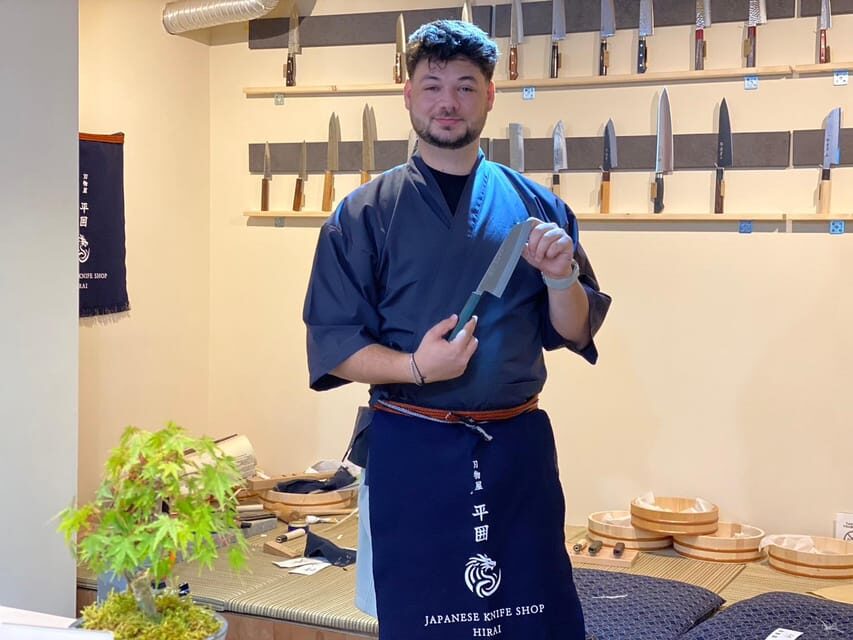
- You take home the knife you sharpen after they package it for you.
- Choose your blade style first: Santoku, Deba, or Yanagi.
- Magnolia handle included, with other handle types available for an extra fee.
- English support is built in, so beginners are comfortable.
- Fire + smoke during fitting means plan your outfit like you’re helping cook, not attending a museum.
Kyoto’s HIRAI knife workshop: more useful than another souvenir
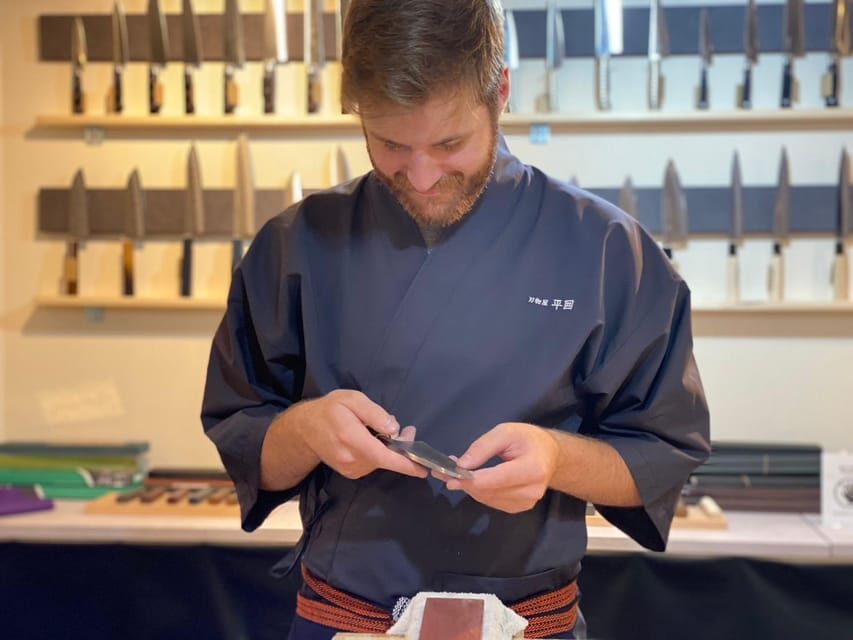
This is the kind of Kyoto activity that makes sense even when you are tired. Instead of buying something you have to explain later, you leave with a skill and a tool that you’ll use at home. And unlike many “craft experiences,” this one is built around repeatable technique, not just watching.
The setting is a working Japanese knife shop called HIRAI, and the class happens right there, so you are surrounded by the real world of sharpening and kitchen tools. The meeting point is simple: come to the shop directly and look for the white storefront curtain.
The class runs about 2 hours, and it is limited to 3 participants, which keeps the feedback personal. If you’ve ever tried sharpening from videos and felt like you were guessing, this format is the difference between frustration and confidence.
A few more Kyoto tours and experiences worth a look



Pick your knife: Santoku, Deba, or Yanagi (and why that matters)
Before the sharpening starts, you choose one knife for the workshop. You can select from Santoku, Deba, or Yanagi styles. That choice matters because you will learn on a real blade shape, then take that same knife home.
This is also where the short lesson at the beginning earns its keep. You get context about Japanese knives—why they exist, and how they fit into kitchen use. You do not just learn strokes; you learn what you are trying to preserve: the blade’s edge and performance.
In practice, choosing the knife early makes the whole session feel focused. You’re not waiting around; you are committing, then sharpening with a goal.
Sharpening on the whetstone: hands-on coaching you can copy later
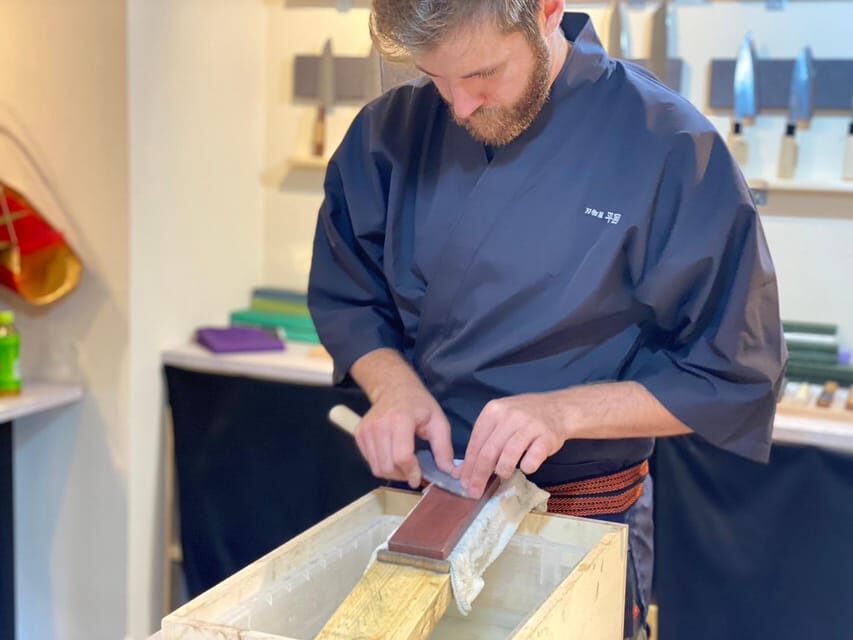
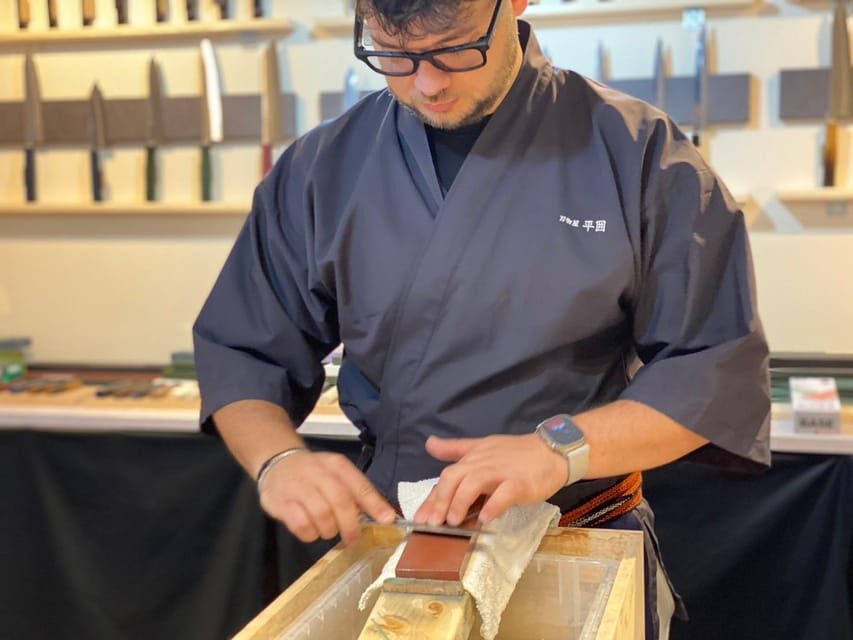
The core of the workshop is sharpening. You’ll work with a whetstone, and the shop provides the stones, so you do not need to buy anything to start. They teach in a way that works for beginners, including clear steps and corrections as you practice.
What I really like about this part is how the instruction is designed for accuracy. Many beginners struggle because they cannot feel what they are doing wrong. Here, the guide can see your progress and help you adjust, which is how you get from trying to doing.
You also get to move from demonstration to your own hands quickly. That rhythm helps you avoid the classic trap: watching a tutorial twice and still not knowing how much pressure or angle to use. The workshop format nudges you into feedback mode fast.
And yes, you’re learning on a proper Japanese knife blank you chose for the session, not some throwaway tool. That detail makes the sharpening lesson feel more serious—and more satisfying.
Handle fitting with fire: the smoky part that makes it real
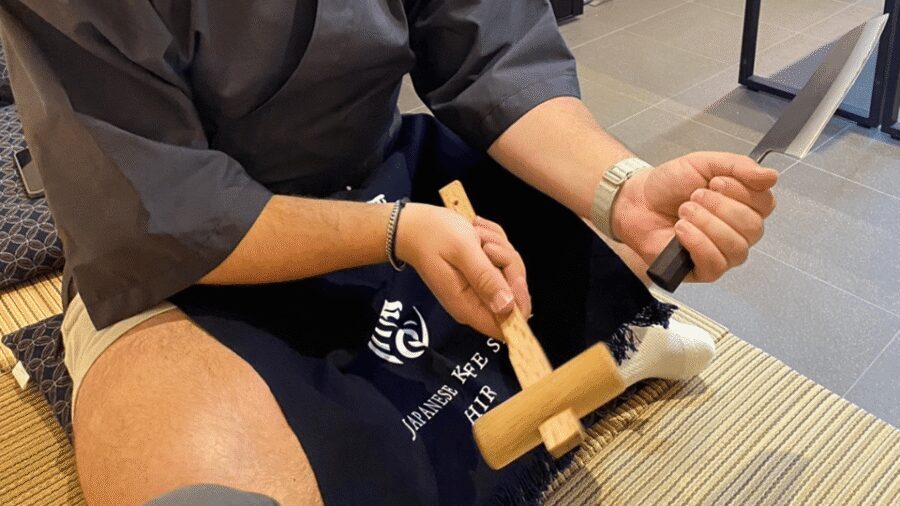
After sharpening, the class shifts from edge work to the handle. You choose the handle you’ll attach, and the included handle is a magnolia tree handle. During fitting, the workshop uses fire, and sometimes you’ll see smoke.
This is the moment where you should treat clothing like a work shirt. The class includes a Japanese working uniform and apron, which helps, but you may still get that smoky smell in whatever you wear. If you want to go straight from the workshop to dinner afterward, plan a change of top or wear something you don’t mind smelling faintly smoky.
The nice surprise is that handle fitting is not just mechanical. You’ll get the process explained step-by-step, and you’ll get guidance while you do it. In other words, it stays educational. You are building a knife assembly, not just completing a craft step.
If you want something beyond magnolia, you can choose other handle types for an additional fee. The key is that the class still lets you get the included version without paying extra, so you can decide based on taste and budget.
Engraving time: personalize it, up to four characters
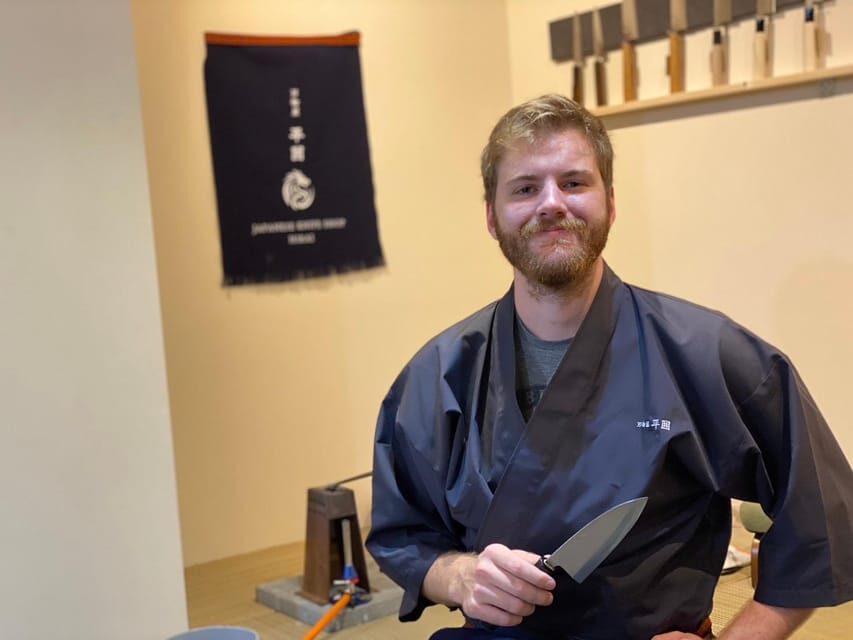
You can add engraving to your knife. The workshop offers engraving service, and you need to request it in advance. The character limit is up to 4 letters, so choose something short—names, initials, or a simple reminder.
The engraving fee is listed as included, which is a big deal for value. Some experiences give you a “maybe” option and then charge later. Here, the option is clearly part of the package if you plan ahead.
And since you’re taking the knife home, engraving turns the tool into a souvenir you can actually use. It becomes a daily object with meaning, not a decorative shelf piece.




What you get in the package: uniform, handle, and the whetstone already handled
Here’s what’s included in the experience fee:
- A knife you sharpen during the workshop
- The handle you attach, with magnolia tree handle included
- A Japanese working uniform and apron
- Experience fee
- Engraving fee
Whetstones are not sold to you during the class because the shop provides them. That keeps the workshop from turning into a shopping trip, which is one of the reasons people leave feeling like they got their money’s worth.
Also, after the workshop ends, they package your knife so you can take it home safely. You’re leaving with a complete, ready-to-use knife project.
Small group learning with English support: less guessing, more correction
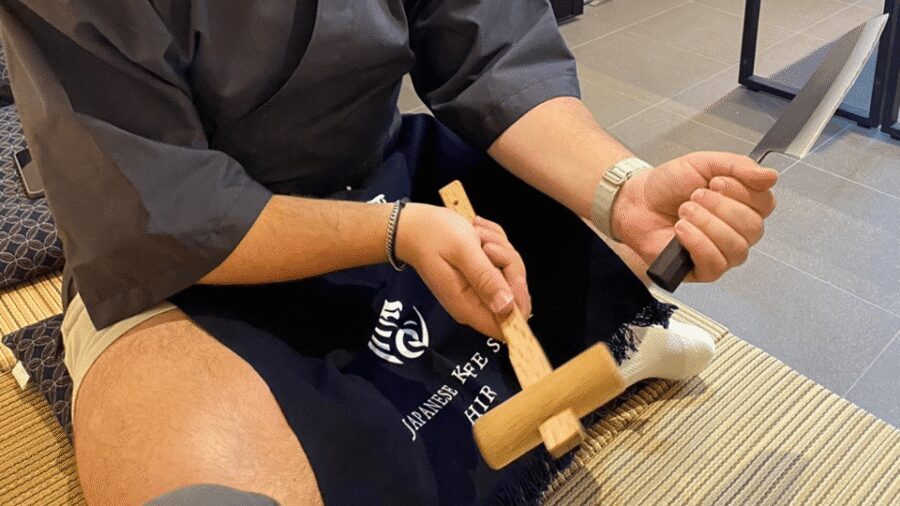
Small groups are one of the biggest quality signals here. With a maximum of 3 participants, you get enough attention that you are not just part of the background.
You also have English support. The instructor is described as English and Japanese, and the format includes an English guide/translator. That matters because sharpening has tiny details. If you miss one concept—like what you are aiming for—you can spend the whole session repeating the wrong habit.
In the feedback people mention instructors such as Julio, and for some sessions Tim shows up as a guide. Others mention Tatsu as part of the team. Whoever you get, the common theme is clear communication and hands-on correction.
This is also where the vibe stays relaxed. The workshop can feel focused, even a little calming, because you’re concentrating on technique with a steady pace and help right beside you.
Price and value: why $161 can actually be a good deal
At $161 per person for about 2 hours, you’re paying for three things at once: instruction, workshop materials, and the knife project itself.
A big part of the value is what’s included:
- You choose a knife style and sharpen it
- You fit a magnolia handle
- You can engrave it (with the planning required)
- You get uniform/apron support
- You get packaging to take the knife home
So the workshop cost is not just “class time.” It’s the class plus the tool you worked on. Several people describe it as good value because the activity feels close to the cost of the knife itself, with the sharpening instruction added on top.
There’s also a practical benefit: even if you end up buying or using knives later, you learn what to do to maintain an edge. That skill can stretch the life of any future blades you own.
One more value point: there’s no pushy sales pressure. You can browse, sure, but the experience isn’t built around forcing upgrades. If you want other handle types, you can add that for extra cost, but it is optional.
Practical expectations: timing, rules, and how to make the session smoother
The workshop expects you to arrive a bit early. Plan to be at the shop about 5 minutes before start time so everything runs smoothly.
The shop also has clear behavior rules:
- No pets
- No baby strollers
- No smoking
- No alcohol or drugs
- Keep noise down
These aren’t just formalities. They help the room stay safe and focused, especially during the fire-based handle fitting portion.
It is also good to know who this fits. It is not suitable for children under 15, and it is not designed for wheelchair users. The guidance also says people over 80 may find it difficult, so take that into account when you’re planning.
If you show up rested, wear workable clothes, and come ready to concentrate, the 2 hours move fast—in a good way.
Should you book Kyoto’s knife sharpening and handle fitting workshop?
Book it if you want a Kyoto memory that travels well and lasts longer than a photo. This is ideal if you’re a beginner who wants the basics done correctly, with real feedback, and you like the idea of taking home a knife you helped assemble.
Skip it if you dislike hands-on activities, hate any chance of smoky smells on your clothing, or you’re looking for a passive cultural show. The workshop is active and technical. It rewards attention.
My bottom line: if you want a skill plus a take-home Japanese knife, and you’re comfortable with a small-group, step-by-step workshop in a working shop, this one is a strong yes.
FAQ
What knives can I choose for the workshop?
You can choose one knife style from Santoku, Deba, and Yanagi for the workshop.
Do I get to take my knife home after the class?
Yes. After the workshop, the knife is packaged for you, and you can take it home.
Is handle fitting included, and what handle do I get?
Handle fitting is part of the workshop. The included handle is a magnolia tree handle. Other handle types can be chosen for an additional fee.
Can I engrave my knife?
Yes. Engraving is available if you let the shop know in advance what characters you want. The limit is up to 4 letters.
Are whetstones provided?
Yes. You use the whetstones provided by the shop.
Is an English guide available?
Yes. The instructor/guide is available in English (and Japanese as well).
What should I wear for handle fitting?
Handle fitting uses fire, and sometimes smoke comes out. Wear clothes you don’t mind getting smoky.