Gion is a lot to take in. This small-group walking tour helps you get oriented fast while you move through Kyoto’s most famous geisha district and nearby temple-and-shrine stops. I like how the guide gives context as you pass landmarks, instead of just pointing and walking. And I especially like the small-group feel (up to 15), which keeps it relaxed enough to ask questions.
You’ll hit places many first-timers miss when they wander on their own, including Kennin-ji and the Yasui-Konpiragu area. All the main stops are free to enter, so your $20 is mostly paying for navigation and the cultural explanations. One possible drawback: it’s only about 2 hours, so the stops are more “taste and learn” than “slow and linger.”
In This Review
- Key things to know before you walk
- Why this Gion tour works so well for first-timers
- The 2-hour route from Gion to Yasaka Shrine
- Stop 1: Gion streets—where the neighborhood story begins
- Stop 2: Kennin-ji Zen temple—the calm checkpoint
- Stop 3: Yasui-Konpiragu—small shrine, specific ritual
- Stop 4: Hōkan-ji (Yasaka Pagoda)—the iconic silhouette
- Stop 5: Ninenzaka—stone-paved Kyoto on a slope
- Stop 6: Yasaka Shrine finish—the red gates and lanterns
- What the guide adds (and why it’s worth paying)
- Price and value: $20 for guidance plus free entry
- Practical tips so you enjoy every stop
- Should you book this Kyoto Gion walking tour?
- FAQ
- Where does the tour start and end?
- How long is the Kyoto Gion walking tour?
- How many people are in the group?
- What ticket do I need, and do I have to print it?
- Is there admission to pay at the stops?
- Are snacks included?
- Is the tour suitable for most people?
- Are service animals allowed?
- What happens if the weather is bad?
- How does cancellation work?
Key things to know before you walk
- Small group pacing (max 15) makes it easier to hear the guide and move at a comfortable speed
- Mobile ticket means fewer hassles once you’re there
- Free entry stops keep the tour focused on sights and stories, not ticket lines
- A guided route through Gion’s classics plus a couple of quieter spiritual stops
- Photo-based explanations and strong English are part of what the guide experience is known for
Why this Gion tour works so well for first-timers
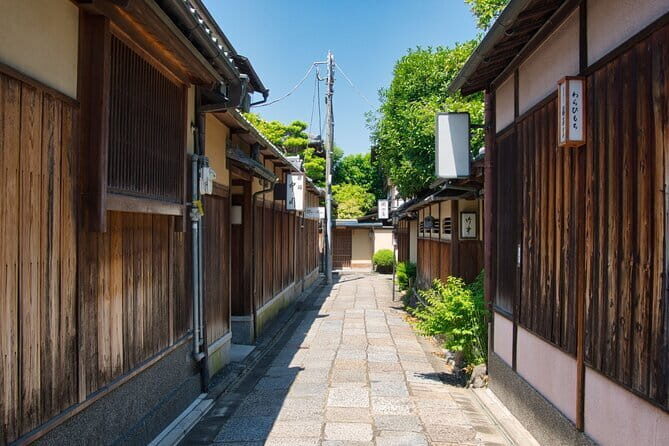
Gion can feel like a movie set—wooden buildings, traditional streets, and constant motion around Yasaka Shrine. The trouble is, on your own you can easily miss the small details that explain what you’re seeing. This tour solves that with guided context along the way.
The route also makes sense. You start in Gion, then connect it to Zen at Kennin-ji and Shinto stops nearby, then finish near Yasaka Shrine. That lets you see how the neighborhood’s religious sites and traditional streets sit side by side. Instead of treating each place as a separate checkbox, the guide helps you connect the dots.
Two big wins for me are practical. First, you don’t have to manage navigation. The experience is designed so you can leave the map behind and still know where you are and why you’re walking this way. Second, the group is kept small. With fewer people, you’re not trapped behind a crowd, and it’s easier to ask simple questions like what a gate or stone ritual actually refers to.
A few more Kyoto tours and experiences worth a look


The 2-hour route from Gion to Yasaka Shrine
This walk is designed to be doable on a first day, roughly 2 hours in total. Most stops are short, with time built in for walking between them and getting explanations at each location. You’ll visit six main places, and the entry to each is free.
Start point: Kyoto Tourist Lounge Gion at Pare Gion area (Komatsu Cho / Higashiyama Ward). The tour ends at Yasaka Shrine (Gionmachi Kitagawa, Higashiyama Ward). Being able to start and end in the same “Higashiyama / Gion orbit” is a big convenience—after you’re done, you’re already in position to keep exploring nearby streets.
Timing matters here. Because the stops are brief, you’ll want to treat them like mini-lectures plus photos. If you’re the type who likes to spend 30–45 minutes in one temple hall, you may feel slightly rushed. But if you want a smart overview that gives you a plan for the rest of your day, this format is a strong fit.
Stop 1: Gion streets—where the neighborhood story begins
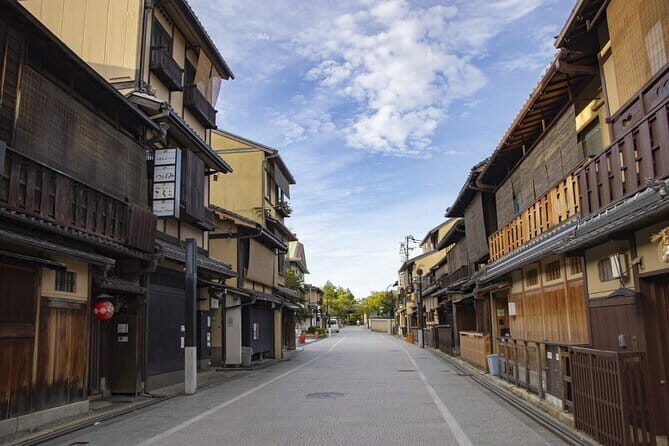
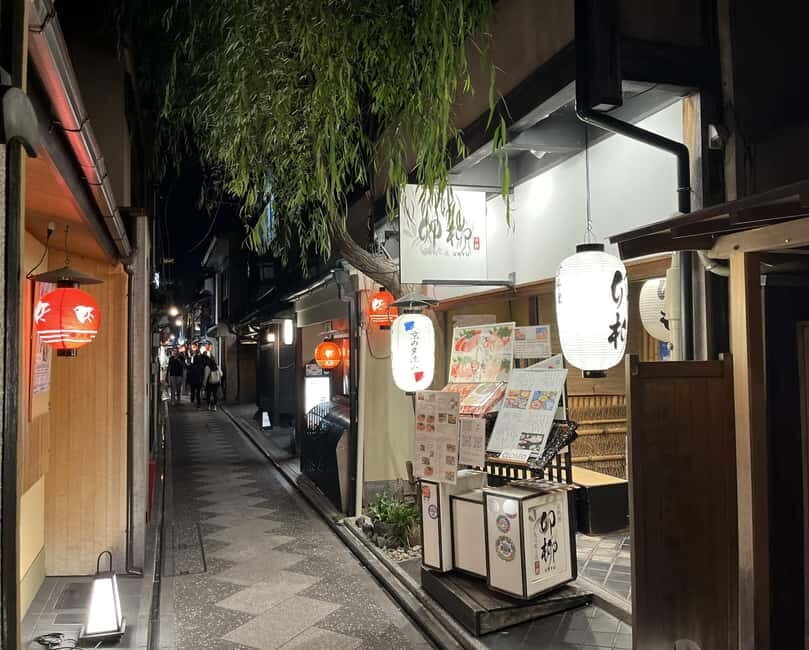
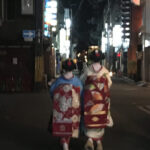
You begin in Gion, Kyoto’s best-known geisha district. You’re walking through an area famous for preserved wooden machiya townhouses, traditional teahouses, and cobblestone streets. The goal at this stage is orientation: you’ll learn what to look for while your feet are still fresh.
Because you start near Yasaka Shrine, the tour gets you thinking about the geography right away. Many first-timers only notice the busiest front-of-street views. Here, you’re nudged toward the smaller lanes and the kinds of architectural cues that make Gion feel distinctly Kyoto rather than generic old-streets photo time.
Potential drawback: Gion’s fame comes with crowds. Even in a small-group tour, parts of the area can be busy. The advantage is that you’re not alone out there, and you’ll know what matters while people pass around you.
Stop 2: Kennin-ji Zen temple—the calm checkpoint

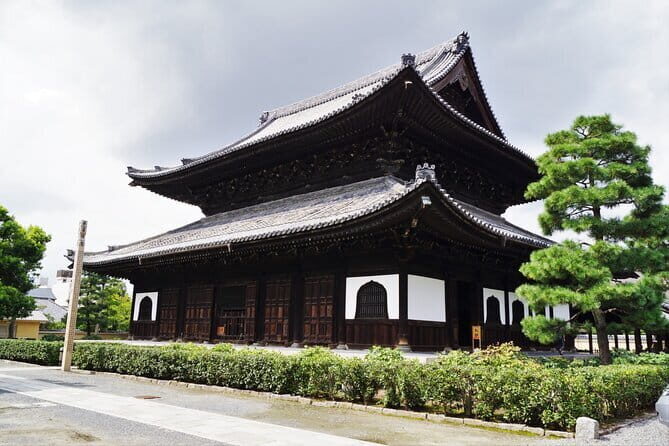
Next is Kennin-ji, one of Kyoto’s oldest Zen Buddhist temples, founded in 1202 by the monk Eisai. It’s also tied to Eisai’s role in introducing Zen and tea culture to Japan. That matters because it gives you a historical lens while you’re standing in a quiet religious space.
Kennin-ji is a good “reset” stop. After walking through streets associated with entertainment and tradition, you shift into a serene temple environment. The tour keeps the time reasonable at about 15 minutes, so you’ll get a sense of atmosphere and meaning without it turning into a long stop that breaks your momentum for the rest of the day.
Practical consideration: if you’re hoping for a slow, meditative experience, 15 minutes can feel short. But as part of a guided orientation route, it works well—especially if you want the day to stay balanced between spiritual sites and street-level Kyoto.
Stop 3: Yasui-Konpiragu—small shrine, specific ritual
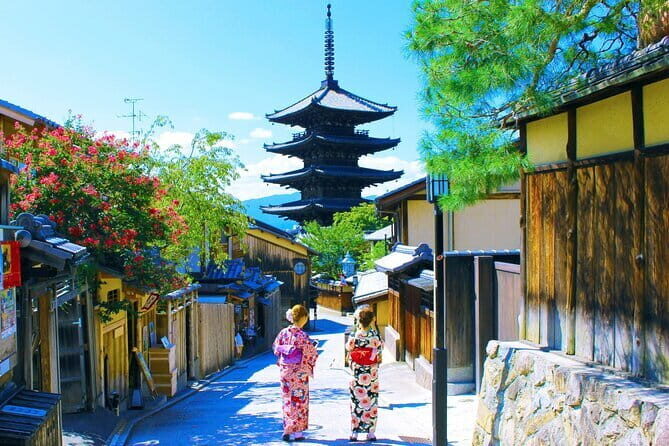
Then you move to Yasui-Konpiragu, a small but significant Shinto shrine tucked in the heart of the Kyoto streets near Gion. It’s known for the enkiri/enmusubi stone, a distinctive stone connected to traditional wishes and intentions.
This is one of those stops that’s easy to miss if you’re wandering. A small shrine doesn’t always look like it belongs on a “top sights” list, but the tour gives you the reason it matters. You get context for why people visit it, which changes how you experience the space.
Because the stop is about 15 minutes, you’ll likely leave with understanding, not just photos. The only downside is that it’s not designed for long soaking. If you love shrine details and want to read every sign, you may want extra time here on your own after the tour.
Other walking tours we've reviewed in Kyoto





Stop 4: Hōkan-ji (Yasaka Pagoda)—the iconic silhouette
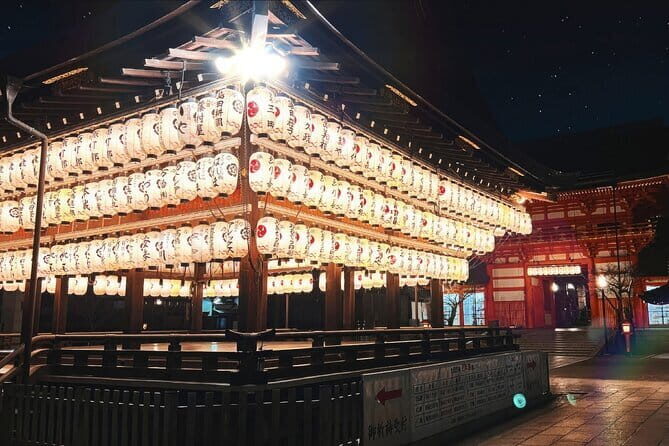
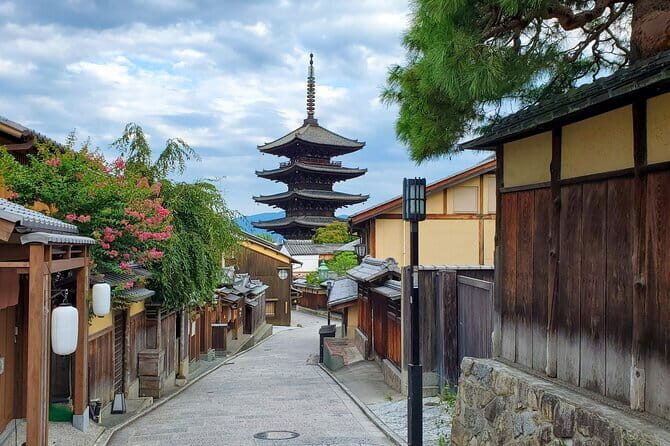
The route continues to Hōkan-ji Temple, better known as the Yasaka Pagoda. This is one of the most iconic images tied to the Higashiyama district: a graceful five-story pagoda rising above the surrounding traditional streets.
This stop is short, around 10 minutes, which is actually a smart move. You get the photo moment and the explanation—then you’re back on your feet heading toward the next street experience. If you try to spend too long here, you risk losing time for Ninenzaka and Yasaka Shrine, which round out the tour nicely.
The “watch for” at this stage is simple: look at the pagoda’s relationship to the streets and rooftops around it. The guide’s context helps you see it as part of the neighborhood’s visual rhythm, not just as a standalone tower.
Stop 5: Ninenzaka—stone-paved Kyoto on a slope
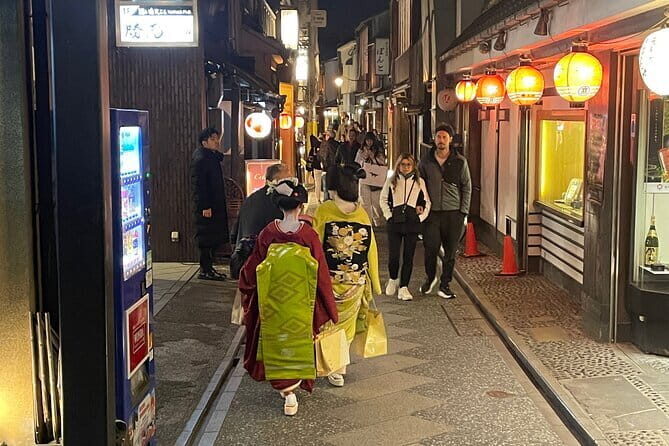
Next up is Ninenzaka, a charming historic slope in the Higashiyama district. It’s known for preserved traditional architecture and a lively street atmosphere. The street is stone-paved, which means it can be slippery or uneven depending on the surface and conditions.
At about 10 minutes, this stop works best if you keep it light and curious. Use it for a short walk, a few photos, and noticing the old-building style. It’s also a natural bridge between big landmark sites and smaller street scenes.
The main consideration: because it’s a popular approach area, it can get crowded. The small-group setup helps, but you’ll still share the street with other people—so don’t plan on leisurely wandering during this part of the tour. Treat it as a guided taste of Higashiyama.
Stop 6: Yasaka Shrine finish—the red gates and lanterns
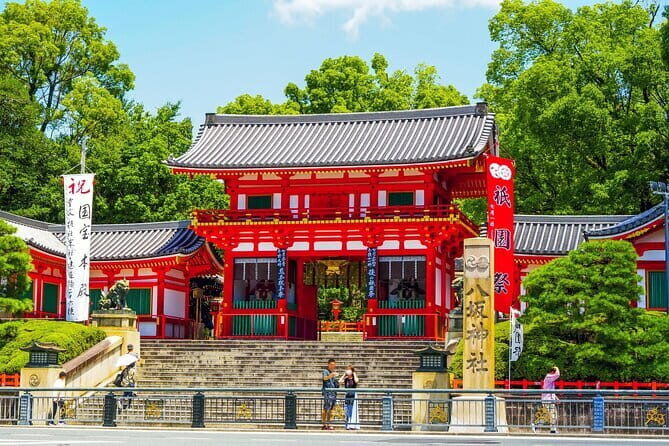
Finally, the tour ends at Yasaka Shrine (also known as Gion Shrine). This is one of Kyoto’s important Shinto shrines, and it’s famous for vermilion gates and lanterns that light up the area.
The ending is fitting. You start in the neighborhood identity of Gion and close at a major Shinto anchor. When you arrive, you’ll likely feel more connected to what you’re seeing because you’ve already visited a Zen temple and a smaller Shinto shrine on the way.
At about 10 minutes for the tour portion, you’ll get oriented and experience the key look of the shrine. Then you can decide how long you want to stay after the group finishes. If you’re the type who wants lantern photos at different angles, arrive with the plan to extend your exploration a bit on your own.
What the guide adds (and why it’s worth paying)
This tour is not just about moving through famous spots. The guide adds meaning by explaining what you pass and how it fits the neighborhood. The focus is cultural heritage, plus fun, practical tips that help you look at the area with better “eyes.”
One standout detail from guide experience shared in feedback: Jay is praised for being very informative, using interesting pictures to back up explanations, and communicating in strong English. There’s also mention of how much attention is given to mapping and route clarity. That combination matters because it turns Kyoto from a blur of scenery into a place you understand enough to keep exploring after the tour ends.
The small group format supports this. With fewer people, you’re more likely to actually hear the story behind a shrine gate, a temple connection, or a distinctive stone ritual—rather than just catching fragments over shoulder-to-shoulder foot traffic.
Price and value: $20 for guidance plus free entry
At $20 per person, this is priced for people who want real help without paying for a private guide. The key value is that the major stops have free admission tickets, so your payment supports the in-person guidance, the route design, and the cultural context.
Think of it like this: instead of spending time figuring out what matters and where to go next, you’re buying a compact plan. And since the tour lasts about 2 hours, it fits neatly into a first day in Kyoto without taking over your entire morning or afternoon.
Would you still be able to see these places on your own? Yes. But if your time is limited—and you want to walk into Gion with confidence—this tour spends your budget on the thing that’s hardest to DIY: context.
Practical tips so you enjoy every stop
A couple of practical notes can make the tour feel smoother.
First, wear comfortable shoes. The route includes cobblestones and a stone-paved slope, and you’re walking between multiple sites in a short window. Second, because snacks aren’t included, you’ll probably want to grab a quick drink or small snack before you go. The tour keeps moving, so you don’t want to wait too long to refuel.
Also plan around weather. The experience requires good weather, and if it’s canceled due to poor conditions you’ll be offered a different date or a full refund. Kyoto’s streets can be less fun under rain, especially on slopes and stone surfaces.
Finally, expect it to be easy to join. Service animals are allowed, it’s near public transportation, and it’s set up for most people to participate.
Should you book this Kyoto Gion walking tour?
Book it if you want a confident first look at Gion with minimal fuss. The strongest reason is the mix of street orientation plus structured spiritual stops—Kennin-ji, Yasui-Konpiragu, Hōkan-ji/Yasaka Pagoda, and Yasaka Shrine. You’ll leave with a mental map, not just photos.
Skip it (or plan to add extra independent time) if you prefer long, slow visits where you can sit and read quietly for a long stretch. This tour is built for learning efficiently in about 2 hours, so your “linger time” will likely happen after the group finishes.
If you’re trying to make your first day feel organized, this is a solid $20 move: small group, free entry stops, and a guide who helps you actually understand what you’re seeing.
FAQ
Where does the tour start and end?
It starts at Kyoto Tourist Lounge Gion (Pare Gion area) in Higashiyama Ward, and it ends at Yasaka Shrine at 625 Gionmachi Kitagawa, Higashiyama Ward, Kyoto.
How long is the Kyoto Gion walking tour?
The tour lasts about 2 hours.
How many people are in the group?
The maximum group size is 15 travelers.
What ticket do I need, and do I have to print it?
You use a mobile ticket.
Is there admission to pay at the stops?
All listed stops have admission ticket free.
Are snacks included?
No, snacks are not included.
Is the tour suitable for most people?
Yes, most travelers can participate.
Are service animals allowed?
Yes, service animals are allowed.
What happens if the weather is bad?
This experience requires good weather. If it’s canceled due to poor weather, you’ll be offered a different date or a full refund.
How does cancellation work?
You can cancel up to 24 hours in advance for a full refund. If you cancel less than 24 hours before the start time, the amount you paid isn’t refunded.