Kyoto after dark has a different rhythm. This bike tour threads lantern-lit streets with Shinto and temple stops, so the city feels both famous and strangely quiet. I like that you’re not just sightseeing from a sidewalk; you’re actually moving through the neighborhoods at a human pace with bilingual guides who connect the dots as you roll along.
Two things I especially like: you get bottled water and the bike included, which removes a lot of hassle, and the route hits major night photo areas without waiting all day. One thing to think about: the ride is best for people who can bike confidently in city conditions, and the tour includes plenty of on-foot time and guide talk, so it’s not a nonstop pedal-fest.
In This Review
- Key highlights worth your attention
- Getting started at the 7-Eleven near Higashikujō
- Fushimi Inari-taisha after dark: torii gates with a quieter mood
- Miyakawa-cho Dori: lantern streets just south of Gion
- Gion at night and Hanamikoji’s ochaya frontage
- Yasui-Konpiragu: a shrine stop with a personal theme
- Hōkan-ji and Yasaka Pagoda: cobblestones, townhouses, and night framing
- Ninenzaka and the Higashiyama night view finish
- Price and logistics: does $80 feel fair?
- The biking reality: comfort, timing, and guide style
- Who should book this Kyoto night bike tour
- Should you book this night bike tour?
- FAQ
- What is the duration of Discover Kyoto at Night by Bike?
- What time does the tour start in Kyoto?
- Where is the meeting point?
- Is the bicycle included?
- Are entrance fees included?
- Is bottled water included?
- What should I know about fitness and cycling ability?
- What is the group size limit?
- Is there free cancellation?
Key highlights worth your attention
- Small group size (up to 9): easier conversations and a calmer ride.
- 5:00 pm start: you hit Kyoto while light is fading and lanterns are starting to glow.
- Fushimi Inari at night: torii gates and shrine vibes before the late-evening rush.
- Lantern streets near Kamogawa: scenic stops that feel very Kyoto without huge detours.
- Photograph-friendly stops: the Yasaka Pagoda area and Ninenzaka slope are built for night shots.
- All entrance fees covered: shrines and temple entries are included in the price.
Getting started at the 7-Eleven near Higashikujō
Your tour begins at 7-Eleven, 44-1 Higashikujō Kamitonodachō, Minami Ward, Kyoto. The start time is 5:00 pm, and the experience returns you to the same meeting point at the end. That simple out-and-back setup is one less thing to worry about when you’re navigating Kyoto on your own.
Logistically, this helps you stay flexible. You don’t need to plan a separate pickup point, and the meeting spot is described as being near public transportation, which matters if you’re juggling buses or trains earlier in the day. You’ll also get a mobile ticket, so you can keep everything in your phone instead of hunting for paper.
The bike itself and bottled water are included. That’s a small detail, but it changes the feel of the tour. You can focus on the streets and the sights instead of pausing to buy snacks every time you stop.
One timing note: the listed duration is about 3 hours 45 minutes. Because Kyoto night sightseeing often means short rides plus frequent stops, you should expect a mix of biking and standing around while the guide explains what you’re seeing.
Other cycling tours in Kyoto


Fushimi Inari-taisha after dark: torii gates with a quieter mood
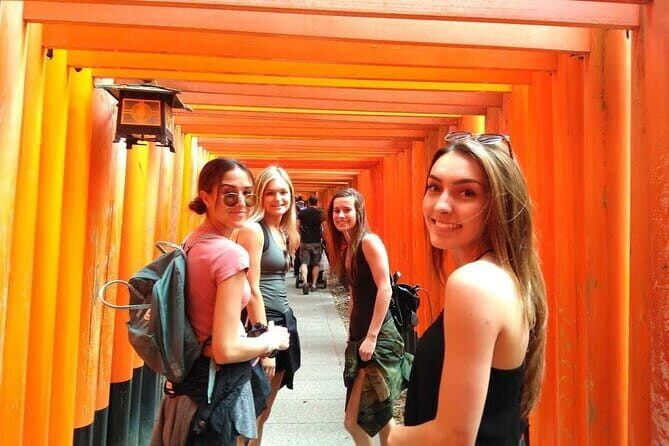
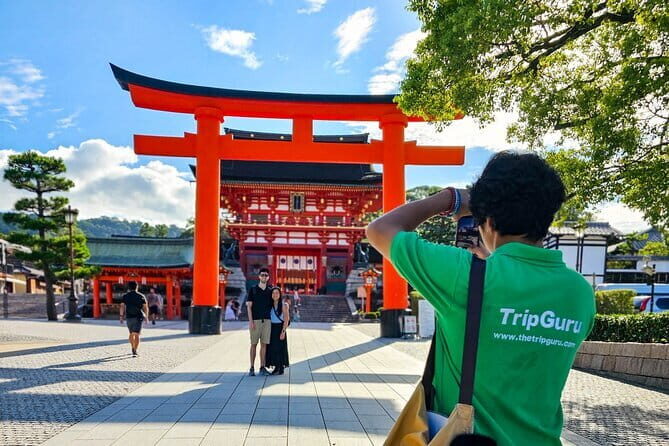
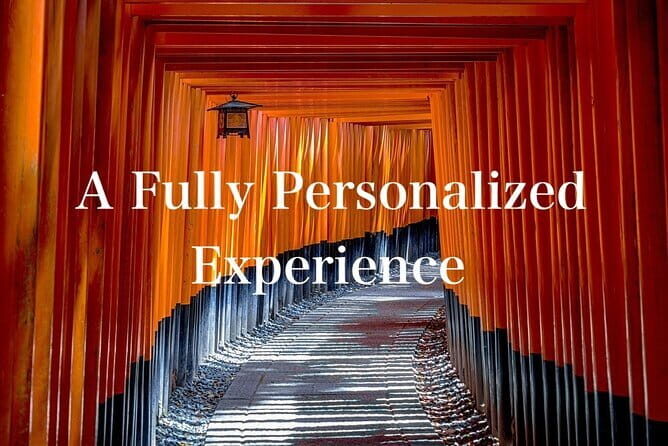
The tour opens at Fushimi Inari-taisha Shrine, known as the most visited Shinto shrine in Kyoto. The big draw is right there: thousands of torii gates, creating a tunnel effect that feels almost timeless. Even though it’s one of Kyoto’s headline sights, arriving on a night schedule changes the vibe. You get the magic of lantern and evening lighting without feeling like you’re stuck in the busiest part of the day.
This stop is listed as 40 minutes, and admission is free. That free entry matters because it lets you spend the time you want at the shrine grounds without worrying about an added cost. It’s also a good way to orient yourself. Once you see the torii lanes at night, the rest of the tour’s theme makes more sense: Kyoto becomes a sequence of glowing gateways, alley streets, and temple frames.
A practical consideration: torii areas can be uneven or crowded in bursts. You’ll still be on a bike tour, but at this stage you should be ready to dismount and walk.
Miyakawa-cho Dori: lantern streets just south of Gion
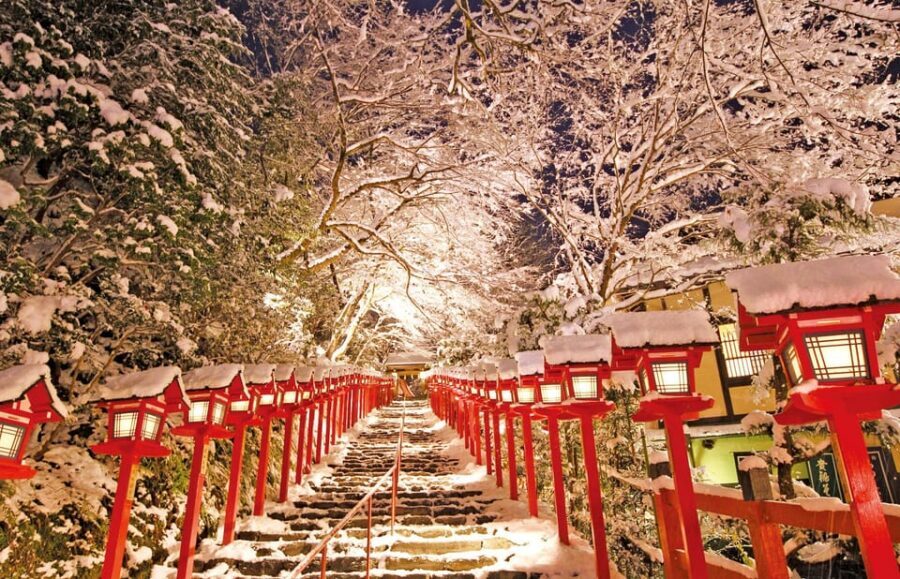
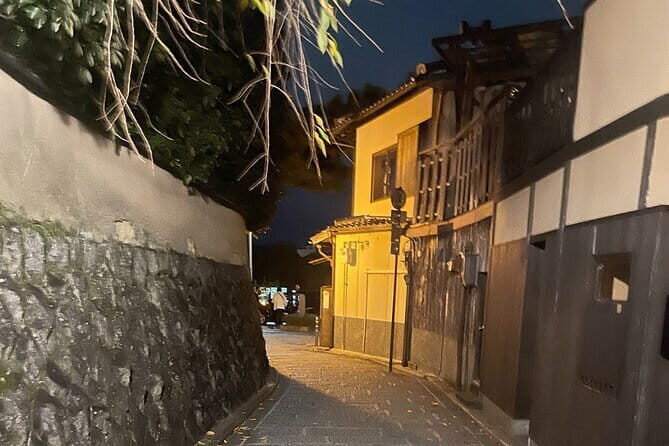
After Fushimi Inari, the route glides you toward Miyakawa-cho Dori, a street that changes character at night. This stop sits just south of Gion and runs parallel to the Kamogawa River, so you get that classic Kyoto canal-and-alley atmosphere.
It’s listed for 15 minutes, and admission is free. With a short window like this, the value comes from timing. Evening lighting gives the street its mood fast: lantern glow, reflections around the river area, and that feeling of stepping into a more old-fashioned Kyoto.
This is also a good intermission stop. You’ve got the grandeur of Fushimi Inari, and now you’re shifting to smaller-scale street beauty. If you’re the type who likes details—doorways, lanterns, and the rhythm of the street—this segment tends to land well.
Gion at night and Hanamikoji’s ochaya frontage
Next comes Gion, one of the city’s most iconic areas. At night, the appeal is how the traditional culture shows up in the light and the street design. The tour specifically calls out Hanamikoji Street, lined with historic tea houses, often referred to as ochaya.
This stop is listed for 10 minutes, and admission is included. That’s a reminder that even small stops in Kyoto can carry real entry or guided access value. Ten minutes is tight, so you’ll want to have your phone ready for photos but also keep your eyes up for street details. The best night shots here usually come from the angle of the lane and the way the lanterns and building fronts interact.
What I like about this portion is pacing. You’re not just moving past Gion; you’re getting a quick, structured taste of what people come for—historic streets, old wooden façades, and a night atmosphere that feels different from daytime.
Yasui-Konpiragu: a shrine stop with a personal theme
Then you roll into Yasui-Konpiragu, also noted on the tour as one of Kyoto’s most unusual and fascinating Shinto shrines. The tour describes people coming here to help cut ties with bad relationships or habits and to form stronger bonds or resolve.
This stop is 10 minutes, and entry is free. Even if you’re not deeply religious, shrine themes like this are useful. They turn a sightseeing stop into a story you can remember. You also get a break from the most photographed areas. Not every highlight needs to be a postcard.
Because the stop is short, the value is mostly about what the guide points out and how they frame the purpose of the shrine. If you prefer a tour that gives context instead of just motion, this is one of the sections that tends to justify the guided approach.
Other evening experiences in Kyoto




Hōkan-ji and Yasaka Pagoda: cobblestones, townhouses, and night framing
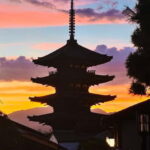
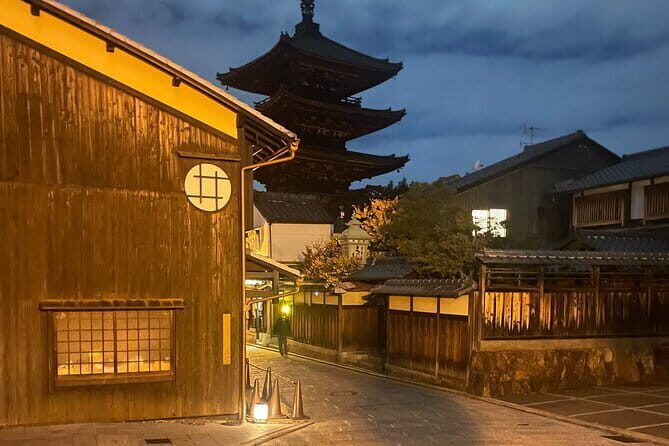
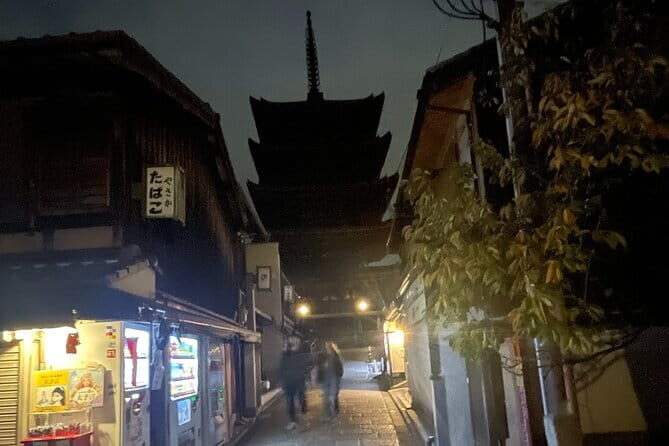
The tour moves on to Hōkan-ji Temple, specifically the area known for the Yasaka Pagoda. This is described as one of Kyoto’s most photographed locations. The reason is visual: the pagoda sits among narrow cobblestoned streets lined with Machiya townhouses.
This stop is listed for 15 minutes, and admission is free. Fifteen minutes is enough time to get a few different angles, especially if you’re patient about where you stand. In this kind of alley setting, you often have to choose between a great view and an uncrowded space. The guide can help you time your photos as the group moves.
One more practical note: narrow cobbled streets mean you should keep your balance and watch for uneven footing. A night bike tour is fun, but your comfort matters most when you’re off the bike.
Ninenzaka and the Higashiyama night view finish
From the pagoda area, the tour heads toward Ninenzaka, a slope area known for night scenery and photos. This stop is 15 minutes, and admission is free. Ninenzaka is often appreciated for its traditional feel and the way the street curves and frames the background.
Then you finish with a visit to the most famous park in Higashiyama, described as having cherry trees, ponds, and wooden bridges. The exact seasonal look depends on timing, but the structure of the place still works for night photos: water reflections, bridge shapes, and tree silhouettes.
That final portion is a good way to close the tour because it gives you a pause zone. After a sequence of shrines and temple views, a park and pond setting lets you breathe and reset. It also tends to be where you’ll notice how Kyoto lights behave outdoors—soft glow, quiet shadows, and the gentle way the streets open up.
Price and logistics: does $80 feel fair?
The price is $80.00 per person for an experience listed at 3 hours 45 minutes. On paper, it’s not a throwaway add-on, so it helps to look at what you actually get.
You get the bicycle, bottled water, and all entrance fees. That bundle is a real value lever in Kyoto, where even small paid entries and guided access can add up fast. You also get bilingual guiding and a curated route across several high-demand night areas.
Group size is small—maximum 9 travelers—which is another value point. You’re more likely to get your questions answered and get moving without long delays.
The only caution is what you’re choosing this for. If your dream is hours of nonstop pedaling, the tour’s format includes lots of on-foot time at each stop plus explanation. That means you’re trading some bike time for context and a smoother street experience.
The biking reality: comfort, timing, and guide style
This tour requires moderate physical fitness. It also helps to be a fairly confident bike rider. The route sounds straightforward, but Kyoto streets can have tight turns, uneven spots, and night lighting that changes how obstacles appear. If you’re new to cycling, you’ll probably feel more stressed than excited.
One more style factor: the guided storytelling is a big part of the experience. In the best cases, that talk helps you understand what you’re looking at—why the torii matters, what the shrine theme means, and what makes certain streets special at night. In less ideal pacing, you might feel like you’re stopping more than you expected. Either way, you’ll want to go in with patience. This isn’t a quick photo run; it’s a guided night walk that happens to use bikes between sights.
The good news is that some guides focus hard on safety and keeping everyone comfortable on the ride. One guide named Juan is specifically mentioned for that kind of attention to how the bikes and the flow of traffic feel for the group.
Who should book this Kyoto night bike tour
I’d steer you toward this tour if you want an efficient way to see several top Kyoto night sights without doing all the route planning yourself. It’s also a great choice if you like guided context and want to understand what you’re seeing, not just snap photos.
It’s also a smart pick if you’re traveling with limited time and want to bundle multiple areas—Fushimi Inari, Miyakawa-cho, Gion, Yasaka Pagoda, Ninenzaka, and a Higashiyama park finish—into one evening.
I’d think twice if:
- you’re a brand-new bike rider and aren’t comfortable with city cycling,
- you want a cardio-focused ride with minimal standing,
- you’re the type who gets impatient with longer explanations.
Should you book this night bike tour?
If your goal is Kyoto after dark with structure, included bikes, and entrance fees handled, I think it’s a strong value at $80. The route makes sense for an evening: you start with Fushimi Inari, move through lantern-style streets and traditional neighborhoods, and end with a more open park-and-pond setting in Higashiyama.
Book it if you can bike confidently and you’re okay with a tour that mixes pedaling with guided stops. Skip it if you want a mostly nonstop ride or if you need a beginner-friendly cycling lesson built into the schedule.
FAQ
What is the duration of Discover Kyoto at Night by Bike?
The tour lasts about 3 hours 45 minutes.
What time does the tour start in Kyoto?
It starts at 5:00 pm.
Where is the meeting point?
You meet at 7-Eleven, 44-1 Higashikujō Kamitonodachō, Minami Ward, Kyoto, 601-8002, Japan.
Is the bicycle included?
Yes. Use of the bicycle is included.
Are entrance fees included?
Yes. All entrance fees are included.
Is bottled water included?
Yes. Bottled water is included.
What should I know about fitness and cycling ability?
The tour calls for moderate physical fitness level. It is also best if you’re a fairly proficient bike rider.
What is the group size limit?
The maximum group size is 9 travelers.
Is there free cancellation?
Yes, you can cancel for free up to 24 hours in advance for a full refund.