Kyoto is more fun when you get your hands dirty. This replica food workshop teaches you how Japan’s restaurant display culture works, then lets you create it yourself with wax, hot water, and real crafting steps. You’ll leave with a tempura replica packaged like a grocery item, so it feels like a souvenir and a small art project in one.
I especially like the hands-on method. You shape melted wax so it hardens into texture, then wrap your shrimp and pumpkin in a realistic batter look. Second, I like the take-home result: your finished sample comes home in packaging that resembles the ones you see at shops.
The one thing to consider is mess and heat. You’re working with melted wax and hot water, so you’ll want to follow the instructor’s pace closely and plan for possible wax spots.
In This Review
- Key things to know before you go
- Replica Food in Kyoto: Why This Workshop Is So Different
- Where to Meet Near Kani Douraku (And How Not to Stress)
- Inside the Workshop: What the Small Group Setup Feels Like
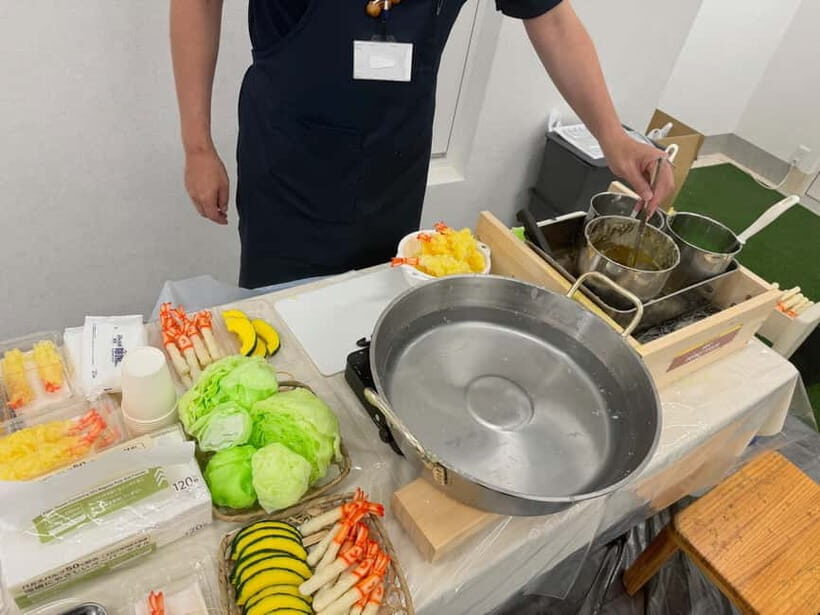
- The Main Event: Making Shrimp and Pumpkin Tempura Replicas
- Why the wax method is the magic part
- Optional Lettuce Replica: A Nice Change of Pace
- Take-Home Packaging: Your Replica Food as a Souvenir
- How Long It Takes (And How to Fit It Into Your Day)
- Price and Value: Is $22 Worth It?
- Who This Kyoto Workshop Suits Best
- Practical Tips So Your Tempura Looks Like Tempura
- Is It Worth Booking? My Decision Checklist
- FAQ
- How long is the Kyoto replica food making experience?
- What’s the price per person?
- What food replicas will I make?
- Are all materials included?
- Is there an English instructor?
- How big is the group?
- Is this workshop suitable for young children?
- Where is the meeting point?
- Can I cancel for a refund?
- Can I reserve and pay later?
Key things to know before you go
- Small group of up to 4 means you’re not fighting for attention when you’re shaping wax.
- English/Japanese instruction helps you move fast even if your Japanese is limited.
- You’ll make shrimp and pumpkin tempura using a wax-and-batter method, plus an optional lettuce replica.
- You take your replica home in supermarket-style packaging, as a display souvenir.
- Hot wax workflow can be tricky if you don’t like careful, step-by-step tasks.
Replica Food in Kyoto: Why This Workshop Is So Different
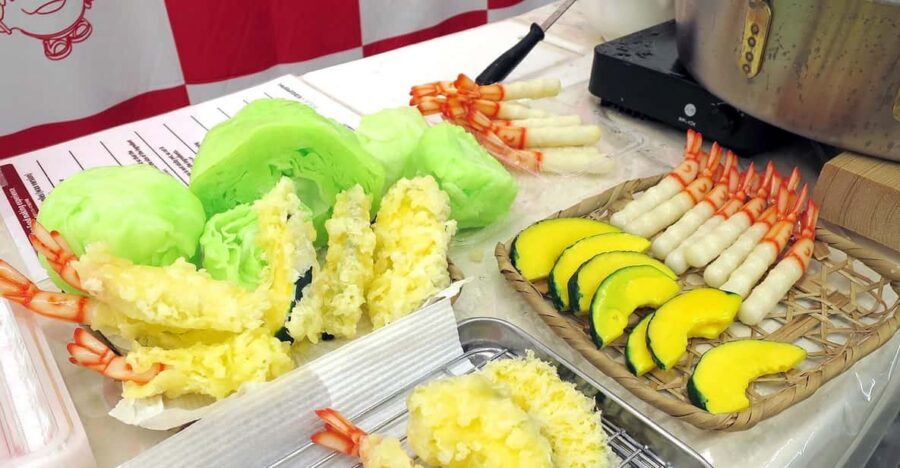
Most Kyoto activities give you a story to remember. This one gives you something you can actually pack. The focus is Japan’s “replica sample” culture, where lifelike food models sit in front of restaurants to show what’s on the menu. Instead of just looking at those displays, you manufacture the look and texture with your own hands.
That shift matters. Watching fake food behind glass is interesting. Making it yourself teaches you why the displays look convincing: the shaping, the batter-like wrap, and the way pieces are formed to read clearly at a glance. After the workshop, you’ll likely notice replica displays differently while you’re walking around Kyoto.
Also, the whole format is built for short attention spans and quick learning. It’s a 1-hour class with a small group (limited to 4 participants), so the experience doesn’t drag. You’re not spending hours mastering technique you won’t use. You’re using technique right away to create something that looks finished enough to take home.
If you're still narrowing it down, here are other tours in Kyoto we've reviewed.


Where to Meet Near Kani Douraku (And How Not to Stress)
Your meeting point is diagonally across from Kani Douraku, the shop with a large crab signboard. That’s handy because it gives you a visual landmark instead of a vague address.
In practical terms, you’ll want to arrive right on time for your reserved slot. The instructor explains how to make the dish all at once, and that first walkthrough matters. If you show up late, you’ll miss the flow of the steps and you may feel rushed during the hands-on portion.
The workshop also sits in an area that’s easy to turn into an “activity plus food” plan. One advantage of going here is that you finish near places you can eat right after—handy when your day in Kyoto already includes temples, streets, and long walks.
Inside the Workshop: What the Small Group Setup Feels Like
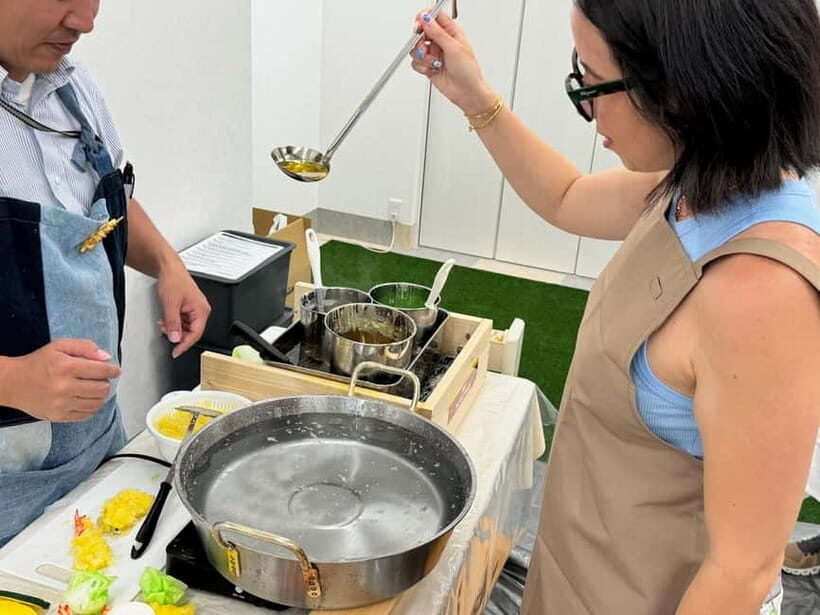
This is not a crowded, watch-from-the-back kind of class. It’s a small group limited to 4 participants, and the instructor works with you as you shape and wrap your replica.
That size does two useful things:
- You get closer supervision while you work with wax and hot water.
- You can ask questions without feeling like you’re interrupting a big class rhythm.
You’ll work with an instructor who speaks English and Japanese, so communication is usually straightforward. Even if your Japanese is basic, the step-by-step nature of the workshop helps you keep moving.
If you’re coming with kids, there’s an important constraint: it’s not suitable for children under 6. Also, for children, the workshop may ask for parental assistance—especially with the hotter parts of the process.
The Main Event: Making Shrimp and Pumpkin Tempura Replicas
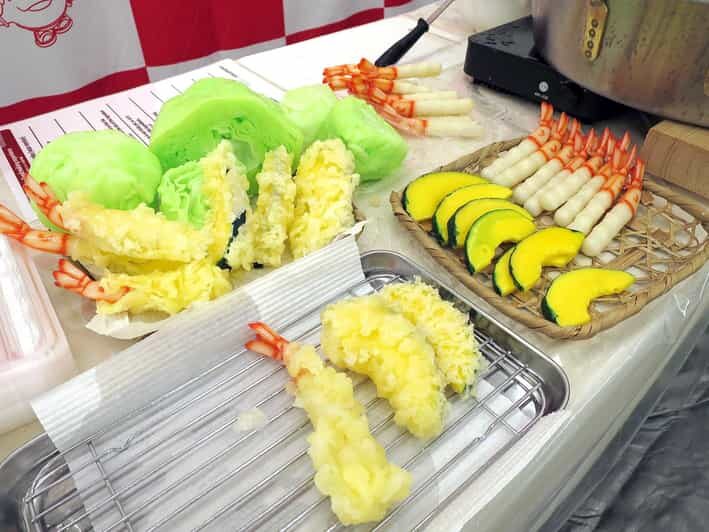
The workshop centers on making shrimp and pumpkin tempura replicas. The process is a classic style of craftsmanship: form, texture, then coat the look.
Here’s what you should expect, step by step:
- You learn how to work with melted wax.
- You pour wax into hot water and then shape it before it hardens.
- Once the wax piece is set, you wrap your shrimp and pumpkin with a batter-like covering that creates that tempura appearance.
It sounds simple when listed like that. In practice, it’s more like a craft class than a cooking demo. The goal isn’t flavor. The goal is the look—how the pieces read as tempura when displayed.
Why the wax method is the magic part
Wax gives you control over texture. You can shape forms and get the hardened effect that helps the piece look food-like at a distance. The hot-water step is key because it changes the way the wax sets quickly enough for you to keep building the replica.
This is also why the class can feel challenging at first: you’re doing fast forming in a controlled process. If you slow down too much, you lose the timing. If you rush, the shapes can look uneven. The instructor’s job is to help you hit that sweet spot.
And if you love small “wow” moments: this is one of those activities where the result looks better than you’d expect from a beginner craft. Wax tempura doesn’t sound like a souvenir you’d want to keep, but once it’s shaped and wrapped, it becomes oddly impressive.
A few more Kyoto tours and experiences worth a look




Optional Lettuce Replica: A Nice Change of Pace
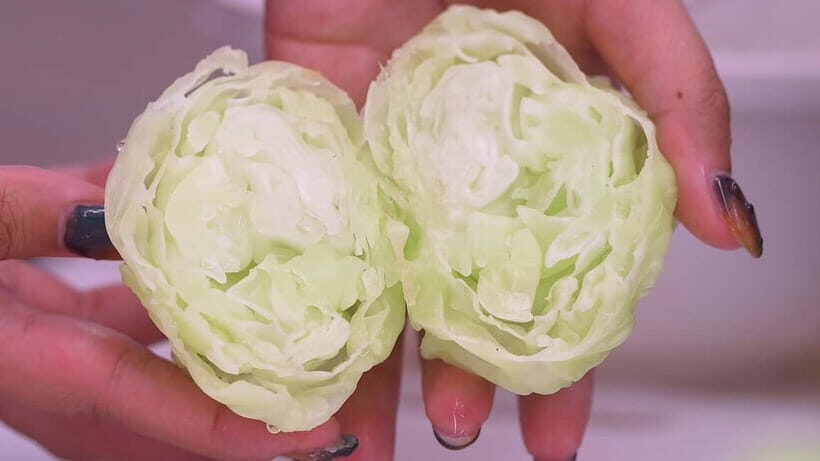
Along with shrimp and pumpkin tempura, you can also choose an optional lettuce replica. This gives you a more complete bowl look and helps the final package resemble a real restaurant display item.
If you’re thinking about choosing a set-up that looks balanced in photos and packaging, lettuce helps a lot. It also shifts your craft experience slightly—less focus on shaping seafood and more on adding a fresh-looking element to round out the sample.
Take-Home Packaging: Your Replica Food as a Souvenir
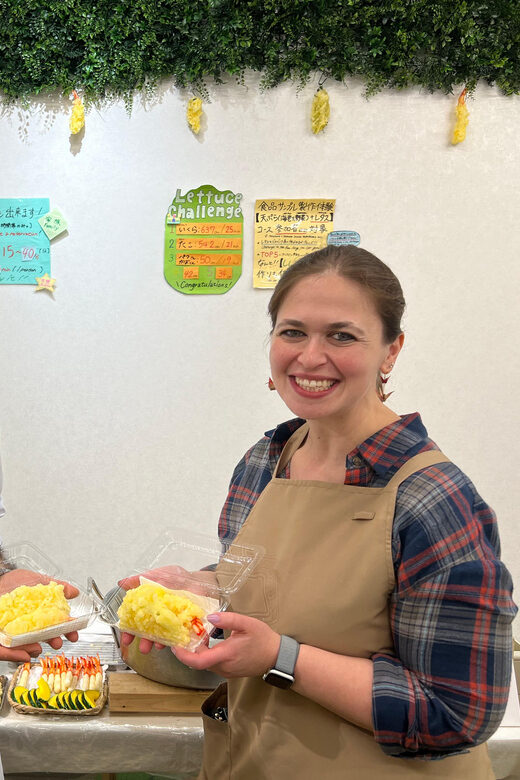
After you finish shaping and coating your pieces, you don’t just leave with a project in a bag. You take home your replica food packaged to resemble what you’d find in a supermarket.
That detail matters more than it sounds. Display food replicas are already about presentation and realism. Packaging that looks like a product turns your work into something that feels complete and gift-ready.
Two practical notes you should take seriously:
- These replicas are for display only.
- The wax and styling are meant to look edible, but you should not treat them like food.
It’s a funny warning, but it’s also a safety and hygiene reminder. Treat it like a crafted souvenir, not dinner.
How Long It Takes (And How to Fit It Into Your Day)
The duration is 1 hour, including the key instruction and hands-on crafting. Because it’s short, you can place it between other Kyoto stops without wrecking your schedule.
A smart way to plan your day:
- Schedule this earlier rather than later, when you still have energy for walking.
- After the workshop, eat nearby. The area is set up for food, and you’ll already be thinking about tempura once you’ve made it.
One of the perks from people who’ve done the class is that the replica tempura makes them crave the real thing right after. Even if you don’t, you’ll likely enjoy hunting down a restaurant window display like yours, just to compare.
Price and Value: Is $22 Worth It?
At $22 per person for about one hour, this workshop isn’t trying to compete with big-ticket Kyoto experiences. It’s priced like a focused craft class with materials included and a finished keepsake you can take home.
Here’s why that’s good value:
- You get the craft experience, not just a viewing or a demo.
- All materials are included, so you don’t pay extra for supplies.
- You leave with something that functions as both a souvenir and a conversation starter.
If you’re the kind of traveler who likes experiences that produce a tangible result, the value makes sense. If you’re mainly shopping for scenic photos and don’t care about making anything, then it may feel more like a workshop you either enjoy or don’t.
But if you like hands-on learning—even for a short time—this is a strong use of an hour in Kyoto.
Who This Kyoto Workshop Suits Best
This experience fits best if you:
- Like interactive workshops and don’t mind step-by-step instructions.
- Want a souvenir that’s personal, not just something bought from a shelf.
- Enjoy craft-style activities with a clear “finish line.”
It also works well for families where kids are old enough to handle the workflow safely. The main limitation is not for children under 6, and you should expect parental help to be requested.
For couples, it’s a playful shared project. For solo travelers, the small group size can feel friendly rather than awkward because the instructor is teaching you directly through the steps.
And if you’re a bit of a curious culture-hunter, you’ll appreciate what you learn about replica food display culture—because you’ll be able to read the displays with more understanding once you’ve made one.
Practical Tips So Your Tempura Looks Like Tempura
A few things can make your outcome better and keep the experience stress-free:
- Arrive at your reserved time so you don’t miss the explanation that happens first.
- Wear clothing you don’t mind getting a little waxy. Wax can happen, even with care.
- If the staff offers aprons or chefs-style jackets, use them. You’ll be able to focus on shaping instead of worrying about stains.
- Follow the instructor’s pacing while working with wax and hot water. The timing affects texture.
Also, take pictures while you work if you can. The whole craft process is visual: shaping wax, wrapping batter-like layers, and building the bowl look. You’ll get more “proof of skill” photos than you’d expect.
Is It Worth Booking? My Decision Checklist
Book this workshop if you want:
- a short, hands-on Kyoto activity that ends with a take-home item,
- a unique cultural craft tied to real restaurant life,
- a small-group class where you get help as you go.
Skip it if you:
- hate anything involving hot materials and careful crafting,
- only want passive sightseeing right now,
- are traveling with very young children under 6.
If you fall into the first group, it’s one of those Kyoto experiences that feels practical and memorable because it creates something you keep.
FAQ
How long is the Kyoto replica food making experience?
It lasts for 1 hour.
What’s the price per person?
The price is $22 per person.
What food replicas will I make?
You’ll make shrimp and pumpkin tempura using melted wax, and you can also choose a lettuce replica option.
Are all materials included?
Yes. All materials are included.
Is there an English instructor?
Yes. The instructor speaks English and Japanese.
How big is the group?
The group is small, limited to 4 participants.
Is this workshop suitable for young children?
It is not suitable for children under 6. The workshop may ask for parental assistance for children.
Where is the meeting point?
Meet diagonally across from Kani Douraku, identifiable by the large crab signboard.
Can I cancel for a refund?
Yes, you can cancel up to 24 hours in advance for a full refund.
Can I reserve and pay later?
Yes. The option is reserve now & pay later (you pay nothing today).