Kyoto can feel crowded. This tour is designed to cool that down fast. You get a relaxed 3–4 hour walk through Arashiyama’s calmer back paths, with quiet temples, scenic pauses, and practical guidance that makes the area easier to enjoy. I also like that the guide, Yusuke Tanaka, handles both the story and the photos—yes, he helps you get good pictures while keeping the pace comfortable.
Two big highlights are the rare black torii gate at Nonomiya Shrine and the time to enjoy bamboo beyond quick stop-and-snap tourism. One consideration: you’ll do about 3 km of walking, and you must take off your shoes to enter inside at Seiryoji and Daikaku-ji, so plan for comfort and warm-weather stamina.
In This Review
- Key takeaways before you go
- Escape-the-crowd design in Arashiyama (and why it feels different)
- Meeting at Randen-yaJapan and planning your start day
- The itinerary, stop by stop: where the calm comes from
- Stop 1: Nonomiya Shrine and its rare black torii gate
- Stop 2: Arashiyama Bamboo Forest with soundscape and guided photos
- Stop 3: Seiryoji Temple, including the national treasure statue
- Stop 4: Daikaku-ji Temple and the Saga Gosho imperial palace feel
- Stop 5: Osawaike (Osawa-no-ike Pond), the oldest artificial pond in Japan
- The Tale of Genji option: extra story, same route
- What you actually get for $89 (value that adds up)
- Shoes, timing, and comfort: the small stuff that decides your day
- Who this tour suits best (and who should choose something else)
- Should you book Arashiyama Hidden Gems: Walking Tour escaping crowds?
- FAQ
- How long is the Arashiyama walking tour?
- What’s included in the $89 price?
- How much are the temple and pond tickets?
- Do I need to remove my shoes?
- Where do I meet and where does the tour end?
- What’s the difference with The Tale of Genji option?
Key takeaways before you go
- Small group, calmer pace: maximum of 6 travelers, built for a thoughtful walk instead of a sprint.
- Black torii and moss garden at Nonomiya Shrine, plus clear etiquette on how to pray.
- Bamboo forest with photo help: Yusuke takes memorable photos and you get a focused 15 minutes.
- Old temple stops that most people skip: Seiryoji (about 1,200 years) and Daikaku-ji’s Saga Gosho palace setting.
- Seasonal scenery at Osawaike: the oldest artificial pond in Japan, with quiet bamboo views.
- Optional Tale of Genji storytelling: same route, extra literary context (bamboo forest excluded).
Escape-the-crowd design in Arashiyama (and why it feels different)
Arashiyama is one of those Kyoto areas where the sights are famous for a reason—and also where the crowds can turn your day into a timed ticket line. This walking tour tries to solve that with a small group size and a route that balances the headline attraction with calmer, less-visited places.
The practical win is how the tour is paced. You’re walking about 3 km total (roughly 55 minutes of walking time inside the tour), then you slow down for temple entry, viewpoints, and a bit of local-food time. That means you’re not only seeing places—you’re learning what you’re looking at.
The guide matters here too. Yusuke Tanaka guides locally and has experience with over 3,000 guests, and his hobby is photography. In plain terms: you’ll spend more of your time looking, and less of your time wrestling with a camera or phone at the exact wrong angle.
A few more Kyoto tours and experiences worth a look

Meeting at Randen-yaJapan and planning your start day
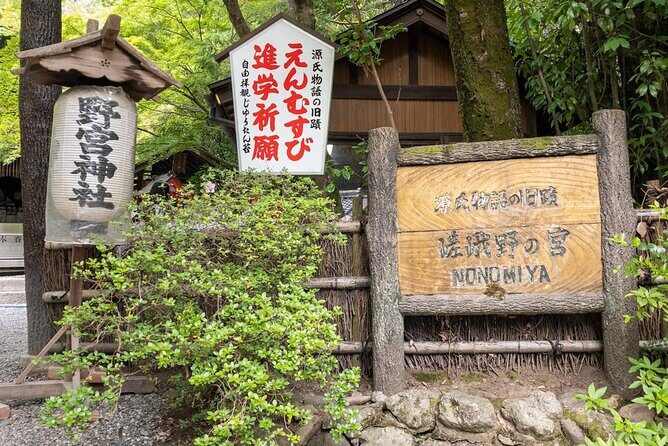
The tour meets inside the Arashiyama station area at Randen-yaJapan, located within the hannarI-hokko square (嵐山駅はんなりほっこりスクエア内). The exact address is listed as Ukyo Ward, Sagatenryūji Tsukurimichichō, 202. It’s a good setup if you’re already using public transport in Kyoto, since Arashiyama is well connected.
You finish at Daikaku-ji Temple in Sagaosawacho, Ukyo Ward. Importantly, the tour end area has limited dining options, so you should plan ahead if you want a real sit-down meal after.
One extra helpful detail: if you want to return to the starting point, Yusuke offers a free returning walking tour. That’s a nice way to keep your afternoon from feeling chopped up after temple tickets.
The itinerary, stop by stop: where the calm comes from
Stop 1: Nonomiya Shrine and its rare black torii gate
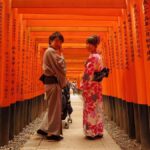
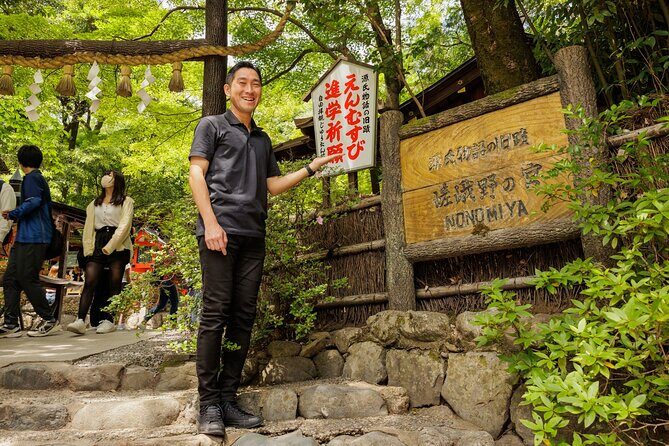
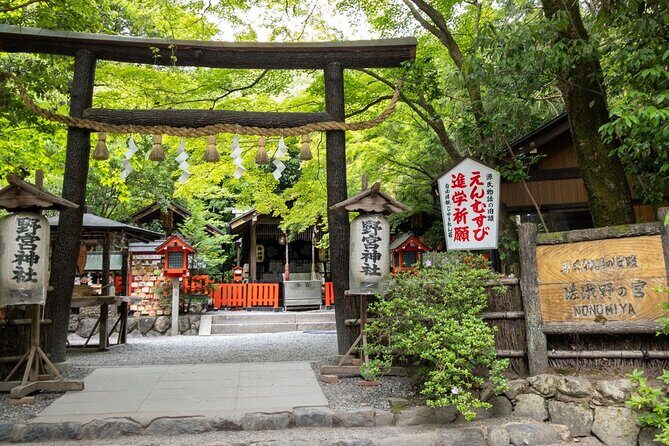
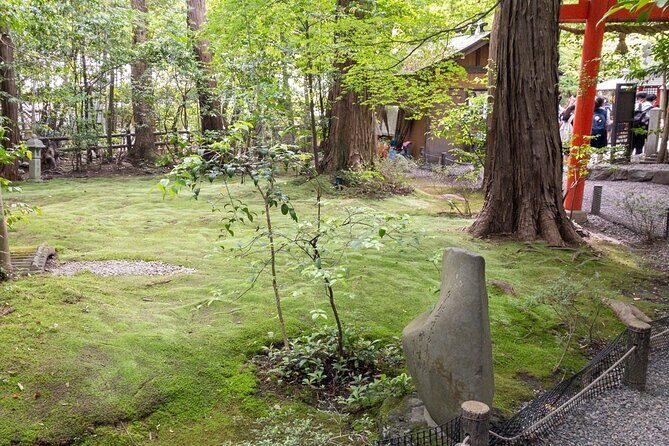
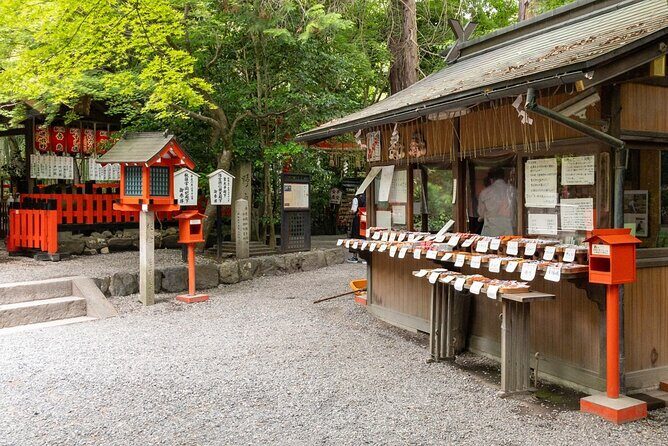
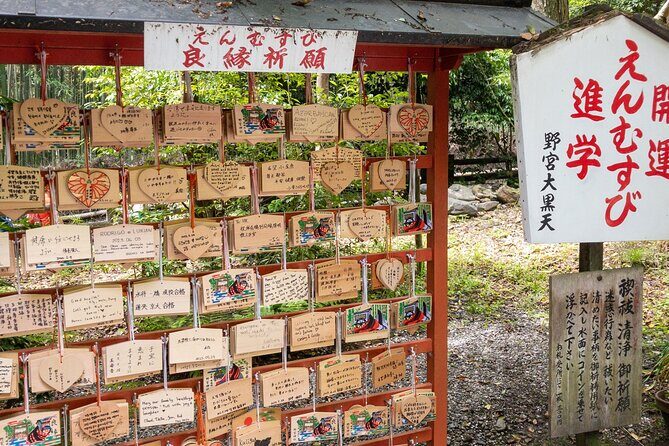
You begin at Nonomiya Shrine, and the tour quickly sets the tone: quieter ritual details, not just photo stops. The standout feature is a black wooden torii gate. Only two shrines in Japan have black torii gates, and Nonomiya is one of them.
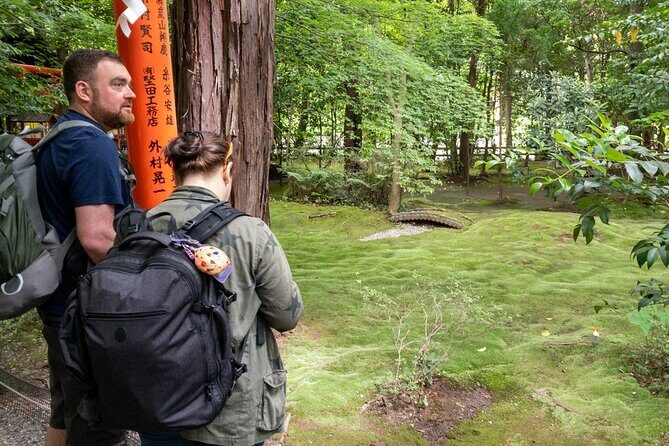
You’ll also spend time in the moss garden and learn the proper way of visiting and praying. That includes practical etiquette—how shrine worship works in daily life, and how to tell the difference between a shrine and a temple experience.
What I like about this start is that it orients you. When you understand the basics, the rest of the day feels less like you’re rushing through scenery and more like you’re moving through places with meaning.
A small drawback to consider: shrines are often photographed quickly, but this tour expects you to slow down. If you only want selfies and no etiquette lesson at all, you might find the early focus a little slower than you’d prefer.
Stop 2: Arashiyama Bamboo Forest with soundscape and guided photos
Next comes the Arashiyama Bamboo Forest, and it’s the moment many people think will be the whole day. Here, it’s treated like one chapter, not the entire book.
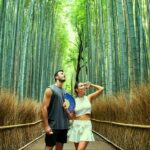
You’ll get about 15 minutes to enjoy the bamboo forest and the soundscape of bamboo—what changes is that you’re not just looking at tall stalks, you’re also listening for the rhythm of the place. There’s a dedicated photo time too, and Yusuke helps take memorable pictures while you’re there.
Is this still a popular area? Yes. But the difference is you have context and a time limit that keeps it from hijacking your whole schedule.
If your priority is avoiding crowds at all costs, you may still notice foot traffic here. The tour’s real advantage is what happens after the bamboo, when you shift into calmer temple grounds.
Other walking tours we've reviewed in Kyoto


Stop 3: Seiryoji Temple, including the national treasure statue
Then you step into Seiryoji Temple, one of the day’s best “slow down” stops. The original temple dates back about 1,200 years, and the current building is about 300 years old, which gives you that layered feeling—this is a long-lived spiritual site, not a single-era backdrop.
You’ll see a Japanese national treasure: the Shaka Nyorai (Buddha) statue. The tour time here is around 55 minutes, so you’re not speed-walking through the main points.
One important logistics detail: you have to take off your shoes to enter inside at Seiryoji. If you’re traveling with socks that you don’t mind removing and re-wearing, you’ll be fine. If you’re not a fan of that routine, wear easy-to-handle footwear so it doesn’t eat into your enjoyment.
The ticket cost for Seiryoji is ¥500 per person and is not included in the tour price.
Stop 4: Daikaku-ji Temple and the Saga Gosho imperial palace feel
After Seiryoji, you’ll reach Daikaku-ji Temple, with about 50 minutes at this stop. This is where the tour leans hard into the “calmer Arashiyama” goal.
Daikaku-ji is connected to the former imperial palace called Saga Gosho, originally built about 1,200 years ago. The tour description focuses on it as a place where you can enjoy that imperial palace atmosphere without the worst crowd pressure you’d expect from headline Kyoto spots.
You’ll also enter inside areas where you must remove your shoes, similar to Seiryoji. That makes the stop feel more respectful and contained—less like a quick showroom, more like a place you slow down in.
Daikaku-ji entrance is not included, and the tour data lists the combined ticket for Daikaku-ji & Osawa-no-ike Pond as ¥800 per person.
If you’re the type who loves garden-and-history places—especially the kind of grounds that feel like they were built for viewing slowly—you’ll probably find this stop to be the heart of the tour.
Stop 5: Osawaike (Osawa-no-ike Pond), the oldest artificial pond in Japan
Finally, you wrap up at Osawaike, also called Osawa-no-ike Pond. This is a strong ending because it’s a change of tempo from temple interiors to outdoor quiet scenery.
The pond is described as the oldest artificial pond in Japan, and the tour highlights how the scenery shifts across seasons. You’ll also spend time around the pond with views that include a quiet bamboo forest atmosphere.
Osawaike has its own ticket listed as ¥300, not included in the main tour price. The total tour time for this stop is about 20 minutes, which is enough to see it, take photos if you want, and absorb the calmer feeling after the main temple grounds.
One practical note: the tour end point is Daikaku-ji, and the data points out that there are not many restaurants around the ending point. If you want a specific type of food, plan it before you reach the final stop—or carry a snack.
The Tale of Genji option: extra story, same route
If you pick the option called The Tale of Genji, you’ll get added literary storytelling during the tour. The key detail is that most visited places (except the bamboo forest) appear in The Tale of Genji, and Yusuke explains the historical and literary context during your walk.
Both options visit the same locations. The difference is that the Tale of Genji choice adds deeper interpretation around what you’re seeing.
This is a great fit if you’ve read the story or even only know the setting name. But even if you haven’t, the standard tour still makes sense because the route itself is designed around temples, shrines, and scenic viewing.
What you actually get for $89 (value that adds up)
At $89 per person, this isn’t an ultra-budget option. But the value stacks in a way that helps your day run smoothly.
Included in the tour price:
- Guiding throughout
- An original tour booklet about 15 pages
- Help with taking good photos (Yusuke learns photography as a hobby)
Not included (from the tour details):
- Seiryoji Temple: ¥500
- Daikaku-ji & Osawa-no-ike Pond: ¥800
- Osawaike ticket: ¥300
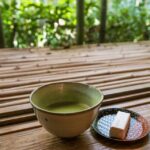
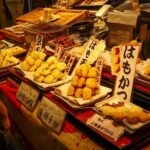
- Optional Japanese snacks: about ¥500
- Insurance and gratitude (your choice)
That totals temple/pond entry costs that you should mentally budget for before your day. Still, you’re paying for more than access—you’re paying for interpretation, timing, and photo help. In Kyoto, that often matters more than people expect, because without context you can miss the reason a place is special.
The mobile ticket also helps. You’re not stuck hunting paper confirmations.
Shoes, timing, and comfort: the small stuff that decides your day
This tour is comfortable by design, but you should respect the few rules that affect how it feels.
You’ll walk about 3 km, and the total duration is about 4 hours (the tour includes travel/walking time in that total). If you’re sensitive to heat or long steady walking, consider going earlier in the day when Kyoto feels less intense.
Also remember:
- Take off your shoes to enter inside at Seiryoji Temple and Daikaku-ji Temple
- Bring snacks if you need them—there are not many restaurants near the finish
A nice plus for comfort: group size is capped at 6. That makes it easier for Yusuke to adjust pacing if someone needs a breather.
Who this tour suits best (and who should choose something else)
This walking tour is ideal if you want Arashiyama that feels thoughtful rather than frantic. It’s especially well matched to people who enjoy temples and shrines, like learning how to read a site beyond just the big postcard shot, and don’t want a huge crowd experience.
It also fits history and literature fans who might choose the Tale of Genji option. If you’re traveling with a partner or small group, the cap of 6 keeps your day from feeling like a bus tour.
Choose a different style of tour if you want:
- A very fast hit of all top attractions with no etiquette or context
- A day that avoids shoe removal entirely (this tour requires it for temple interior entry)
Should you book Arashiyama Hidden Gems: Walking Tour escaping crowds?
I’d book it if your goal is a calmer Arashiyama and you’re happy trading a bit of speed for better pacing. Starting with Nonomiya Shrine, getting the bamboo forest time with photo support, then finishing at Daikaku-ji and Osawaike is a smart sequence for a more relaxed day.
You should skip or think twice if you dislike removing shoes inside temples or you’re not comfortable with about 3 km of walking over roughly 3–4 hours. Also, plan snacks because the ending area isn’t known for a restaurant-heavy situation.
If you want a Kyoto day that feels local—without giving up the classics—this tour design is one of the better ways to do it.
FAQ
How long is the Arashiyama walking tour?
The tour lasts about 3 to 4 hours. You’ll walk about 3 km, and the total duration includes walking time and travel time within the schedule.
What’s included in the $89 price?
The price includes guiding, an original tour booklet (about 15 pages), and help taking good photos. Admission tickets for Seiryoji Temple and Daikaku-ji/Osawa-no-ike Pond are not included.
How much are the temple and pond tickets?
Seiryoji Temple ticket is ¥500 per person. The ticket for Daikaku-ji & Osawa-no-ike Pond is listed as ¥800 per person, and Osawaike is listed at ¥300. You’ll also find optional Japanese snacks listed at about ¥500.
Do I need to remove my shoes?
Yes. You have to take off your shoes to enter inside at Seiryoji Temple and Daikaku-ji Temple.
Where do I meet and where does the tour end?
Meet at Randen-yaJapan inside the 嵐山駅はんなりほっこりスクエア. The tour ends at Daikaku-ji Temple in Sagaosawacho, Ukyo Ward.
What’s the difference with The Tale of Genji option?
The Tale of Genji option keeps the same route and locations, but adds deeper literary storytelling and historical/literary context during the tour. Bamboo forest is the exception for the added Genji context.
If you’d like, tell me what time of year and roughly what time you plan to start in Arashiyama, and I’ll help you pick the best option for your day.