Hiroshima and Miyajima in one long day. This is a bus-and-ferry route that ties together the city’s difficult history with one of Japan’s most photogenic shrines. I especially like the built-in timing: about 90 minutes at the Peace Memorial Museum plus a separate visit to the Atomic Bomb Dome and park area. I also like the freedom you get at Miyajima Omotesandō, since you can pick your own food instead of being locked into a set lunch. One possible drawback: it is not a light day—there’s plenty of walking, and the tour is not recommended if you have difficulty on long stretches.
What makes it practical is the transport plan. You get an air-conditioned bus, the ferry tickets for Miyajima, and key admissions handled for you, so you can focus on the sights. If you choose the Kyoto or Osaka departure options, the day also includes round-trip Shinkansen tickets and staff help for getting onto the train (but they do not ride with you).
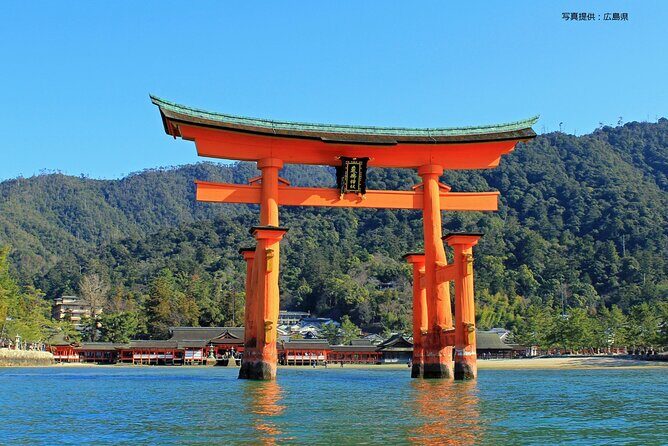
If you care about photos, this day is set up for it. You’ll have time to shoot the “floating” Great Torii Gate from the ferry area, and you also get a short window at Itsukushima Shrine itself. Just know lunch isn’t included, so your best move is to plan to eat during the Omotesandō free time.
In This Review
- Key things to know before you go
- A 12-hour loop that connects Kyoto, Hiroshima, and Miyajima
- Meet points, Shinkansen help, and how the day actually runs
- Peace Memorial Park: the stops that give weight to the day
- Peace Memorial Museum time: 90 minutes that matter
- Hiroshima Castle: the bus-window photo moment
- Miyajima by ferry: your Great Torii Gate photo window
- Itsukushima Shrine in 60 minutes: what you can realistically do
- Omotesandō Shopping Street: meal freedom without the set lunch
- Value check: why about $111 makes sense here
- Who should book this Hiroshima and Miyajima bus day?
- Should you book this tour?
- FAQ
- Is lunch included on this tour?
- Is this tour conducted in English?
- How long do I spend at the Peace Memorial Museum?
- Are ferry tickets to Miyajima included?
- Is admission to Itsukushima Shrine included?
- Do I need to buy museum or shrine tickets?
- What time does the tour end in Hiroshima?
- Are Shinkansen tickets included from Kyoto or Osaka?
- Is the tour suitable if I have trouble walking long distances?
- Does the tour depend on weather?
Key things to know before you go
- English-speaking guide only helps you keep up with the meaning behind each stop, not just the facts.
- Peace Memorial Museum entry is included, and you’ll get about 90 minutes there.
- Ferry tickets are included for the trip to and from Miyajima, plus time to photograph the Great Torii Gate.
- Itsukushima Shrine admission is included with about 60 minutes on-site.
- Omotesandō free time (90 minutes) lets you buy your own meal from local eateries.
- No lunch on the day, so eat when you have the break, not when hunger strikes.
A 12-hour loop that connects Kyoto, Hiroshima, and Miyajima
This is the kind of day trip that saves you from the logistics headache. You start in the Kyoto area (or Osaka, depending on your option), take the train toward Hiroshima, then settle into a comfortable bus ride that handles the in-between distances. Then the day pivots to Miyajima, where the ferry crossing adds a nice rhythm change.
Even though the day is long, the pacing is built around two very different themes: reflection in Hiroshima and scenery in Miyajima. The Hiroshima portion is about absorbing what happened and what peace means afterward. The Miyajima portion is where you get to step into an iconic setting—shrines, sea, and that famous Torii Gate view.
There’s also a smart separation of experiences. You don’t just rush past the memorial sites and call it a day. Instead, you get distinct time blocks: Atomic Bomb Dome and Peace Memorial Park first, then the Peace Memorial Museum later. That order works well if you like your emotions to match your information, not the other way around.
A few more Kyoto tours and experiences worth a look

Meet points, Shinkansen help, and how the day actually runs
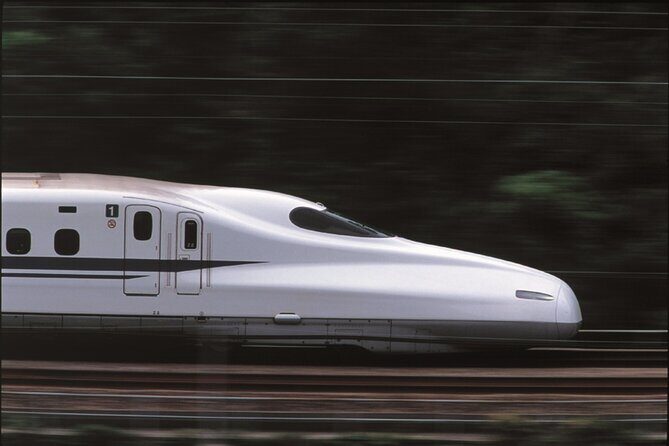
Timing is the backbone of this trip. Your Shinkansen departure is listed as early morning from Kyoto (8:03 AM) or from Shin-Osaka (8:18 AM). Staff meet you at the station to help you get settled for the train, but they do not accompany you onto the Shinkansen itself. Once you arrive in Hiroshima, you meet the guide at Hiroshima Station at the north exit area (Exit gate 2nd floor, North Exit).
From there, the day is structured like a checklist:
- A bus ride with a Hiroshima Castle viewpoint stop
- A ferry ride toward Miyajima
- Shrine time at Itsukushima
- Shopping/eating time on Omotesandō
- Ferry return
- Atomic Bomb Dome and Peace Memorial Park
- Then the Peace Memorial Museum
The end of the tour is around 18:00 back at Hiroshima Station. Practically, this means you should plan to move through the day without big meal expectations and without hoping to add extras on your own between stops.
Also note the tour uses a mobile ticket. That’s one less thing to manage, but make sure your phone battery is good. Japan days often involve checking tickets on the move.
Peace Memorial Park: the stops that give weight to the day
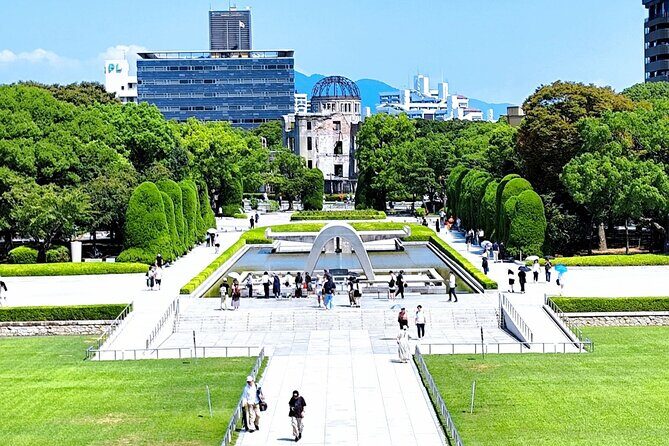
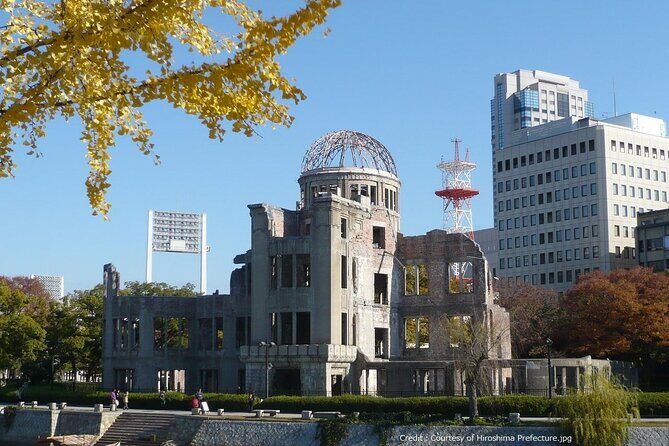
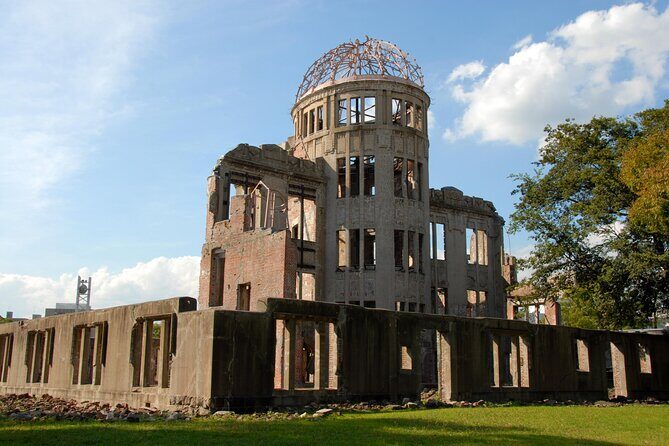
Hiroshima’s memorial area is not casual sightseeing. The Atomic Bomb Dome visit is paired with time at the Peace Memorial Park rest house area, and the plan gives you a solid block to slow down. This is the part of the day where the English guide’s role matters most—having someone explain the significance helps you avoid treating it like just another landmark photo.
The Atomic Bomb Dome is especially powerful because it’s a real structure that still carries the story of what happened nearby. You’re given time to see it and be in the park space around it, which makes a difference. If you only glance and move on fast, the meaning gets lost. Here, you’re not rushed in the same way.
And then you move to the museum, which is where you can connect the dots between personal impact and historical context. The day doesn’t rely on emotion alone. It gives you information, too.
Peace Memorial Museum time: 90 minutes that matter
You’ll have about 90 minutes at the Peace Memorial Museum, and that’s a realistic amount of time for reading and absorbing without feeling trapped. This isn’t a quick photo window. It’s a time to understand the event, its aftermath, and the broader meaning of peace.
One practical tip: go in expecting that some exhibits may hit hard. If you’re the type who likes to control pacing, you can spend time first on the sections that feel most accessible to you, then circle back. The museum time block is long enough for that strategy, but you’ll still want to keep an eye on your group schedule.
This museum stop is also included with the admission fee, so you don’t need to worry about tickets or entry lines. That removes stress right when you most want your head clear.
Hiroshima Castle: the bus-window photo moment
There’s a Hiroshima Castle stop, but it’s mainly a viewpoint from the bus window rather than a full walk-through. Think of it as a palate cleanser between the memorial atmosphere and the ferry ride toward Miyajima.
This kind of stop is useful because you get a sense of place. Hiroshima isn’t only the memorial sites; it’s also a city with layers, rebuilt over decades. Even if the stop is short, it can help you reorient yourself visually before the day shifts again.
If you’re someone who loves getting off the bus and walking every time, this segment might feel brief. But it keeps the day on track for the more time-sensitive experiences later.






Miyajima by ferry: your Great Torii Gate photo window
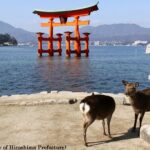
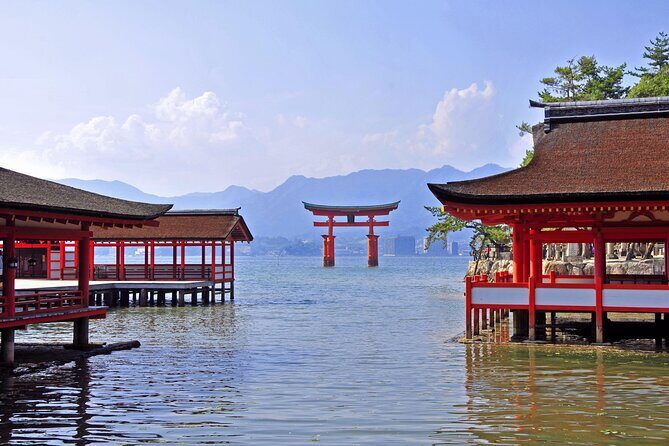
The ferry segment is where the day becomes visually fun again. You’ll board at the Miyajimaguchi Ferry Terminal with tickets included, and the plan builds in time for photo opportunities of the Great Torii Gate that looks like it’s floating in the water.
To get the best shots, aim to position yourself early when you’re near the best viewing area of the ferry. This is one of those moments where even small changes in angle can change the photo. If you’re traveling with a camera setup, keep your strap/gear organized before you board so you’re not fumbling while everyone else moves.
Also, remember: the ferry is part transportation and part experience. It’s a gentle transition between the heavy side of Hiroshima and the scenic side of Miyajima.
Itsukushima Shrine in 60 minutes: what you can realistically do
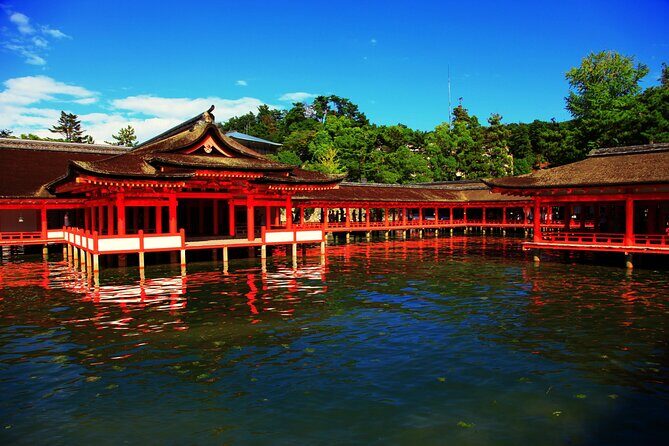
Itsukushima Jinja is included with admission, and you’ll get about 60 minutes on-site. That’s enough time to take in the big picture, walk the main areas you want, and get your shrine-and-water shots. It’s not enough time to become a slow researcher, though. If you love soaking up details for hours, you’ll probably wish for more time.
The good news is the shrine setting is forgiving. Even a straightforward route gives you plenty of photo moments, plus the chance to appreciate how the tide and water setting shape the look people come for.
Because the time is limited, I’d recommend you decide early what you want most:
- The iconic views from the main approaches
- Walking for photos without trying to cover every side path
- A quick pause to just stand and watch the scene shift
That way, you leave feeling you actually saw it, not just walked through it.
Omotesandō Shopping Street: meal freedom without the set lunch
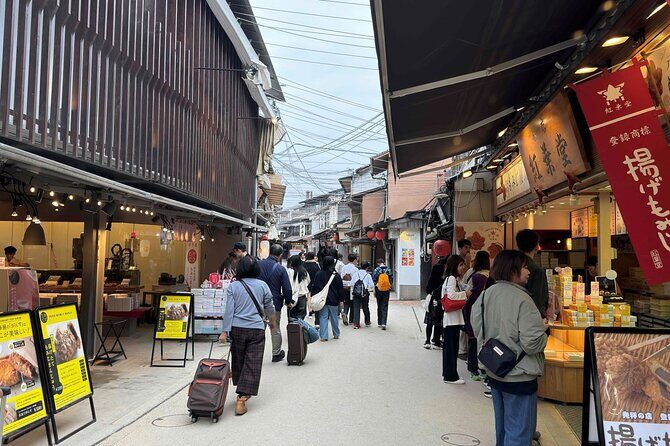
This is one of the smartest parts of the tour. You get 90 minutes at Miyajima Omotesandō Shopping Street, and lunch is not included—so you buy what you want from local eateries.
Why this matters: set lunches on group tours can be hit or miss. Here, you can choose something that fits your tastes and energy level. If you want noodles, snacks, or something more filling, you can pick it up during your free time and not feel rushed to eat earlier.
A practical note: since you’re not locked into a group lunch, you should still plan ahead for the order of operations. If you want souvenirs, scan quickly first, then eat before the ferry return timing tightens.
Also, this is when many people will want photos, browsing, and eating at once. Don’t be surprised if it feels busy. The trick is to keep moving toward what you care about, then slow down when you find something worth lingering over.
Value check: why about $111 makes sense here
At around $111.05 per person, this day isn’t cheap, but it’s also not just paying for a bus seat. You’re paying for a lot of bundled costs:
- Air-conditioned bus support
- An English-speaking guide
- Admissions for the Peace Memorial Museum and Itsukushima Shrine
- Ferry tickets to and from Miyajima
- Shinkansen tickets for Kyoto or Osaka option plan only
When you add up those pieces on your own—especially the museum admission, shrine fee, ferry transport, and the train—you start to see why the price can feel fair. The tour also reduces decision fatigue. You don’t have to map meeting points, figure out ferry timing, and scramble for entry. On a packed day, that has real value.
The trade-off is time. You’re not in control of how long you can linger at each stop. If you’re the type who wants to drift for hours, you’ll feel the constraints.
Who should book this Hiroshima and Miyajima bus day?
This tour is best for you if you want:
- A structured one-day plan that covers both Hiroshima history and Miyajima sights
- An English explanation that gives context at the memorial stops
- Convenience: tickets and key admissions handled, ferry included
- A chance to choose your own meal at Omotesandō
Skip it or think carefully if:
- You have difficulty walking for long periods. The tour is not recommended for that.
- You prefer flexible pacing with minimal group timing.
- You want a full meal included. Lunch is not part of the package.
It also suits you well if you’re staying in Kyoto and want to avoid overnight logistics. The day ends back at Hiroshima Station around 18:00, so you’re not trapped all night in transit.
Should you book this tour?
If you want one day that meaningfully covers Hiroshima and then gives you Miyajima’s famous scenery with transport support, this is a strong choice. The Peace Memorial Museum timing, the separate park/Dome visit, and the included admissions make the day feel intentional instead of rushed. Add the ferry and Itsukushima Shrine entry, plus the meal freedom at Omotesandō, and you get a good mix of weight and wonder.
The only real reason to hesitate is the length and walking. If you can handle a full day on your feet, this is a practical, well-built way to experience both sides of the region in one go.
FAQ
Is lunch included on this tour?
No. Lunch is not included, but you do get free time at Miyajima Omotesandō Shopping Street where you can purchase your own meal.
Is this tour conducted in English?
Yes. The tour is conducted by an English-speaking guide only.
How long do I spend at the Peace Memorial Museum?
You’ll have about 90 minutes at the Hiroshima Peace Memorial Museum.
Are ferry tickets to Miyajima included?
Yes. Ferry tickets are included for the trip to Miyajima and the return.
Is admission to Itsukushima Shrine included?
Yes. Itsukushima Shrine admission is included, with about 60 minutes on-site.
Do I need to buy museum or shrine tickets?
No. Entrance fees for the Hiroshima Peace Memorial Museum and Itsukushima Shrine are included.
What time does the tour end in Hiroshima?
The tour ends around 18:00 at Hiroshima Station.
Are Shinkansen tickets included from Kyoto or Osaka?
For the Kyoto and Osaka tour options, the plan includes round-trip Shinkansen tickets and staff boarding assistance at Kyoto Station or Shin-Osaka Station. Staff do not accompany you on the train.
Is the tour suitable if I have trouble walking long distances?
It’s not recommended for people who have difficulty walking for long periods.
Does the tour depend on weather?
Yes. It requires good weather, and if it’s canceled due to poor weather, you’ll be offered a different date or a full refund.