Molten tin turns into a ninja weapon fast. In this Kyoto workshop near Demachiyanagi Station, you cast and finish real tin into a shuriken, kunai, or oni-style mask with expert help from Daiki and his team. It is hands-on craftsmanship, not a sit-and-watch demo.
My favorite part is getting your hands on the real process, from molding and pouring to filing and the final oil finish. I also like that you leave with a photo-worthy metal piece in its own box, made with your choices. One thing to keep in mind: your finished weapon is small, about 8–10 cm, so this is a keepsake, not a life-size replica.
In This Review
- Key points to know before you go
- Kyoto’s Ninja Weapon Workshop: Tin Casting That Feels Like Real Craft
- Finding the Studio: Easy Kyoto Access From Demachiyanagi
- Picking Your Ninja Item: Shuriken, Kunai, or Oni Mask
- From Casting Sand to a Mold You Made
- Melting and Pouring Tin: The Main Event
- Cooling, Shaping, and Polishing: Turning Rough Tin Into Details
- Oni Mask Upgrades: Gold Leaf and a Wearable Cord
- Rust Protection and Oil Finish: The “Keep It Forever” Part
- What the Workshop Includes (and What You Should Bring)
- Price and Value: Is $103 Worth It?
- Language and Staff Support: English, Japanese, and Helpful Guidance
- Who Should Book This Ninja Tin Casting Workshop
- Should You Book It?
- FAQ
- What can I make in this Kyoto workshop?
- How long does the experience take?
- How big is the finished ninja weapon or mask?
- Is this workshop suitable for beginners?
- What age limits should I know before booking?
- What should I bring with me?
- Does the workshop include tools and materials?
- Is smoking or food allowed during the session?
Key points to know before you go
- 3 minutes from Demachiyanagi Station in Kyoto, so it is easy to fit into a day
- You create the design (shuriken, kunai, or oni mask) and cast actual tin yourself
- Traditional steps, hands-on: mold, pour, cool, shape, file, and finish
- Rust protection and special oil are included so your metal souvenir stays looking good
- Optional oni upgrades add gold leaf and a cord for display or wear
- Beginner-friendly with staff assistance and English/Japanese support
Kyoto’s Ninja Weapon Workshop: Tin Casting That Feels Like Real Craft
Kyoto has plenty of craft experiences where you watch someone else do the skill. This one flips that. You are working metal—tin, to be precise—so the experience feels grounded and satisfying. Tin melts at a low temperature (about 230°C) compared with many metals, which is why it is a good choice for a workshop setting. You get the thrill of the process without needing advanced skills.
What makes it especially fun is that you are not just making a generic souvenir. You make a specific ninja-themed object: shuriken, kunai, or an oni-inspired mask. The details you choose end up in the final shape, and the finishing work is all about smoothing and refining by hand.
And yes, it is a great day-photo generator. You can capture what you are making and the moment of casting and shaping, which is a nice way to document the craft instead of only the finished product.
Other ninja experiences in Kyoto



Finding the Studio: Easy Kyoto Access From Demachiyanagi
The location is one of the practical reasons I think this workshop works well for visitors. The studio is about a 3-minute walk from Demachiyanagi Station, so you are not burning half your day on transit and transfers.
This matters in Kyoto. A lot of the city is lovely but spread out, and workshop times can be tight. Here, the short walk makes it easier to keep your schedule sane, especially if you are pairing it with other nearby stops.
Picking Your Ninja Item: Shuriken, Kunai, or Oni Mask
Start by choosing what you want to craft. You can pick a shuriken or kunai, and you can also opt for an oni mask option. If you choose the oni mask, you will have extra steps and extra flair.
Here is how the choices affect your time and the difficulty of the final look:
- Shuriken / Kunai: about 2 hours
- Oni Mask: about 2.5 hours, since it includes extra decorative steps
The workshop also sets expectations clearly: the finished piece is 8–10 cm. So if you are hoping for something huge to hang like a wall sculpture, this is not that. If you want something you can hold, show off, and stash neatly in luggage, it is perfect.
From Casting Sand to a Mold You Made
Before any metal touches the process, you create the mold. The workshop uses special casting sand to form the detailed shape of your chosen design.
This step is worth paying attention to because it is where your final outcome starts. If the mold shape is crisp, your tin casting will come out with cleaner lines. The staff guides you through how to shape the sand so the design transfers properly.
In plain terms: the better you handle the mold, the better the weapon looks after casting. This is also a good moment to slow down, ask questions in English (or Japanese if you want to practice), and make sure you understand what the finished piece should resemble.
Melting and Pouring Tin: The Main Event
Now for the part that feels like you are truly forging. Tin goes from solid to molten, then you pour it into the mold under staff supervision.
This is one of the most memorable stages because it is both dramatic and controlled. The process turns an object made of sand into metal in a single cycle. Staff supervision matters here, and the workshop has rules that keep things safe (including a prohibition on making fire).
It is also why this class works for beginners. You do not need to know metalwork beforehand. You need to follow instructions, pay attention, and enjoy the moment.






Cooling, Shaping, and Polishing: Turning Rough Tin Into Details
After the tin is cast, it is cooled in water. Then the real transformation begins: you remove material, refine edges, and smooth the surface into a finished piece.
The workshop uses a sequence like this:
- Shape it by hammering
- Smooth it using a file
- Refine details until it looks sharp and clean
This is where the “craft” part comes through. The tin is workable, which helps you get to the final look without needing years of training. You are not just waiting for your souvenir to appear. You are actively shaping what it becomes.
The shaping and filing stage is also where staff help shows up. People in the class (especially families) tend to love this part because it feels tangible. You can literally see your progress step by step.
Oni Mask Upgrades: Gold Leaf and a Wearable Cord
If you pick the oni mask option, you get extra finishing steps beyond the base process.
Two notable add-ons are:
- Gold leaf for a dramatic accent
- A cord attachment so you can display it like a mask or wear it
These upgrades matter because they turn the piece from a simple metal toy into something with real character. Even if you are not a ninja fan, an oni mask has that Kyoto arts-and-folklore vibe that looks great in photos.
The mask option also typically takes about 2.5 hours, so build in a little breathing room if you plan to continue your day right after.
Rust Protection and Oil Finish: The “Keep It Forever” Part
A common problem with handmade metal crafts is that they can look fine on day one and then change later. This workshop avoids that with a practical finishing step.
After shaping and smoothing, your piece soaks in a rust-preventive solution, then you apply special oil. That helps protect the tin and gives the metal a nicer finish.
To me, this is part of the value: it is not just about making something. It is about making it so you can actually keep it as a souvenir that ages reasonably well.
You also get a dedicated box for your weapon, which is a quiet lifesaver for luggage and gifting.
What the Workshop Includes (and What You Should Bring)
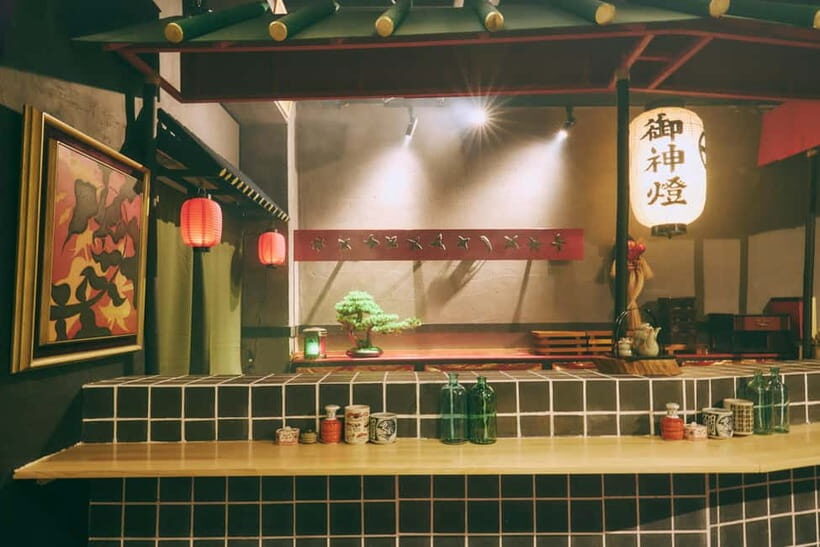
You get materials and tools for one weapon, plus a work apron rental and equipment rental. The included process is basically the whole chain:
- Design your item
- Make the mold
- Melt and cast tin
- Shape and refine (hammering, filing, smoothing)
- Soak for rust prevention and finish with oil
- Receive the piece in its own box
What you should bring is simple: drinks. The workshop notes that there is no water available for participants, which is an easy thing to forget in Japan when you assume you can just pick up a bottle on the spot. Bring a bottle or two, especially if you are doing this in warmer months.
Food is not allowed during the session, and there are rules against alcohol and drugs. Smoking is also not allowed (including indoors).
Price and Value: Is $103 Worth It?
At $103 per person, you might wonder if you are paying for a themed activity. In this case, you are paying for the full hands-on metalwork experience: casting guidance, materials, tools, finishing, protection, and packaging.
Here is what makes it feel like value instead of a gimmick:
- You work with real metal, not a replica or a pre-made object
- All materials for one weapon are included
- The class includes the steps that usually cost extra in DIY craft shops: shaping time, finishing, and rust protection
- You leave with something genuinely different from standard shop souvenirs
Also, the duration (about 2 hours, or 2.5 for the oni mask) is long enough to learn the process and do real shaping work, but not so long that it crushes your Kyoto itinerary.
If you are the type of traveler who remembers moments you made yourself, this is the kind of workshop that tends to stick.
Language and Staff Support: English, Japanese, and Helpful Guidance
The instructors work in English and Japanese. That means you can follow the steps without stress, even if your Japanese is basic.
The vibe from past sessions is also pretty clear: staff are patient, explain each step, and keep things friendly while you work. People have described Daiki and the colleague as very helpful, with good English and lots of guidance through the process.
That support matters most during the tricky moments: molding details, safe casting, and the transition from rough tin to clean edges.
If you are traveling with kids, this type of guidance is a big deal. The workshop is suitable for beginners and even children with staff assistance, as long as you meet the age rules.
Who Should Book This Ninja Tin Casting Workshop
This class fits best if you want a hands-on craft with a real outcome. It is a strong pick for:
- Couples looking for a creative shared activity
- Families with older kids who can follow instructions
- Anyone who likes Japanese culture beyond the usual shrine-and-temple checklist
- People who enjoy making a souvenir instead of buying one
It is also a nice change of pace from Kyoto’s more passive sightseeing days.
Who should be cautious:
- Very young kids, since the workshop is not suitable for children under 5 years (and not for babies under 1)
- Anyone outside the upper age guidance, since it is not suitable for people over 95 years
- Anyone who hates hands-on tasks. If you want to watch only, this one asks you to do real work.
If you are bringing a child under 15, you will need a guardian accompaniment.
Should You Book It?
Yes, I think you should book this workshop if you want a Kyoto souvenir with actual craft behind it. The closest thing to a deal-breaker is only one: you need to be fine with the finished size being 8–10 cm. If you want a big decorative piece, it will feel small. If you want something you made yourself and can pack home, it is exactly the right scale.
If you are on the fence, ask yourself this: do you want a story you can explain later? This workshop hands you one, from mold to finished metal weapon, with staff support and a take-home box to prove it.
FAQ
What can I make in this Kyoto workshop?
You can choose from shuriken, kunai, or an oni-inspired metal mask.
How long does the experience take?
Shuriken and kunai take about 2 hours. The oni mask option takes about 2.5 hours (completion time can vary).
How big is the finished ninja weapon or mask?
The finished piece is about 8–10 cm.
Is this workshop suitable for beginners?
Yes. The experience is designed to be suitable for beginners, with staff assistance throughout the process.
What age limits should I know before booking?
It is not suitable for children under 5, babies under 1, and people over 95. Participants under 15 must be accompanied by a guardian.
What should I bring with me?
Bring drinks. Food is not allowed.
Does the workshop include tools and materials?
Yes. It includes materials for one weapon, plus apron and equipment rental, and the included steps from molding and casting through finishing.
Is smoking or food allowed during the session?
No. Smoking is not allowed, including indoors, and food is not allowed. Alcohol and drugs are also not allowed.