Kyoto by bike hits different. This half-day route strings together temple power, river walks, and the famous orange torii of Fushimi Inari, all without wasting hours in transit. I like that the ride is paced for real sightseeing, not a sprint, and that the guides (people like Jay, Julian, and Indra) bring stories and practical tips that make each stop click faster.
I also love the way this tour mixes big-name Kyoto—like Toji and Fushimi Inari—with quieter stretches where you can actually absorb the place. One more plus: small group size (up to 8) keeps the whole thing relaxed, and you’ll get time to ask questions instead of shouting over a bus.
Possible drawback: you need to be comfortable on a bike. If your back’s unhappy or you don’t ride confidently, this won’t feel fun—even with helmets and a safety briefing.
In This Review
- Key points that make this Kyoto bike tour worth it
- Why biking South Kyoto beats the usual temple shuffle
- From Kyoto JR Station to Cycle Kyoto: the easiest start line
- Toji first: UNESCO energy without rushing the details
- Higashi-Honganji: big scale, calmer pace
- Takase Canal and the Kamo River: the ride part that feels like sightseeing
- Gion backstreets: how you see the geisha district without only seeing the crowd
- Tofukuji photo stop: when the tour slows down on purpose
- Fushimi Inari Taisha: torii gates, guided flow, and a famous ending
- How the pace feels across 210 minutes
- Bike comfort and gear: what’s included (and what you should bring)
- Price and value: is $77 a good deal?
- Who should book this Kyoto bike tour
- Who should skip it (or choose an e-bike)
- Should you book this Kyoto half-day bike tour?
- FAQ
- How long is the Kyoto half-day guided bike tour?
- What’s included in the price?
- Do I need to be an experienced cyclist?
- Is there an e-bike option?
- Where do I meet the guide?
- What tour stops are included?
Key points that make this Kyoto bike tour worth it
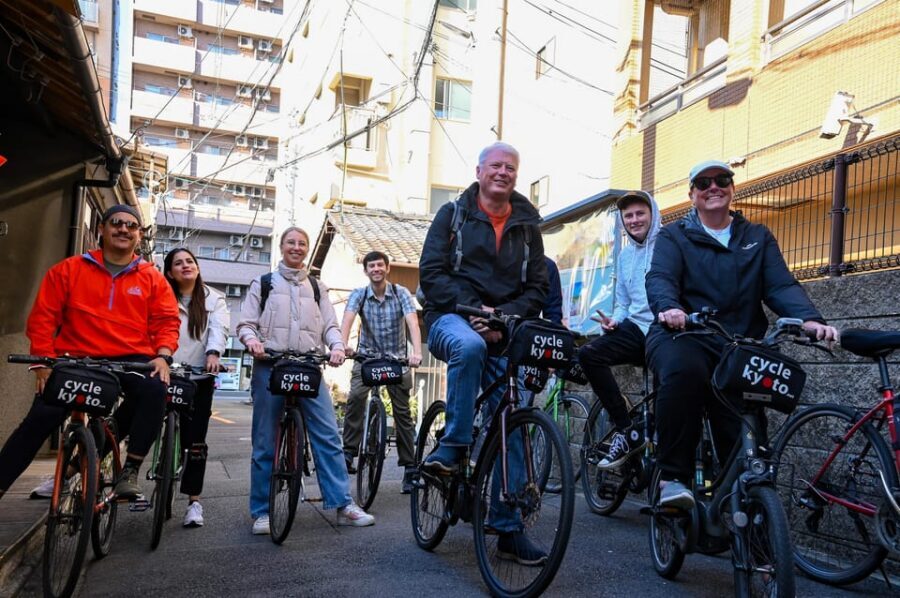
- Small group, English live guide so you’re not just following a script.
- Toji + Higashi-Honganji give you major temple context early, before the day gets busy.
- Takase Canal and the Kamo River add an easy, scenic “in-between” between landmarks.
- Gion backstreets help you see the vibe without only seeing the main postcard streets.
- Tofukuji and Fushimi Inari are picture stops built into the flow, not rushed at the end.
Why biking South Kyoto beats the usual temple shuffle
South Kyoto can feel like two different cities stitched together: polished, famous stops on one side, and local neighborhoods on the other. A bike tour is a smart way to connect them. You move fast enough to cover ground, but slow enough to notice small things—street layout, temple gates appearing around corners, and those narrow lanes where you’d never end up on foot unless you planned it.
This tour is built around that idea: start with temple heavy-hitters, then slide into the calmer riverside and canal sections, and finish at Fushimi Inari when you can still enjoy the walk without turning the whole day into a crowded endurance test.
You’ll also get a very practical balance of guided time and personal time. Some stops are guided tours; others are photo-focused pauses. That matters in Kyoto, where you’ll want a few minutes to step back, frame the view, and not feel like you’re being herded.
One more thing I appreciate: the ride stays short and “half-day” sized—210 minutes total—so it doesn’t hijack your entire day.
A few more Kyoto tours and experiences worth a look
From Kyoto JR Station to Cycle Kyoto: the easiest start line
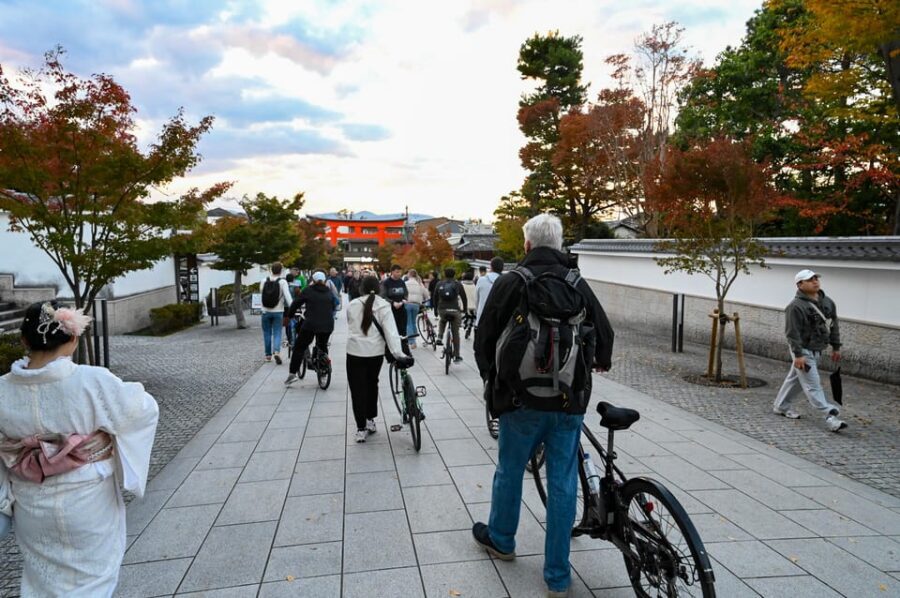
The meeting point is right by Kyoto Station, which is a big deal if you’re dealing with luggage or jet lag. You go past Avanti, cross one set of traffic lights, then after Daily Yamazaki, you take the next left to Cycle Kyoto.
If you’re arriving by train, plan to show up a bit early. Japan stations can be easy to navigate, but getting to the exact corner still takes a few minutes—especially if you’re reading street signs on the move. This is also when you’ll do the 15-minute safety briefing, get your helmet, and get set up on a bike that fits.
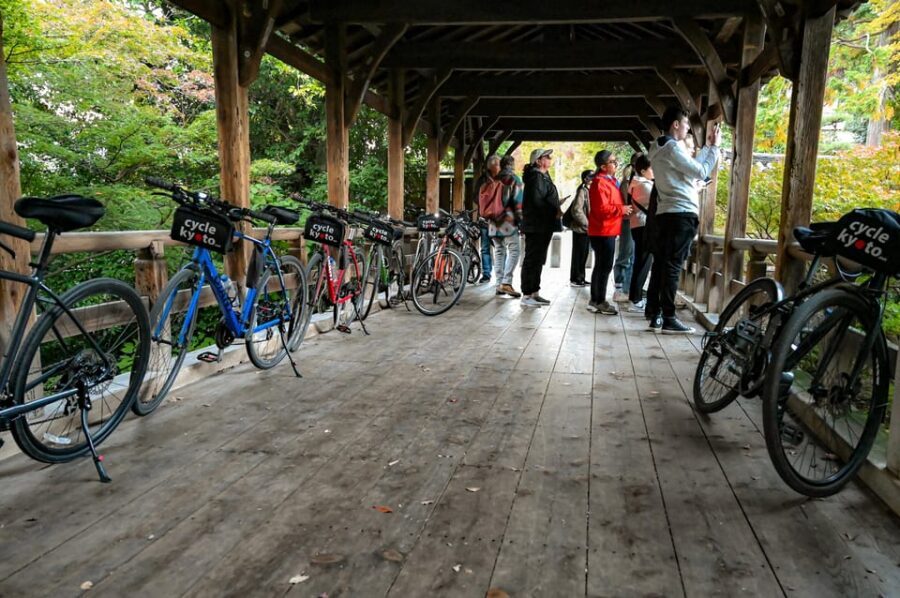
The tour includes bicycle rental and helmet, plus water. That’s one less thing you have to bring or hunt down.
Toji first: UNESCO energy without rushing the details
Toji is a great opener because it’s an anchor point—historic, recognizable, and big enough that it gives you Kyoto context right away. The tour starts at this UNESCO heritage site, described as Kyoto’s oldest temple, and that “early big moment” sets the tone for everything that follows.
Here’s what I think this stop accomplishes for you:
- You learn the temple rhythm Kyoto uses—big gate energy, courtyard space, and the way religious sites sit in the city.
- You get an easy first win photo-wise, before the ride starts layering more sights on top.
Time is guided (about 35 minutes), which is enough to understand what you’re looking at without feeling stuck. Then you leave the temple zone and head toward waterways and backstreets, which is exactly the shift you want after an immersive first stop.
Higashi-Honganji: big scale, calmer pace
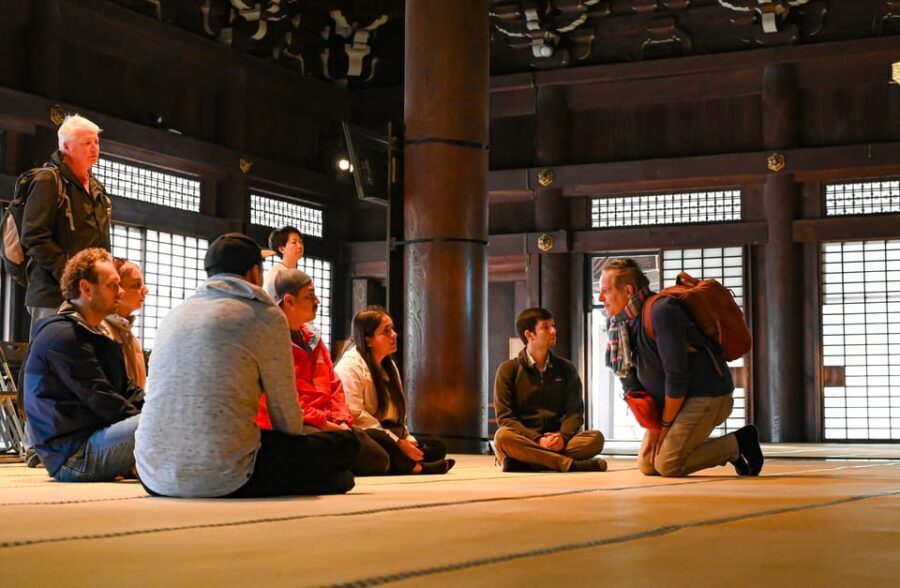
Next comes Higashi-Honganji, one of Japan’s largest temples. Big scale sites can go one of two ways on tours: either you race through them, or you get lost in the size. This tour keeps the stop structured with a guided portion (also around 35 minutes).
Why I like this placement: it’s a breather between the most iconic “must-see” style attractions. You’re still in major Kyoto, but you’re not yet at the torii-gate crowds. The guide time helps you notice what you might otherwise walk past—temple layout cues, architecture cues, and the cultural role these places play.
If you’re the kind of traveler who likes understanding what you’re photographing (rather than just snapping), this stop is a good payoff.
Takase Canal and the Kamo River: the ride part that feels like sightseeing
Then the tour switches gears from “temple time” to “motion time.” You’ll visit the Takase Canal and the Kamo River area, with short stops along the way.
This is where biking earns its keep. On foot, you could walk riversides and canals, sure—but cycling makes it easier to string them together with other places without turning your day into a marathon. The vibe is also different. You’ll feel the change in space and sound: less gate-to-gate tourism, more city flow.
Timing here is short (about 10 minutes for Takase, 15 minutes for the Kamo River), so you’re not stuck waiting. It’s built for quick refresh and photos—then you’re back in motion toward Gion.
Other cycling tours in Kyoto
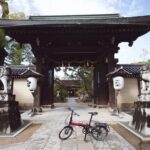


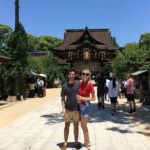
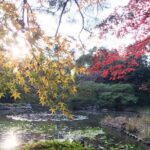
Gion backstreets: how you see the geisha district without only seeing the crowd
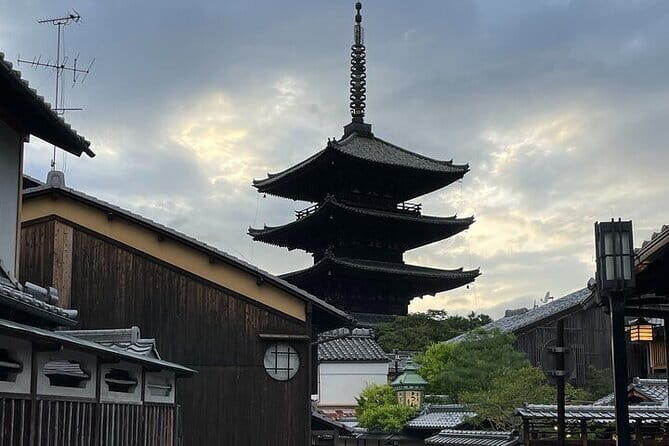
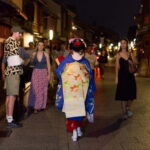
Gion is famous for a reason. It’s also famous for crowds—especially if you show up at the wrong hour. This tour helps by taking you through backstreets as part of the route, with a guided block that lasts about 30 minutes.
I love Gion in small pieces: a bend in the road, a lane that narrows and suddenly feels quieter, a temple-like frontage you didn’t expect. When you’re on a bike, you can cover the right pockets faster than walking, while still stopping at points that make sense.
What to watch for:
- The way streets open and close like little corridors.
- Traditional-looking facades and teahouse district cues.
- Those moments where you realize you’re not on the biggest main drag.
You get that “Kyoto feeling” here: old neighborhood layout meeting modern city life. It’s also a nice contrast after the larger temple sites.
Tofukuji photo stop: when the tour slows down on purpose
After Gion, you’ll reach Tofukuji Temple, and this portion is set up as a photo stop (about 30 minutes). That timing is smart. A photo stop needs enough slack for you to move, find your angle, and settle your settings if you’re using a camera.
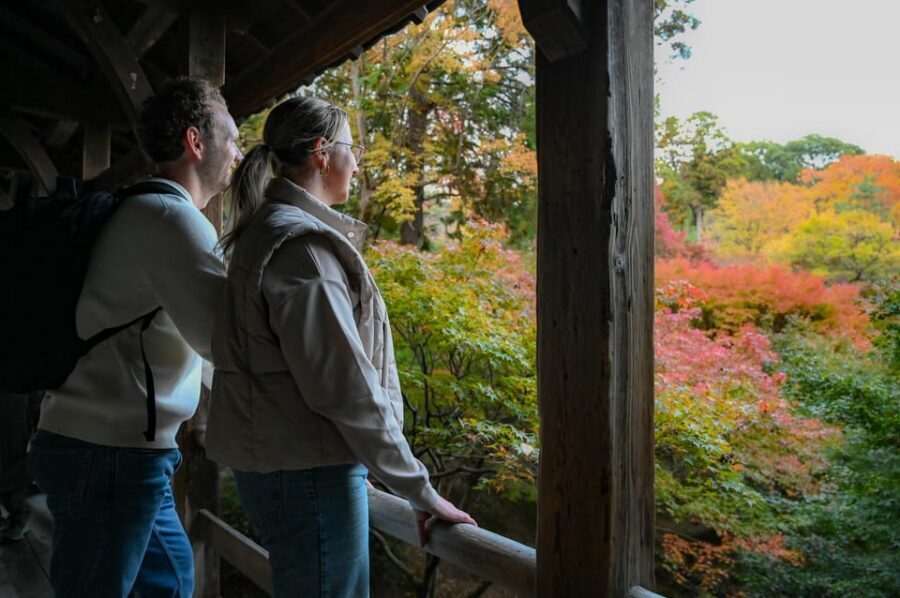
Tofukuji is described as stunning, and even if you’re not chasing architecture details, you’ll likely find something worth photographing: framed temple views, the feel of the grounds, and the way the site shifts visually as you reposition.
A photo stop also means you can be flexible. If the light is good, you’ll take advantage. If it’s not, you still have time to enjoy the site and get one or two solid images.
Fushimi Inari Taisha: torii gates, guided flow, and a famous ending
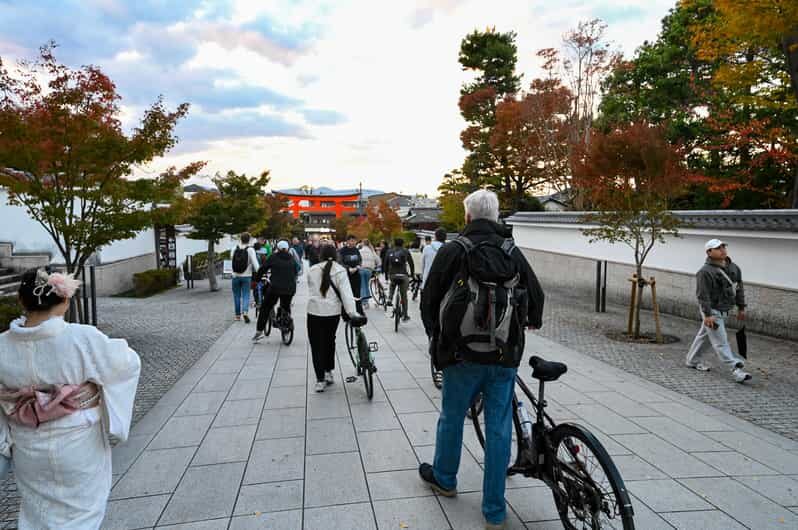
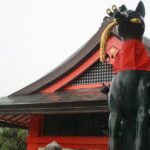
Then comes the finish: Fushimi Inari Taisha, Kyoto’s most visited attraction in Japan, and the heart of this tour. You’ll roll down into the area through the local neighborhood and then do a guided portion (about 45 minutes).
What makes Fushimi Inari work on a bike tour is the flow. You don’t start here as a standalone activity where you only have your own instincts and map. The guide helps you get oriented fast—so instead of spinning around at the gate complex, you’ll understand where you are and what matters.
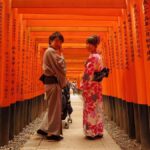
You’ll also do a stroll around the famous orange torii gates. This is the part where you should expect a lot of visual repetition—and that’s why I like having guidance. You can still wander, but you’ll likely spend your time in the spots that give you the strongest sense of the place instead of getting stuck in the most obvious paths.
One practical consideration: this is a top attraction. Even with a route designed to keep things moving, you should be ready for crowds in at least some sections. If you’re sensitive to shoulder-to-shoulder situations, go with the mindset that your goal is to enjoy the experience in motion, not to find a totally empty temple forest.
How the pace feels across 210 minutes
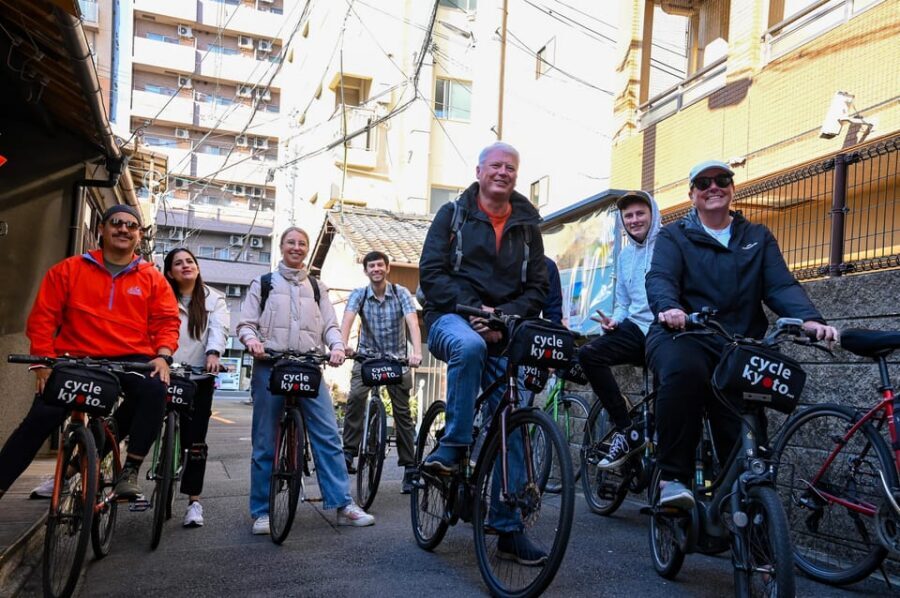
This is not a “sit and listen” tour. It’s a cycle-first half day with short guided blocks and a few key off-bike moments.
The included safety briefing helps you feel confident early. And the group size (limited to 8) keeps the movement from turning into a traffic jam. If the group is small, the pace often feels even more relaxed.
I’d also expect a ride that adds up to a meaningful distance—enough to feel like you worked a little, but not enough to ruin the rest of your day. If you want something gentle, choose clothing and shoes that won’t fight you after an hour of pedaling.
Weather matters. Kyoto weather can change quickly, and one rainy-day review vibe in the info suggests the guide can adjust when conditions aren’t ideal. Still, bring warm layers and dress for biking, not for sitting at a bus stop.
Bike comfort and gear: what’s included (and what you should bring)
The tour provides:
- Bicycle rental
- Helmet
- Guide
- Water
And you’re advised to bring:
- Comfortable shoes
- Warm clothing
- Camera
- Sunscreen
- Comfortable clothes
- You’ll have a small pouch on the bicycle for personal items
E-bikes are available upon request for an upgrade fee of 3000 yen. If you’re concerned about hills or want an easier ride, it’s worth considering. Kyoto’s streets can be busy and some stretches can feel like you’re weaving through traffic patterns—an e-bike reduces that mental load.
Also note the limits: the tour requires a minimum age of 13, and it’s not suitable for people with back problems or anyone who can’t ride a bike.
Price and value: is $77 a good deal?
At $77 per person for 210 minutes, the value depends on what you hate doing on a trip.
If you hate:
- figuring out routes between scattered sights,
- paying separately for multiple attraction entries and guide time,
- or dealing with public transit in multiple segments,
then this price starts making sense fast. You’re buying bundled guidance plus transportation (the bike), plus helmet and water, all while hitting a compact cluster of major stops.
You’re not paying for meals, so plan to eat after. But you are paying to save mental energy—and in Kyoto, that energy is a real currency. A half-day that covers Toji, major temple time, riverside/canal breaks, Gion backstreets, and a torii-gate finish is exactly the type of itinerary that feels worth it when you compare it to trying to build the same day solo.
Who should book this Kyoto bike tour
This tour is a good match if you:
- want temples and neighborhoods, not just one type of sight,
- like guided context that helps you understand what you’re seeing,
- enjoy cycling enough to be comfortable for a few hours,
- want a small-group experience (up to 8) over a large crowd.
It’s also a solid choice if you’re in Kyoto for the first time and want an efficient “South Kyoto map” you can build on later. You’ll learn street connections and get a feel for where things are, which makes future wandering easier.
Who should skip it (or choose an e-bike)
Skip if:
- you can’t ride a bike confidently,
- your back doesn’t handle biking well,
- you’re traveling with someone under 13 (minimum age is 13).
If you can ride but want less strain, ask about the e-bike upgrade early. It’s an extra cost, but it can turn the ride from effort into a smooth, relaxed sightseeing tool.
Should you book this Kyoto half-day bike tour?
I’d book it if you want a smart, compact introduction to South Kyoto and you’re comfortable cycling for a few hours. The lineup is well chosen: UNESCO Toji as a foundation, Higashi-Honganji for big temple scale, a riverside/canal rhythm shift, Gion backstreets for neighborhood flavor, and then the torii-gate climax at Fushimi Inari.
Don’t book it if biking sounds like work. This is a “you ride, you see” tour, not a walking-only option in disguise. If weather is questionable, pack warm layers and dress for movement. And if crowds at Fushimi Inari bother you, go in expecting to share space—then focus on enjoying the guided flow and the visuals you came for.
If that sounds like your style, you’ll come away with a Kyoto sense of place that’s hard to replicate from a train window or a checklist.
FAQ
How long is the Kyoto half-day guided bike tour?
The tour lasts 210 minutes (about 3.5 hours), including a short safety briefing and guided time at each main stop.
What’s included in the price?
The tour includes bicycle rental, a helmet, a live English guide, and water.
Do I need to be an experienced cyclist?
You need to be able to ride a bike. This tour isn’t suitable for people who can’t ride, and it’s also not recommended for those with back problems.
Is there an e-bike option?
Yes. E-bikes are available upon request for an upgrade fee of 3000 yen.
Where do I meet the guide?
Meet at Cycle Kyoto. From Kyoto JR Station, go past Avanti, across one set of traffic lights, then after Daily Yamazaki take the next left.
What tour stops are included?
You’ll visit or tour Toji, Higashi-Honganji, Takase Canal, the Kamo River, Gion backstreets, Tofukuji Temple (photo stop), and Fushimi Inari Taisha with time around the torii gates.