A brush stroke can slow your Kyoto down. In central Kyoto at Gojo Paradiso, you learn shodo calligraphy in a calm, hands-on way, with clear guidance from the instructor (Takako’s name comes up often) and helpers. I love the hands-on shodo practice and the fact you leave with a finished piece on rice paper that feels like real artwork. The only drawback to consider: this workshop is not suitable for children under 10, so it’s more focused than a kid-friendly craft.
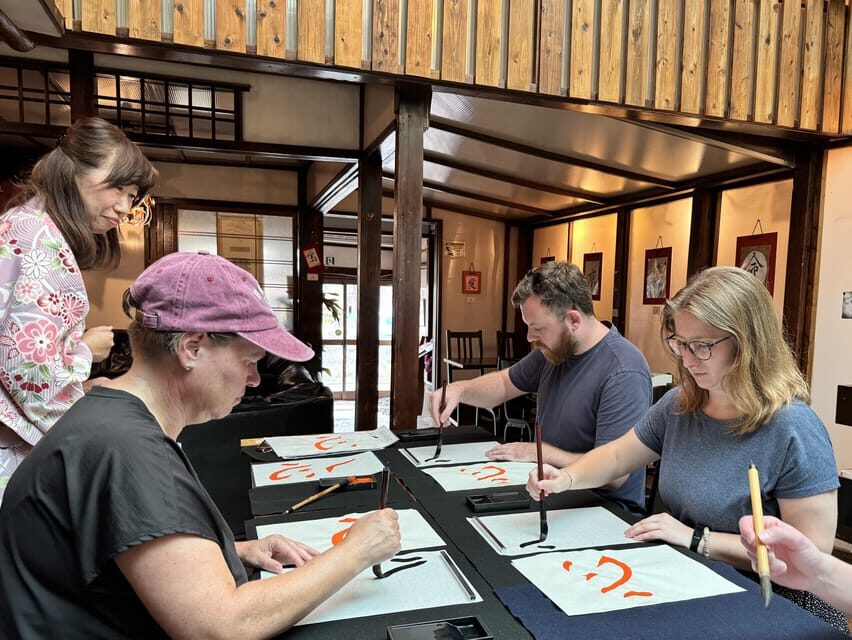
What really makes it work is the format. You’re in a small group (max 10), the class runs in English and Japanese, and the teacher works step by step from basic brush strokes to writing characters and your name in kanji—without making you feel rushed.
In This Review
- Key things to know before you go
- Why Kyoto calligraphy feels practical, not performative
- Gojo Paradiso on Kiyamachi Street: easy to find, calm to learn
- The 1 to 2 hour flow: how you go from strokes to a finished piece
- 1) A quick intro to what shodo is and what your character is doing
- 2) Brush-stroke training: learning control before characters
- 3) Your characters and name in kanji
- 4) Wrap-up time: photos, a gallery look, and special orders
- Your supplies are handled—so you can focus on learning
- The take-home piece: why the final result matters
- Price and value: is $32 worth your time?
- Who this workshop suits best (and who should skip it)
- Practical tips so your strokes don’t unravel
- Should you book this Kyoto calligraphy workshop?
- FAQ
- How long is the Kyoto Japanese calligraphy workshop?
- Is the workshop suitable for beginners?
- What languages are used during the lesson?
- What is included in the price?
- Where is the meeting point in Kyoto?
- Is the workshop wheelchair accessible?
- Is there an age requirement?
- Do I need to reserve in advance?
Key things to know before you go
- Beginner-friendly shodo lessons that start with the basics of brush control
- Small-group attention (limited to 10 participants) and patient, encouraging teaching
- You practice, then produce a take-home work on rice paper, often stamped/signatured
- English and Japanese support so you can follow the instructions even if your Japanese is limited
- Central Kyoto location near Kiyamachi Street and the Takase River for an easy add-on day activity
- You can also write your name in kanji, which turns the lesson into a personal souvenir
Why Kyoto calligraphy feels practical, not performative
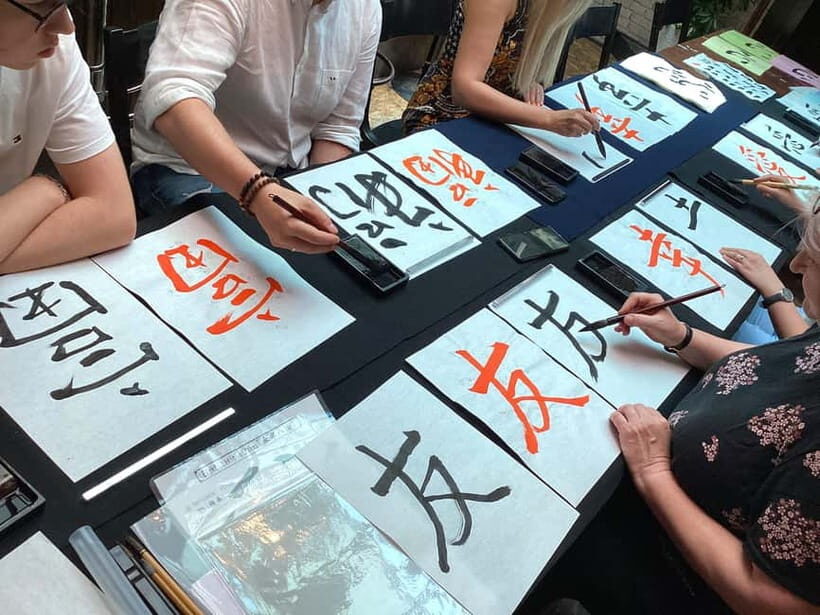
Japanese calligraphy, or shodo, isn’t about copying a pretty picture. It’s about controlling pressure, direction, and timing—so the mark you make ends up looking confident even if you’re a beginner.
That’s why this workshop works so well in real life. You’re not sitting and watching brush magic from across the room. You’re practicing basic strokes, then building toward a character (and often your own name in kanji), with a teacher guiding what to do next. The result is that you don’t just learn culture in theory—you leave holding something you made.
I also like how the teaching style is described: patient, positive, and very structured. In the feedback, Takako and her helpers are mentioned as supportive, with individual attention on exercises. That matters because calligraphy is one of those crafts where one small correction (angle, pressure, or where you place your next stroke) can change everything.
A few more Kyoto tours and experiences worth a look



Gojo Paradiso on Kiyamachi Street: easy to find, calm to learn
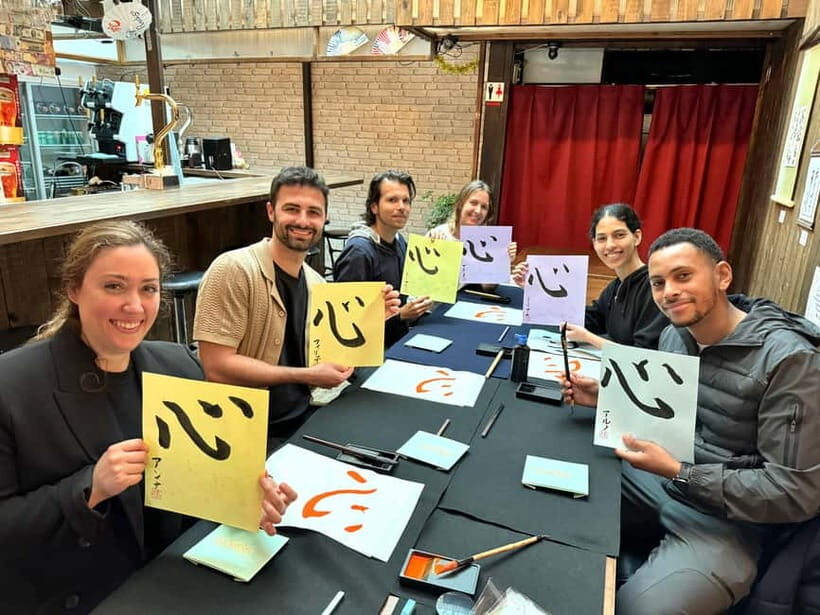
The meeting point is Gojo Paradiso, on Kiyamachi Street along the Takase River. It’s a short walk from Keihan Kiyomizu Gojo Station (about 5 minutes) and also reachable from Keihan Shichijo Station (around 10 minutes). In other words, you can plug this into a sightseeing day without turning it into a logistics puzzle.
One detail that shows up again and again: the class space is quiet. That’s a big deal for something as hands-on as calligraphy. When you’re focused on breath, pace, and brush control, background noise becomes a distraction. A calm setting helps you actually enjoy the learning process instead of just trying to get it done.
Also, the workshop is capped at 10 people. That size keeps it from becoming a lecture. You’re close enough to see what the instructor is doing, and you can get help when your strokes start going the wrong direction.
The 1 to 2 hour flow: how you go from strokes to a finished piece
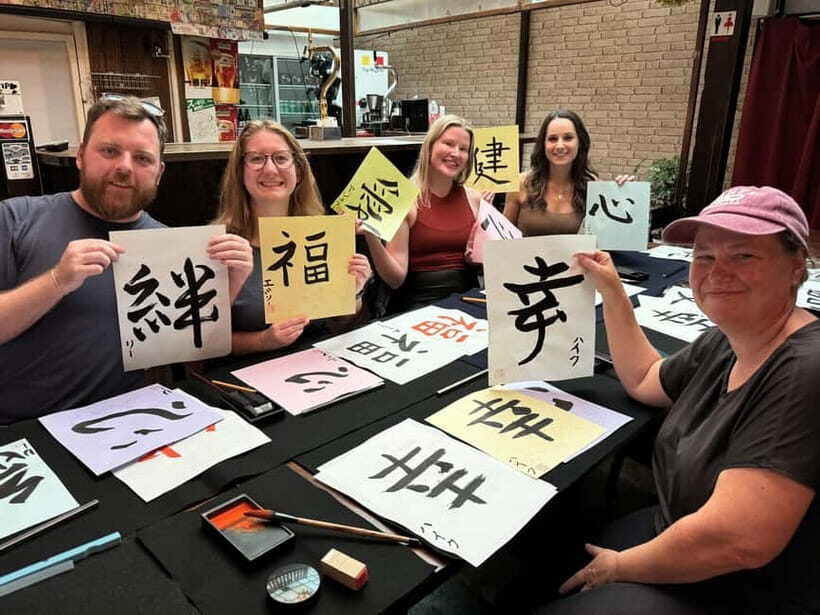
The workshop is scheduled for 1 to 2 hours (you’ll see starting times when you check availability). While the exact pacing can vary, the structure is consistent: learn the background, practice key strokes, then create your take-home artwork.
Here’s what you can expect, in the order that makes sense:
1) A quick intro to what shodo is and what your character is doing
You start with a short history/meaning part, so the strokes don’t feel random. You’ll also learn what calligraphy is trying to express—balance, movement, and intention. It’s not a deep seminar; it’s enough to give you a frame for what comes next.
2) Brush-stroke training: learning control before characters
Next comes the practical part. You’ll practice core brush strokes that form the building blocks of kanji. Think of it like learning letterforms through fundamentals, not luck. The teacher demonstrates, then you try.
This is where individual attention matters. In the feedback, people note how the instructor spends time with each student on each exercise. Two assistants/helpers are also mentioned, which likely helps with guidance and troubleshooting when your brush doesn’t behave the way you expect.


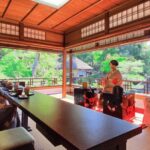

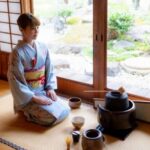

3) Your characters and name in kanji
After the strokes feel less scary, you move to writing characters. Many participants also get to write their name in kanji, which turns the lesson into something personal. That personal character practice is also a fun way to leave Kyoto with a souvenir that doesn’t look like every other photo.
4) Wrap-up time: photos, a gallery look, and special orders
In the final phase, you can take photos, explore a gallery, and place special orders. This is a nice bonus because it helps you see how your lesson connects to larger calligraphy works—so you don’t just leave with one character; you leave with context.
Your supplies are handled—so you can focus on learning
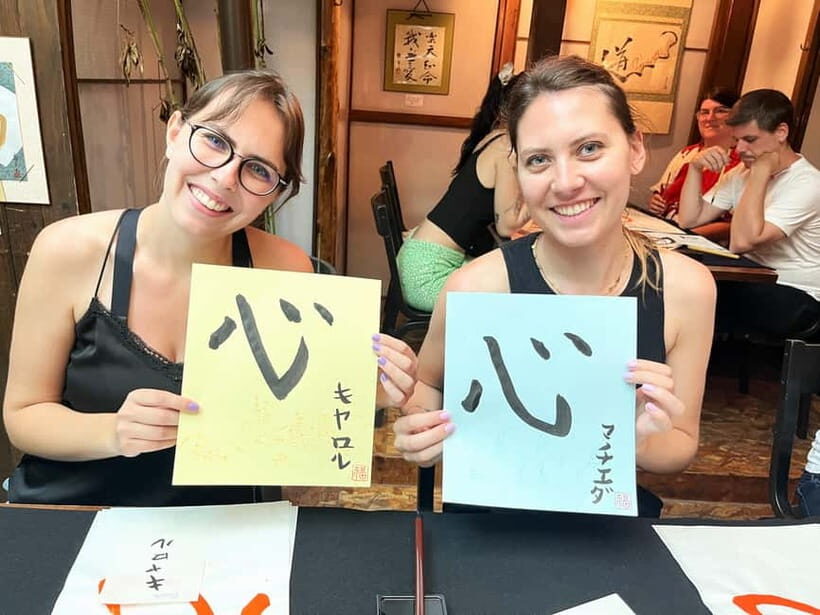
This workshop includes all necessary supplies. That’s a quiet but important value point. Calligraphy supplies can be confusing to buy on your own, and you don’t want your first day in Kyoto to become an errand mission.
With supplies included, you can concentrate on what you actually came for: the physical technique. You’ll practice using the brush and paper materials provided, and you’ll end up with your finished work on rice paper.
In the feedback, the materials are described as high-quality and well organized. People also mention that there’s plenty of material on hand for practice and that the class runs on time—both of which help you feel like the session is planned, not improvised.
The take-home piece: why the final result matters
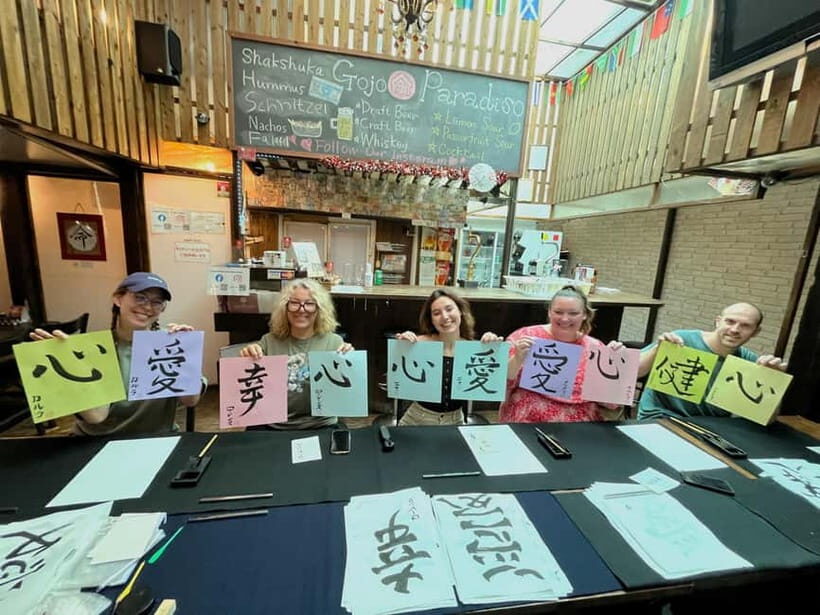
The highlight isn’t just that you learned a skill. It’s that you leave with something you can show at home.
Your creation is a one-of-a-kind memento, and many participants describe a satisfying final presentation: their calligraphy placed on rice paper, signed in kanji, and stamped by the teacher. That stamp/signature detail turns it from a craft project into something that feels official.
One particularly memorable add-on from the feedback: participants mention receiving a gift of handmade calligraphy accented in gold. That sort of thoughtful extra doesn’t always happen in workshops, so when it does, it upgrades the entire experience.
If you’re the type who likes tangible travel souvenirs, you’ll probably appreciate this. A calligraphy piece is also a calmer reminder than a mass-produced magnet. You can treat it like art, not just a receipt from a day out.
Price and value: is $32 worth your time?
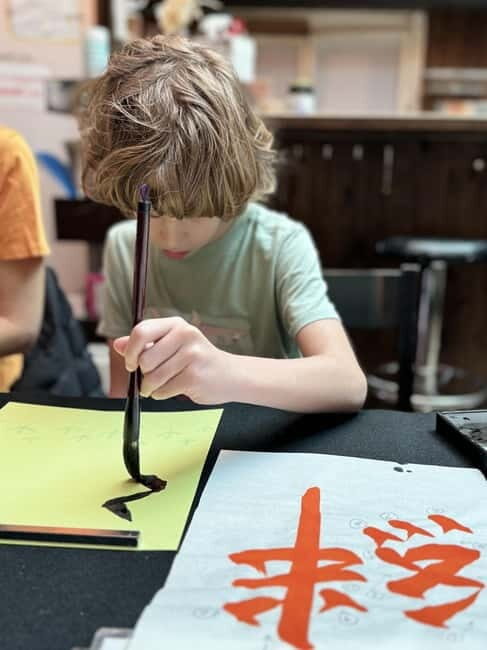
At $32 per person for a 1 to 2 hour small-group workshop, this is priced like a solid cultural activity that doesn’t try to overcomplicate things.
What you’re really paying for:
- A skilled instructor guiding you step-by-step
- All supplies included, including the paper used for your take-home work
- Small-group format (max 10), which helps you get corrections instead of generic advice
- Your final output, often signed and stamped on rice paper
In many cities, lessons that provide materials and a personal output cost significantly more. Here, the value is in the combination: teaching + practice + a finished souvenir.
That said, it’s still worth matching your expectations. This isn’t a performance tour where you observe art. It’s a participatory class where you’ll spend time practicing strokes. If you want a quick photo stop, this might feel like effort. If you’re into learning something you can actually do, it’s a good deal.
Who this workshop suits best (and who should skip it)
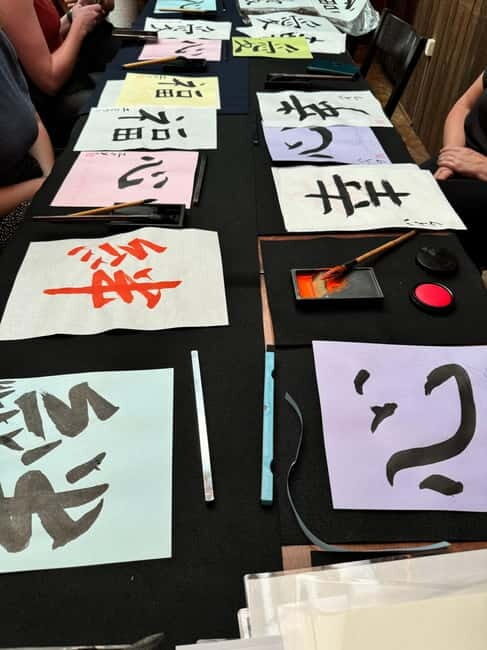
This is ideal for:
- Beginners who want guidance and clear steps
- Couples and friends looking for a shared activity that results in a personal keepsake
- Solo travelers who enjoy structured, hands-on time rather than open-ended wandering
- Anyone who likes crafts but wants a lesson with cultural depth, not just decoration
It’s not suitable for children under 10, so if you’re traveling with younger kids, you’ll want a different activity.
Because the group is small and the instruction is patient, it’s also a good fit if you worry you might not be good at art. Calligraphy training is forgiving in the sense that you’re learning technique, not scoring talent.
Practical tips so your strokes don’t unravel
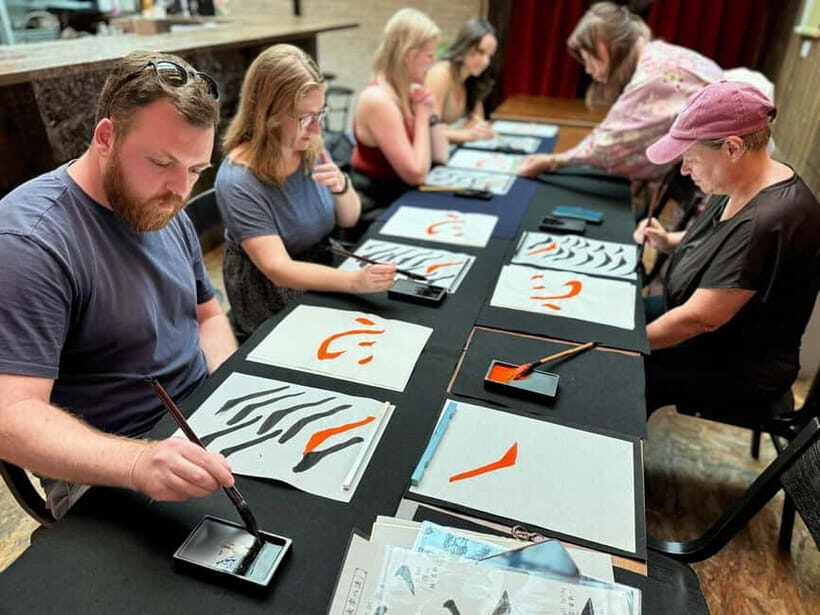
You don’t need special preparation, since supplies are included and instructions are in English and Japanese. But a few small habits can make the session smoother:
- Take your time with the first strokes. The class builds from basics, so rushing early makes later steps harder.
- Watch your brush angle and pressure. That’s the difference between a character that looks shaky and one that looks intentional.
- Ask for help when something feels off. The structure supports corrections, and assistants are there to help.
- Bring curiosity, not perfectionism. Even if your character isn’t identical to a textbook example, the point is learning how to make your brush behave.
Also, plan to leave a little breathing room in your day. You’ll want time to find the studio, get settled, and enjoy the photo/gallery wrap-up afterward.
Should you book this Kyoto calligraphy workshop?
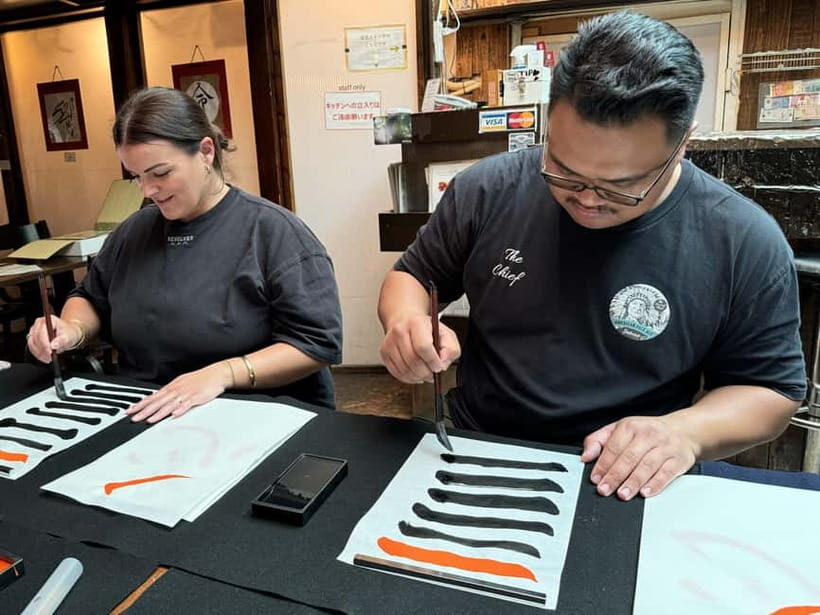
Yes—if you want a hands-on cultural experience that ends with something you can take home and actually use as a memory.
Book it when you:
- like structured instruction
- enjoy making things with your hands
- want a small-group class in central Kyoto
- want a souvenir that feels personal (like writing your name in kanji)
Consider skipping or choosing something else if you:
- want a passive experience with lots of sightseeing built in
- need an activity that works for children under 10
- hate sitting down for focused practice for 1 to 2 hours
With a strong rating (4.7 from 84 bookings) and consistent feedback about patient teaching, quality materials, and the satisfying take-home result, this is the kind of Kyoto activity that pays you back in real memory—and real ink.
FAQ
How long is the Kyoto Japanese calligraphy workshop?
The workshop lasts 1 to 2 hours. Exact start times depend on availability.
Is the workshop suitable for beginners?
Yes. The class offers step-by-step instruction for beginners, starting with basic brush strokes and moving toward kanji characters.
What languages are used during the lesson?
The instructor offers English and Japanese.
What is included in the price?
The price includes an expert calligraphy instructor and all necessary supplies. You also take home your finished calligraphy piece as a one-of-a-kind souvenir.
Where is the meeting point in Kyoto?
You meet at Gojo Paradiso, on Kiyamachi Street along the Takase River. It’s about a 5-minute walk from Keihan Kiyomizu Gojo Station and about 10 minutes from Keihan Shichijo Station.
Is the workshop wheelchair accessible?
Yes, the activity is wheelchair accessible.
Is there an age requirement?
The workshop is not suitable for children under 10.
Do I need to reserve in advance?
Yes. Reservation is required at least 1 day in advance. You can also reserve now and pay later, and cancellation is free up to 24 hours in advance for a full refund.