Food in Kyoto, guided and easy. In about two hours, you’ll weave through Nishiki Market and a department-store basement depachika with tastings that make the menu make sense fast. Two things I like right away: you get guided bites such as yuba sashimi and a soy milk donut, plus classic market snacks like Nishiki gyoza and tempura. One watch-out: it’s short, so the market can feel a little fast if you want to linger and snack at every stall.
What really helps is the guide’s pace and how they translate what you’re looking at. Names that come up often for this kind of guiding include Jasmine, Boris, Mao, Alex, Ai, Kats, Brooke, and Katz—so the format clearly attracts people who like teaching and keeping things moving. You also end near Kawaramachi, which is handy if you’re planning to keep wandering after the last bite.
If you’re the type who enjoys learning while you eat, this is a very efficient way to get Kyoto flavors without getting stuck in decision fatigue.
In This Review
- Key Things I’d Pay Attention To
- A Two-Hour Food Route Through Nishiki and a Depachika
- Price Check: What $48 Buys You in Kyoto
- Where You Meet (Apple Kyoto) and Finish (Kawaramachi)
- Stop 1: Daimaru Kyoto Depachika Basement Bites
- Stop 2: Nishiki Market, Kyoto’s Kitchen Corridor
- Stop 3: Nishiki Tenmangu Shrine for a Breather
- How to Eat Smarter on This Tour (and Avoid Common Frustration)
- Who This Tour Fits Best
- Should You Book This Nishiki Market and Depachika Food Tour?
- FAQ
- How long is the Kyoto Nishiki Market & Depachika food tour?
- What’s included in the tasting during the tour?
- Where does the tour start and end?
- How big is the group?
- Is the tour admission covered for the market and department store?
- Can I get a full refund if I cancel?
Key Things I’d Pay Attention To

- Depachika tastings first: start in Daimaru Kyoto’s basement food hall so you can understand what you’re about to see and buy.
- Actual bite list, not just walking: you’ll try yuba sashimi and soy milk donut, plus Nishiki gyoza and Uoriki tempura.
- Nishiki Market is more than snacks: you pass food stalls and also see produce and kitchen supplies like knives and cookware.
- Short shrine stop for a reset: Nishiki Tenmangu Shrine adds quiet and context between food stops.
- Small group size (up to 9): easier to ask questions and get quick directions in a tight crowd.
A Two-Hour Food Route Through Nishiki and a Depachika
This tour is built for people who want results without a half-day commitment. You get two major food zones—Nishiki Market and a depachika—then you close with Nishiki Tenmangu Shrine for a calmer moment. It’s a smart structure because Kyoto food can be overwhelming when you’re staring at 50 stalls and trying to guess what’s best.
You’ll also learn how to order and what to prioritize while you walk. That matters, because in Nishiki, the hardest part isn’t finding food—it’s deciding what to eat when everything looks good and smells better than good.
The small group limit (max 9) helps a lot here. You don’t feel like you’re trapped in a school bus line. Instead, you can actually follow, hear the guide, and still enjoy the market energy without constantly checking where your group went.
A few more Kyoto tours and experiences worth a look
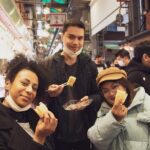
Price Check: What $48 Buys You in Kyoto

$48 for roughly two hours sounds simple, but the value comes from the mix: guided navigation + multiple tastings + a tight route that saves time.
You’re not paying just for access to Nishiki Market (which is free to enter). You’re paying for:
- A guide who helps you choose what’s worth trying.
- Food tastings that include specific items like yuba sashimi, soy milk donut, Nishiki gyoza, and Uoriki tempura.
- A sequence that turns chaos into order: depachika first, then the market.
One more subtle value point: you leave knowing what to buy next. Several people mention going back to the market afterward, which is the real win. You’re not only eating on the tour—you’re building a short list for your next stop.
Possible drawback on value: since it’s a 2-hour format, if you’re a big eater who wants a full meal’s worth of food, you might feel like you want more. It’s best thought of as a tasting-and-learning experience rather than a guaranteed belly-filler.
Where You Meet (Apple Kyoto) and Finish (Kawaramachi)

The tour starts at Apple Kyoto (83-1 Tachiuri Nakanochō, Shimogyo Ward). You’ll finish at Kyoto-Kawaramachi Station area, near Kawaramachi. That matters if you’re planning to continue your day on foot or hop on public transit right after.
You’ll get a mobile ticket, and the meeting point is near public transportation. So you’re not doing a long “dead walk” just to reach the start. The guide also helps with what to do next at the end, which is useful when you’re trying to match your food high with a realistic plan.
Keep this in mind: you’re ending near one of Kyoto’s main shopping and walking corridors, so it’s easy to continue exploring right after the tour instead of rushing back to your hotel.
Stop 1: Daimaru Kyoto Depachika Basement Bites

Your first stop is Daimaru Kyoto, and the key word here is depachika. That’s Japan’s department-store basement food culture: clean, curated, packed with grab-and-go treats, and way easier to sample than trying to pick from dozens of street stalls immediately.
This part lasts about 30 minutes. Admission is free, but you’re there for the tastings and the guidance. The tour includes items like yuba sashimi (tofu skin) and a soy milk donut. If you haven’t had yuba before, this is a good way to try it without guessing. And if you’re curious about Kyoto-style sweet or snack flavors, that soy milk donut is a gentle entry.
What I like about starting in the depachika: it sets the “taste expectations.” You learn how certain flavors work, how portions are sold, and what types of items are meant to be eaten immediately versus taken home.
Potential drawback: because it’s a department store basement, it can feel less chaotic than Nishiki Market. If you love street-level noise and crowd energy, you may have to wait a bit for the full market atmosphere.
Stop 2: Nishiki Market, Kyoto’s Kitchen Corridor

After the depachika, you head to Nishiki Market Shopping District, often called Kyoto’s kitchen. This is the part most people picture: indoor market lanes packed with food vendors and specialty shops.
Your time here is about 1 hour. Admission is free. And yes, it can be crowded—this is a famous place—so having a guide is practical. You avoid the time sink of staring, comparing, and trying to figure out what you actually want to eat today.
You’ll be sampling market classics included in the tour, like Nishiki gyoza and Uoriki tempura. One big benefit of guided tastings: you don’t just taste randomly. You learn what you’re eating and why someone would choose one stall over another.
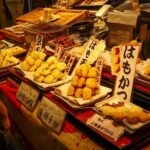
Nishiki isn’t only food. You’ll also see shops selling produce and kitchen goods, including knives and cookware. That’s part of the experience if you’re the kind of person who likes to look beyond snacks—like seeing what local cooks value and what tourists and locals both come to hunt for.
Two practical tips for this stop:
- Eat the tasting as the guide hands it to you, not later. Things get colder or less fresh quickly when you’re walking.
- If you’re with kids or teens, Nishiki is a good place to use their opinions. Many people find the hour hits a sweet spot for shorter attention spans.
One caution: because it’s only an hour, you may feel pressure to keep moving. If you want to do your own extended shopping here, treat this tour as your orientation lap, then plan a second walk afterward.

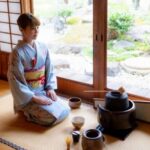

Stop 3: Nishiki Tenmangu Shrine for a Breather

The final stop is Nishiki Tenmangu Shrine, a Shinto shrine dedicated to the deity of learning. It’s nearby, and the visit is short—about 15 minutes.
This is the tour’s mental reset. Nishiki Market is food on food on food. Then suddenly you’re standing somewhere quieter, with a different pace. That contrast is nice, especially after tasting multiple items in a row.
It’s also a reminder that Kyoto isn’t only about eating. The shrine stop gives you a cultural anchor so the whole experience feels less like a snack run and more like a small slice of local life.
If you tend to skip shrines because you think you’ll get bored, don’t. Even a brief visit can change the feel of the rest of your day.
How to Eat Smarter on This Tour (and Avoid Common Frustration)

This tour includes tasting items, but you’ll still want to manage your appetite and energy.
Here’s how I’d play it:
- Go in hungry-ish, but don’t show up starving. You’ll be walking and tasting, and you don’t want to feel sick before the shrine stop.
- Bring comfortable shoes. Nishiki is walk-heavy, and you’ll be moving through tight areas.
- Be ready to ask questions. The best value isn’t only the food—it’s the guide explaining what you’re tasting and how to make sense of the choices.
If you’re picky, tell your guide early. The tour format is built around food choices you can usually adjust, and many guides are flexible about guiding you toward items that match your preferences.
One more note: the tour ends at Kawaramachi Station. That’s a good plan point, not an afterthought. If you’re continuing to other neighborhoods, having that transit access helps you keep momentum.
Who This Tour Fits Best

This tour is a strong match for:
- First-timers in Kyoto who want to understand the food scene quickly.
- People who like tasting several items rather than committing to one heavy meal.
- Families with kids or teenagers, since it’s paced for learning plus snacks without being too long.
- Food-minded shoppers who also want to see parts of Nishiki beyond eating.
It might be less ideal if you’re:
- Looking for a full dinner experience. This is tastings plus guidance in about two hours.
- Hoping for a slow, unhurried wandering session. Nishiki is busy, and the tour keeps you on a schedule.
Overall, it’s a good “foundation tour.” You come away with enough knowledge to shop and snack on your own afterward—without buying random items that don’t match your tastes.
Should You Book This Nishiki Market and Depachika Food Tour?
Yes, if you want Kyoto food in a time-efficient, guide-led format. At $48, you’re paying for smart tastings (yuba sashimi, soy milk donut, Nishiki gyoza, Uoriki tempura), plus help navigating what can otherwise feel like a wall of choices.
I’d book it if you:
- Like learning the why behind the what.
- Want a short route with a natural ending near Kawaramachi.
- Prefer small group pacing (max 9) in a market environment.
I’d skip or consider another option if you:
- Need a heavy meal, not tastings.
- Hate crowds and feel stressed by busy indoor markets.
If you’re on the fence, use this rule: treat it as your orientation to Kyoto food. Then plan your later shopping and second bites on your own with better instincts.
FAQ
How long is the Kyoto Nishiki Market & Depachika food tour?
It runs for about 2 hours.
What’s included in the tasting during the tour?
You’ll have a guide-led food tour with food-tasting items, including yuba sashimi (tofu skin) and a soy milk donut, plus Nishiki gyoza and Uoriki tempura.
Where does the tour start and end?
It starts at Apple Kyoto (83-1 Tachiuri Nakanochō, Shimogyo Ward, Kyoto) and ends near Kyoto-Kawaramachi Station.
How big is the group?
The tour has a maximum of 9 travelers.
Is the tour admission covered for the market and department store?
You don’t pay separate admission for the stops listed (the tour includes the experiences and tastings).
Can I get a full refund if I cancel?
Yes. You can cancel up to 24 hours in advance for a full refund. If you cancel less than 24 hours before the start time, the amount paid is not refunded.