One day can feel like five. This full-day Kyoto tour strings together the city’s biggest icons with a real plan, from Fushimi Inari Taisha’s torii-gate walk to Kinkaku-ji’s Golden Pavilion. I like that it’s not just sightseeing; it’s guided context, so you spend your time understanding what you’re looking at instead of guessing.
Two things stand out for me: the route is tightly organized (including train and bus time) and the guide makes the day flow—especially Takashi, who comes across as thoughtful and exceptionally prepared. The main drawback to consider is simple: it’s a long, active day at 8 hours with multiple transfers and only limited time at each stop.
In This Review
- Key Highlights That Matter
- How the Kyoto Top Sights Tour Fits Together
- Starting at JR Inari Station and Fushimi Inari Taisha’s Torii Gates
- The Train Transfer to Kiyomizu-dera: Time Built Into the Day
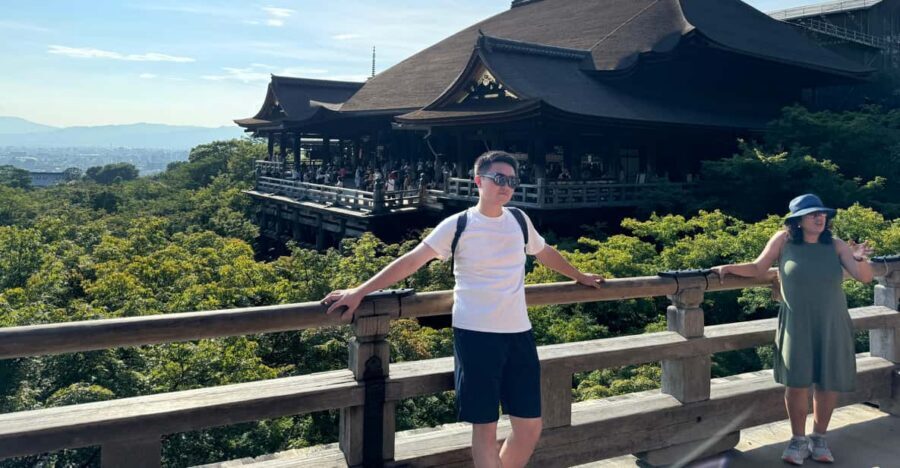
- Kiyomizu-dera’s Wooden Stage and the View You Actually Came For
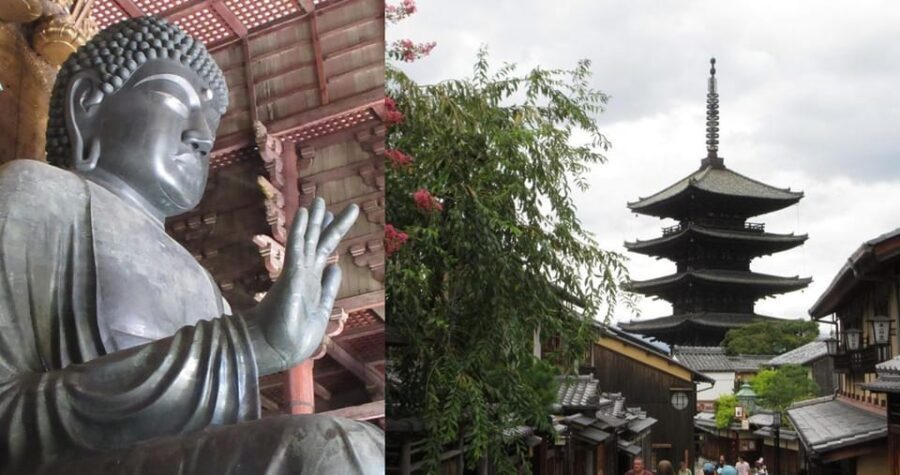
- Strolling Sannenzaka Toward Gion’s Old Kyoto Streets
- Gion Lunch and Traditional Streets in a Time-Boxed Classic
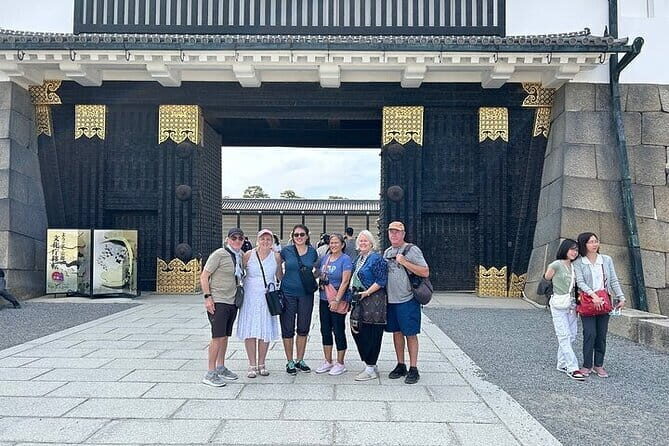
- Nijo Castle: Opulent Architecture and Interiors You Can Appreciate
- The Bus Ride to Kinkaku-ji and Finishing With the Golden Pavilion
- Price and Value: Is $131 a Smart Deal?
- Who This Tour Fits Best (and Who Might Skip It)
- Final Verdict: Should You Book This Kyoto Top Sights Tour?
- FAQ
- How long is the Kyoto Top Sights Guided Tour?
- Where do I meet the guide?
- What are the main stops on the tour?
- Is lunch included?
- What’s included in the price?
- What languages are available for the live guide?
- Can I cancel for a full refund?
- Is payment flexible?
- Is this tour private or small group?
Key Highlights That Matter
- A smart 8-hour route that packs Kyoto’s top sights without turning it into chaos
- Fushimi Inari torii gates with a guide’s interpretation so the walk has meaning
- Kiyomizu-dera’s famous wooden stage views plus time along Sannenzaka
- Gion street time with lunch included (but not the cost) for a classic Kyoto feel
- Nijo Castle interiors so you look beyond the outside walls
- Kinkaku-ji to finish the day with the Golden Pavilion and its garden setting
How the Kyoto Top Sights Tour Fits Together
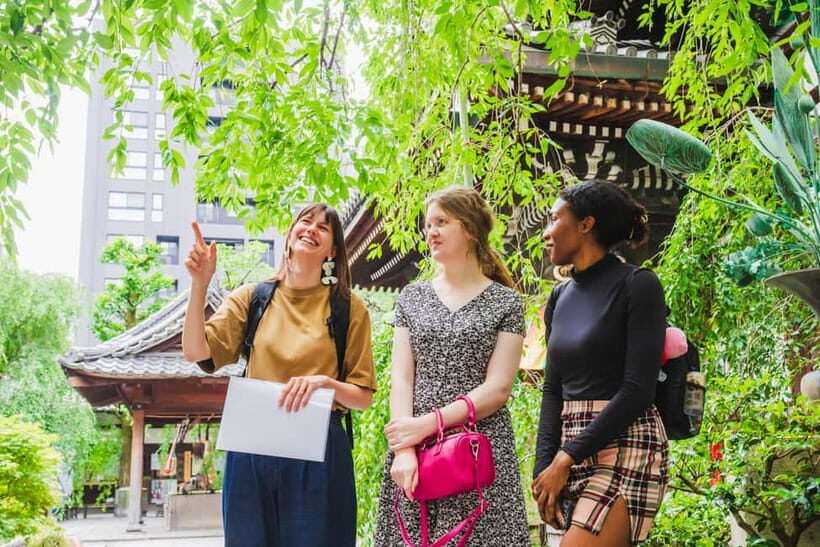
This is an 8-hour guided day built for people who want the headliner sights of Kyoto in one go. You meet at JR Inari Station at the central ticket gate, where the guide holds a yellow DeepExperience sign. The tour ends at Kinkaku-ji (金閣寺), so your last stop is literally the final piece of the day’s puzzle.
You’ll travel by a mix of walking, trains, and bus/coach. That matters because it keeps you from burning your energy on “how do we get there?” moments. The trade-off is that you’re not doing a slow, do-it-your-own-way day. This tour works best if you want a guided order—and you’re happy to keep moving.
Group style is private or small groups, and the guide speaks English and Japanese. In practice, small groups usually help you ask questions without feeling lost in the crowd. It also tends to make the pacing feel smoother at places that get packed.
A few more Kyoto tours and experiences worth a look



Starting at JR Inari Station and Fushimi Inari Taisha’s Torii Gates
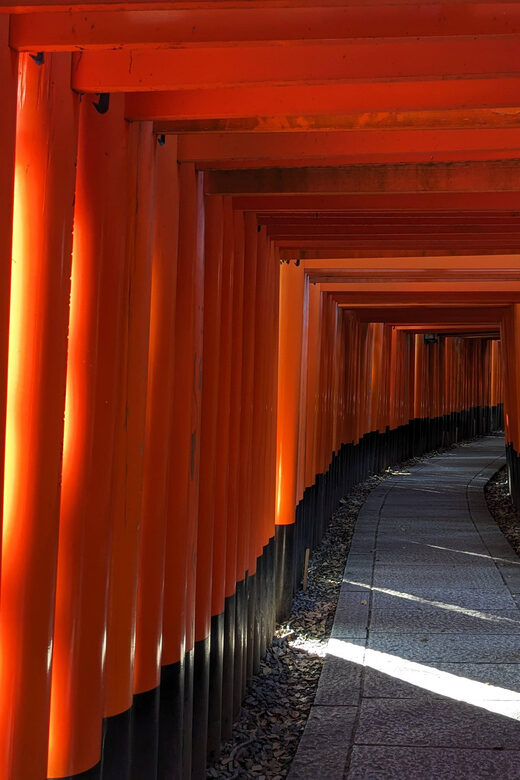
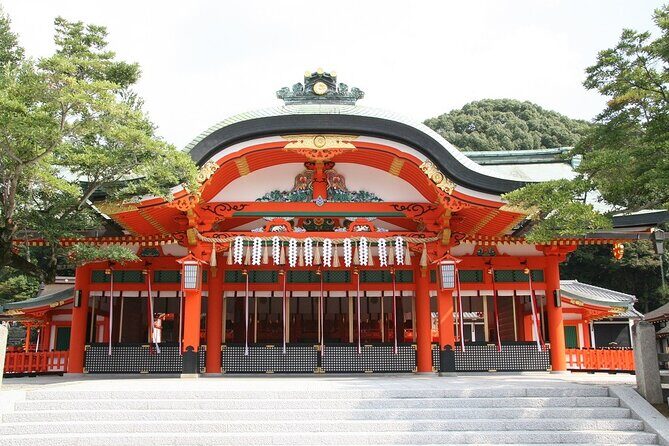
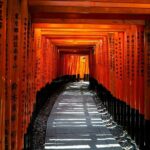
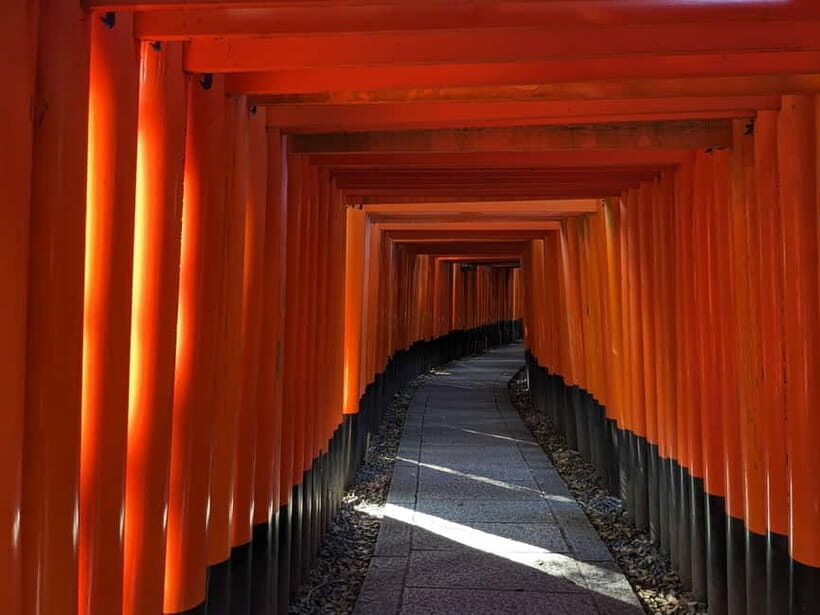
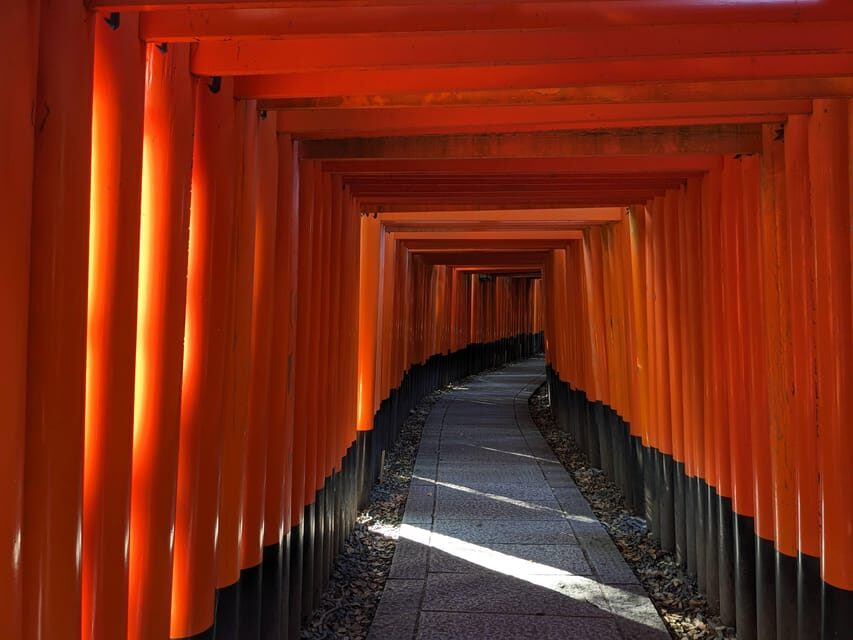
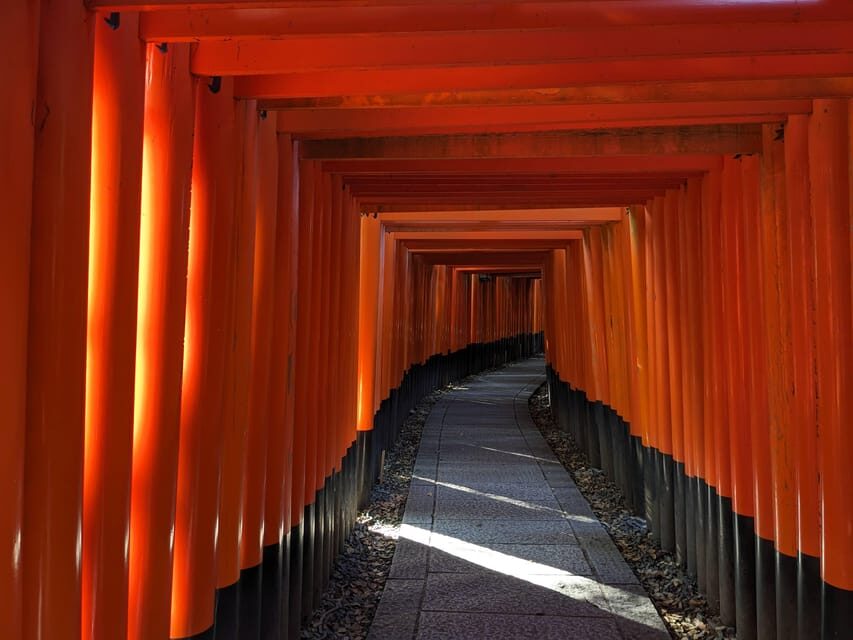
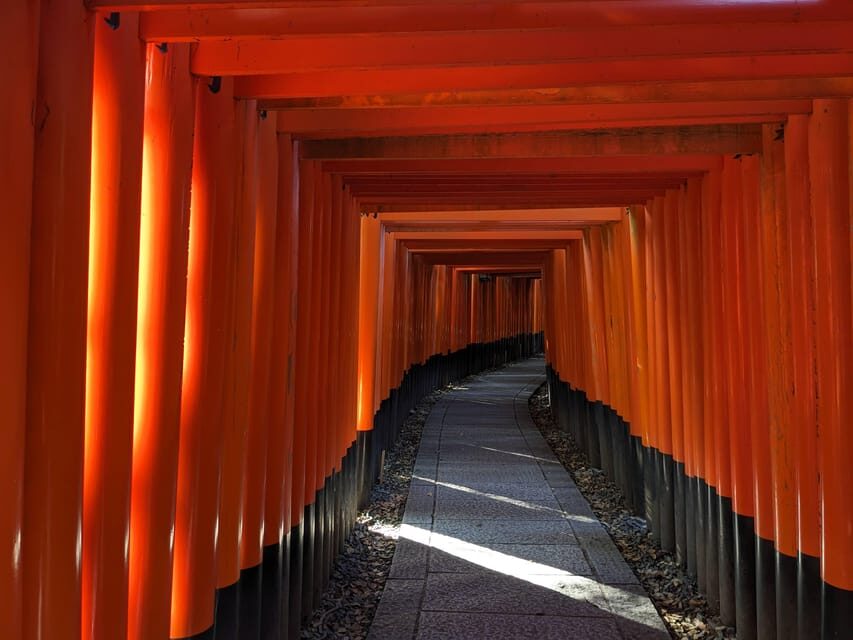
You begin at 稲荷駅 (Inari Station) and then head into Fushimi Inari Taisha for a guided visit focused on the torii-gate experience. The heart of the place is the thousands of vermilion torii gates, lined up like a spiritual hallway. Even if you’ve seen photos before, the real impact is how the gates visually guide your steps and attention.
Your time there is guided (40 minutes), which is the sweet spot for most first visits. You get to walk through the main atmosphere of the shrine without spending the day drifting around. And because it’s guided, you’re less likely to miss the cues that help you read the space—like what you’re looking at and why the torii-gate path feels different from other shrine areas.
Practical tip: wear shoes you’re comfortable walking in for Kyoto. The route involves going on foot between major stops, and that can add up fast in a single day.
The Train Transfer to Kiyomizu-dera: Time Built Into the Day
After Fushimi Inari, you take about 40 minutes by train to get to the next section of Kyoto. This is smart scheduling. If you try to string these sights together on your own without a plan, you often lose time to transport changes and figuring out directions.
I also like that the day keeps a steady rhythm: guided time at each highlight, then transport time, then guided time again. It reduces that “waiting around” feeling. You’re always either moving with purpose or being shown what to look at.
Then it’s off to Kiyomizu-dera, one of Kyoto’s most iconic temple complexes.
Kiyomizu-dera’s Wooden Stage and the View You Actually Came For
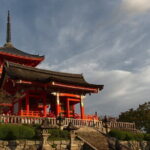
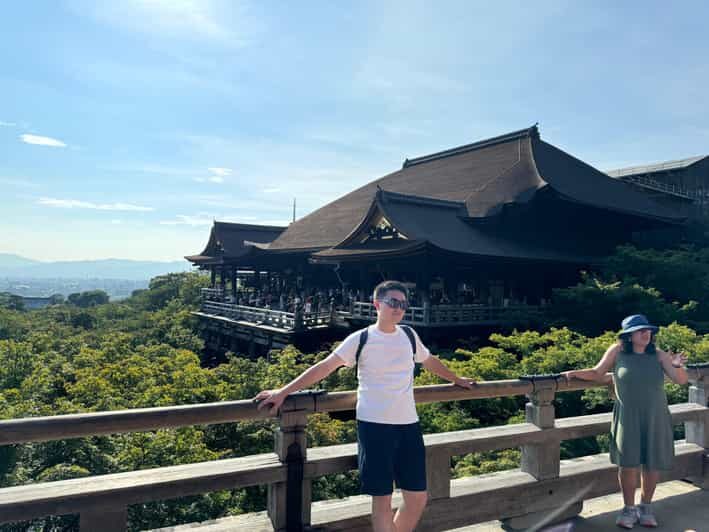
At Kiyomizu-dera, you get a guided tour of about 70 minutes. The headline here is the famous wooden stage, famous for panoramic views over Kyoto. The tour’s value is that you’re not just standing in one spot trying to make sense of a huge temple area. You’re guided through it, with attention on what the stage is known for and how the viewpoint shapes how you see the surrounding city.
Right after that, you transition into the historic streets area with time at Sannenzaka (about 15 minutes guided) and then additional walking (around 20 minutes on foot). This part is where Kyoto starts to feel like Kyoto, not just a list of monuments. You’re moving through the older neighborhood vibe—traditional streets and the kind of atmosphere that photos don’t fully capture.
A balanced note: because Kiyomizu-dera is a big, active site, you’ll feel the day’s pace. If you prefer long, quiet temple time at your own speed, this may feel a bit structured. If you want highlights plus context, it’s a good match.
Strolling Sannenzaka Toward Gion’s Old Kyoto Streets
The tour includes a short stop at Sannenzaka, a street area known for its traditional character. Even with only about 15 minutes guided, this is enough time to get the feel of older Kyoto streets and understand why this stretch shows up in almost every Kyoto guide.
Then you walk for roughly 20 minutes toward the Gion area. That walking time is part of the experience. It helps connect the day’s sights so Gion doesn’t feel like a random detour. Instead, it feels like the next chapter.
This matters because Kyoto can feel disjointed when you visit one place at a time. A guided route keeps your sense of geography and flow intact.
Other guided tours in Kyoto




Gion Lunch and Traditional Streets in a Time-Boxed Classic
Your Gion portion comes with time for lunch plus a guided tour of about 1.5 hours. Lunch is part of your schedule, but the lunch cost isn’t included—so you’ll want cash/card for whatever you pick.
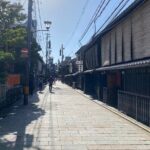
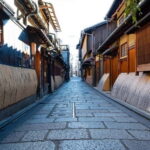
What I like about this setup is that you get a real window in Gion, not a quick walk-by. Gion’s charm comes from the traditional wooden machiya houses and the quaint street feel. With a guide, you can notice the details you might otherwise miss, like how the streets and architecture create the old-Kyoto atmosphere people travel for.
One consideration: Gion is popular. Even without getting into crowd guesses, you should expect a lively environment. The time-boxed structure is helpful here—it keeps you from burning your whole lunch break trying to find the perfect street corner.
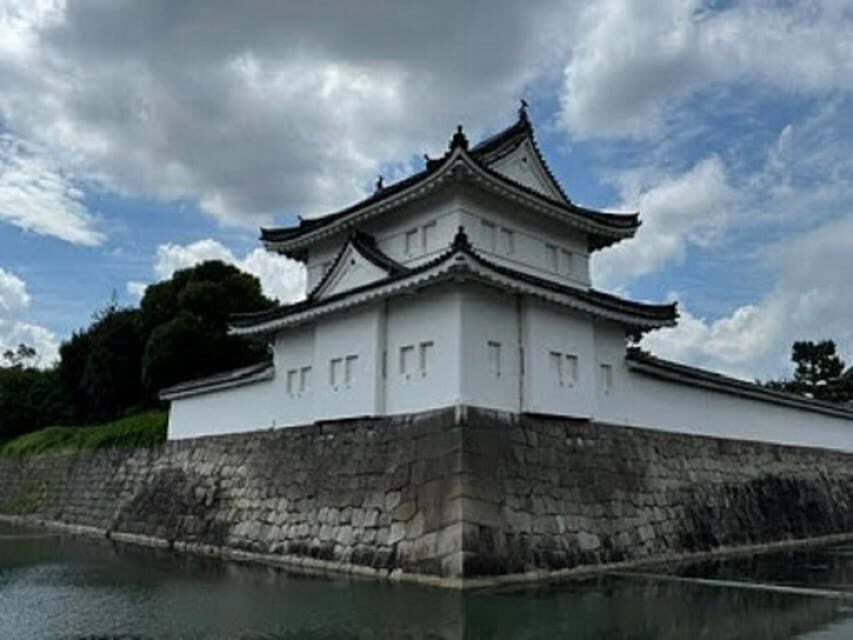
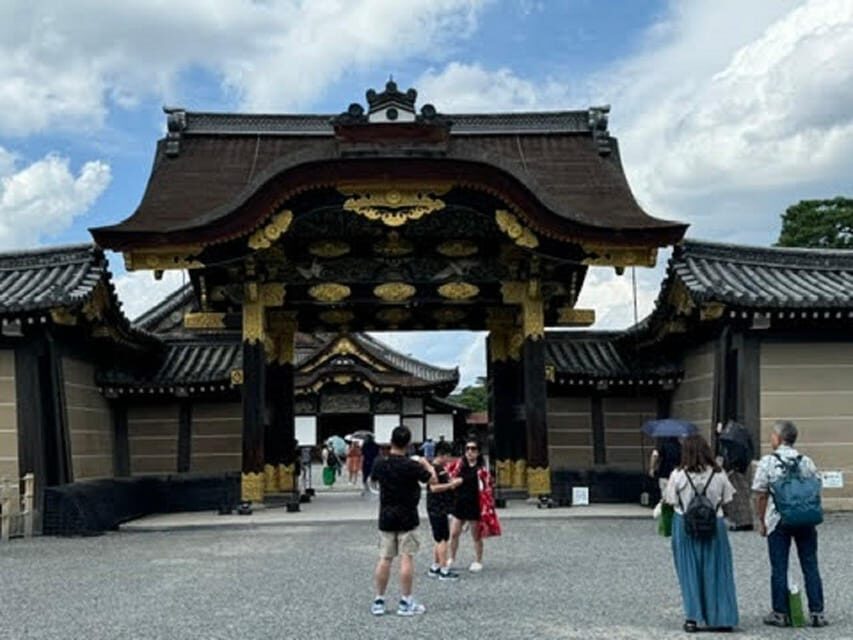
Nijo Castle: Opulent Architecture and Interiors You Can Appreciate
After Gion, you take a bus/coach ride (about 30 minutes) to Nijo Castle. You then get about 1 hour with a guided tour.
Nijo Castle is praised for its opulent architecture and beautifully preserved interiors. In a day like this, that’s a big deal. Temples can blur together if you only look at exteriors. Castles, especially ones with well-kept interiors, give you a different lens on Kyoto’s past—and a chance to slow down your eyes and focus on rooms, layout, and architectural character.
The guide helps here in a practical way: you’re shown where to look and what elements matter, instead of walking through and hoping you understand the details on your own. That’s exactly the kind of value that justifies a guided format.
The Bus Ride to Kinkaku-ji and Finishing With the Golden Pavilion
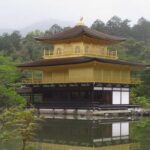
Next is another bus/coach ride (around 30 minutes) to Kinkaku-ji, the Golden Pavilion. You get about 1 hour guided here, and the tour ends at 金閣寺.
The highlights are clear: the golden temple glistens, set over a serene Japanese garden. Finishing here works because by the time you reach Kinkaku-ji, you’ve already seen the major Kyoto styles—shrine gates, a temple viewpoint stage, traditional street neighborhoods, and castle architecture. The Golden Pavilion then lands like a final visual payoff.
Also, ending at the sight itself is convenient. You don’t have to scramble to figure out your exit plan right after one of Kyoto’s most famous stops.
Price and Value: Is $131 a Smart Deal?
At $131 per person for an 8-hour day, the price feels reasonable if you treat this as a time-saver plus a “don’t-miss” pass on admissions and guidance.
What you’re paying for, factually:
- Guide fee is included
- Entry tickets are included
- Lunch is not included
That combination matters. Many self-guided Kyoto days end up costing you more than you expect once you add up ticket prices and the time tax of navigating between areas. Here, you get a structured route with guided time at each stop, and entry costs are already handled.
What’s not included (and you should budget for):
- Your lunch
- You’ll also be using train and bus/coach during the day, and the tour data only explicitly lists entry tickets and guide fees. So I’d keep a little extra for local transport needs, just to avoid surprises.
Overall, the best way to judge value is this: can you afford the time to plan and connect these sights on your own? If your days in Kyoto are limited, this tour earns its keep.
Who This Tour Fits Best (and Who Might Skip It)
This guided day fits you if:
- You’re short on time in Kyoto and want the major icons in one shot
- You like structured sightseeing with a local guide explaining what you’re seeing
- You want a manageable pace across multiple areas—without doing the logistics puzzle yourself
It may not fit you if:
- You want long, unstructured free time at one place
- You prefer to linger at viewpoints for a long while rather than moving on schedule
- You don’t like days that are packed and active (8 hours with multiple transfers is still a full day)
Final Verdict: Should You Book This Kyoto Top Sights Tour?
If you want the classic Kyoto checklist—Fushimi Inari, Kiyomizu-dera, Gion, Nijo Castle, and Kinkaku-ji—in one well-run day, this tour is a strong pick. I especially like the organization and the quality of guidance, and I’d trust a guide like Takashi to keep the day coherent while pointing out what’s worth your attention.
Book it when you want efficiency without turning Kyoto into a rushed scrapbook. Skip it if your travel style is slow and solitary, or if you’d rather spend half a day at one sight without moving.
FAQ
How long is the Kyoto Top Sights Guided Tour?
It lasts 8 hours.
Where do I meet the guide?
Meet your guide in front of the central ticket gate at JR Inari Station. The guide will be holding a yellow sign with the DeepExperience logo.
What are the main stops on the tour?
The tour includes Fushimi Inari Taisha, Kiyomizu-dera, Sannenzaka, Gion, Nijo Castle, and Kinkaku-ji, with the tour finishing at 金閣寺.
Is lunch included?
Lunch is scheduled in Gion, but the lunch cost is not included.
What’s included in the price?
The guide fee and entry tickets are included.
What languages are available for the live guide?
The live guide is available in English and Japanese.
Can I cancel for a full refund?
Yes. You can cancel up to 24 hours in advance for a full refund.
Is payment flexible?
Yes, reserve now & pay later is available, so you can book your spot and pay nothing today.
Is this tour private or small group?
Private or small groups are available.