Matcha, kimono, and a real Kyoto townhouse.
This Tondaya experience happens in a historic wooden machiya home, not a generic show room. I love the silk kimono fitting (you can choose colors and get dressed right away), and I love how the tea ceremony is set inside an old house with the feel of daily life rather than a stage. One thing to consider: this is a group experience, so on busy days you may feel a bit rushed and crowded during the tea room part.
After you’re outfitted, you’ll get time to take photos around the house, including period details and a sense of seasonal atmosphere. Then comes the tea moment: you watch a performance style ceremony and get your own turn with matcha and a sweet, with an explanation meant to help you understand what you’re seeing.
If you’re hoping for maximum quiet, perfect sightlines, and lots of back-and-forth, a private option is worth considering. If your goal is a classic Kyoto tea-and-kimono experience in a real townhouse, this is a strong pick.
In This Review
- Key things to know before you go
- Arriving at Tondaya: a Kyoto house you might miss
- Getting dressed in kimono: silk, socks, and a smooth process
- Walking a machiya: photos, Meiji-era rooms, and garden calm
- The tea ceremony: matcha, sweets, and how group timing affects your view
- House rules and comfort: socks, heat, and keeping your focus
- Price and value: what you’re really paying for
- Who should book Tondaya, and who should choose private
- How to plan your day around this Kyoto experience
- Should you book it?
- FAQ
- How long is the Tea ceremony and kimono experience?
- Where do I meet for Tondaya – Nishijin Japanese Cultural Experience Museum?
- Is this a group experience?
- What’s included in the price?
- What should I bring?
- Can I take photos during the experience?
- Is lunch included?
- FAQ
- Can I wear the kimono during the ceremony?
- Is there a private option?
- What if I can’t find the place easily?
- How does the tea tasting work?
- What if I’m worried about crowds?
- What’s the cancellation window?
Key things to know before you go
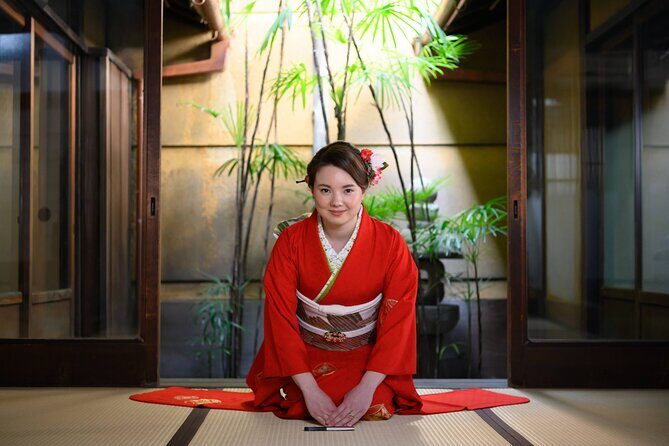
- Silk kimono fitting right on arrival: you’re dressed promptly, and the garments are reported as well made
- Historic machiya setting (Meiji-era feel): you’re touring a real old house, not a facsimile
- Photo time is built in: you can take pictures around the townhouse after getting dressed
- Tea ceremony is group-style: some sessions feel tightly paced depending on crowd levels
- Socks are required: bring your own, or plan to buy a pair on site
- Price is for the whole package: kimono + house time + ceremony, not just a quick tea tasting
Arriving at Tondaya: a Kyoto house you might miss
Your start point is Tondaya – Nishijin Japanese Cultural Experience Museum, at 697 Ishiyakushichō in Kamigyo Ward, Kyoto. The location is near public transportation, but the biggest practical issue is that you can’t treat this like a landmark with obvious signage. Multiple people noted it can be hard to find, especially if you arrive right on schedule without a plan.
Here’s how to make it easier:
- Get off at a station with extra buffer time, then use GPS and walk slowly.
- Keep your ticket details handy on your phone for the first check-in.
- If you’re traveling as a pair, agree on a meeting point inside the building before you get separated by the dressing flow.
Once you’re inside, the vibe is what you want. Instead of feeling like you’ve entered a museum gallery, you’ll feel like you’ve stepped into a townhouse. That matters. In Kyoto, the best cultural experiences don’t just teach you about tradition—they let you see the setting where tradition actually happened.
A few more Kyoto tours and experiences worth a look


Getting dressed in kimono: silk, socks, and a smooth process
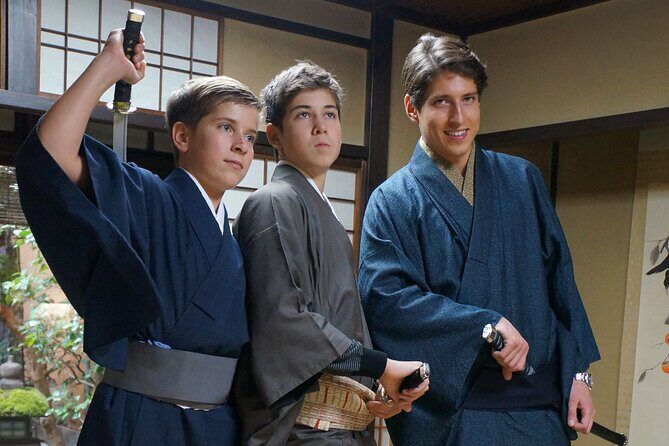
The kimono part is usually the first highlight, and for a good reason. You’re fitted with an authentic silk kimono shortly after arrival. People specifically mention that the kimono experience isn’t just throwing fabric on—it’s careful fitting by the staff, and you can choose the colors before you’re dressed.
Practical reality check: you’ll be coordinating your own body with their process. That’s why socks are mentioned. The experience asks you to bring socks to protect cultural assets. Some people also mention you can buy socks there. Plan ahead anyway, because it’s not fun to scramble when you could be enjoying the moment.
A couple more tips based on what’s typical for these setups:
- Wear clothing that’s easy to remove and put back on quickly.
- Keep small items minimal. You’ll likely want your hands free during fitting and photos.
- If you want the best pictures, think about shoes and how you’ll move between rooms. Wooden geta sandals aren’t part of what’s included, so you may be in socks indoors.
For many people, the kimono dressing isn’t only for photos. It’s the start of the experience’s rhythm. You’ll feel more present in the house because you’re physically slower and more aware. That’s a feature, not a bug.
Walking a machiya: photos, Meiji-era rooms, and garden calm
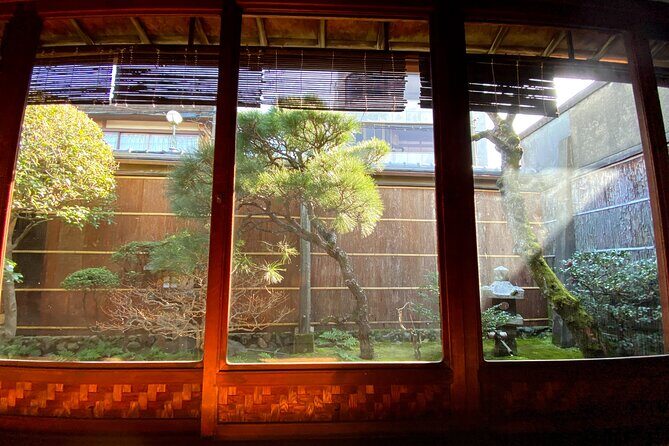
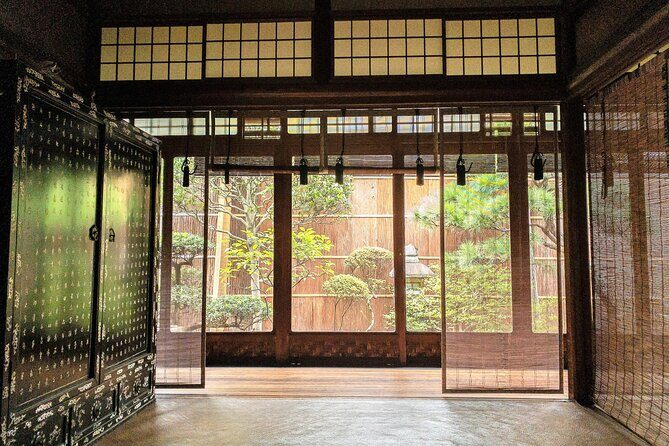
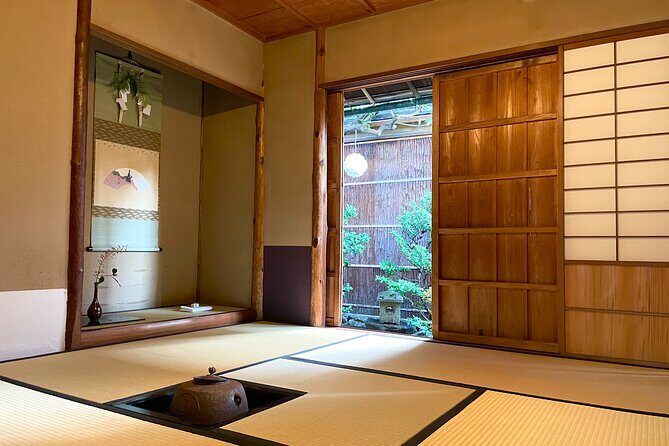
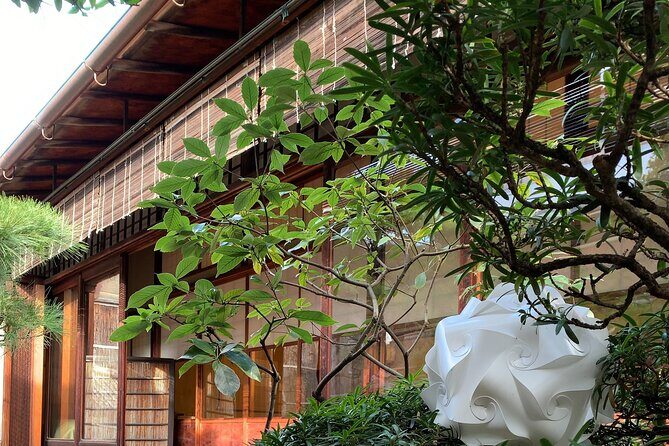
After you’re dressed, you’ll have time to take photos around the townhouse. You’ll also explore the machiya itself, described as originally built during the Meiji period. The layout and materials are the point: this isn’t an empty stage set. It’s an older wooden structure where you notice things like how spaces connect and how light moves through the rooms.
People mention gardens and a quaint, authentic feel. They also mention seasonal breezes inside. That detail sounds small, but it’s exactly the kind of thing that makes a traditional house feel real: air moving through, not lighting meant for a crowd.
What to expect from the house tour experience itself:
- You’ll move through rooms and see the kinds of furnishings and objects that help explain tea culture’s setting.
- You’ll likely get some guidance on what you’re looking at as you walk.
- You’ll also have moments where the space is calm—until you add the reality of groups.
If you’re a photographer, this is your window. The house feels better in photos than in descriptions. The texture of wood, the framing of rooms, and the traditional doors all photograph well, and you’ll get more than one angle opportunity.
The tea ceremony: matcha, sweets, and how group timing affects your view
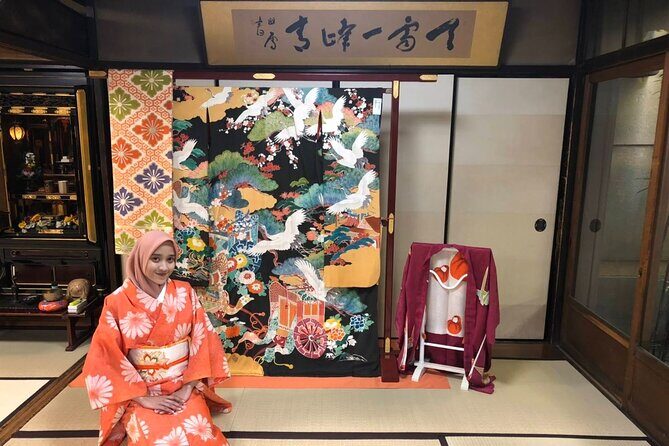
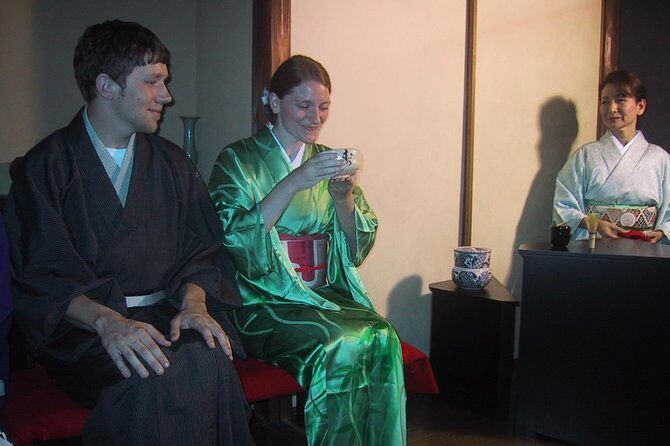
The tea ceremony itself is the centerpiece, and it’s designed to teach you the basics without making you feel like you’re getting tested. In a historic townhouse setting, you’ll watch a traditional ceremony performance, then you’ll experience it yourself—drinking matcha tea and receiving a sweet as part of the tasting.
The total experience time is about 1 hour 30 minutes maximum, and it can vary if the place is crowded. That timing matters because some people felt the ceremony portion is short. In other words: the kimono and house time can take a big share of the clock, and the tea room moment may feel fast if you’re expecting a long, slow, step-by-step lesson.
You’ll also notice that the ceremony is run in a group. The upside: you get context from the staff and the flow feels like a living routine. The downside: in busier moments, people can feel squeezed for sightlines and hearing.
A few patterns show up in the feedback:
- Some people say they could clearly see and follow along, and that the host explained each step and why it’s done.
- Others say they couldn’t see well enough or the explanation felt limited because the group was large and the room felt hot or crowded.
Here’s the best way to protect your experience:
If you want to see every motion and get more explanation, consider booking the private experience option. It’s the simplest way to control crowd noise and make the tea room feel like a tea room instead of a shared schedule.
House rules and comfort: socks, heat, and keeping your focus
This is where small logistics can make or break how much you enjoy the experience. The biggest explicitly stated rule is socks. Wear them. Bring extra if you’re prone to blisters.
Comfort matters too. Several people talked about the tea room feeling hot in packed conditions. If you’re sensitive to heat, think about dressing for it: your kimono fit will be managed for you, but your body still brings its own comfort needs. Avoid wearing anything bulky underneath that makes you sweat fast once you’re fully dressed.
Noise is another factor. Because groups move through the townhouse and sometimes share rooms at different points, you might hear other activity while you’re trying to learn. The tea ceremony is intended to be calm, but the reality of group schedules means you should adjust your expectations: this is tradition inside a public-facing experience.
The upside is that you won’t just watch passively. The ceremony is structured so you can participate, and the goal is understanding how matcha is served and how to drink it properly—enough to make the experience feel respectful, not just theatrical.
A few more Kyoto tours and experiences worth a look

Price and value: what you’re really paying for
At $178.34 per person, this is not a budget activity. It’s priced like a specialty cultural session where the cost is tied to labor and setup: kimono selection and fitting, staff time in a real historic house, and the ceremony itself.
So is it worth it? Here’s the balanced way to judge it:
- If your priority is a real machiya tea setting plus getting dressed in kimono, the value can feel fair. You’re paying for the full package, not only the tea.
- If your priority is a long, detailed lecture about every nuance, you might feel disappointed if your session runs short or you can’t hear/see well.
Also, the session length is capped at about 1.5 hours. That cap pushes the experience to be efficient. If you want extra depth, the private option is likely the better alignment with your expectations.
My practical take: treat this as a Kyoto signature experience where you’re buying the setting and the transformation. The tea tasting is a key part, but the kimono + house time is a major share of what makes people remember it.
Who should book Tondaya, and who should choose private
This is a great fit if you want:
- A classic Kyoto cultural activity with a historical townhouse setting
- A kimono experience that’s quick, structured, and focused on getting you dressed properly
- Enough guidance to understand what you’re doing during the ceremony
It may feel less ideal if you:
- Want a quiet, intimate tea ceremony where you can ask lots of questions and linger
- Are very sensitive about crowds or want unobstructed visibility the whole time
- Expect the ceremony itself to be long and deeply technical rather than short and practical
If any of those apply, picking the private experience option is the most direct fix. It’s not only about comfort. It’s about attention—so you can actually follow what’s happening in the room.
How to plan your day around this Kyoto experience
Because the session is about 1.5 hours total, pair it with flexible plans nearby. You’ll be dressing in kimono, which can slow you down. After the ceremony, you’ll return to the meeting point area, so build in time to get back to where you’re going next.
Two planning ideas that help:
- Do it earlier in your day so you’re not rushing after.
- If you’re also doing Gion or other old-town areas, schedule this on a day when you can take your time walking. Kimono days feel best when you’re not speed-walking to the next stop.
A small tip: bring patience about timing. Some people felt ceremonies started a bit late because of the flow of dressing and group movement. That’s normal for an operation based on people being fitted, guided, and moved in sequence.
Should you book it?
I’d book this if you want a Kyoto tea ceremony where you can also wear a kimono and see a genuine machiya setting. The best moments here are the kimono fitting, the historic townhouse tour, and the sense that you’re stepping into a living tradition rather than just watching from a distance.
I’d think twice or consider private if you’re expecting a long, ultra-detailed ceremony with perfect hearing and sightlines. Because it’s group-run, your comfort depends on how your session is paced and how many people are in the room.
If you match the experience to your expectations, this is a solid Kyoto cultural day—very much the kind of activity that helps the city feel real.
FAQ
How long is the Tea ceremony and kimono experience?
The experience is about 1 hour 30 minutes maximum, and the actual time may vary depending on crowd levels.
Where do I meet for Tondaya – Nishijin Japanese Cultural Experience Museum?
You meet at Tondaya – Nishijin Japanese Cultural Experience Museum, 697 Ishiyakushichō, Kamigyo Ward, Kyoto, 602-8226, Japan, and the experience ends back at the meeting point.
Is this a group experience?
Yes. It runs in a group, with a maximum of 20 travelers.
What’s included in the price?
Included are the tea ceremony experience, the kimono experience, and the entrance fee.
What should I bring?
You should bring socks. Geta (traditional wooden sandals) are not included.
Can I take photos during the experience?
Yes. You can take photos around the house, and photos are encouraged during your visit.
Is lunch included?
No. Lunch is not included.
FAQ
Can I wear the kimono during the ceremony?
Yes. You’ll be fitted with an authentic silk kimono and can wear it during the ceremony and the townhouse visit.
Is there a private option?
The experience offers a private experience option if you prefer a more private setting.
What if I can’t find the place easily?
Multiple people note signage can be limited. Use GPS and give yourself extra time to walk to the townhouse.
How does the tea tasting work?
You watch a traditional tea ceremony performance and then participate with matcha tea and a sweet as part of the experience.
What if I’m worried about crowds?
Because it’s group-run, consider booking the private option if you want better sightlines and a calmer, more personal session.
What’s the cancellation window?
Free cancellation is available up to 24 hours in advance for a full refund.