Kyoto can feel like a to-do list if you only have a few hours. This tour is built for exactly that: you get a clear plan, an early start, and guided stops at two of the city’s biggest icons without spending your morning figuring out logistics.
I especially like the small-group vibe (up to 12 people), because questions are easy and you’re not stuck waiting for a loud herd to move. I also like the taxi hops included between stops, which makes a big difference when you want to see highlights but don’t want your legs to file a complaint.
One thing to consider: this is not the cheapest way to do Kyoto on your own. If you’re comfortable DIY-ing the route and you don’t mind crowded spots later in the day, you may feel the price is only worth it because of the early timing and included transport.
In This Review
- Key takeaways before you go
- Why start Kyoto at 7:00 am?
- Taxi hops that make the route actually painless
- Fushimi Inari-taisha: torii gates and guided photo stops
- Kiyomizu-dera: sweeping views with included entry
- Wandering preserved cobblestone streets near the temple area
- What you get from a small group (and what you don’t)
- Price ($98.53): when this tour is worth it
- The guide factor: Niall’s impact on the experience
- Who should book this Kyoto highlights morning?
- Should you book this Kyoto highlights tour or DIY?
- FAQ
- What time does the tour start, and where do I meet?
- How long is the experience?
- Do I need tickets for Fushimi Inari-taisha and Kiyomizu-dera?
- Is transportation provided between stops?
- How large is the group?
- What’s the cancellation or weather policy?
Key takeaways before you go

- A 7:00 am start for calmer sights means you hit the biggest locations before the main rush.
- Taxi fares are included, even between stops, so the schedule stays smooth.
- Two major landmarks with set time blocks help you avoid guesswork.
- Fushimi Inari is free to enter, while Kiyomizu-dera entry is included.
- You finish near Sanjūsangendō, which can be handy if you’re continuing on your own.
Why start Kyoto at 7:00 am?

If Kyoto is your only big stop in Japan, you’ll feel the time pressure. Waiting until late morning often turns the city’s famous places into a slow-moving photo line. This tour tackles that by starting at 7:00 am and building in timing so you can enjoy Fushimi Inari-taisha and Kiyomizu-dera with far less crowd energy.
That early start is also when these places feel more peaceful. Kiyomizu-dera, in particular, hits differently in the morning light, when you’re not dodging as many bodies on the approaches and stairs.
You also get a bonus that people don’t always think about: a morning plan makes the rest of your day feel free. After roughly 4 hours, you’re not stuck “still trying to get to that one temple.”
A few more Kyoto tours and experiences worth a look


Taxi hops that make the route actually painless

The biggest practical win here is transportation. The tour includes taxi fares during the tour, so you’re not timing buses, hunting nearby stations, or calculating long walks between districts.
This matters because Kyoto’s highlights are famous for being spread out. Even if you like walking, you’ll still appreciate saving time and energy for the moments that are worth it: the torii gate paths at Fushimi Inari and the temple viewpoints at Kiyomizu-dera.
There’s also a quality-of-life element: taxi transfers keep the tour moving close to its schedule. And since the tour is designed to avoid bus crowds, keeping to timing is what makes that whole “early and calm” promise feel real.
Fushimi Inari-taisha: torii gates and guided photo stops

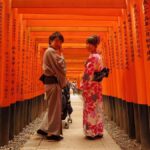
Your first stop is Fushimi Inari-taisha Shrine. The headliner is the maze of sacred torii gates. Yes, you can visit on your own—but with a guide, you spend less time wondering what you’re looking at and more time actually enjoying it.
You’ll get a guided walk through the gate paths, with time set aside for photos. The tour also includes explanation of the history behind the place, which helps you connect the iconic scenery to what’s going on there beyond the obvious “wow, torii.”
Timing tip: plan for your best photos early in the route. Even on a morning tour, the most photographed angles can still gather people as the day builds. If you care about pictures, lean into the guided photo stops and don’t overthink it.
Time in this stop: about 45 minutes, and admission is free. That’s a solid chunk for seeing the main sweep of gates without turning your morning into a full hike.
Kiyomizu-dera: sweeping views with included entry

Next up is Kiyomizu-dera Temple, Kyoto’s best-known temple for a reason. The approach and main grounds have that classic Kyoto feeling: layers of buildings, stairs, and a sense that the place was designed for dramatic viewpoints.
This stop is about 1 hour, and admission is included, which saves you from one extra ticket task mid-tour.
The highlight here is the view. On a calm early morning, the sweeping city scenery can feel almost unreal—cleaner air, fewer people crowding the angles, and more time to pause without constantly being nudged along.
What I think you’ll like most: Kiyomizu-dera is visually busy. A guide helps you focus on what matters so you don’t wander for an hour without feeling like you “saw the point.”
A realistic consideration: Kiyomizu-dera involves walking and stairs. If you want to maximize time at the viewpoint while minimizing effort, follow the group and use your breaks when the tour stops briefly to talk or regroup.
Wandering preserved cobblestone streets near the temple area

After Kiyomizu-dera, you’ll have time to wander a preserved district with cobblestoned streets, quaint shops, and old-style townhouses. This is where Kyoto stops being only temples and starts becoming daily-life Japan: small storefronts, historic-looking facades, and lots of places to browse without a strict tour script.
This part is great if you want a “Kyoto texture” moment. Temples give you the big icons, but preserved streets are what you remember when you’re back home explaining what Kyoto felt like.
How to use this time well: go slow. This isn’t a long checkpoint. It’s your chance to pick up a snack, window-shop, or just take in the street atmosphere at a reasonable pace.
A few more Kyoto tours and experiences worth a look



What you get from a small group (and what you don’t)

With a maximum of 12 travelers, the tour strikes a nice balance. It’s big enough that you don’t feel awkward, but small enough that the guide can still answer questions and keep you moving.
That access is especially important in Kyoto, where many places are famous but still easy to misread if you don’t know what you’re looking for. Having a guide can turn a photo stop into a story, and the story into a better memory.
That said, you should expect an organized pace, not a free-form wander day. You’re following a route with planned time blocks. If you like drifting with zero structure, a DIY day might feel more satisfying.
Price ($98.53): when this tour is worth it

At $98.53 per person for about 4 hours, the price is clearly not “cheap and cheerful.” The question is: where does the money go?
Here’s the value equation I see:
- Taxi fares are included, which is a major cost saver in a city where highlights aren’t always close together.
- You get guided context that helps you enjoy Fushimi Inari and Kiyomizu-dera more than a stop-and-snap visit.
- You get early timing built into the schedule, which can be the difference between a peaceful morning and a slow crush later.
If your goal is only to tick two locations off a list, you might be able to do it for less by going on your own. But you’ll still spend money on transport, and you’ll also spend mental energy planning your route and deciding timing.
Best fit: people who want highlights with less effort. People who would rather pay to reduce hassle—especially the transport hassle—tend to feel the value immediately.
The guide factor: Niall’s impact on the experience

One of the strongest positive signals from recent feedback is about the guide experience, including a mention of Niall (described as knowledgeable about Japanese culture and praised for being informative). When the guide brings energy, it’s not just facts—it’s the small cues that make you slow down at the right moments and look at the place the right way.
The flip side is also worth acknowledging: guides can vary, and if you don’t find the explanation helpful, the tour can feel like you paid for what you could have done alone. My practical advice: if you like learning while you travel, this kind of guided morning is a great format. If you prefer silent sightseeing, you may want to keep expectations aligned with a structured tour.
Who should book this Kyoto highlights morning?
This tour makes the most sense if:
- you’re short on time in Kyoto and want the big-name hits
- you prefer early mornings for a calmer experience
- you like having a plan and don’t want to do a ton of research
- you want taxi-supported movement rather than long walks between districts
- you’re okay with a fixed route and set time blocks
It’s also a good match for couples, friends, or solo travelers who want to see two major landmarks and still keep the rest of the day open.
Should you book this Kyoto highlights tour or DIY?
Book it if you want the most stress-free way to do Fushimi Inari + Kiyomizu-dera in one morning, especially if taxis and an early start matter to you. The included transport and planned timing are the reasons this can feel like money well spent, not because you’re paying for just two sightseeing stops.
Go DIY instead if:
- you’re determined to save money and you don’t mind doing the planning
- you’re fine with crowds later in the day
- you prefer flexible pacing and longer wandering at fewer places
If you’re on the fence, ask yourself one question: do you want to spend your morning “figuring it out,” or do you want to spend it actually looking at Kyoto?
FAQ
What time does the tour start, and where do I meet?
The tour starts at 7:00 am. You meet at Inari Station (Fukakusa Inarionmaecho, Fushimi Ward, Kyoto).
How long is the experience?
The tour lasts about 4 hours.
Do I need tickets for Fushimi Inari-taisha and Kiyomizu-dera?
Fushimi Inari-taisha has free admission. Kiyomizu-dera admission is included in the tour.
Is transportation provided between stops?
Yes. Taxi fares are included during the tour, including transfers between stops.
How large is the group?
This tour has a maximum of 12 travelers.
What’s the cancellation or weather policy?
You can cancel for free up to 24 hours before the experience starts for a full refund. The experience requires good weather; if it’s canceled due to poor weather, you’ll be offered a different date or a full refund.