Naked etiquette, kindly taught. This tour pairs a short, hands-on lesson on Japanese bathing etiquette with time at Funaoka Onsen, a preserved bathhouse that locals have loved for generations. I really like how they teach you the rules before you soak, so you can relax instead of guessing. I also like the historical angle at Sarasa Nishijin, a cafe renovated from a former public bathhouse. One drawback to plan around: the onsen experience involves nude bathing and gender-separated facilities, so couples may be separated.
You also get a human touch from your local guide, Atsuki, who knows the bathhouse world from the inside. The group is small (up to 5), and while Atsuki is not very strong in English, the pacing and guidance are designed to keep things clear.
What makes this tour practical is the prep. You’ll get a take-home guide for proper bathing techniques, then you’ll get to try them right away at Funaoka Onsen.
In This Review
- Key highlights at Sarasa Nishijin and Funaoka Onsen
- Kyoto’s real bathing culture starts with rules, not vibes
- Sarasa Nishijin: a cafe with bathhouse DNA
- Funaoka Onsen: etiquette materials and a soak you can actually enjoy
- What happens during your 90 minutes on the day
- Price and value: how $45.72 earns its keep
- The human side: meeting guide Atsuki and language expectations
- Health and comfort: who should skip this bath experience
- Who this tour fits best (and who might want a different plan)
- Should you book this Japanese bathing culture tour?
- FAQ
- Where is the meeting point for this tour?
- How long does the experience last?
- What do I pay for, and is admission included?
- Do I need a printed ticket?
- Is bathing mixed-gender?
- Is the guide easy to understand in English?
- What should I do if I feel unwell the day of the tour?
- Who should avoid this tour due to health conditions?
- How big is the group?
- What’s the best move after booking?
Key highlights at Sarasa Nishijin and Funaoka Onsen
- Former bathhouse cafe lesson at Sarasa Nishijin, so the culture starts before the soak
- Etiquette first, bathing second, which cuts the awkward guesswork
- Funaoka Onsen with Kyoto local history, not just generic sightseeing
- Small group of up to 5, making questions easier
- Mobile ticket for smoother check-in on the day
Kyoto’s real bathing culture starts with rules, not vibes
Kyoto has plenty of famous sights. But this experience leans into something calmer and more everyday: how Japanese public bathing works as a ritual. Think of it like a mini cultural skill you can use again later, not just a one-time photo stop.
The tour moves in two stages. First, you learn the meaning and etiquette of bathhouse bathing at a special cafe setting. Then you go to Funaoka Onsen to practice the process you just learned. The whole point is to help you feel comfortable doing things the way locals do, especially if it’s your first onsen or sento.
I like that the emphasis is on behavior and health awareness before you enter the bath. That matters because bathhouses are full of small, unspoken norms. When you know those norms ahead of time, the experience becomes relaxing instead of stressful.
Other guided tours in Kyoto
Sarasa Nishijin: a cafe with bathhouse DNA
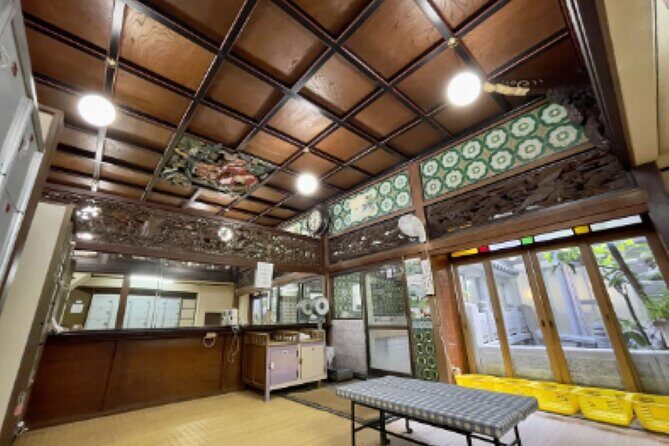
Your first stop is Sarasa Nishijin, a cafe renovated from a public bathhouse. That detail is a big part of the value. You’re not learning about bathing culture in a sterile classroom. You’re learning in a space that used to serve the same purpose: people gathering, bathing, and following shared customs.
This stage is short—about 15 minutes—and it works like a warm-up. You’ll be able to sip a drink while you get history and practical guidance about public baths in Japan. It’s a clever setup for beginners because it gives you context without overwhelming you.
I also like the idea of being there first because it helps you mentally switch modes. Instead of arriving at the onsen tense, you arrive curious and informed. And if you like details about how traditions adapt across time, you’ll probably enjoy hearing about how the building itself fits into the bigger story.
A small consideration: this first stop is time-limited. If you’re the type who wants long explanations, you might want to ask a question early and then save the rest for the onsen stage.
Funaoka Onsen: etiquette materials and a soak you can actually enjoy
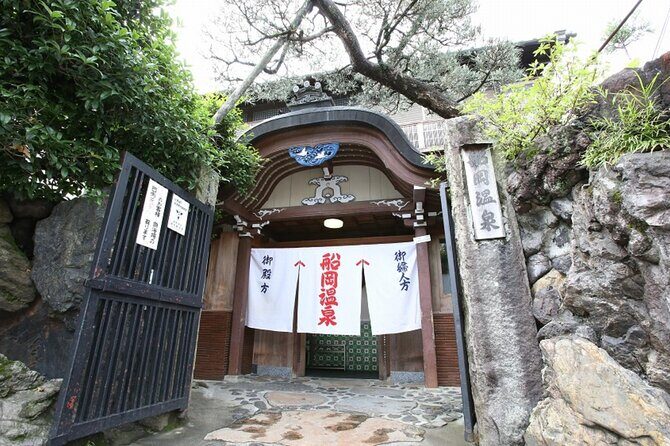
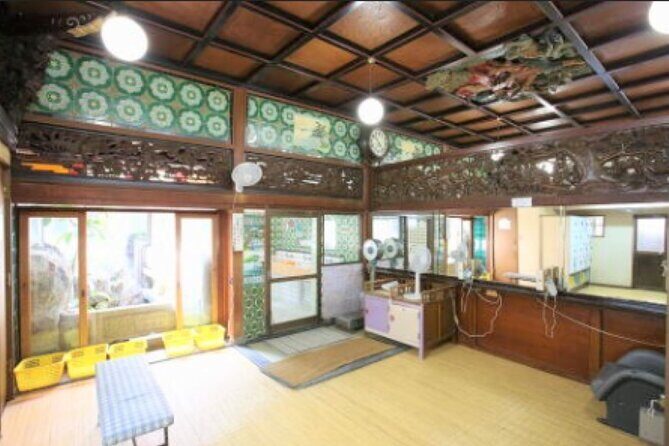
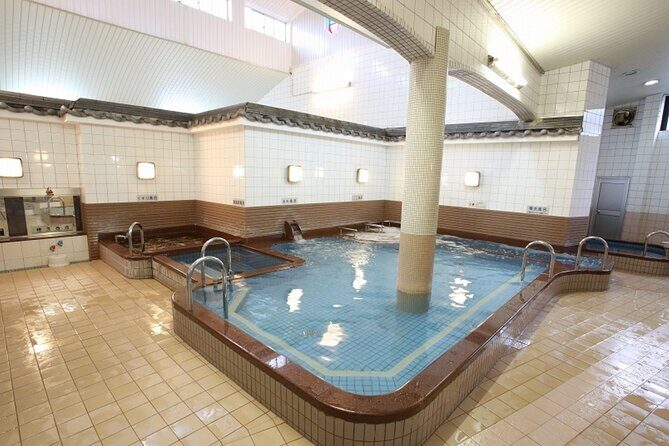
The second stop is Funaoka Onsen, the main event. It’s a beautifully preserved bathhouse and it’s known for being loved by Kyoto residents for generations. That “lived-in” feel is part of why a guided approach helps. You’re not just walking into a facility; you’re stepping into a community ritual.
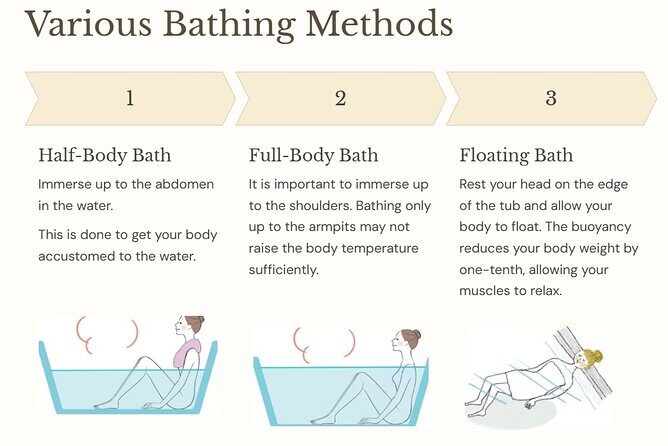
Before you enter, you’ll receive a briefing using materials that explain unique bathing methods. Then you’ll try the bathing method yourself. I like that the instruction is set up as do this, then do it. That keeps the learning from becoming theory.
Here’s what you should plan for: nude bathing and gender-separated facilities. That’s the standard for this kind of Japanese bathhouse setup, and the tour is structured accordingly. If you’re coming as a couple, you may be separated due to those gender divisions. That matters for expectations, so it’s worth noting up front rather than finding out on arrival.
Also plan on the guide being part of the experience. Atsuki is there throughout to help you get through the process smoothly. Even if your Japanese isn’t great, the combination of guidance and the structure of the steps should keep you from feeling lost.
What happens during your 90 minutes on the day
The tour clocks in at about 1 hour 30 minutes total, with admission included for both stages. Practically, it’s short enough to fit into a day of Kyoto sightseeing, but long enough that you’re not rushed through everything.
A simple way to think about your timeline:
- You start at Funaoka Onsen, then head to Sarasa Nishijin for the short cultural prep.
- You return to Funaoka Onsen for the onsen briefing and your soak.
The meeting point and the end point are the same. That makes your day easier because you don’t have to figure out a second pickup or late drop-off.
The group limit is 5 travelers, which I consider a real quality marker. In smaller groups, you get more attention when questions come up. And because bathing etiquette often involves tiny personal concerns (what to do first, how to move with towels, how to avoid awkward moments), that attention matters.
Price and value: how $45.72 earns its keep
At $45.72 per person, this isn’t the cheapest thing you can book in Kyoto. But it’s also not trying to compete with budget entry tickets.
You’re paying for three forms of value:
- Guided etiquette coaching before you enter the bath
- Access to both locations, with admission tickets included
- A take-home guide for proper bathing techniques, which you can use later
In a lot of sightseeing tours, you pay for walking and storytelling. This one leans more toward a usable skill. After this, you’ll be more confident at other onsen or sento-style bathing experiences, because the core etiquette and sequence tend to follow the same logic.
Also, the small group size helps justify the price. Five people means less crowding and more individualized guidance, even if the guide’s English isn’t perfect. In this setting, “clear demonstration and calm pacing” beats perfect vocabulary.
A few more Kyoto tours and experiences worth a look
The human side: meeting guide Atsuki and language expectations
Atsuki is your local guide. He’s independent and not an employee of Funaoka Onsen, and he knows this bathing world from the inside.
One detail you should plan around: Atsuki is a local Japanese guide and is not very good at English. That doesn’t automatically mean it will be confusing, but it does mean you should go in with the right mindset. You’re not going for fluent banter. You’re going for instruction and cultural context.
If you’re worried about language, focus on what the tour is designed to do: teach you the steps and etiquette so you don’t have to guess. With a structured lesson and in-person guidance, you can still get a lot out of the experience even if communication is simple.
Health and comfort: who should skip this bath experience
This tour is not for everyone, and the rules are straightforward. You should not participate if you have contraindications for hot spring bathing, including severe heart or lung disease, recent gastrointestinal bleeding, advanced malignant tumors, or severe anemia.
You should also skip it if you’re feeling unwell that day, have a fever, or have consumed alcohol. And if a doctor advises you not to join, you must refrain.
This isn’t scare-mongering. It’s basic safety for hot-water soaking, especially when you’re doing it in a public bathing environment where you won’t just stop and leave whenever you want without disrupting things.
If you have any medical uncertainty, it’s worth checking with your doctor before you book.
Who this tour fits best (and who might want a different plan)
This experience is a strong match if you want:
- a genuinely local cultural activity in Kyoto, not another checklist stop
- wellness that comes from understanding the ritual (not just soaking)
- a first onsen experience with training wheels
It’s also good if you’re traveling alone and want an organized way to handle etiquette. The onsen can feel intimidating if you’ve never been in one, but this tour is built to reduce that anxiety with pre-instructions.
It may be less ideal if:
- you’re uncomfortable with nude bathing
- you’re expecting mixed-gender bathing
- you’re coming as a couple and strongly prefer staying together during the bath
Should you book this Japanese bathing culture tour?
I’d book it if you’re curious about how Japanese public bathing actually works and you want a low-stress way to do it the right way. The combination of Sarasa Nishijin’s bathhouse-inspired history lesson, a clear etiquette briefing at Funaoka Onsen, and a take-home guide makes this feel like more than entertainment. It’s a practical cultural skill.
Skip it if nude, gender-separated bathing is a hard no for you, or if your health situation makes hot spring bathing unsafe. Also, go in knowing the guide’s English is limited. If you’re expecting a polished, conversation-heavy experience, you might feel underwhelmed. If you want instruction and calm guidance, you’ll likely feel supported.
FAQ
Where is the meeting point for this tour?
The tour starts at Funaoka Onsen, 82-1 Murasakino Minamifunaokachō, Kita Ward, Kyoto, 603-8225, Japan. It also ends back at the same meeting point.
How long does the experience last?
It runs for about 1 hour 30 minutes total, with roughly 15 minutes at Sarasa Nishijin and about 1 hour at Funaoka Onsen.
What do I pay for, and is admission included?
Admission tickets are included for both stops, and the total price is $45.72 per person.
Do I need a printed ticket?
No. The tour uses a mobile ticket.
Is bathing mixed-gender?
No. Nude bathing is segregated by gender at this facility, and couples may be separated.
Is the guide easy to understand in English?
The guide is a local Japanese guide and is not very good at English. The experience is still structured with instruction and guidance, but language may be basic.
What should I do if I feel unwell the day of the tour?
You should not participate if you are feeling unwell, have a fever, or have consumed alcohol.
Who should avoid this tour due to health conditions?
If you have contraindications for hot spring bathing, such as severe heart or lung diseases, recent gastrointestinal bleeding, advanced malignant tumors, or severe anemia, you must refrain from joining. If a doctor advises against participation, you also must not join.
How big is the group?
The tour has a maximum of 5 travelers.
What’s the best move after booking?
Give yourself space in your day. This is a calm ritual, not a sprint between landmarks. Wear something easy to manage before and after the soak, and go in ready to follow the instructions closely. If you do that, this tour can turn a confusing first onsen into something you’ll actually look forward to repeating.