Kyoto is easy to overplan. This private half-day route is built to keep you moving while still seeing the key sights. You get a private guide who handles navigation, and you’ll also spend real time at UNESCO Kiyomizu-dera, not just snap-and-go. I like the way the plan uses taxis plus public transit to cut down on long transfers, and I also like that the stops are spread across shrine, temple, and classic street scenes. The main consideration: it’s tight timing with no lunch stop, and you can’t adjust the order or starting point once it’s set.
The guide is the secret sauce here. Reviews highlight guides such as Yoshi, Kaori, and Mutsumi as patient, funny, and very good at explaining what you’re looking at without rushing you. You’ll still need to bring your own energy for walking through slopes and back alleys, though, since comfortable shoes are a must.
If you want a first-day-style sampler of Kyoto that feels organized (not stressful), this tour fits well. Just show up ready with yen, since admissions and most on-the-ground payments are cash-only in practice.
In This Review
- Key highlights worth your attention
- Why this Kyoto private loop works in a half day
- Price and value for a group of up to three
- The route: from Kyoto Station meeting point to Gion
- Stop 1: Fushimi Inari-taisha and its torii-gate walk
- Stop 2: Chishaku-in for a calmer garden temple stop
- Stop 3: Sanjusangendo and 1000 Kannon statues
- Stop 4: Kiyomizu-dera (UNESCO) and the balcony views
- Stop 5-6: Sannenzaka, Ninenzaka, and Yasakanoto photo stop
- Stop 7: Gion in a short, purposeful walk
- How the guide shapes your Kyoto day (Yoshi, Kaori, Mutsumi)
- What to budget for during the tour
- Timing, walking, and comfort tips that actually matter
- Weather and day-of changes
- Should you book this half-day Kyoto private tour?
- FAQ
- FAQ
- How long is the Kyoto private tour?
- What time does the tour start?
- Where do we meet the guide?
- Where does the tour end?
- Is this tour private?
- What’s the group size limit?
- What’s included in the price?
- Is lunch included?
- Are temple and transport costs included?
- Do I need Japanese yen?
- What if weather is bad?
Key highlights worth your attention

- Seven major Kyoto sights in about half a day, so you can cover more without turning it into a full project
- Taxi plus public transportation routing, which is a big deal in a spread-out city like Kyoto
- Kiyomizu-dera (UNESCO) with time for the landmark balcony and panoramic viewpoints
- Chishaku-in as a calmer garden temple stop, balancing the big crowds elsewhere
- Sanjusangendo’s 1000 Kannon statues and its standout wooden hall setting
- Ends in Gion, which makes your night plans easier in the same area
Why this Kyoto private loop works in a half day
This tour is designed for people who want Kyoto highlights without spending hours figuring out trains, buses, and walking routes. In roughly 5 hours 30 minutes, you hit shrine icons, UNESCO temple views, and classic old-street vibes, with a guide doing the hard parts like timing and transit choices.
The route also makes practical sense. Fushimi Inari is all the way in the shrine-and-steps zone, while Kiyomizu-dera and the historic lanes around Sannenzaka and Ninenzaka are closer to Gion. Mixing taxis and public transit helps you avoid wasting the best part of your day on transfer time.
Because it’s private, the experience feels more like a controlled walk with someone local pointing things out, rather than a group shuffle. You’ll also appreciate the focus on a mix of stops: a major shrine, a major temple hall, a slower garden temple, then old streets and Gion’s atmosphere.
A few more Kyoto tours and experiences worth a look


Price and value for a group of up to three

The price is $236.48 per group (up to 3), with the tour time at about 5 hours 30 minutes. That sounds like a lot until you look at what’s typically costly in Kyoto: getting between far-apart areas quickly, paying for admission across multiple temples, and paying for a guide who can keep everything on track.
Here’s what matters for value:
- The guide is included, and this tour is private, so you’re paying for a real plan rather than relying on your own navigation.
- The tour uses taxis and public transportation to save time, but those ride costs are not included in the base price.
- Temple-related admissions are not included either (you’ll budget roughly 1,500 yen per person for temple fees, based on the tour’s estimate).
If you’re traveling as a pair or small family, the per-person cost drops fast. And if you were planning to do Fushimi Inari plus Kiyomizu-dera plus Gion on your own, the time you’d lose to transfers and crowd navigation is exactly what you’re outsourcing here.
The route: from Kyoto Station meeting point to Gion

The tour starts at Kyoto Tourist Information Center Kyo-NaviJapan, located in the Kyoto Station building (2nd floor). Start time is 12:00 pm, and the tour ends around Gionmachi Minamigawa, near Gion.
This ending location is useful. After the last stop, you’re already in the Gion area, so you can keep walking, grab dinner, or head to another nearby viewpoint without backtracking.
A few logistics points that can make or break a half-day plan:
- There’s no pick-up service, so you’ll need to get yourself to the start point at Kyoto Station.
- You’ll use a mobile ticket, which is convenient and saves you from printing.
- You’ll be walking through slopes and streets, including old lanes and alley-style areas, so comfortable shoes are non-negotiable.
- The tour advises you to have Japanese yen ready, since entrance fees, cab fare, public transportation, and souvenirs may not take other currencies.
Also, plan for this to be fixed. The tour notes you can’t change the itinerary or starting point, and there’s no time to “linger” too long at any one location.
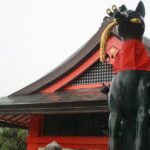
Stop 1: Fushimi Inari-taisha and its torii-gate walk

You begin at Fushimi Inari-taisha Shrine, with about 1 hour on site. Admission here is free, which is great value, and it’s also the kind of stop where a guide can help you move through the area efficiently.
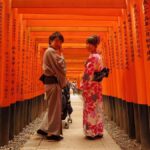
The headline is the one-thousand-plus torii gates. This shrine is famous for Inari, traditionally associated with business prosperity, so the atmosphere has that practical Kyoto charm: devout, orderly, and surprisingly busy even when you’re not trying to hunt crowds.
What I like about starting with this stop is rhythm. You’re still fresh from the meeting point, and Fushimi Inari is the most “iconic Kyoto shrine” moment of the day. With a guide, you’re not stuck guessing which paths connect smoothly or where the best viewing pockets are before you head onward.
Practical note: expect lots of stairs and paths. You’re there to walk, not to stand in one place for photos.
Stop 2: Chishaku-in for a calmer garden temple stop

Next is Chishaku-in for about 40 minutes. This is the quieter break in the schedule, and it’s described as having a beautiful Japanese garden. The admission is listed as not included, so budget accordingly.
If the day feels too big after the Fushimi Inari walking, this stop helps reset your pace. You get a more composed temple-garden feel compared to the dense shrine bustle.
This is also where you’ll benefit from having someone explain what you’re seeing. Even if you’re not a temple-architecture specialist, a local guide can help you notice small details you’d otherwise overlook, like how gardens frame views and how the grounds create breathing space.
A few more Kyoto tours and experiences worth a look



Stop 3: Sanjusangendo and 1000 Kannon statues

Sanjusangendo Temple takes about 1 hour. Admission is not included, and this stop is all about one standout visual idea: 1,000 statues of Kannon (the goddess of mercy) arranged in the hall.
The temple is also known for having a very large collection of national treasures in Japan and for its long wooden structure (the tour summary notes it as Japan’s longest wooden structure). In practical terms, that means this is less about walking around outside and more about settling into the hall space and taking in the sheer scale.
What makes this stop worth it on a first visit is contrast. After torii gates and shrine grounds, Sanjusangendo offers a different kind of awe: symmetry, repetition, and that “how is this possible” feeling when you see the number of figures in one organized setting.
Stop 4: Kiyomizu-dera (UNESCO) and the balcony views

Kiyomizu-dera is the UNESCO anchor in the itinerary. You get about 1 hour here, with admission not included.
The famous moment is the huge balcony and the chance for panoramic views of Kyoto. This is where the guide is especially useful because Kiyomizu-dera can feel like a maze of buildings, paths, and vantage points. You don’t just want to find the balcony—you want to understand why it’s built the way it is and what you’re looking at when you step into view areas.
A helpful way to think about timing: one hour is enough to see the main areas without sprinting. It’s not enough to wander forever, so be ready to decide what matters most to you: the balcony view, the surrounding temple areas, or photo time.
Stop 5-6: Sannenzaka, Ninenzaka, and Yasakanoto photo stop

After Kiyomizu-dera, you move to the old-street lanes: Sannenzaka and Ninenzaka. This is about 1 hour, and admission is free. The lanes are lined with traditional wooden buildings and are full of souvenir shops, so it’s a good time to slow down and browse.
This is also the moment to treat the streets like a living museum. You’ll be walking through the kind of lane that instantly changes how Kyoto feels compared with modern neighborhoods. Even if you don’t buy anything, it’s a great reset after the temple-heavy earlier stops.
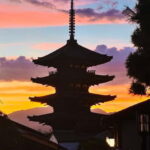
Then you get a quick landmark photo moment at Yasakanoto, the five-story pagoda. It’s about 5 minutes, and the plan notes you’re mainly viewing it from the outside. That’s plenty if your goal is a picture and a quick sense of place—but don’t expect a long dedicated pagoda visit.
Stop 7: Gion in a short, purposeful walk
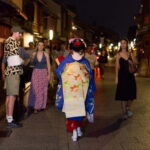
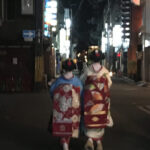
The last stop is Gion, where the tour focuses on the geisha district atmosphere, including the presence of Maiko and Geiko in the area. This segment is about 20 minutes and admission is free.
Because it’s short, your mindset should be simple: this is for atmosphere, photos, and getting oriented in Gion’s streets—not for a long dinner-night wander. Ending here makes sense because you finish where Kyoto evening plans often begin.
If you’re hoping to spot performers, keep expectations realistic. The tour data emphasizes the district vibe more than guarantees of sightings, so go for the streets and the feeling of old Kyoto in motion.
How the guide shapes your Kyoto day (Yoshi, Kaori, Mutsumi)
The best part of this tour is that the itinerary is carried by a local professional guide, and the tour’s own reviews back that up with specific guide names.
Guides such as Yoshi and Kaori are highlighted for being informative and for making the day feel comfortable and un-rushed. Mutsumi is described as humorous, quick to adapt to wishes, and strong on explaining history behind what you’re seeing.
A key practical point though: the tour also warns that it’s a short half-day plan and you can’t change the itinerary or starting point. So the “adaptation” you might experience is usually about small timing choices and how your guide responds to the interests of your specific group, not a total rewrite of the route.
In practice, this matters because Kyoto can feel overwhelming without help. When someone points out what matters in each spot, you stop treating the day like a checklist and start seeing it like a story.
What to budget for during the tour
The base price covers the guide, but it doesn’t cover all on-the-ground costs. Here’s the realistic budget list based on the tour details:
- Public transportation fee: about 150 yen per person
- Taxi fee: about 2,500 to 3,000 yen per one taxi (depends on how many taxi rides the day uses)
- Admission fees: about 1,500 yen per person for all temple admissions
- Lunch: not included, and the tour notes there’s no time to eat
The tour also strongly suggests you carry Japanese yen. It’s a simple tip, but it prevents the most annoying kind of travel stress: being ready at a ticket gate and realizing you can’t pay with your card or currency.
One smart move: eat lunch before you meet at noon. The tour explicitly says there isn’t time to eat during the route.
Timing, walking, and comfort tips that actually matter
This is a half-day tour with a lot of ground coverage, and Kyoto’s old areas come with physical reality: stairs, slopes, and narrow streets.
The tour explicitly recommends comfortable shoes, and that’s honestly the best piece of advice you can follow. If you wear shoes that squeeze or don’t grip well, the Sannenzaka/Ninenzaka lanes alone can become the reason you stop enjoying the day.
Also plan for a “one stop at a time” mentality. You won’t have long blank space between sights, so if you like browsing for souvenirs, you’ll do it during the lane time at Sannenzaka/Ninenzaka rather than at random moments.
Weather and day-of changes
The tour requires good weather. If the day gets canceled due to poor weather, you’ll be offered a different date or a full refund. That matters in Kyoto, because rain can turn slopes into a slip hazard and can reduce photo quality in outdoor areas like Fushimi Inari and the Kiyomizu-dera view spots.
Should you book this half-day Kyoto private tour?
Book it if:
- You want Fushimi Inari, Kiyomizu-dera, and Gion in one organized plan without doing the logistics yourself
- You’re traveling with one or two companions, so the per-group price makes sense
- You’d rather spend money on a guide who reduces stress than spend hours building your own itinerary
Skip it or reconsider if:
- You want a slow, flexible day with lots of extra time at one place. This tour is structured, and you can’t change the starting point or itinerary.
- Lunch timing matters a lot to you. There’s no lunch slot, and the tour encourages you to finish lunch first.
- You’re trying to keep costs minimal on top of the base price. Taxi and admission fees are additional.
If you’re doing Kyoto for the first time and want a strong “greatest hits” day with fewer headaches, this private route is a smart way to start. You’ll leave with a clear sense of where Kyoto’s major sights sit—and a grounded plan for the days after.
FAQ
FAQ
How long is the Kyoto private tour?
It’s about 5 hours 30 minutes.
What time does the tour start?
The start time is 12:00 pm.
Where do we meet the guide?
You meet at Kyoto Tourist Information Center Kyo-NaviJapan in the Kyoto Station building (2nd floor).
Where does the tour end?
The tour ends around Gionmachi Minamigawa in the Gion area (around Gion).
Is this tour private?
Yes. It’s a private tour for only your group.
What’s the group size limit?
The tour price is per group for up to 3 people.
What’s included in the price?
A selected local professional guide is included.
Is lunch included?
No. Lunch is not included, and there’s no time to eat during the tour.
Are temple and transport costs included?
Admission fees are not included (estimated about 1,500 yen per person). Public transportation is also not included (estimated 150 yen per person), and taxi fees are additional (about 2,500–3,000 yen per taxi).
Do I need Japanese yen?
Yes. The tour advises having Japanese yen ready because entrance fees, cab fare, public transportation, and souvenirs may require yen.
What if weather is bad?
The experience requires good weather. If it’s canceled due to poor weather, you’ll be offered a different date or a full refund.