Kyoto in the morning hits different. This early bird, guide-led walk strings together Gion and Higashiyama highlights in a tight 3-hour loop, with commentary that helps you read what you’re seeing instead of just taking photos. I really like the flexibility of a private option (so your group sets the pace) and the fact that professional photos are included, not just a quick snapshot on your own phone.
The main thing to weigh is that it’s a walking experience with a moderate fitness level, plus you’ll need to budget for the Kiyomizu-dera admission fee (¥500 per person) since it isn’t included.
In This Review
- Key highlights at a glance
- Why this Kyoto early bird route works (and feels calmer)
- Meet at Izumo-no-Okuni in Higashiyama Ward
- Gion and Hanamikoji: geisha district, explained in plain language
- Yasui-Konpiragu and the idea of praying for relationships
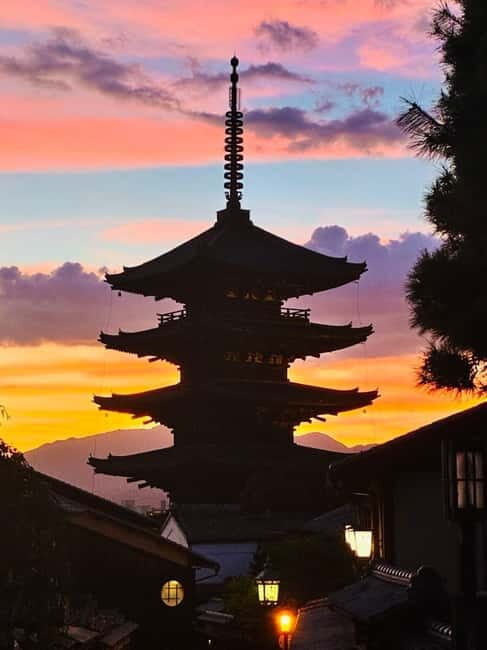
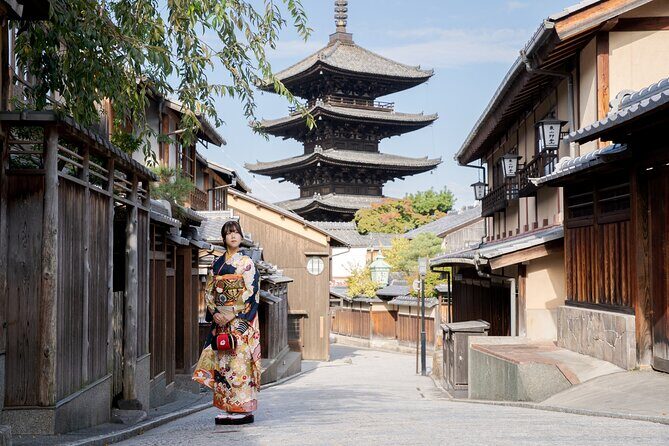
- Yasakanoto (Hokanji Temple) and that legendary nail-free pagoda story
- Sannenzaka and Ninenzaka: the old-street stroll between temples
- Kiyomizu-dera: your 1-hour UNESCO World Heritage Site moment
- Yasaka Koshin-Do: colorful temple stop that breaks the monotone
- Yasaka Shrine finale: protection, prosperity, and 30 minutes to linger
- Professional photos and an English guide who keeps the tour from feeling mechanical
- Price and value: about $64 for a guided, photo-assisted highlights loop
- Private or small-group flexibility: who this suits best
- What to know before you go (walking pace, tickets, and comfort)
- Should you book this Kyoto Early Bird Gion & Higashiyama tour?
- FAQ
- How long is the Kyoto Early Bird Gion & Higashiyama tour?
- Is this tour private?
- What language is the guide?
- What’s included in the price?
- Do I need to pay admission fees during the tour?
- Is food and drinks included?
- Where do I meet the guide?
- Is the tour easy for walking?
- What if I cancel?
Key highlights at a glance
- Early start before the crowds means you get to wander the famous lanes with less crush
- Gion + Hanamikoji focus on the geisha district details, not just the name on a map
- Shrines with clear reasons to visit (like prayers for ending bad relationships)
- Kiyomizu-dera included for an hour where you can take in big views over Kyoto
- Yasaka Shrine as the finale gives the tour a strong cultural finish
- Professional photo stops help you walk away with more than memories
Why this Kyoto early bird route works (and feels calmer)
If you’ve only visited Kyoto mid-day, you already know the big districts can get crowded fast. This tour is built for the opposite rhythm: head out early, when the streets still feel like local Kyoto and your guide can actually explain what matters without shouting.
You’re also walking through the parts of town that look like postcards, but the best value is the human scale. Instead of racing from one landmark to the next, you get short, purposeful stops—like a guided stroll with built-in context. The tour’s structure is ideal for first-timers who want the “core Kyoto” experience without the stress of mapping it all.
A few more Kyoto tours and experiences worth a look

Meet at Izumo-no-Okuni in Higashiyama Ward

Your day starts back at a very Kyoto-feeling landmark: the Statue of Izumo-no-Okuni near Kawabatacho in Higashiyama Ward. It’s a practical meeting point because it’s near public transportation, so getting there is usually straightforward.
The tour ends back at the same meeting point. That matters more than it sounds. A lot of sightseeing plans leave you stranded across town, trying to solve transit after you’re tired. Here, you return to your starting area, which keeps the day simple.
Plan on arriving on time. If you’re late, you won’t be able to join and there’s no refund. So treat meeting time like a train departure: show up a bit early and you’ll enjoy the walk rather than worry about it.
Gion and Hanamikoji: geisha district, explained in plain language
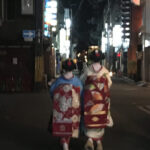
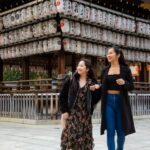
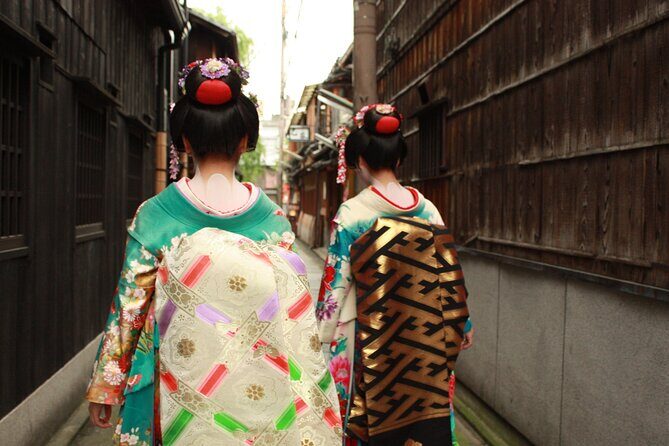
The first stretch is Gion, Kyoto’s best-known geisha district. In about 10 minutes, you get oriented to what makes Gion feel like old Kyoto—traditional wooden machiya houses, teahouses, and preserved historic street vibes.
Then you move to Hanamikoji Street for about 15 minutes. This is the lane that people come for. Your guide doesn’t hype it into a fantasy; instead, you’ll learn what you’re looking at and why it’s famous. You also may spot geisha and maiko, but it’s worth knowing the “may” part is real. The real win is learning the atmosphere and details, even if you don’t catch anyone.
What I like about this segment: it’s short enough that you don’t get bored, but guided long enough that it doesn’t feel like name-dropping. Your guide’s commentary helps you notice the differences in architecture and street layout, so you end up with photos that make sense.
Yasui-Konpiragu and the idea of praying for relationships
Next comes Yasui-Konpiragu, a shrine known for prayers tied to ending bad relationships. The tour gives you a focused stop (about 15 minutes) where you can slow down and understand the cultural logic behind the prayers.
Even if you’re not into shrine rituals, this stop is a great way to expand your Kyoto knowledge beyond “pretty buildings.” It connects the spiritual sites to everyday concerns—repairing friendships, removing negative ties, and starting fresh connections.
A practical note: shrines are peaceful but still active places. Follow your guide’s cues, move with the group, and keep things respectful. The payoff is that the whole tour feels more grounded.
Yasakanoto (Hokanji Temple) and that legendary nail-free pagoda story
Then you hit Yasakanoto, also known as the Yasaka Pagoda at Hokanji Temple, for about 15 minutes. It’s famous for its sheer scale and the story that it was built without using nails. Whether you treat that story as legend or fact, it still signals the core point: Kyoto’s temple architecture is full of claims that reflect pride in craftsmanship.
This is the kind of stop that’s quick but memorable. The exterior view gives you a sense of “Kyoto grandeur” without making the day feel like an exam.
My take: this stop breaks up the walking tempo and gives your eyes a vertical moment after the street-level charm of Gion and the lane-hopping feel of the early portion.
A few more Kyoto tours and experiences worth a look

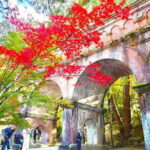
Sannenzaka and Ninenzaka: the old-street stroll between temples
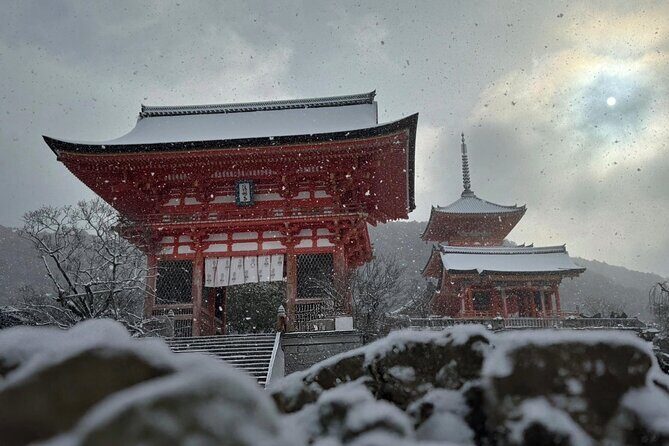
After the pagoda, the tour moves into the famous slope lanes: Sannen-zaka and Ninen-zaka (about 15 minutes). These are stone-paved, souvenir-lined streets in historic wooden buildings. They’re tourist-friendly, yes—but also a real slice of how the old town looks and feels.
This part is useful because it acts like a bridge. You’ve been in shrine territory and street-level charm, and you’re heading toward Kyoto’s biggest temple stop next. The streets give your brain time to reset before the main viewing time at Kiyomizu-dera.
Shop if you want, but don’t feel obligated. The best move is to walk slowly enough to take in the street form. Your guide’s presence here helps you filter what’s worth a look so you don’t spend all your attention buying little things you don’t need.
Kiyomizu-dera: your 1-hour UNESCO World Heritage Site moment
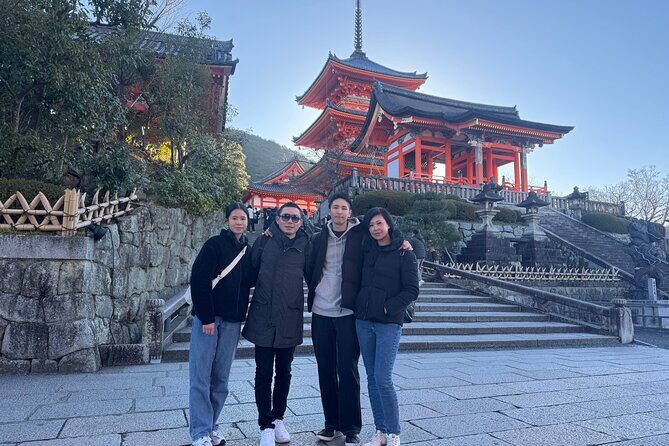
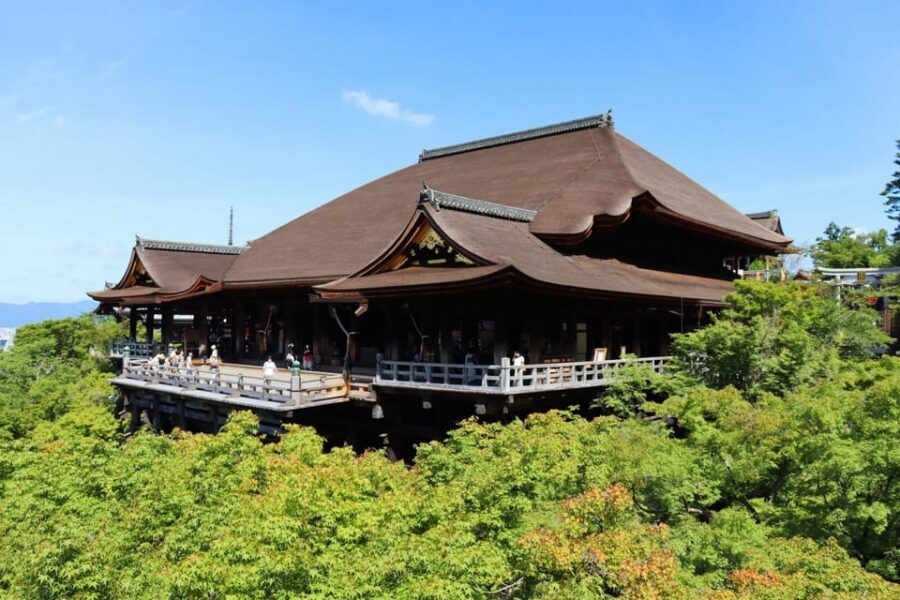
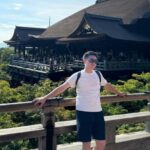
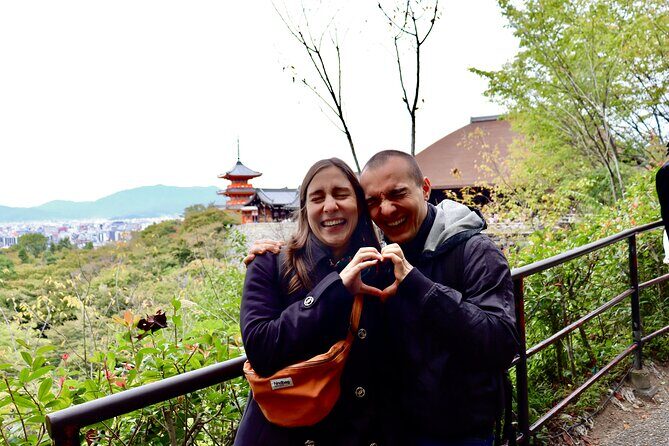
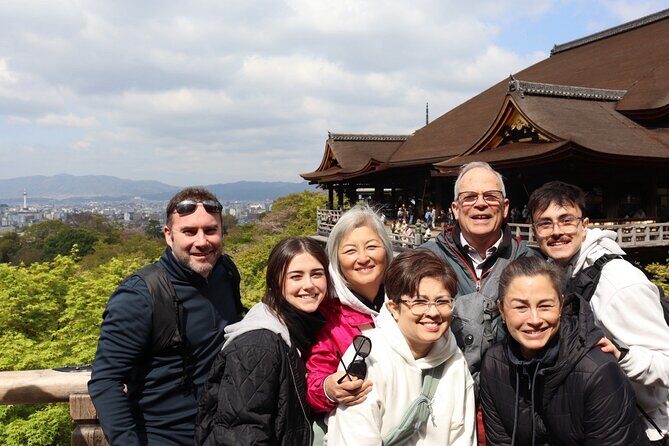
Now for the big one: Kiyomizu-dera Temple. Your stop is about 1 hour, and it’s where you’ll likely feel the scale of Kyoto’s devotion and architecture. The tour notes that Kiyomizu-dera sits on top of a mountain and offers panoramic views of Kyoto City.
This is also the stop tied to the tour’s UNESCO World Heritage context. If you want one place on this route that feels like a “major site,” this is it.
A key cost detail: Kiyomizu-dera admission is not included and runs ¥500 per person. Since everything else on the list is free, this is the one extra expense that actually changes your total. If you’re budgeting tightly, keep that in mind before you commit.
How to get value from your hour: don’t treat it like a quick photo run. Use your time for a slow look around the complex area, then save your most focused attention for the viewpoints. The views are the reward for climbing and walking through the temple grounds.
Yasaka Koshin-Do: colorful temple stop that breaks the monotone
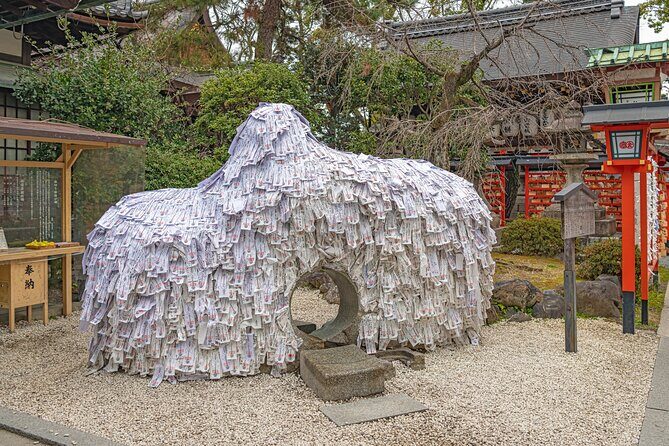
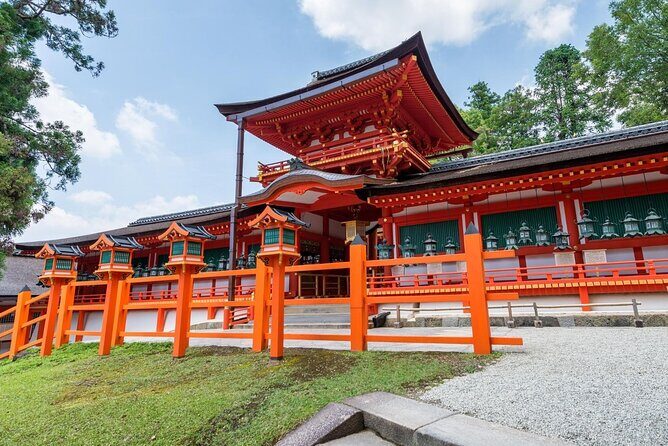
Next is Yasaka Koshin-Do, another shorter stop around 15 minutes. The standout detail here is the color. The tour description calls it a mysterious temple and points out that many temples tend to feel subdued, while this one is decorated with vivid colors.
This is a smart insertion because it adds variety. After the heavy architecture and viewpoints at Kiyomizu-dera, the bright detail gives you a different kind of visual satisfaction—almost like changing camera angles.
It’s also a good reminder that Kyoto isn’t only about famous statues and big gates. Small, vivid places count, and your guide’s stop-by-stop plan gives you time to notice them.
Yasaka Shrine finale: protection, prosperity, and 30 minutes to linger
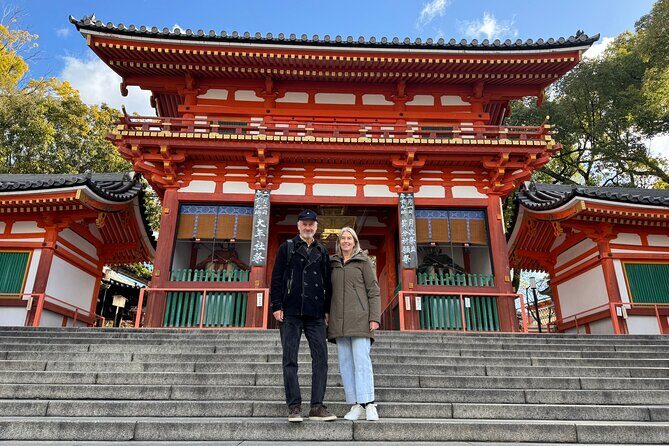
Your final destination is Yasaka Shrine, with about 30 minutes on site. The shrine is described as the headquarters of related shrines across Japan—2,300 connected shrines—and dedicated to prosperity and protection.
This is a great way to end because it feels complete. Earlier you visited specific prayer themes and architecture moments. Here, you wrap the tour with a larger institutional shrine presence—something you can feel even if you don’t read every sign.
Spend your last chunk of time absorbing the details around the shrine area. If your photos came out well (and they often do on this tour), this is where you’ll want a few that don’t look like you rushed. Your guide’s pacing helps here too.
Professional photos and an English guide who keeps the tour from feeling mechanical
Two inclusions do real work for your experience:
1) A local English-speaking guide who explains landmarks so you don’t just wander.
2) Professional photos taken during the tour.
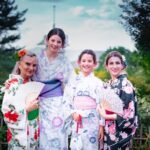
Those photos are a big value add. In Kyoto, you’re surrounded by beautiful streets, but it’s hard to frame shots when you’re walking and juggling your own phone. Having someone take care of that means you can spend more time looking and less time asking strangers to shoot your group.
The guide name Ikki Kataoka comes up in customer feedback. The notes highlight clear English, patience (including with older guests), detailed explanations, and strong results when he acts as a photographer during early morning tours. If you end up with Ikki, you’re likely to get a very smooth morning flow: walking directions, photo moments, and cultural context all working together.
Price and value: about $64 for a guided, photo-assisted highlights loop
At $64.01 per person for roughly 3 hours, the pricing makes sense when you look at what’s included and what’s not. You get:
- a local English guide
- professional photos
- multiple landmark stops, most of which list free admission
The one paid add-on you should plan for is Kiyomizu-dera (¥500). Food and drinks aren’t included, either.
So the value math is: you’re paying mainly for guided time, interpretation, and photography help. That’s a good deal if you want the experience to feel planned without feeling rigid. It’s also a smart option if you don’t want to piece together your own route and then discover you missed the one place you really needed.
If you’re traveling solo, the private option might still feel worth it for the guide access and photo help. If you’re in a group, the value can feel even better because private pacing keeps everyone from getting dragged along.
Private or small-group flexibility: who this suits best
This tour offers flexibility: you can pick a private option or a small-group tour depending on what you want from your morning. And because it’s described as a private tour/activity with only your group participating, you should expect more control than typical big-bus sightseeing.
This setup is ideal for:
- couples who want photos without constantly coordinating
- families who need slower, more patient guidance
- first-timers who want structure but not a strict script
- anyone who prefers a calmer early start over late-day crowds
It’s less ideal if you hate walking or you want a lot of free time at each site. This is built around movement and short stops, not long meandering.
What to know before you go (walking pace, tickets, and comfort)
This is a walking tour. The fitness requirement is listed as moderate, and you’ll spend plenty of time on foot. That doesn’t mean it’s a hike, but it does mean you should wear shoes that can handle continuous city walking.
Also plan for:
- Kiyomizu-dera admission fee (¥500) since it isn’t included
- no food or drinks included, so you may want to eat before you meet up or plan a meal after
- arriving on time, because late arrivals may not join and you won’t get a refund
One more practical detail: you’ll receive a mobile ticket, and the tour is near public transportation. That helps if you’re bouncing between Kyoto sights and don’t want to fuss with hardcopy tickets.
Should you book this Kyoto Early Bird Gion & Higashiyama tour?
I’d book it if you want Kyoto’s two big districts in one morning, with a guide who helps you understand what you’re seeing. The combination of early start, English commentary, and included professional photos is a strong value mix. The itinerary is tight and logical, and Kiyomizu-dera gets its due with an hour on site.
I wouldn’t book it if you’re trying to minimize walking, or if you hate paying extra once you arrive (because Kiyomizu-dera’s ¥500 fee is on you). Also, if you want a lot of sit-down time or long independent free-roam at each stop, this structure may feel a bit brisk.
If you’re flexible, early, and ready for a guided stroll, this is a solid way to do classic Kyoto without turning your day into a scavenger hunt.
FAQ
How long is the Kyoto Early Bird Gion & Higashiyama tour?
It runs for about 3 hours.
Is this tour private?
Yes. This is listed as a private tour/activity, with only your group participating.
What language is the guide?
The included guide is English-speaking.
What’s included in the price?
The tour includes a local English-speaking guide and professional photos taken during the tour.
Do I need to pay admission fees during the tour?
Yes. Kiyomizu-dera Temple admission is not included and costs ¥500 per person. Other listed stops show free admission.
Is food and drinks included?
No. Food and drinks are not included.
Where do I meet the guide?
You meet at the Statue of Izumo-no-Okuni, Kawabatacho, Higashiyama Ward, Kyoto.
Is the tour easy for walking?
It’s designed as a walking experience and calls for a moderate physical fitness level. Comfortable walking shoes help.
What if I cancel?
You can cancel for a full refund up to 24 hours in advance of the experience start time. If you cancel less than 24 hours before, the amount won’t be refunded.