Kyoto hands you a brush and a break from rushing. This Japanese calligraphy class happens in the historic Ninenzaka area, inside a 150-year-old townhouse with a calm, focused feel. You’ll learn core beginner techniques and make your own calligraphy piece, with instruction in English every day.
What I like most is the patient, step-by-step teaching. The class also pairs the art with a quick, useful history so you understand what you’re actually doing, not just how. One thing to consider: the session is only about 50 minutes, so you’ll want to concentrate and keep up, especially if you’re hoping for extra practice time.
In This Review
- Key calligraphy class takeaways (Ninenzaka, socks, small group)
- Where You’ll Go: Ninenzaka and Kangetsu Kyoto’s townhouse room
- The 50-Minute Calligraphy Lesson: what actually happens
- Concentration is part of the deal
- The 150-year-old townhouse setting: more than a pretty backdrop
- Socks, shoes, and the comfort checklist
- Small-group teaching: up to 18 people
- What you take home
- Price and value: is $43 a good deal?
- Best for: who this class fits
- Who should consider skipping it
- Timing tips in Kyoto: make it easy on yourself
- Weather note: when it might be canceled
- Should you book this Japanese calligraphy class?
- FAQ
- What is the duration of the Kyoto Japanese calligraphy class?
- How much does the calligraphy class cost?
- Is the class offered in English?
- Where do I meet for the class?
- Do I need to wear socks?
- Is there an age limit?
- How big is the class group?
- Is this experience dependent on weather?
- What is the cancellation policy?
Key calligraphy class takeaways (Ninenzaka, socks, small group)
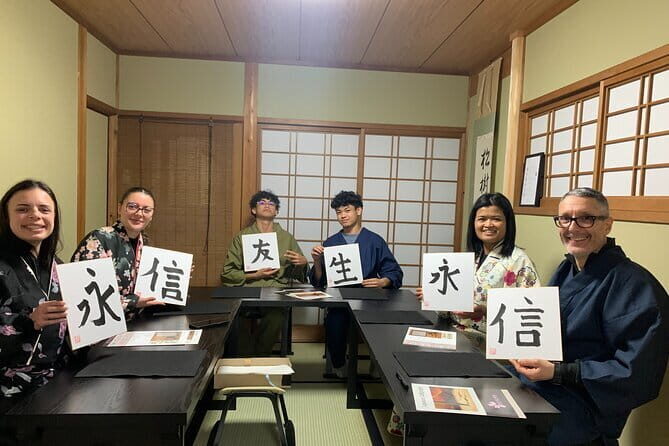
- 150-year-old townhouse setting in Kyoto’s classic Ninenzaka area
- Beginner-friendly, English instruction every day for an easy start
- Small group size (max 18), which helps you get attention
- 50-minute format that stays focused, but can feel quick
- Socks required indoors, with purchases available if you forget
- You take home your finished piece, not just notes
Where You’ll Go: Ninenzaka and Kangetsu Kyoto’s townhouse room
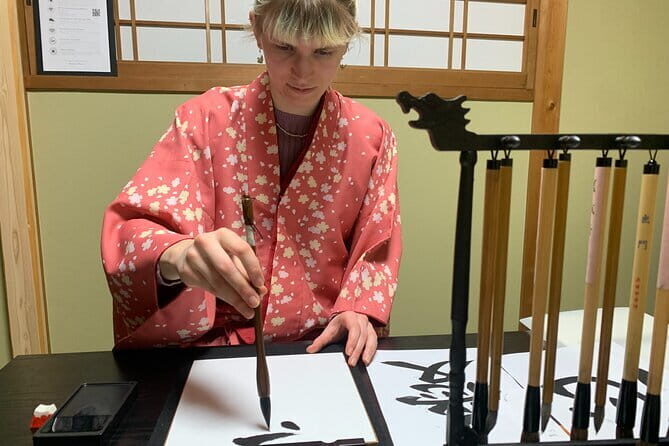
This class is built for a specific slice of Kyoto: the Ninenzaka area in Higashiyama. That matters because Ninenzaka is one of those places where the streets already feel like part of the cultural lesson. You arrive in a neighborhood that stays walkable and atmospheric, and then you step indoors to slow down.
The meeting point is Tea Ceremony & Cultural Experience Kangetsu Kyoto at 二年坂349-19 Masuyachō, Higashiyama Ward, Kyoto (日本文化体験教室 寒月 京都二年坂349-19, 605-0826). The activity ends back at the same place, so there’s no awkward “now what” at the end.
One practical plus: it’s near public transportation. Kyoto can be a bit of hop-on, hop-off walking, so being close to transit helps if you’re juggling other sights that day.
A few more Kyoto tours and experiences worth a look


The 50-Minute Calligraphy Lesson: what actually happens
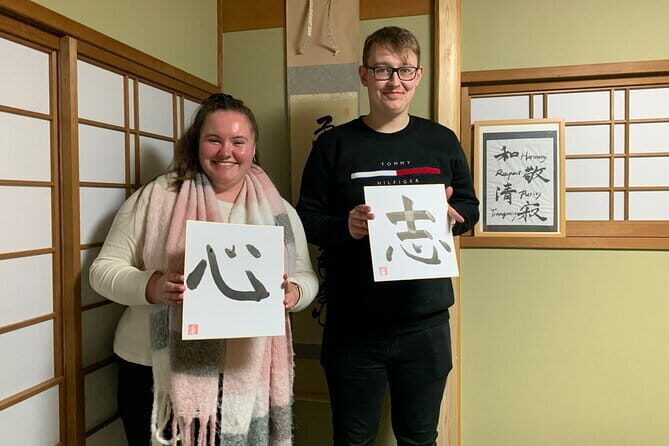
Think of this as a short, guided workout for your hand and your attention. The total time is about 50 minutes, which is plenty for learning how calligraphy works at a basic level, but not enough to become an expert. The goal is clarity: you should leave with a piece you’re proud of and a better feel for the art.
After meeting up, you’ll be taught the fundamentals of traditional Japanese calligraphy. The instruction is described as beginner-friendly, and the teaching style is patient and supportive, with time for you to try again when you miss a stroke. That’s the best way to learn brushwork: controlled guidance plus repeat attempts, not just watching from the sidelines.
You also get a brief but informative look at the history and cultural side of calligraphy. That context is more than trivia. It helps you understand why calligraphy is treated as both skill and expression in Japan, not just handwriting.
Concentration is part of the deal
Calligraphy is calming, but it’s not mindless. You’ll need to focus on your brush control and pacing. The good news is the class keeps the atmosphere peaceful, and the teaching is designed to get beginners through the steps without making it stressful.
The 150-year-old townhouse setting: more than a pretty backdrop
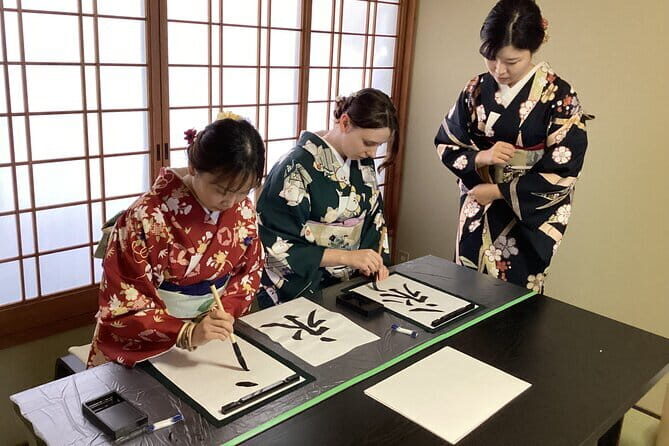
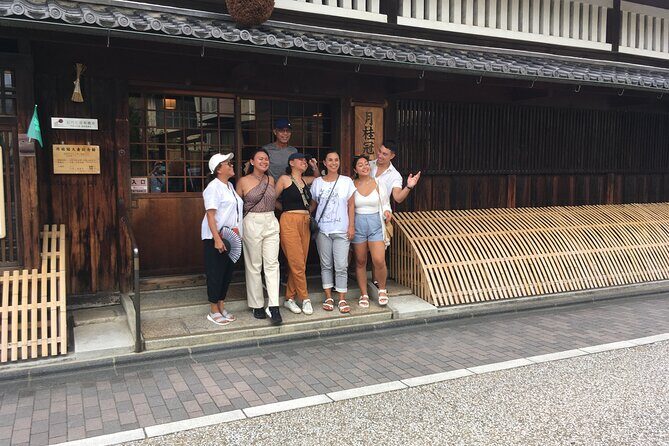
This class takes place in a 150-year-old townhouse, which changes the vibe compared with a modern studio. You’re in a traditional-style interior, and the experience feels quieter and more grounded than the usual classroom setup.
That setting also explains why you’re asked to wear socks. You’ll want socks ready because if you forget, you can purchase them on site. This small rule is a sign that the room is meant to feel respectful and tidy in a traditional way.
It’s also part of why the class feels like a cultural activity, not just a craft booth. The space supports the pace: short lesson, quiet practice, then completion.
Socks, shoes, and the comfort checklist

This is the one logistics item that can quietly ruin your day if you ignore it—so don’t.
- Wear socks for the class.
- If you forget, you can buy socks.
That’s it. No complex packing list. Still, I’d take socks seriously. Calligraphy involves careful hand movement and a stable posture, so comfortable, clean socks make it easier to stay focused.




Small-group teaching: up to 18 people
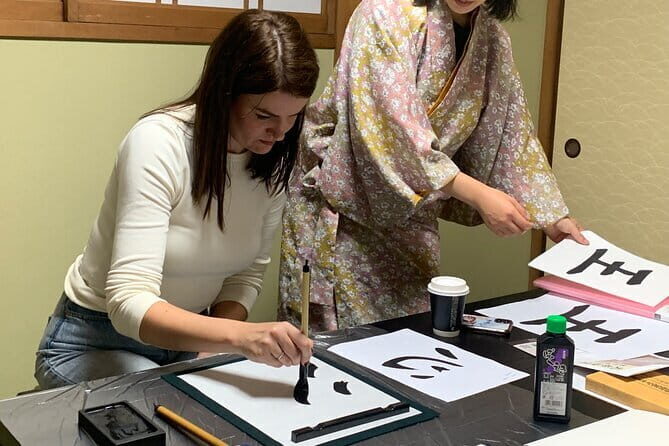
The group size is capped at 18 travelers. That keeps the experience from turning into a lecture. With a smaller group, you’re more likely to get help when something isn’t clicking—especially with beginners.
In the same spirit, the class includes an instructor team: a master teacher plus an assistant. The teaching approach is described as patient, and the assistant role is helpful for quick adjustments and support while you practice. That combination is ideal if you’re the kind of learner who needs a second try without feeling rushed.
What you take home
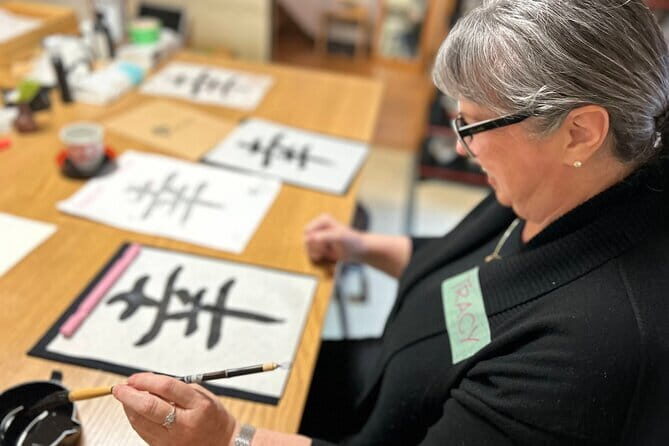
You don’t just leave with a photo. You’re making your own calligraphy piece during the lesson, and it’s a souvenir you can bring home.
That matters for value. At $43 per person, you’re paying for instruction, materials, and a guided outcome. When a class includes a take-home result, it feels more like an experience than a demo you watched for an hour.
Also, because the class is designed for beginners, the goal isn’t perfection. You should leave with a piece that reflects your effort and the technique you practiced.
Price and value: is $43 a good deal?
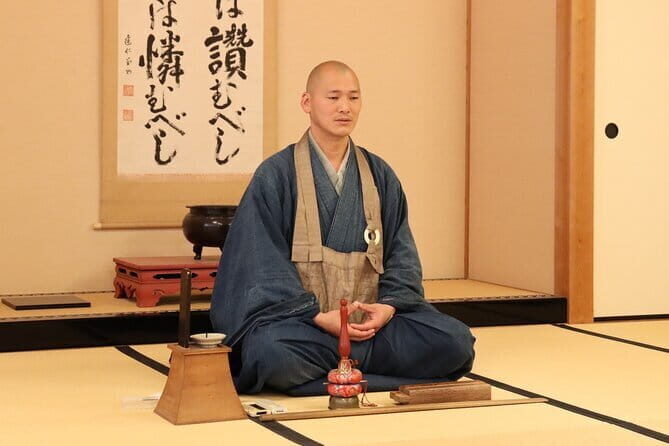
$43 for about 50 minutes in a small group inside a traditional townhouse is a fair price. Here’s why.
You’re not paying for open studio time. You’re paying for guided instruction in English, with enough support for beginners to complete a piece. The teachers also provide history context, so you get both the practical skill and the cultural meaning.
Could you spend more for a longer class? Yes. Some people may wish the session were longer than 50 minutes so there’s extra practice time. But the shorter format keeps things efficient, and it works well if you want a meaningful Kyoto cultural stop without eating your whole afternoon.
Best for: who this class fits
This is especially good if you:
- Want a beginner-friendly activity that doesn’t require prior skill
- Prefer calmer, indoors experiences in the middle of a busy Kyoto itinerary
- Like cultural context, not only hands-on crafting
- Are traveling with a teen or adult and want a shared activity with a satisfying result
Who should consider skipping it
If you need a long practice session to learn new motor skills, you may find 50 minutes feels rushed. That’s not the class being unhelpful—it’s the timebox.
Also, children under 12 years old are not allowed, so families need to plan around that.
Timing tips in Kyoto: make it easy on yourself
This class is short, so it’s perfect for balancing a day packed with temples and walking. In Kyoto, you can burn a lot of energy just getting from place to place, so a 50-minute indoor activity can reset you.
Ninenzaka is a popular area, so arriving a little early helps. Even when a class is well-organized, you’ll appreciate extra breathing room to get settled before you start practicing.
Weather note: when it might be canceled
The experience requires good weather. If it’s canceled due to poor weather, you’ll be offered a different date or a full refund. If you’re visiting in rainy season or have a tight schedule, consider booking early in the day so you have flexibility.
Should you book this Japanese calligraphy class?
Yes, if you want a structured, beginner-friendly cultural activity with a clear outcome. The combination of a traditional townhouse setting, patient teaching, and the chance to take home your finished piece makes this a strong value.
I’d pass if you specifically want lots of repeat practice, a longer session, or a lesson aimed at advanced calligraphers. For that, you’ll likely want a longer workshop format.
FAQ
What is the duration of the Kyoto Japanese calligraphy class?
The class lasts about 50 minutes.
How much does the calligraphy class cost?
It costs $43.00 per person.
Is the class offered in English?
Yes. The experience offers English every day.
Where do I meet for the class?
Meet at Tea Ceremony & Cultural Experience Kangetsu Kyoto, 日本文化体験教室 寒月 京都二年坂349-19 Masuyachō, Higashiyama Ward, Kyoto, 605-0826, Japan.
Do I need to wear socks?
Yes. You are required to wear socks. If you forget, you can purchase socks.
Is there an age limit?
Children under 12 years old are not allowed to participate.
How big is the class group?
The activity has a maximum of 18 travelers.
Is this experience dependent on weather?
Yes. It requires good weather. If canceled due to poor weather, you’ll be offered a different date or a full refund.
What is the cancellation policy?
Cancellation is free. You can cancel up to 24 hours in advance for a full refund. If you cancel less than 24 hours before the start time, the amount you paid will not be refunded.