Japanese calligraphy feels surprisingly doable.
This Kyoto Ninenzaka class turns Japanese calligraphy (shodō) into a hands-on 50-minute session right where you’ll already want to be walking: near Kiyomizu Temple and the iconic Ninenzaka lanes. I really like how beginner-friendly it is, even if you have zero art background, and how you end with your own writing to keep.
Two things I’d push hard: the patient instruction (you get lots of chances to ask questions) and the take-home souvenir payoff, since you write your own simple kanji by the end. The one possible drawback is that you’ll be sitting on the floor and handling tools, so you need socks and clothes you don’t mind getting ink on.
In This Review
- Key highlights before you go
- Kyoto’s Ninenzaka townhouse location: walking distance to the sights
- Townhouse calm: the setting that makes shodō easier
- What you actually learn: history, tools, and core shodō mechanics
- 1) Calligraphy basics and cultural context
- 2) Understanding the tools
- 3) How to hold the brush and manage pressure
- Tools and ink: why inkstone work changes your strokes
- The meditative setup: preparing paper and getting ready to write
- Core brush techniques: lines, strokes, dots, and sweeps
- Writing simple kanji: balance, placement, and a Kyoto-themed touch
- Your take-home calligraphy: the best part, and why it’s worth the money
- Practical stuff that makes or breaks the session: socks and clothing
- Price, group vibe, and time: why 50 minutes works
- Who should book this shodō class
- Should you book Kyoto Ninenzaka Japanese Calligraphy in a Townhouse?
- FAQ
- Where is the meeting point?
- How long is the Japanese calligraphy class?
- Is there a language option for the class?
- Do I need prior experience in Japanese or art?
- What should I bring with me?
- Is a kimono included?
- What’s the cancellation policy?
- Is it easy to write something with only one session?
Key highlights before you go
- Real shodō basics, step by step so you’re not just watching
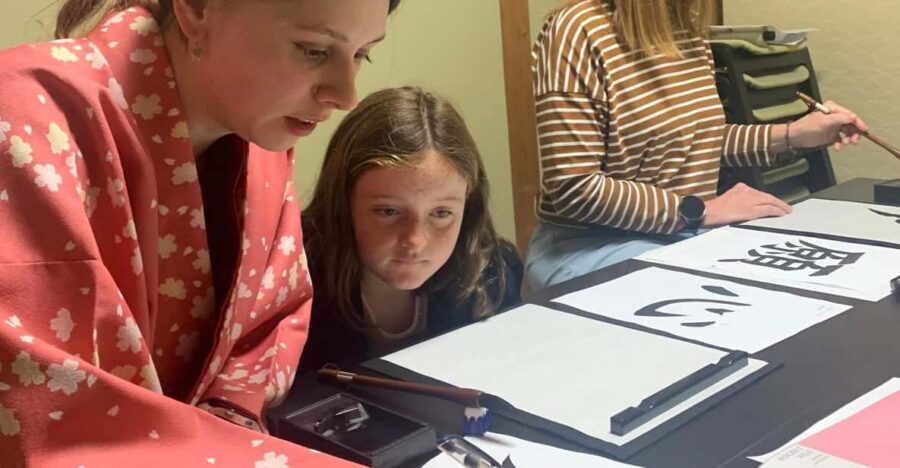
- Small, question-friendly class style with a master and assistant
- Tools + technique focus: brush pressure, stroke control, and balance
- You keep what you make as a memory of Kyoto
- English guidance with clear, practical explanations for beginners
Kyoto’s Ninenzaka townhouse location: walking distance to the sights
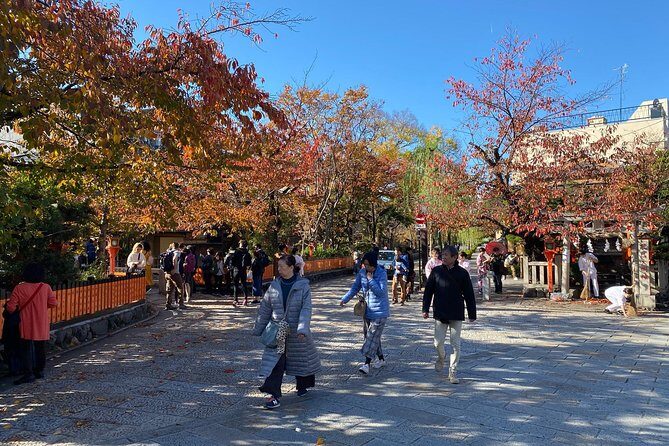
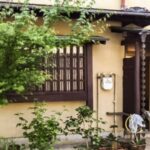
You’ll meet near Kiyomizu Temple, at the end of an alley close to the Starbucks on Ninenzaka. That’s a big deal because it means you can plan this class as part of a normal Kyoto walking loop instead of adding a full transit mission.
Ninenzaka is one of those streets where the city slows down. You’ve got old-stone lanes, quiet corners, and the feeling that you’re moving through a real neighborhood rather than a themed area. The class location benefits from that. You’re not rushing from one tourist stop to another with your hands full. You can arrive, settle in, and then focus.
Timing-wise, the class is 50 minutes, which is ideal if you’re doing Temple morning + culture afternoon. It’s long enough to learn something real, but short enough that you won’t feel like you sacrificed your whole day.
A few more Kyoto tours and experiences worth a look


Townhouse calm: the setting that makes shodō easier
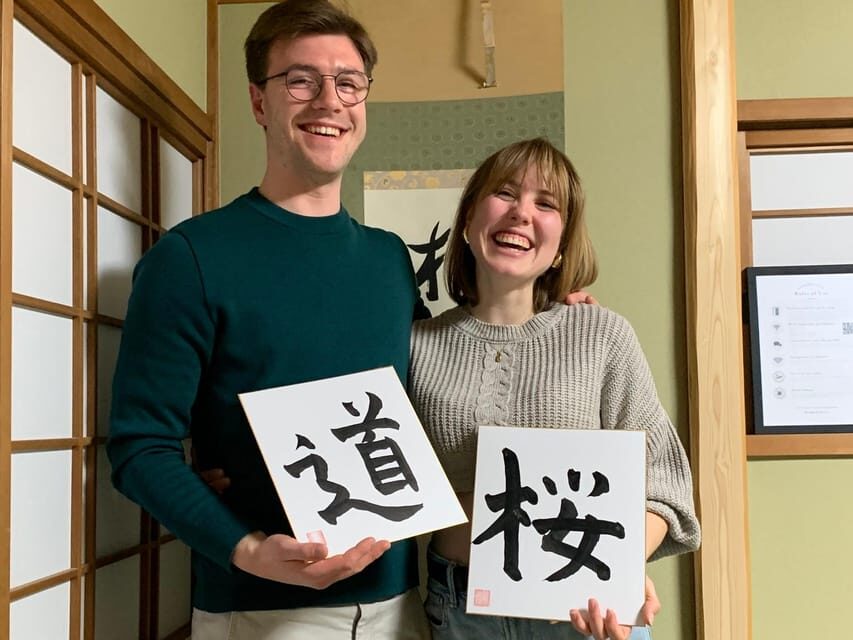
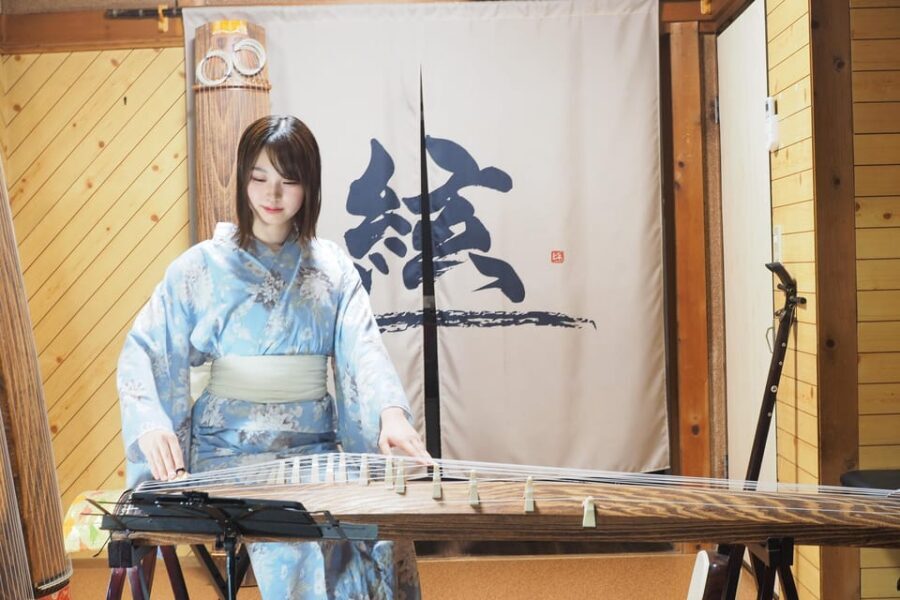
This is taught in a townhouse-style space, and that atmosphere matters more than you might think. Calligraphy isn’t just about drawing letters. It’s about control, rhythm, and getting your body and mind to cooperate with the brush.
You’ll work with an experienced instructor team, including a master instructor and an assistant, and everything runs in English. That combination helps because Japanese calligraphy can look mysterious from the outside. In the room, it becomes clear: this is technique you can learn, and the teacher breaks it down so you understand how to fix what’s not working.
If you like calm, grounded activities between bigger sightseeing moments, this class fits. It’s the kind of experience where the quiet energy of Kyoto does half the work for you.
What you actually learn: history, tools, and core shodō mechanics
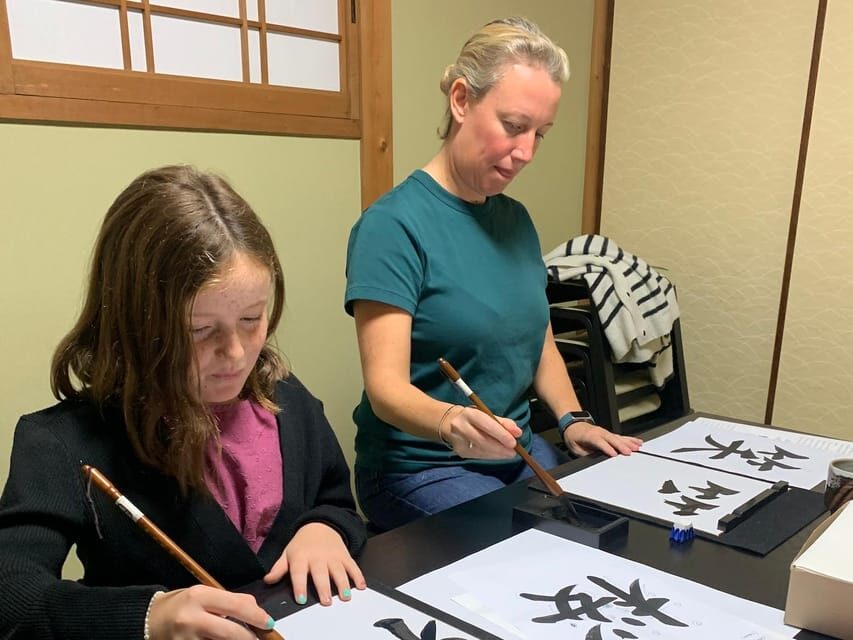
The lesson is built in layers, and that structure is what makes it beginner-friendly instead of overwhelming. You start with the “why,” then move to the “how,” then you practice until the brush feels like it belongs in your hand.
Here’s the order of learning you can expect:
1) Calligraphy basics and cultural context
You get an introduction to calligraphy and its connection to Japanese traditions. This isn’t heavy lecture. The goal is to give you a mental map so each stroke isn’t random. When you understand what the brush is supposed to do, your body follows the logic faster.
2) Understanding the tools
You’ll learn what the essential materials are and how they work together: brushes, ink sticks, an inkstone, and paper. The tool section is practical. Knowing the purpose of each item helps you avoid the common beginner mistake of treating calligraphy like “just writing with a fancy pen.”






3) How to hold the brush and manage pressure
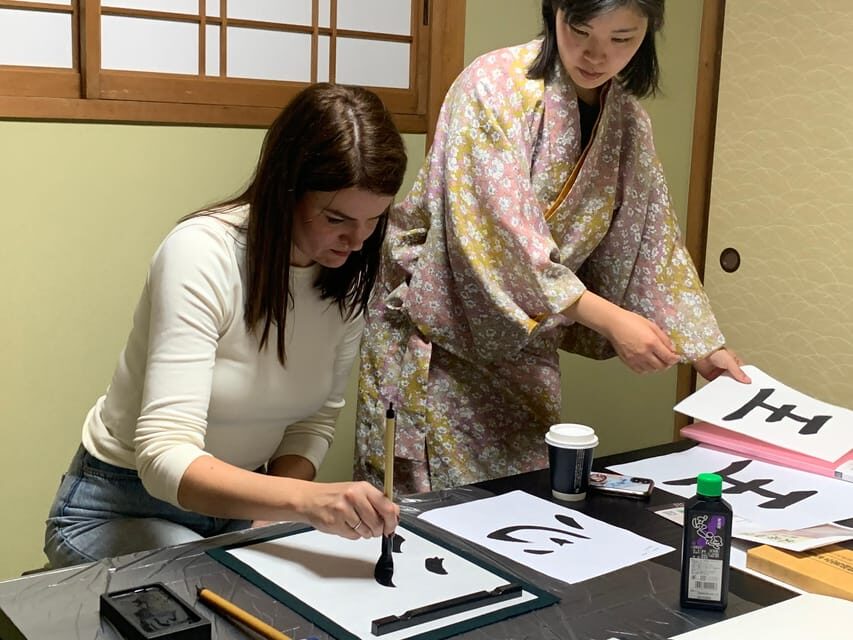
This is where most people suddenly feel, oh, that’s the trick. You’ll get guidance on proper brush handling and how to adjust brush pressure. Pressure is a big deal in shodō because it changes thickness, flow, and the feel of the stroke.
Tools and ink: why inkstone work changes your strokes
The class includes learning about ink sticks and the inkstone, and that matters for your end result. When ink is prepared correctly and you understand how brush + ink interact, your strokes come out more consistent.
In other words, your final kanji isn’t only about drawing. It’s about starting with the right ink behavior. You’ll also learn how to care for tools, which helps you use them without fighting them. That’s also why the class stays beginner-friendly: you’re guided through the process instead of being handed materials with no context.
The meditative setup: preparing paper and getting ready to write
Before you write, you’ll practice the preparation steps: how to use the writing paper and a paperweight, plus the slow, intentional part of getting set up.
This portion is short, but it changes the whole session. When your paper is positioned correctly and your materials are ready, the brushwork feels calmer. You spend less time adjusting and more time practicing the stroke.
It’s also a nice reset if you’ve been walking around Kyoto. You stop, sit, and do one focused task. That’s where the experience becomes memorable in a different way than typical sightseeing.
Core brush techniques: lines, strokes, dots, and sweeps
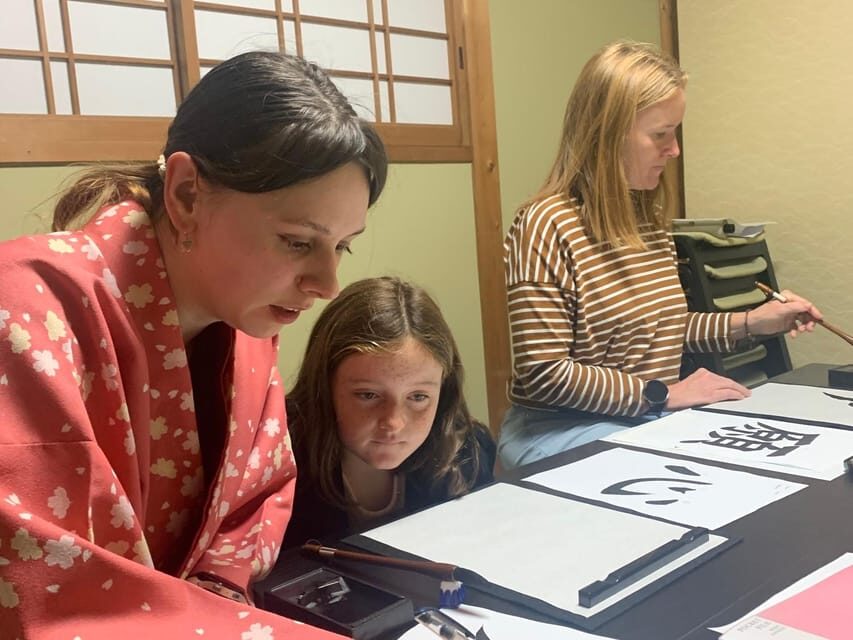
Now you get to the skills that actually show up in your kanji.
You’ll practice:
- basic lines
- strokes with control
- dots and sweeping motions
This is the part where a “short class” doesn’t mean “no practice.” Even in 50 minutes, you can feel progress because you’re building a small set of controllable moves. Each technique becomes a building block for the kanji later.
The teacher guidance matters here too. If your stroke is too shaky or too heavy, you learn what to correct through brush handling and pressure rather than just being told to try again.
Writing simple kanji: balance, placement, and a Kyoto-themed touch
The class culminates with writing basic kanji characters, with a focus on vertical and horizontal balance and letter placement. In real calligraphy, composition is everything. Even if you can draw the shape, the spacing and alignment can change the entire look.
You’ll practice the fundamentals of placement so your character doesn’t look squeezed or drifting. This kind of instruction is exactly what makes the souvenir feel like a real piece of work instead of a scribble you made by accident.
You also go a step further culturally with seasonal themes and expressions in your calligraphy. That’s the Kyoto touch: your writing isn’t just a generic exercise. It’s tied to how Japanese seasonal language shows up in everyday art.
Your take-home calligraphy: the best part, and why it’s worth the money
The class includes a take-home piece, so you don’t leave with only photos. You keep your calligraphy as a memory of Kyoto, which is rare for short activities.
For $49 per person, the value comes from three things that align well:
- hands-on practice with experienced guidance
- the take-home souvenir (your own written kanji)
- an original booklet about calligraphy that helps you remember what you were taught
In plain terms: you’re paying for instruction time plus a finished product you can keep. That combination is often more satisfying than paying for an experience where you mainly watch.
One more small value note: because it’s beginner-friendly, you don’t need to “know the basics” to benefit. You start from zero and still end with something you can be proud of.
Practical stuff that makes or breaks the session: socks and clothing
This one is strict in the way that helps everyone have a smooth experience.
You should bring:
- socks
- clothes that can get dirty
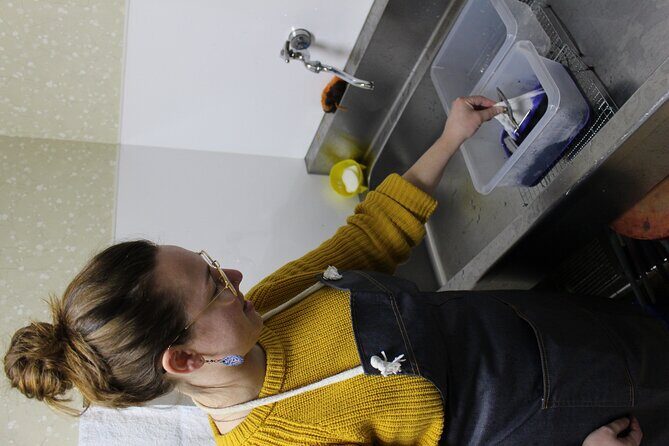
And yes, this is because you’ll be handling tools and preparing to write. Ink and brush work are messy by nature, so dress like you’re doing a hands-on craft, not like you’re attending a museum talk.
If you arrive without socks, you can be provided socks for a fee. That’s worth keeping in mind if you’re packing light.
You’ll also want to plan around the behavior rules. No smoking indoors, no loud noise, and no selfie sticks. Leave pets, baby strollers, and large luggage out of the equation too. The goal is a quiet room where everyone can focus.
Price, group vibe, and time: why 50 minutes works
A 50-minute class can sound short, but it’s enough time to teach and practice core moves—especially when the class is small and you can ask questions.
One theme that comes through clearly is how patient the instructors are. When teachers are kind but also excellent at explaining technique, you waste less time stuck on the same problem.
The group size and question opportunities help you troubleshoot your strokes quickly. That’s the difference between a class where you make something and a class where you learn how to make it again later.
If you’re trying to squeeze Kyoto into a tight schedule, this time length is a feature. You can keep exploring after, with your hands and mind satisfied by doing something cultural and physical.
Who should book this shodō class
This is a strong fit if:
- you’re a beginner and want real instruction, not a “look but don’t touch” demo
- you want a Kyoto activity that’s calm and focused instead of crowded
- you care about taking home an actual handmade souvenir
- you like culture that shows up in everyday life, not just in big monuments
It may not be the right fit if:
- you’re hoping for an activity with no hands-on work
- you need to bring items like strollers or big bags (those aren’t allowed)
- you’re traveling with young kids—this class isn’t suitable for children under 10
Should you book Kyoto Ninenzaka Japanese Calligraphy in a Townhouse?
Yes, if you want a short, meaningful Kyoto experience with a clear payoff. The combination of English instruction, hands-on shodō fundamentals, and a take-home piece makes it one of those activities that feels worth the time even when your schedule is packed.
Book it especially if you like learning by doing and you want a souvenir that isn’t mass-produced. If you’re sensitive to mess, remember: bring socks and clothes that can get dirty, and you’ll be fine.
FAQ
Where is the meeting point?
You’ll meet near Kiyomizu Temple, at the end of an alley next to the Starbucks on Ninenzaka.
How long is the Japanese calligraphy class?
The class lasts 50 minutes.
Is there a language option for the class?
The class is taught in English, with an English-speaking host or greeter.
Do I need prior experience in Japanese or art?
No. It’s beginner-friendly, and you don’t need Japanese or art experience.
What should I bring with me?
Bring socks and clothes that you don’t mind getting dirty.
Is a kimono included?
Kimono is not included. A 2-piece kimono is available to pay for separately.
What’s the cancellation policy?
You can cancel up to 24 hours in advance for a full refund.
Is it easy to write something with only one session?
Yes. The class covers brush handling and basic techniques, then moves to writing simple kanji characters with guidance, so you leave with your own calligraphy piece.