Kyoto ramen gets real when you make it. This class is interesting because you’ll learn noodle-making from scratch using a professional ramen noodle machine, guided in English. I especially like that you get hands-on instruction from staff such as Kaz, and that the finished reward is a bowl of ramen made by the chef right after your noodles are ready. One possible drawback: this is a noodle workshop, not a full ramen-cooking class where you’d make the broth too.
Set in Musoshin’s Gion location, it’s easy to connect this to Kyoto sightseeing without eating up your whole day. You’ll also get a rental apron and a bandana souvenir, which is a small thing but feels like proper “you were there” value. If you’re sensitive to gluten, note that the noodles are made with wheat flour.
For the money, you’re paying for more than ramen. At $48.27 per person, you’re buying time with an English-speaking instructor, the tools and ingredients for the noodles, plus your meal (and one soft drink) in a central Kyoto neighborhood.
In This Review
- Key highlights you’ll care about
- Musoshin Gion and your starting point in Kyoto
- The 1-hour ramen noodle workshop: what you actually do
- Chef’s broth and the bowl you eat at the end
- Noodle quality, texture, and why this method matters
- Vegetarian, vegan, and pescetarian options you can plan around
- Price and value: is $48.27 worth it?
- How to get the most out of this class
- Who should book this Kyoto ramen noodle making class
- Should you book it?
- FAQ
- How long is the Kyoto ramen noodle making class?
- Where is the class meeting point?
- Is the instructor English-speaking?
- What’s included in the price?
- Are vegetarian or vegan options available?
- How many people are in each class?
- Can I cancel for a refund?
Key highlights you’ll care about
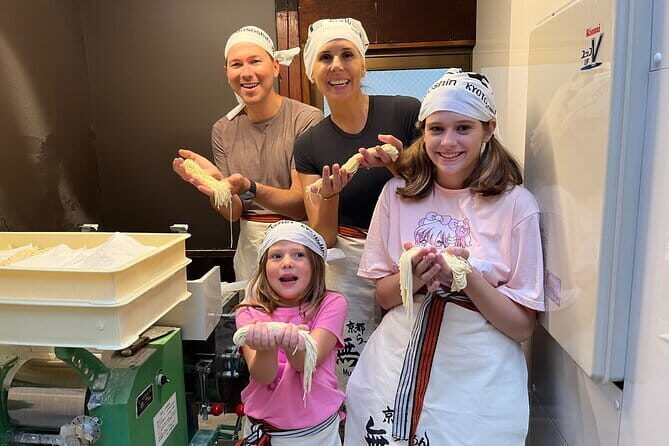
- Hands-on noodle making with dough made from two types of flour
- Professional ramen noodle machine used during the workshop
- English-speaking instructor (with instructors like Kaz, Azu, and Amiru)
- Chef-prepared ramen served at the end of the class
- Vegetarian, vegan, and pescetarian options available for the tasting session
- Small group size: up to 6 travelers
Musoshin Gion and your starting point in Kyoto
This experience happens in central Kyoto’s Gion area at Musoshin Gion (not Musoshin Ramen Academy). That matters because Gion is where you can make this fit neatly with a walk in the neighborhood before or after—without needing extra time to travel across town.
Your meeting point is 558-2 Komatsuchō, Higashiyama Ward, Kyoto, 605-0811, Japan. It’s also listed as near public transportation, so you should be able to reach it without wrestling with long transfers. You’ll use a mobile ticket, and you’ll receive confirmation within 48 hours of booking, as long as there’s availability.
In terms of group feel, the class caps at 6 travelers. That’s the sweet spot for hands-on work: you get coaching without it turning into a big show where you’re just watching from the sidelines.
A few more Kyoto tours and experiences worth a look


The 1-hour ramen noodle workshop: what you actually do
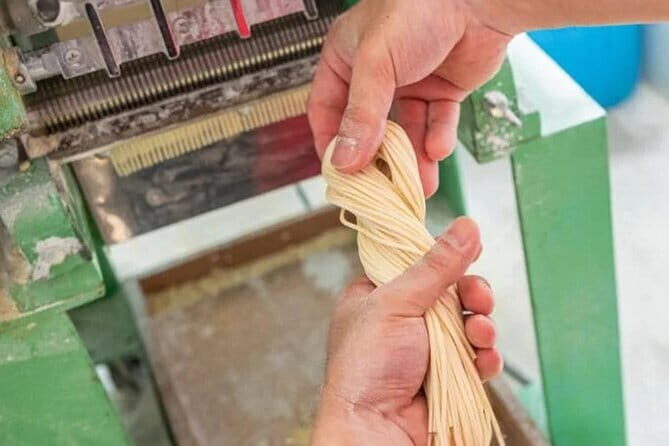
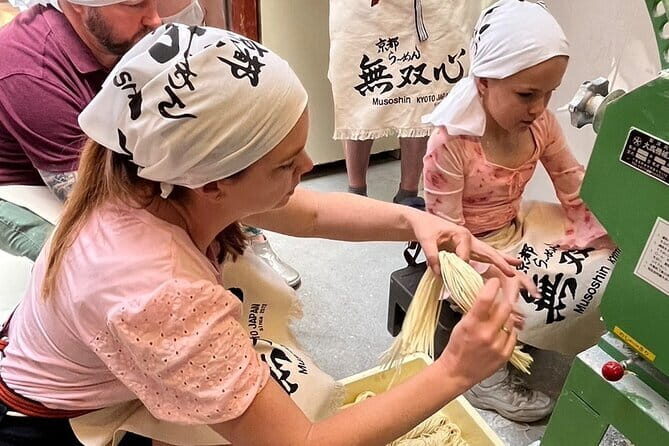
The heart of this class is making ramen noodles yourself. Over about 1 hour, you’ll follow the process step by step with an instructor in English, and you’ll do the core physical work—so you leave with more than memories. You leave with muscle memory.
Here’s the flow as it’s designed:
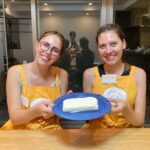
First, you’ll get set up for noodle making. You’ll be given a rental apron and you’ll take part in the workshop using the provided tools and ingredients. The class is structured around guided participation: you’ll pour water, knead the dough, and then move into rolling and cutting.
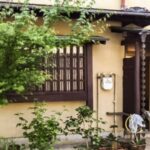
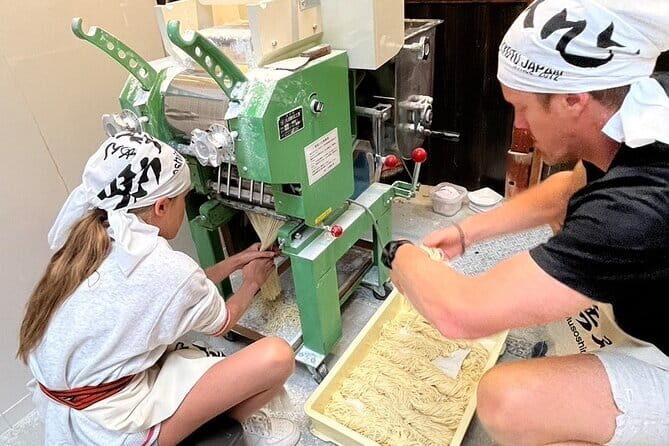
Next comes the noodles themselves. The dough is made using two types of flour, and you’ll learn how to handle it before the machine gets involved. The workshop uses a professional noodle-making machine, so you’re not stuck doing everything by hand. That keeps the process realistic for a one-hour session, while still letting you learn how the dough should feel at each stage.
Then you’ll roll and cut the noodles into shape. This is where the class becomes genuinely fun. You’ll see how ramen noodles get their texture through preparation and thickness, and you’ll understand why people get picky about consistency.
One practical note: this workshop is focused on noodles. The class experience doesn’t position you as the person who cooks the broth. Instead, the chef handles the broth, and you focus on producing the noodles and learning the method.
Chef’s broth and the bowl you eat at the end
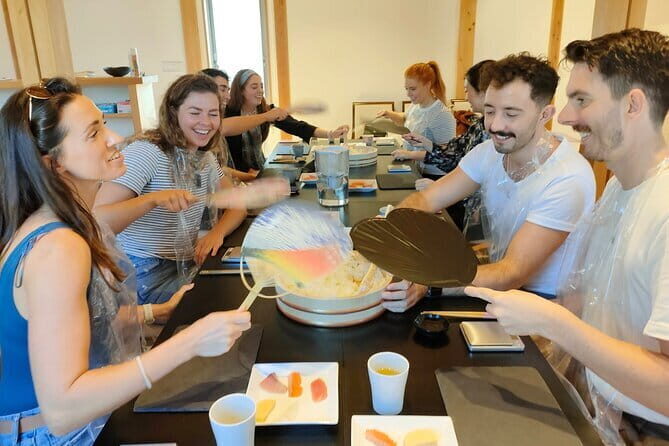
After your noodle making, the payoff is eating what you helped create. You’ll enjoy a bowl of ramen made by the chef, plus one soft drink.
The broth is described as a blend of vegetables, prepared by Musoshin’s ramen chef. That’s useful context if you’re expecting something like a meat-based tonkotsu experience. Here, you should expect savory depth built from vegetable components, not just a single flavor punch.
There’s also a note that the experience is supported with high-quality Kyotamba rice and condiments from local makers. Even if your main focus is the ramen bowl, this kind of ingredient sourcing is exactly what makes a workshop feel more “local” than a generic cooking demo.
What I like about the way this is set up: you learn the noodle process, then you immediately eat the result while it’s fresh and properly served. That timing helps the technique make sense. You don’t have to wait days to wonder what you did differently.
Noodle quality, texture, and why this method matters
Ramen noodles aren’t just noodles. Texture is the whole point—how they chew, how they hold onto broth, and how they behave in the bowl.
This class helps you understand that because you’re making noodles with real ingredients and a real machine, not just assembling a pre-made kit. Since the dough uses wheat flour, you’ll also learn how wheat dough responds to mixing, kneading, and rolling. Even if you’re not trying to recreate this at home immediately, you’ll leave with a better sense of what “good ramen noodles” means.
And because you’re working with an instructor in English, you’re not guessing. You can ask questions about what you’re doing and why. From the teaching style feedback, instructors such as Kaz and Azu/Amiru are described as friendly and effective at explaining the process in detail, which is exactly what you want in a hands-on food class.
Vegetarian, vegan, and pescetarian options you can plan around
If you follow a vegetarian or vegan diet, this is a big deal. The class states that vegetarian, vegan, and no meat or fish options are available for the tasting session, and it can accommodate vegetarian, vegan, and pescetarian diets if you tell them in advance.
That means you can focus on the noodle-making experience without worrying that the meal will be meat-heavy. You’ll still get the workshop’s main outcome: the ramen you eat at the end, aligned with your dietary needs.
Just make sure you inform the provider of your dietary restrictions when you book, so they can prepare accordingly.




Price and value: is $48.27 worth it?
Let’s talk value in plain terms. At $48.27 per person, you’re not paying for a bowl of ramen alone. You’re paying for:
- An English-speaking noodle-making instructor
- Ingredients and tools for noodle making
- A rental apron
- Your ramen bowl plus one soft drink
- A bandana souvenir used during the workshop
Also, you’re paying for time in a central Kyoto location (Gion) and a small group cap of 6 travelers, which usually means more direct attention than a larger class.
Could this cost feel high if you mainly want to eat? Sure. If your goal is just ramen, you can find cheaper options. But if your goal is to understand ramen at the noodle level—how the dough becomes the noodles you taste—this is the kind of experience where the price starts to feel fair. You get both the lesson and the meal, and they connect.
How to get the most out of this class
You’ll enjoy this more if you go in with the right expectations. Treat it like a guided food craft, not a casual dinner event.
Here are a few smart ways to get more value from your hour:
- Watch the instructor first, then copy. The process is step-by-step, and noodle dough rewards small corrections.
- Pay attention to the dough feel. Even without being a chef, you’ll start recognizing when the dough is behaving right.
- Think about texture while you eat. When you get the bowl, notice how your noodles handle the broth.
- Ask about the method. If something feels confusing, this format is built for questions.
One thing to consider if you’re traveling with family: it can be a fun, interactive activity, but it’s still a hands-on workshop with food preparation tasks. If your kids are comfortable getting involved, it can be a great use of time in Kyoto.
Who should book this Kyoto ramen noodle making class
This class is a strong fit if you:
- Want a hands-on Kyoto food experience beyond just eating out
- Like learning processes you can actually recognize later when you order ramen
- Appreciate small groups and direct instruction
- Need vegetarian, vegan, or pescetarian meal options
You might skip it if:
- You want a broth-focused cooking class where you make the soup from scratch
- You’re only chasing the cheapest meal in Gion
- You need gluten-free options (the noodles are made from wheat flour)
Should you book it?
If you’re in Kyoto and you love ramen—or you want to love it more—this workshop is a practical, fun way to connect taste to technique. The standout value is the combination: you make the noodles and then you eat the results in the same session, with chef-prepared broth afterward. Add the English instruction and the small group size, and it becomes a well-priced experience rather than a pricey gimmick.
If that sounds like your kind of Kyoto day, book it.
FAQ
How long is the Kyoto ramen noodle making class?
It lasts about 1 hour.
Where is the class meeting point?
The meeting point is 558-2 Komatsuchō, Higashiyama Ward, Kyoto, 605-0811, Japan.
Is the instructor English-speaking?
Yes. The class includes an English-speaking noodle making instructor.
What’s included in the price?
You get noodle-making ingredients and tools, a bowl of ramen with one soft drink, a rental apron, and you’ll receive the bandana used during the workshop as a souvenir.
Are vegetarian or vegan options available?
Yes. Vegetarian, vegan, and no meat or fish options are available for the tasting session. You should inform them in advance of your dietary restrictions.
How many people are in each class?
The experience has a maximum group size of 6 travelers.
Can I cancel for a refund?
Yes. You can cancel for free, as long as you cancel at least 24 hours before the start time for a full refund.
If you want, tell me your travel dates and dietary needs, and I’ll help you time this with a realistic Gion walking plan so it fits cleanly into your day.