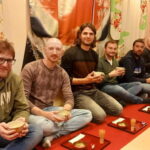
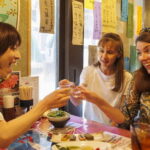
Kyoto’s food feels easier with a guide. This 3-hour walking tour strings together three very different stops—depachika comfort food, the famous Nishiki Market, and a calm temple-and-shrine finish—so you eat your way through the city without getting lost or missing the best counters.
I really like the pacing: you get a 5–8 item lunch tasting that’s varied (from savory to sweet), plus time to browse Nishiki Market with guidance. I also like the human factor. Guides like Andrea (fun, flexible) and Aoki (attentive and personable) are specifically the kind of hosts who help you feel comfortable ordering and tasting your way through Kyoto.
One possible drawback: the tour runs on a schedule. If you’re the type who wants to wander at your own speed with zero structure, you may feel a bit “on the timetable,” especially around the market crowds. Also, the food includes common allergy ingredients like meat/seafood/wheat/dairy, so you’ll want to plan ahead if you have restrictions.
In This Review
- Key Highlights You’ll Actually Feel
- A 3-Hour Kyoto Walk That Feels Like a Local Plan
- Starbucks at Sanjo Karasuma: Why This Start Works
- Rokkakudo Temple: A Quiet Pause Before the Food Frenzy
- Daimaru Kyoto Depachika: Kyoto Comfort Food Under One Roof
- Nishiki Market Shopping District: Kyoto’s Kitchen in Walking Form
- The Finish at Nishiki Tenmangu Shrine: Time to Settle Down
- What’s Included, What’s Not, and Why It Matters
- Guides Make the Difference: Andrea, Aoki, and Yoriko
- Price and Value: Is $79.07 Fair for Kyoto?
- Who This Tour Fits Best
- Should You Book This Nishiki Market Walking Food Tour?
- FAQ
- How long is the Nishiki Market walking food tour?
- What time does the tour start?
- Where do I meet the guide?
- Where does the tour end?
- What food is included?
- Are there dietary restrictions to consider?
- How big is the group?
- Is the tour weather-dependent?
Key Highlights You’ll Actually Feel
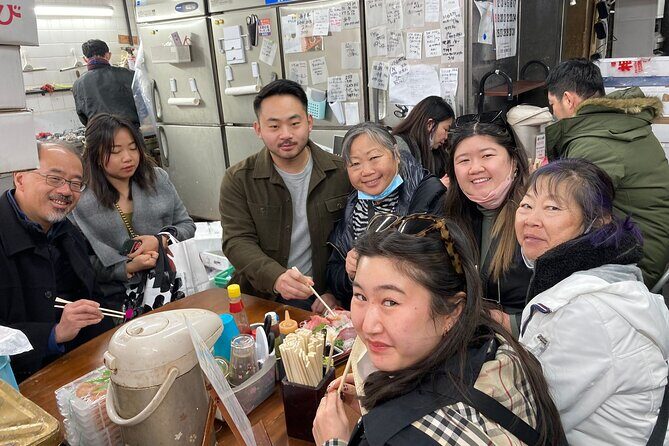
- Daimaru depachika: pick-and-savor Kyoto staples in a focused food-bazaar setting
- Nishiki Market access with a guide: help choosing stalls, plus tastings like skewers and sake
- Temple-and-shrine rhythm: a quieter historical stop before you hit the busiest eating streets
- Small group size (max 6): easier questions, fewer lines, less waiting around
- Tastings are the point: a guided lunch of 5–8 local foods, not just a “walk and snack”
- Guides like Andrea, Aoki, and Yoriko get praised for knowledge and friendliness
A 3-Hour Kyoto Walk That Feels Like a Local Plan
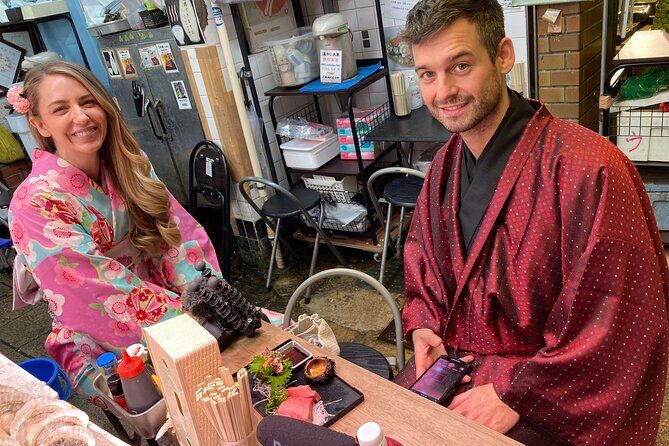
This Nishiki Market walking food tour is designed for one thing: help you eat Kyoto in the right order. Kyoto can overwhelm you fast. Streets are packed, menus move in Japanese, and the best shop might be the one you’d otherwise walk past. Here, you start with an easy meeting point, then move through food-focused areas with stops that break up the noise.
At $79.07 for about 3 hours, it’s not the cheapest way to eat. But you’re paying for guided selection and included tastings. In practice, that can be the difference between sampling three things and actually getting a solid spread—savory bites, sweets, and the kinds of local items that show up again and again in Kyoto food culture.
The other big value is the group size. With a maximum of 6 travelers, you get more attention than you would on the huge walking tours. That matters in food markets, where timing and choices can make or break your experience.
A few more Kyoto tours and experiences worth a look
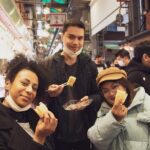
Starbucks at Sanjo Karasuma: Why This Start Works
Meeting at the Starbucks Kyoto Sanjo Karasuma Building is practical. It’s an easy landmark, and it’s near public transportation. That matters on a city day when you might already be walking a lot. You don’t waste time hunting down a small side street meeting point.
You also start at 10:00 am, which is an underrated detail. Earlier in the day often means less crush at food counters, and it gives you enough daylight for the temple stop and market browsing. If you tend to get hangry, the fact that you’ll start moving straight into tastings is a relief.
And because the tour uses a mobile ticket, you’re not stuck with paper in your pocket while you’re trying to eat. Simple, but it helps when you’re juggling transit, photos, and snacks.
Rokkakudo Temple: A Quiet Pause Before the Food Frenzy
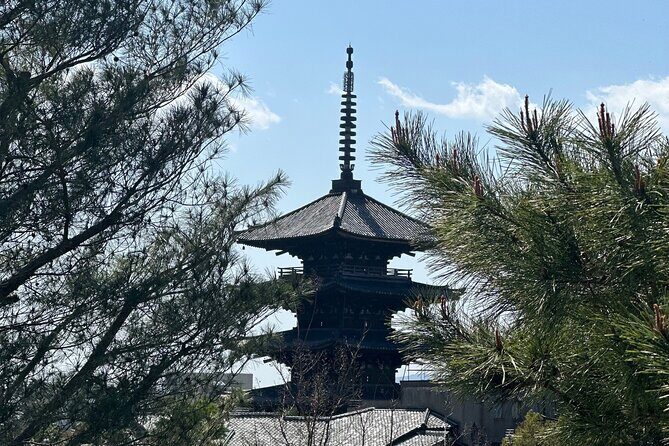
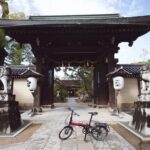
One of the smartest parts of this itinerary is the break in the middle. After you’ve met and gotten oriented, you head to Rokkakudo Temple. This is where the tour stops being only about calories and becomes about pacing.
Kyoto’s food streets are lively, and Nishiki Market gets especially busy. Having a calmer stop like Rokkakudo helps your brain reset. You also get a more well-rounded day: you’re not just hopping from one food counter to the next; you’re seeing how locals mix everyday culture with historic places.
The trade-off is time. Temple stops take minutes you could spend eating. But in a short 3-hour tour, this kind of stop can actually improve your food experience because you’re less rushed and more present.
Daimaru Kyoto Depachika: Kyoto Comfort Food Under One Roof
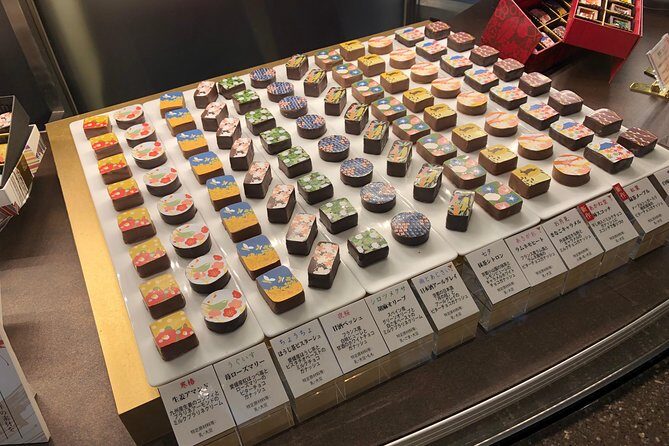
Next comes the Daimaru Kyoto department store food basements (depachika). If you only eat in Nishiki Market, you’d miss how Kyoto does food convenience: polished, seasonal, and often unbelievably well-organized under department-store ceilings.
Here, you’re set up to sample multiple Kyoto favorites without playing stall roulette. You might try things like:
- meat buns (nikuman), a local crowd-pleaser
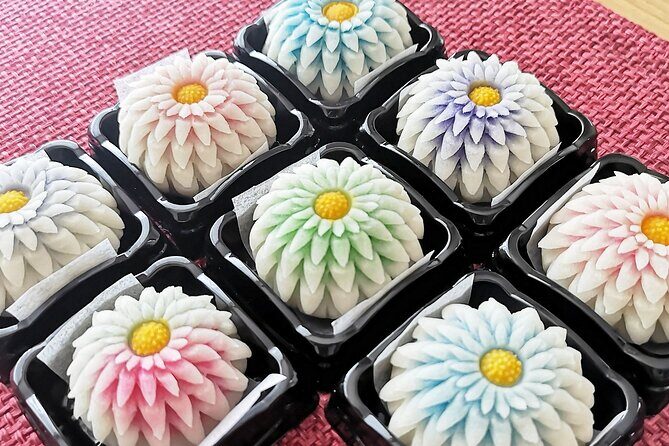
- wagashi (Japanese sweets) from a long-running wagashi shop
- other depachika specialties that rotate with the seasons
This stop is also where you get a sense of what “Kyoto treats” means beyond one dish. You’re tasting different styles—savory comfort food, delicate sweets, and prepared items that show up in local everyday routines.
The main drawback? Depachika can feel more “covered and curated” than street food. If you love messy, street-corner chaos, depachika might feel a touch orderly. But if you want reliable selection with minimal hassle, it’s a win.
Nishiki Market Shopping District: Kyoto’s Kitchen in Walking Form
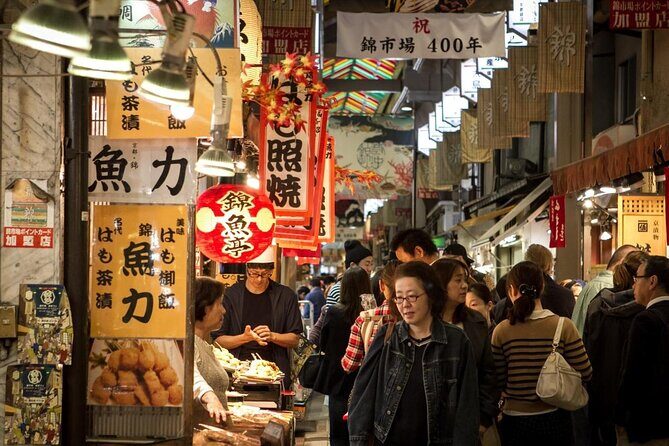
After the temple and depachika, you hit Nishiki Market, often called Kyoto’s Kitchen. This is where the tour’s structure really shines. Markets like this can be gorgeous and confusing at the same time. A guide helps you:
- choose what’s worth trying right now
- understand what you’re tasting and why it matters
- avoid getting stuck staring at menus you can’t read quickly
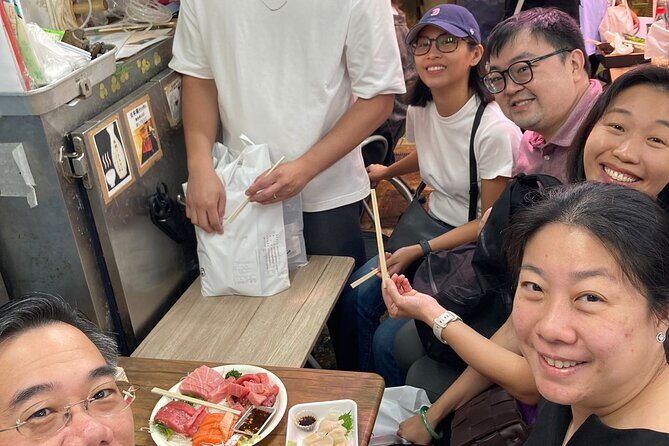
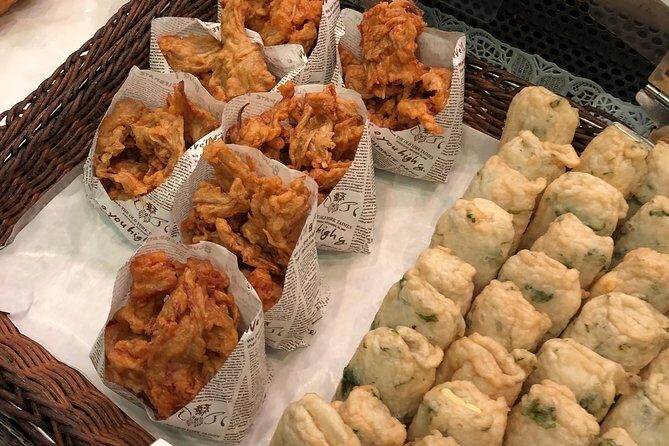
Your Nishiki portion includes the kind of foods that make people fall in love with Kyoto eating: you might see rolled omelets, skewers, and tastings that can include sake. The included lunch tasting is listed as 5–8 local foods, and Nishiki is usually one of the key places where those items land.
One note that keeps things honest: the tour taste menu can vary based on what’s available. That’s normal for markets. The examples you might encounter include things like fresh specialties such as sashimi and skewered wagyu beef, plus other shop recommendations along the way.
Crowds are the other reality. Even with a guide, Nishiki gets busy. Wear comfortable shoes and accept that you’ll be shoulder-to-shoulder at times. The good news is that you’re not doing it blindly—you’re walking with someone who knows where to go and when.
Other walking tours we've reviewed in Kyoto


The Finish at Nishiki Tenmangu Shrine: Time to Settle Down
To end, you walk to Nishiki Tenmangu Shrine. This is a calm landing after eating and street noise. It’s also a good way to digest—literally and mentally.
A shrine finish does two practical things. First, it keeps the tour from turning into an endless snack spiral. Second, it gives you a moment to reflect on what you just ate and what you noticed. That’s how you remember a food trip: it clicks together as a story, not as random bites.
Even if you’re not into shrines in general, you’ll likely appreciate the pacing. A quiet ending helps the whole morning feel intentional.
What’s Included, What’s Not, and Why It Matters
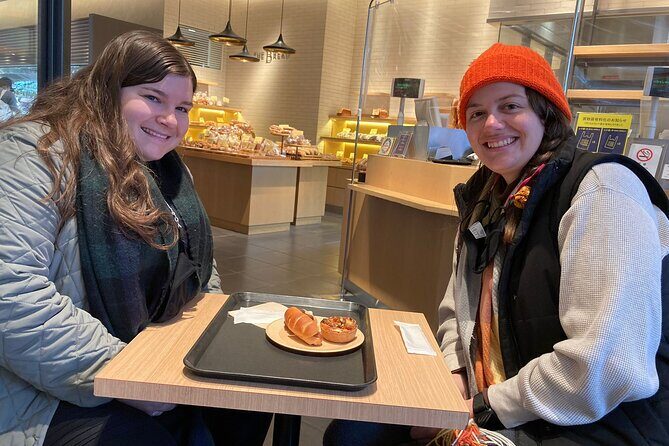
This tour includes a lunch tasting of 5–8 local foods. That’s the core value. You’re not just paying for walking. You’re paying for guided sampling, which saves you both money and decision fatigue.
Not included: extra snack food beyond the tastings, tips for the guide (welcome), and an audio guide (not provided). So if you’re the kind of eater who always wants one more thing, plan for additional spending. The included tastings are designed to be enough for lunch, but they won’t satisfy the appetite of every super-snacker.
Dietary restrictions are also worth flagging clearly. The tour notes that meals may include ingredients such as meat, seafood, wheat, and dairy. If you have allergies or strict dietary rules, contact the provider in advance and ask what can be accommodated. Don’t assume the market can easily swap ingredients on the fly.
Guides Make the Difference: Andrea, Aoki, and Yoriko
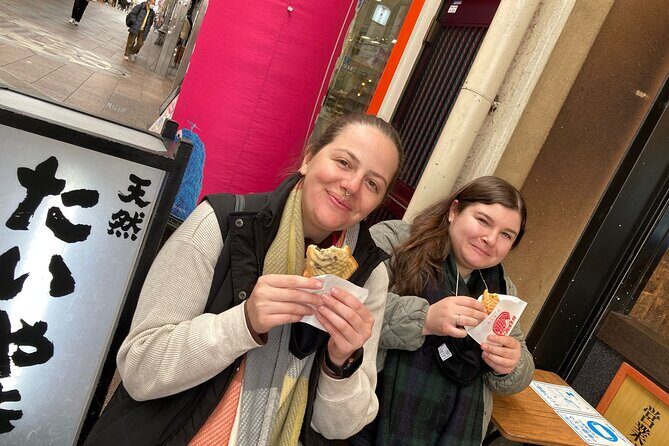
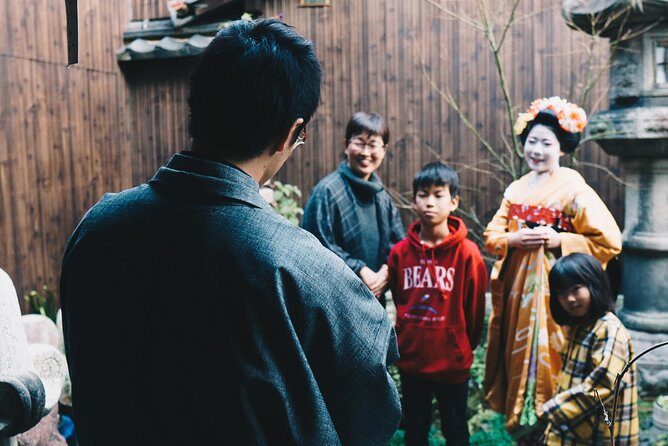
One of the most praised elements is the guide experience. Names that come up in the feedback include Andrea, Aoki, and Yoriko—and they’re described in a very consistent way: friendly, attentive, and knowledgeable about the area and food.
That matters because good market guides don’t just point. They help you eat in a way that makes sense. They’ll help you understand what you’re tasting, where locals tend to go, and how to navigate the market without feeling lost.
Balance check: a small set of feedback points out that the tour can feel timetable-driven and not as free-flowing as some people want. If you prefer lots of unstructured time, you might want to treat this as a guided “best bites” plan rather than a choose-your-own-adventure food crawl.
Price and Value: Is $79.07 Fair for Kyoto?
For $79.07 per person, you’re paying for:
- a guided route through major food areas
- a structured lunch tasting (5–8 local foods)
- temple and shrine stops that shape your route
- a small group experience (max 6)
Where this can be great value is when you’d otherwise spend money guessing. Nishiki Market can be expensive if you buy randomly. A guide helps you sample better, more representative items and avoid paying for things that don’t fit your tastes.
Where it may not feel worth it is if you’re the type who already knows the best stalls and would rather go solo. If you love wandering without guidance and already read menus confidently, you might find the value less obvious.
My practical take: if you’re visiting for the first time and want a Kyoto food orientation fast, this is a solid spend. If you’re already a Nishiki pro, you may prefer independent exploring.
Who This Tour Fits Best
This tour is a great match for you if:
- you want a guided introduction to Kyoto food basics
- you’d rather not spend your first Nishiki hour guessing what to order
- you like small groups and direct help
- you enjoy short stops that add cultural context without dragging for hours
It’s less ideal if:
- you have strict dietary needs and don’t want to pre-arrange accommodations
- you dislike any schedule at all
- you already have a very specific food plan and don’t want tastings structured for you
The weather requirement is also real. The tour notes it requires good weather. If rain is heavy, you’ll likely need to reschedule or accept a weather-based alternative plan.
Should You Book This Nishiki Market Walking Food Tour?
Yes, if you want a smart Kyoto food sampler that reduces guesswork and keeps moving. The mix of depachika tastings plus Nishiki Market browsing gives you range. The temple and shrine stops help it feel like a real itinerary, not just a line of snacks.
I’d especially book it if you’re new to Kyoto or short on time. Starting at a clear landmark, keeping the group small, and using a guided tastings format means you’ll eat more thoughtfully and waste less money on random picks.
If you’re extremely picky, allergic, or craving a totally freeform food day, you might want to plan a different approach. And if you’re hoping for a super-long unhurried wander, remember this is about 3 hours and follows a route.
FAQ
How long is the Nishiki Market walking food tour?
It runs for about 3 hours.
What time does the tour start?
The start time is 10:00 am.
Where do I meet the guide?
You meet at Starbucks Coffee – Kyoto Sanjo Karasuma Building, Japan, 〒604-8166 Kyoto, Nakagyo Ward, Mikurachō, 85−1 KDX京都烏丸ビル 1F.
Where does the tour end?
The tour ends at Nishiki Tenmangu Shrine, 537 Nakanochō, Nakagyo Ward, Kyoto, 604-8042, Japan.
What food is included?
The tour includes a lunch tasting of 5–8 local foods. Specific items can vary, but examples include nikuman, wagashi, and Nishiki Market specialties.
Are there dietary restrictions to consider?
Yes. The meals may include ingredients such as meat, seafood, wheat, and dairy. If you have allergies or restrictions, contact the provider in advance to discuss options.
How big is the group?
The tour has a maximum of 6 travelers.
Is the tour weather-dependent?
Yes, it requires good weather. If it’s canceled due to poor weather, you’ll be offered a different date or a full refund.
If you tell me your travel dates and any must-eat (or avoid) items, I can help you decide whether this schedule fits your Kyoto plan.