One day, three Kansai moods. This trip strings together Nara deer downtime, Osaka street-food energy, and Kobe’s harbor views without you having to fight train transfers. I especially like how the morning in Nara Park slows your pace, and how Dotonbori gives you that fast, colorful Osaka feeling right away. One thing to keep in mind: it’s a long day with a lot of moving, so you’ll want comfy shoes and a good attitude for occasional walking between bus stops and sights.
What makes it work is the human touch. Your guide is bilingual (English and Spanish), and you’ll get clear meet-up instructions plus context during the ride—helpful when you’re jumping between three very different cities. Guides I saw mentioned include Cesar, Angeles, Paula, and Heli, and that mix of warmth and organization is a big reason this feels stress-free for a day trip.
In This Review
- Key things to know before you go
- A 10.5-hour Kansai sampler from Kyoto
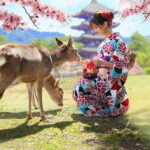
- Nara Park and free-roaming deer: the calm start that sets the tone
- Osaka’s Dotonbori: neon, noise, and the best kind of plan-free time
- Osaka Castle and its garden-and-moat feel: a calmer mid-afternoon reset
- Kobe’s Chinatown (Nankinmachi) and the harborfront: two moods in one city
- How the bilingual guides keep the day on track
- Transportation, walking, and comfort planning
- Food planning: what you’ll spend and how to eat well
- Price and value: is $129 reasonable for three cities?
- Who this tour fits best (and who might not love it)
- Should you book this Osaka–Nara–Kobe day trip?
- FAQ
- Where does the tour start?
- What time does the tour run?
- What cities does this day trip include?
- What’s included in the price?
- What’s not included?
- What languages are the guides?
- Is there free time at each stop?
- What should I bring?
- Is the tour wheelchair accessible?
- Can I cancel for a refund?
- Is this tour flexible to book?
Key things to know before you go
- Nara Park deer time is your main reset: a long window to wander and enjoy the area at an easy pace.
- Dotonbori comes with a guided start: you get oriented fast, then you’re free to roam for food and photos.
- Osaka Castle adds greenery and big landmark photos: expect a calm moat-and-garden feel after the street energy.
- Kobe isn’t just sightseeing: you’ll also get Chinatown atmosphere and then a harborfront walk for ocean views.
- It’s a full 10.5-hour day: you’re on the move, so plan for walking and tired legs.
A 10.5-hour Kansai sampler from Kyoto
This is a one-day circuit across Honshu that hits the classic Kansai triangle: Nara, Osaka, and Kobe. Total time on the clock is about 630 minutes (10.5 hours). The tour runs from Hotel Keihan Kyoto Grande (outside), and you’ll head back to Kyoto Station at the end, so you’re not left figuring out last-mile transfers after a busy day.
The pacing is built for maximum variety. You start with the softer, greener side of Japan in Nara, then switch gears to Osaka’s neon-and-food scene, and finish with Kobe’s harbor mood. That structure is exactly why this tour feels different from doing just one city: you get contrast, not repetition.
For people who don’t want to micromanage trains, this saves real mental energy. Your guide and bus do the navigation between cities, and you focus on what you actually came for—temples and deer, a major Osaka landmark, and Kobe’s Chinatown + waterfront.
A few more Kyoto tours and experiences worth a look
Nara Park and free-roaming deer: the calm start that sets the tone
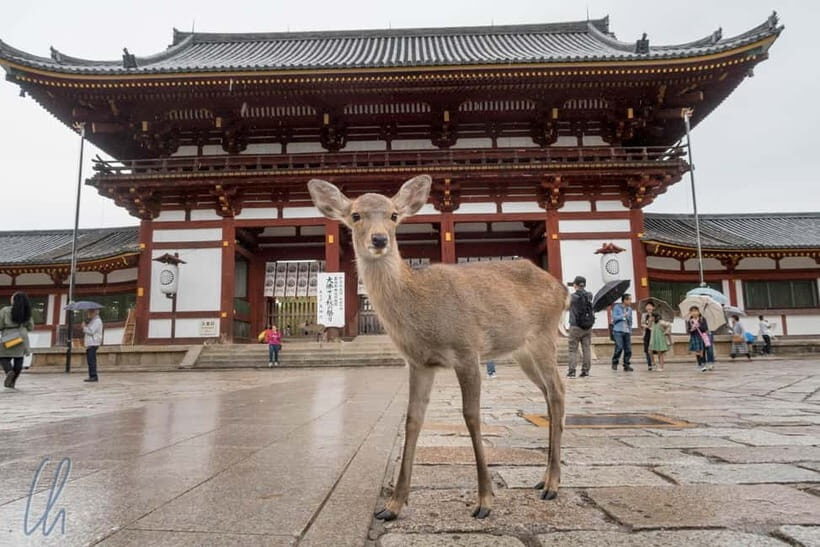
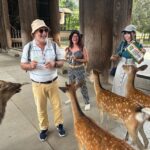
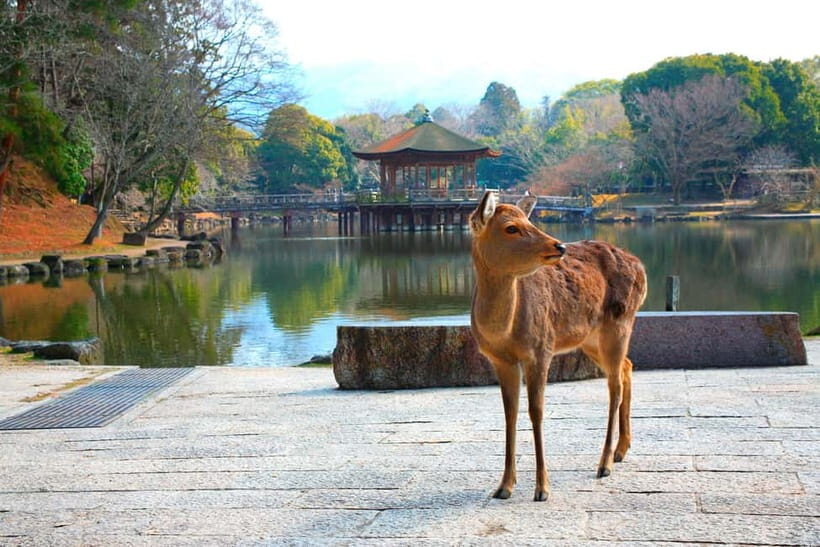
Your morning begins with a bus ride from Kyoto, then you’re dropped into Nara Park with about 2.5 hours of free time. This is the part of the day that feels like a deep breath.
Here’s what I like about starting in Nara instead of treating it like an afterthought. The park gives you space. You can wander slowly, look at temple surroundings and traditional gardens, and let the deer sightings happen naturally rather than in a rushed “photo line” moment.
The deer themselves are the headline, of course. They roam freely, and even if you’ve seen deer in other places, Nara’s park setup makes it feel more spontaneous and magical. You’ll get chances to watch deer interact, then pause and enjoy views toward nearby historic areas.
Two practical notes:
- Wear shoes you don’t mind getting a little dusty. The park paths can add up fast.
- Bring water and sunscreen. Even when the morning feels cool, you can still get tired and sunburned.
If you’re traveling with kids or you want a gentler cultural break before the big-city hopping, this Nara block is the piece that makes the whole day feel balanced.
Osaka’s Dotonbori: neon, noise, and the best kind of plan-free time
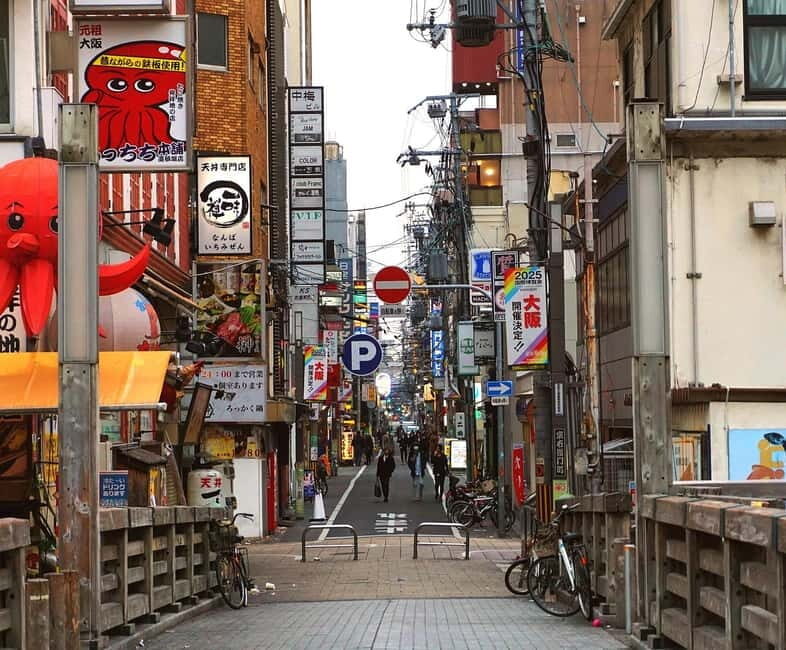
After Nara, you head into Osaka and go straight to Dotonbori. This is the busy, bright entertainment strip people come for, and you get a guided tour component plus time to explore on your own.
I like that the tour doesn’t just drop you in and vanish. The guided portion helps you orient quickly—where to head for photos, how the street area is set up, and what to look for while you’re walking. Once you have that map in your head, your free time feels more intentional.
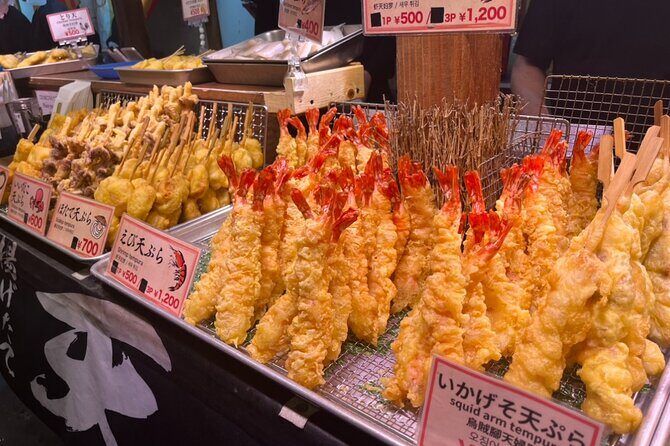
Then it’s all about food and energy. Dotonbori is where you’ll find the iconic street-style snacks. The highlights include trying local favorites like takoyaki (octopus balls) and okonomiyaki (savory pancakes). Since food isn’t included, you’re free to choose what fits your tastes and budget—but the area is built for fast, casual eating.
One small caution: Dotonbori is lively and crowded. If you’re hoping for quiet sightseeing, Osaka at this hour isn’t that. But if you want a fun sensory experience and a good chance to try street food, this is a strong match.
Osaka Castle and its garden-and-moat feel: a calmer mid-afternoon reset
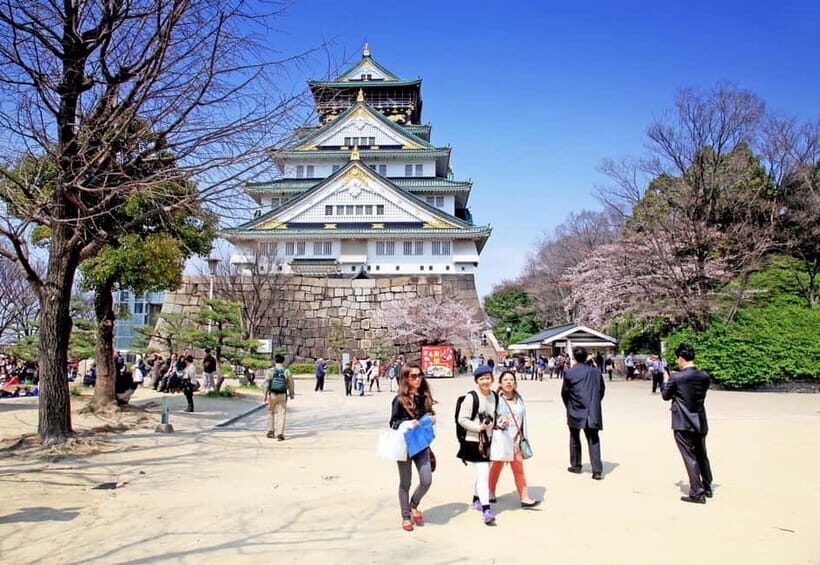
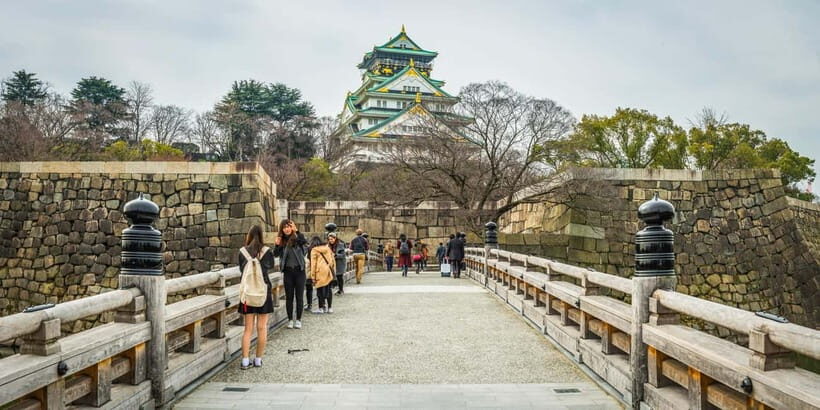
Next up is Osaka Castle with free time and a walk (about 1 hour). After Dotonbori’s intensity, the castle area gives you something different: wide views, greenery, and a calmer pace.
The moat and surrounding grounds make it easier to take photos without feeling like you’re constantly squeezing between people. Even if you don’t spend your time inside every building, the setting alone gives you that “major landmark” feeling.
What makes this stop practical is timing. It breaks the day in a useful way. You’ve had food and noise in Dotonbori, now you get a place to slow down, regroup, and enjoy scenery while still ticking off one of Osaka’s best-known sights.
If you’re short on stamina, prioritize what matters most for you here:
- Take the best exterior views and garden walks first.
- If you decide you want extra time, it’s easier to add it earlier rather than try to cram it at the end.
Kobe’s Chinatown (Nankinmachi) and the harborfront: two moods in one city

In the late afternoon, you move on to Kobe, and the tour gives you about 2 hours in the city, including a visit and guided tour plus free time.
Kobe’s Chinatown, Nankinmachi, is a big part of the experience. Think colorful streets, lots of international cuisine options, and a different vibe than what you just experienced in Osaka. It’s a fun change of flavor—literally and atmospherically.
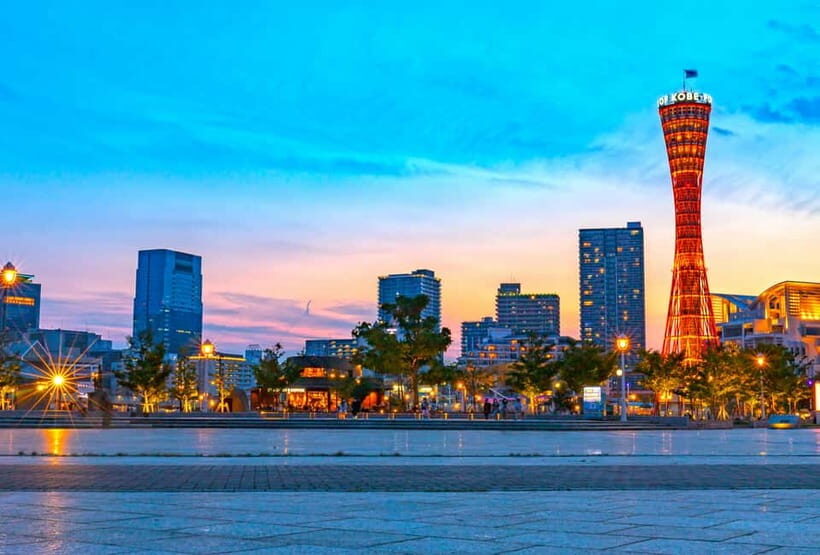
Then you shift toward the harborfront. Kobe Port area views add a coastal calm after the city walking. You get photo opportunities around landmarks like Kobe Port Tower and Meriken Park, plus ocean views that help close the day on a lighter note.
Here’s the balance you should expect: this is a “hit the highlights” Kobe stop. You get enough time to explore Chinatown and still enjoy the harbor atmosphere, but you won’t have a full day to wander every neighborhood detail.
One consideration: if you’re hoping for a long, slow Chinatown crawl, you may want to arrive with a focus. Decide in advance whether you’re there for food browsing, souvenir shopping, or photo streets. That way, even if your Chinatown time feels brief, you still leave satisfied.
A few more Kyoto tours and experiences worth a look


How the bilingual guides keep the day on track
A lot of the tour’s success comes down to execution. You’ll travel with a live guide speaking English and Spanish, and the group usually gets clear direction on where to meet after free time.
Names that show up in guide mentions include Cesar, Angeles, Paula, Heli, Ikeda-san (driver in one account), Alex, Alessandro, Montserrat, and Alan. The common thread is the same: guides stay engaged, answer questions, and keep the day moving without turning it into a lecture marathon.
Another detail I value: you get context while you’re traveling. Instead of only learning after you arrive, the bus segments can help you understand why each place matters. That turns your walking time into something more than just check-the-box photos.
And yes, there are moments to manage. At some stops, bus drop-off points can be a short walk from the best viewing areas. In practice, it’s not a deal-breaker, but it does mean your day becomes more “walking day” than “sit and glide day.”
Transportation, walking, and comfort planning
This is a full bus day, and you should assume you’ll be standing, walking, and timing your steps between activities. The tour is not designed for wheelchair users.
What to bring is simple and smart:
- Comfortable shoes
- Water
- Sunscreen
- Camera
If you want the day to feel smoother, plan for these basics:
- Keep your water handy on transitions. Waiting around can get tiring in warm weather.
- Bring a light layer. In Japan, you can get big temperature swings between shaded areas, sun, and bus air-conditioning.
- Pace your energy. The longest stretches often happen when you transition from guided time to free time.
Also, expect that the day’s rhythm is a mix of guided orientation and independent exploring. That’s part of the design: you get just enough structure to enjoy the time you have in each city.
Food planning: what you’ll spend and how to eat well
Food and drinks are not included, so you should treat meals as part of your budget. The tour gives you the chance to eat where the cities shine.
- In Dotonbori, street food choices are the star. Takoyaki and okonomiyaki are popular because they’re easy to grab and share.
- In Kobe’s Chinatown, you’ll likely find a bigger range of international-style options, and it’s also a place where you can search for a dish that fits your preferences.
One helpful thing: guides often try to support dietary needs when possible, and at least one account mentions extra care in finding vegetarian options in each place. Still, since meals aren’t included, you should go in with the mindset of ordering for yourself during free time.
If you hate decision fatigue, pick one “must try” item in each city and then allow yourself to browse for one extra snack. That keeps your food plan from turning into a time sink.
Price and value: is $129 reasonable for three cities?
At $129 per person, you’re paying for three big destinations, guided time in key areas, and the bus logistics between them. The biggest value isn’t just the sights—it’s the reduction in effort.
If you tried to do Nara, Osaka, and Kobe on your own, you’d spend real time figuring out routes, station changes, meeting points, and timing. Even a confident traveler usually loses half a day to logistics when trying to combine three cities in one go. This tour compresses that work.
So what are you really buying?
- Guided structure for Nara Park’s big entry moment, Dotonbori’s orientation, and Kobe’s Chinatown visit.
- Comfortable transportation across cities from Kyoto and back.
- Time blocks that are long enough to actually enjoy each place, not just peek.
Where you might feel the cost is if you’re the kind of traveler who wants deep immersion in just one city. This is more like a tasting menu than a full tasting flight. If you love Osaka neighborhoods and could happily spend a full day there, you might want extra time after the tour.
But if you want a solid first hit of Kansai with minimal planning, $129 is the kind of price that can save you stress and time.
Who this tour fits best (and who might not love it)
This day trip is a great match if you:
- Want to see three cities from Kyoto without juggling trains.
- Like guided context but still want freedom to wander and eat on your own.
- Have limited time in Japan and want an efficient intro to Nara, Osaka, and Kobe.
It’s less ideal if you:
- Want a slow, relaxed day with minimal walking.
- Need wheelchair accessibility (this tour isn’t suitable for wheelchair users).
- Are planning to spend lots of time inside museums or do extensive indoor add-ons at each stop, since free time is limited by the schedule.
Also, keep in mind that the day is long—your legs will notice. If you’re used to lots of walking, you’ll be fine. If you’re fragile with mobility, I’d rethink the fit.
Should you book this Osaka–Nara–Kobe day trip?
I’d book it if your goal is a high-value snapshot of Kansai with guided help and low stress. The structure is smart: Nara gives you calm, Osaka gives you energy and street food, and Kobe ends with Chinatown color plus harbor scenery. The bilingual guide team and the day’s timing are the big reasons this works so well.
I wouldn’t book it if you want a slow travel day or you’re chasing a deeply detailed experience in just one city. This is a packed circuit. You’ll enjoy it most when you’re happy to trade a bit of depth for big variety.
If you’re ready for a long, fun day—wear good shoes and plan to eat out—this tour is one of the easiest ways to get three of Kansai’s most recognizable highlights into a single day.
FAQ
Where does the tour start?
It starts outside Hotel Keihan Kyoto Grande. You should arrive at least 10 minutes early for check-in.
What time does the tour run?
The duration is about 630 minutes (10.5 hours). Specific starting times depend on availability.
What cities does this day trip include?
It covers Nara Park, Osaka (Dotonbori and Osaka Castle), and Kobe (Chinatown and harbor area).
What’s included in the price?
You get a bilingual live guide (English and Spanish) and transportation from the meeting point.
What’s not included?
Food and drinks are not included.
What languages are the guides?
Guides speak English and Spanish.
Is there free time at each stop?
Yes. You’ll have free time in places like Nara Park, plus free time in Dotonbori and Kobe.
What should I bring?
Bring comfortable shoes, camera, sunscreen, and water.
Is the tour wheelchair accessible?
No, it’s listed as not suitable for wheelchair users.
Can I cancel for a refund?
Yes. It offers free cancellation up to 24 hours in advance for a full refund.
Is this tour flexible to book?
Yes, it includes a reserve now & pay later option (you can book without paying immediately).