Pedal past Kyoto’s icons without the slog. This private e-bike tour is built for speed and ease, with e-bike rental included and a guide who can shape the route to your pace and interests. I like how the ride turns big-name stops into a smooth checklist, and I also love the human touch: guides like Yonnie, Yuhey, Polina, and Mana bring the history to life and help with photo moments.
The main thing to consider is simple: you’ll need to feel comfortable riding a bicycle (the tour is for people with at least moderate physical fitness), and you’ll be moving through busy streets. If that sounds fine, you’ll get a lot more Kyoto per hour than you would on foot.
You start and finish at Sunny CycleJapan in Shimogyo Ward, and the tour is close to public transportation. You’ll also keep things moving outdoors, hopping between temples, shrines, canals, and classic streets—often with short, focused stops that make the day feel efficient but not rushed.
In This Review
- KIYOTO Kyoto Private E-Cycling Tour: The practical reason it works
- What you’ll love on this e-bike route
- A few things to keep in mind before you book
- Where you meet: Sunny CycleJapan base
- How long is the day really? 4 to 8 hours, with flexibility
- Stop-by-stop: what each highlight is really like
- Higashi Hongan-ji: a big temple start (before the famous gates)
- Fushimi Inari-taisha: red torii tunnels and mountain trails
- Komyo-in Temple: a quieter garden pause
- Tofuku-ji: Tsutenkyo Bridge views
- Hōkan-ji (Yasaka Pagoda): postcard views in Higashiyama
- Yasui-Konpiragu Shrine: pray for relationships
- Hanamikoji Street: Gion’s classic alley vibe
- Tatsumi Bridge and the Shirakawa River: the scenic break
- River terrace walk: Shirakawa Shinsui Terrace
- Heian Jingu Shrine Otorii: the big gate moment
- Nanzen-ji: major temple grounds and gardens
- Nanzenji Suirokaku (Aqueduct): brick structure drama
- Philosopher’s Walk: 2 kilometers of scenic strolling
- Honen-in: forest-temple calm
- Shimogamo Jinja: old Shinto roots
- Kamogawa Delta (Kyoto Prefectural Kamogawa Park): river meeting scenery
- Kyoto Gyoen: park around the old Imperial Palace
- Ebisugawa stepping stones at Kojin: a playful local-style moment
- Teramachi-dori Street: shopping street with everyday Kyoto energy
- Sanjo Street: a convenient food-and-sights hub
- The real value: how this tour saves your time without skipping the meaning
- Bikes, kids, and the comfort factor that matters
- When to choose this tour (and who it’s best for)
- Should you book KIYOTO’s private Kyoto e-bike tour?
- FAQ
- How long is the KIYOTO private Kyoto e-bike tour?
- Is the electric bike rental included?
- Where does the tour start and end?
- Do I need to buy tickets for temples and shrines?
- Is this tour private?
- Do kids bikes or seats cost extra or need requests?
- Do I need to be able to ride a bicycle?
- What’s the cancellation window?
KIYOTO Kyoto Private E-Cycling Tour: The practical reason it works
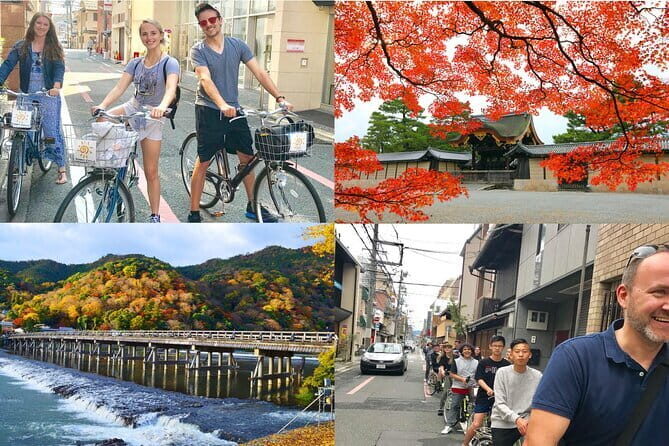
A private e-bike tour makes a huge difference in Kyoto because the city is spread out, and walking between major sights can eat half your day. With this tour, you trade sore feet for glide time, while still getting out of the saddle to look closely and take photos.
The “private” part matters too. In real life, your group’s energy changes—kids need more breaks, you might want extra time at one shrine, or you may prefer fewer stops and more time at the river. This tour is designed to adjust, rather than march you through a fixed routine.
And yes, the bikes are a big deal. In the feedback I saw, people repeatedly called out comfort and that the bikes were in good shape, which is exactly what you want when your day includes narrow lanes and frequent stops.
What you’ll love on this e-bike route
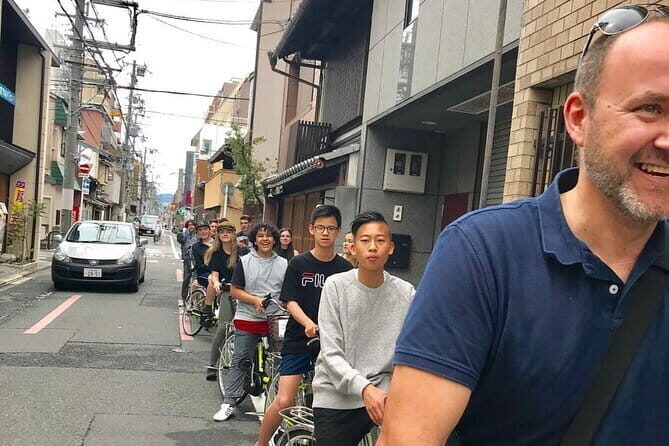
E-bike rental included, no equipment hunt. You show up and ride, with electric bikes available (and a normal cycle option too). That alone saves time and avoids one more thing to organize in Kyoto.
A guide who actually makes stops make sense. You’ll get local stories tied to what you’re looking at—history, customs, and small cultural details you’d usually miss if you were reading alone.
Photo-friendly pacing. The guides help with great photo moments, and the stop lengths are long enough to frame shots, not just snap-and-go.
A route that mixes headline sights with calmer corners. The day threads together big names like Fushimi Inari-taisha and scenic areas along the Shirakawa and Kamo River.
Worth the money if you want maximum coverage. At $198.15 per person, you’re paying for private guidance plus e-bike transport. If your goal is to cover a lot without exhaustion, this price starts looking more reasonable.
Other cycling tours in Kyoto


A few things to keep in mind before you book
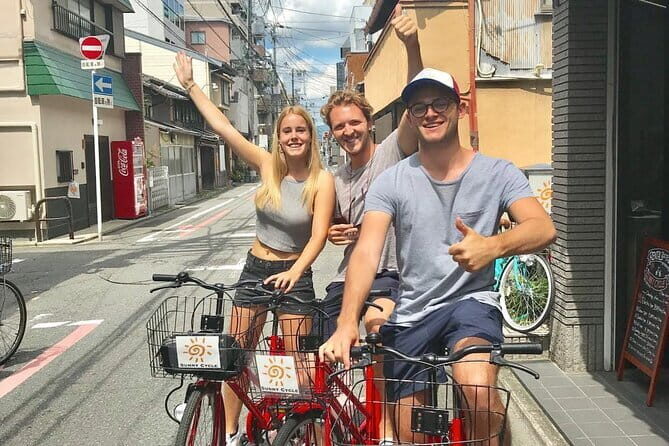
You must be able to ride. The tour requires bicycle riding ability, and it’s designed around a smooth flow on bike rather than constant stopping like a walking tour.
Expect some crowded-city navigation. Kyoto streets can get busy, especially around famous areas. The guides handle this safely, but it helps if you’re not nervous about sharing the road.
Not everything is free. Many stops are free to enter, but paid temple/shrine entrances are not included. Plan for a little extra cost depending on what you visit.
Where you meet: Sunny CycleJapan base
You’ll start at Sunny CycleJapan, 600-8419 Kyoto, Shimogyo Ward, Ōhorichō 477, 1F. It’s a clear, fixed meeting point, and the tour notes that it’s near public transportation—useful if you’re juggling trains or arriving from elsewhere in the city.
The tour ends back at the same place. That’s a small thing, but it removes end-of-day stress. No last-minute transit scramble.
How long is the day really? 4 to 8 hours, with flexibility
The tour runs about 4 to 8 hours, so your exact schedule can vary. The itinerary includes many stops, each with short time windows—so you’ll likely spend time riding between areas and then pause for look-and-photo moments.
This range is one reason the tour works well for different groups. If you want a shorter, highlights-heavy day, you can often focus on the main clusters. If you’d rather slow down and linger, the guide can shape the pace around your group.
Stop-by-stop: what each highlight is really like
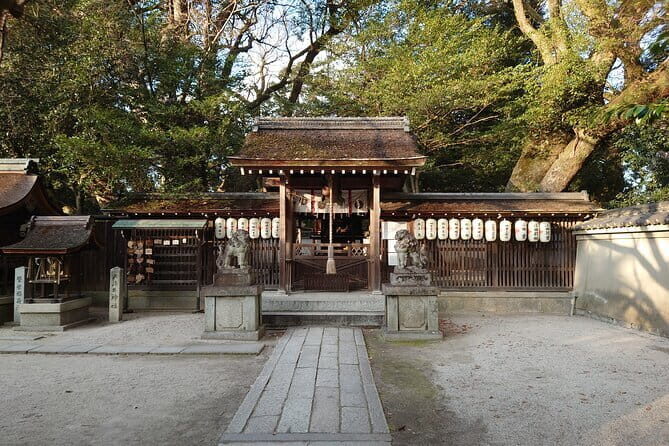
Other private tours in Kyoto


Higashi Hongan-ji: a big temple start (before the famous gates)
Your day can begin at Higashi Hongan-ji, a major Jodo Shinshu Buddhist temple founded in 1602. If you arrive early, you’ll appreciate the scale right away: wide grounds and a strong sense of place. It’s a good warm-up stop because it sets a calm tone before you hit the crowds at Fushimi Inari.
If your group prefers starting with the most famous name first, you might also treat this as a flexible opener—depending on your guide’s pacing.
Fushimi Inari-taisha: red torii tunnels and mountain trails
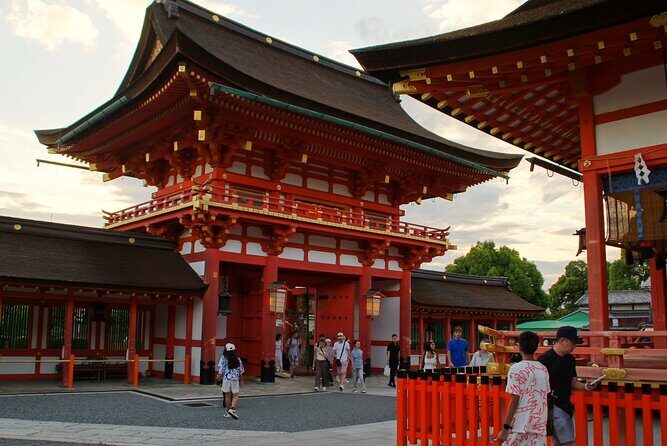
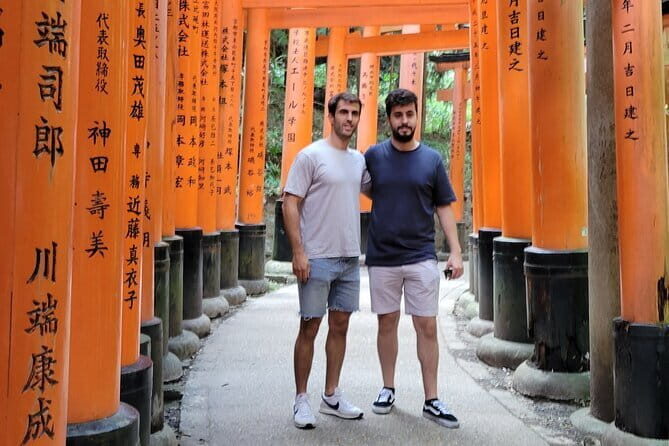
Next is Fushimi Inari-taisha Shrine, the head shrine of over 30,000 Inari shrines across Japan. The star attraction is the thousands of bright red torii gates that create a tunnel effect along the trails.
In your allotted time (about 40 minutes), you’ll want to choose your route wisely. Don’t try to conquer every step if you’re also planning more sights later. Aim for a stretch where the torii lines draw your eye, stop for a photo, then turn back at a comfortable point.
This is also where the e-bike helps most. Getting there and moving through the area without wasting time in long walking segments is a real advantage.
Komyo-in Temple: a quieter garden pause
Then you’ll visit Komyo-in Temple, a sub-temple of Tofuku-ji known for a tranquil garden. The timing here is short—about 20 minutes—but it’s a perfect reset after Inari’s energy.
One practical note: the itinerary marks this stop as not included for admission. If you want to avoid surprises, treat this as the one stop where you might need extra cash or ticket planning.
Tofuku-ji: Tsutenkyo Bridge views
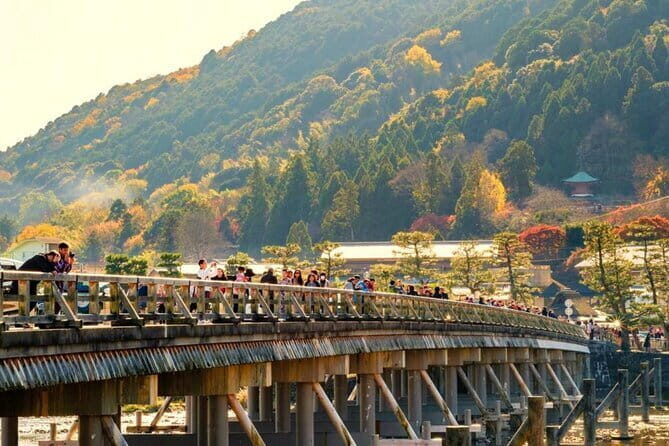
Tofuku-ji Temple follows, including the famous Tsutenkyo Bridge. It’s known for dramatic seasonal views—especially in autumn—spanning a valley with panoramic color lines.
Your time is brief (around 10 minutes), so think of this as a photo-and-look stop. If you’re visiting in autumn season, expect the view to be the main event.
Hōkan-ji (Yasaka Pagoda): postcard views in Higashiyama
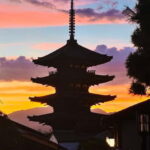
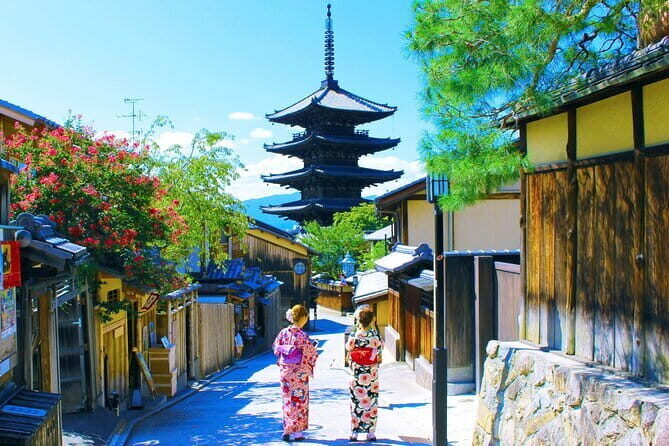
Next comes Hōkan-ji Temple, home to the Yasaka Pagoda. Even if you’ve seen it in pictures, it hits differently when you’re there: the silhouette against the historic Higashiyama backdrop gives you that instant Kyoto feeling.
You’ll have about 20 minutes, enough to get a couple angles. This is a good moment to slow down and let the guide’s stories tie the place to the neighborhood around it.
Yasui-Konpiragu Shrine: pray for relationships
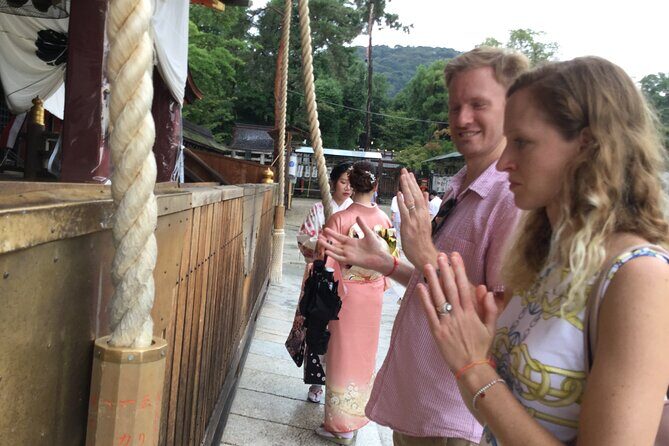
At Yasui-Konpiragu, you’ll find a shrine associated with gods for breaking bad relationships and bringing in good ones. People often come with intentions related to cutting ties or strengthening connections.
Expect about 10 minutes here. It’s not a “marathon temple” stop—it’s more of a focused, meaningful stop, with time for a quick read of the shrine details and a respectful look.
Hanamikoji Street: Gion’s classic alley vibe
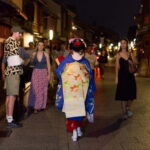
Then you head to Hanamikoji Street in the Gion area. This narrow alley is lined with traditional tea houses and restaurants, and it’s one of those streets where the atmosphere alone does the job.
Your time is short—about 10 minutes—but it’s enough to take in the texture: old Kyoto streetscape, light traffic, and the feeling of being close to preserved traditions.
Tatsumi Bridge and the Shirakawa River: the scenic break
After that, you’ll hit a more scenic stretch with Tatsumi Bridge (about 10 minutes), followed by Shirakawa Canal (about 15 minutes).
The best part of this portion is that it feels like a different Kyoto pace. You’re away from the densest crowds and closer to the river’s rhythm—willows, wooden bridge lines, and that classic canal mood.
River terrace walk: Shirakawa Shinsui Terrace
Next is the Shirakawa Shinsui Terrace, a riverside walkway with stone-paved paths where you can hear the water up close. Your time here is about 15 minutes, and it’s a great break if your legs are feeling it.
It also makes sense here to take photos from multiple spots. The water and canal angles shift as you walk a little.
Heian Jingu Shrine Otorii: the big gate moment
Then you’ll reach the Great Torii of Heian Shrine, a massive vermilion gate built in 1929. It’s reinforced concrete, and it commemorates Emperor Showa’s enthronement—so it carries a modern-history layer inside a traditional setting.
You’ll have about 15 minutes. This is ideal for wide-angle photos and for getting oriented before the day turns more temple-heavy again.
Nanzen-ji: major temple grounds and gardens
Nanzen-ji is one of Kyoto’s big Rinzai sect temples, founded in 1291. Your time is about 15 minutes, which means you’ll focus on the key views rather than trying to see every corner.
It’s also a good point in the day to notice how the temple grounds change the air—more open space, more quiet, and a break from street-level motion.
Nanzenji Suirokaku (Aqueduct): brick structure drama
Inside the Nanzen-ji grounds is the Nanzenji Suirokaku, a brick aqueduct completed in 1888. It’s a striking piece of infrastructure history that still looks dramatic today, especially when you can walk around it and see different angles.
Your time is short—about 10 minutes—but it’s one of those “how did Kyoto build this so perfectly?” moments.
Philosopher’s Walk: 2 kilometers of scenic strolling
Then comes Philosopher’s Walk, a scenic path along the Biwa Canal banks stretching about 2 kilometers. You’ll have about 30 minutes, which is enough for a satisfying portion of the route without turning it into an all-day hike.
Even if you’re not visiting during peak seasonal blooms, the path has a calm, reflective feel. It’s a good match for a day that started with red torii tunnels.
Honen-in: forest-temple calm
Honen-in Temple is a Zen temple in a forest setting, associated with Honen Shonin and founded in the 13th century. You’ll have about 15 minutes, and it’s meant to slow your pace for a moment.
This stop is where Kyoto’s quiet shows up. It’s also a good mental reset if you’ve been taking photos nonstop.
Shimogamo Jinja: old Shinto roots
Next is Shimogamo Jinja (also known as Kamomioya Shrine), one of Kyoto’s oldest Shinto shrines. The history traced in the tour info goes back to around 90 BC.
You’ll have about 30 minutes, giving you enough time to look around respectfully and absorb the shrine setting without rushing.
Kamogawa Delta (Kyoto Prefectural Kamogawa Park): river meeting scenery
The route then heads to the Kamogawa Delta, where the Kamo and Takano Rivers meet. It’s known for scenic stepping stones shaped like turtles and birds.
Your time is about 15 minutes, and this is a fun stop because you can do a quick “walk and look” without needing to commit to a long excursion.
Kyoto Gyoen: park around the old Imperial Palace
You’ll also spend time at Kyoto Gyoen, a large park area around the old Imperial Palace. It’s popular with locals for relaxing, and it’s famous for cherry blossoms.
Your tour data doesn’t list a time here, but it functions as a breathing space—green open area between temples and shopping streets.
Ebisugawa stepping stones at Kojin: a playful local-style moment
Then you’ll visit the stepping stones at Kojin (Ebisugawa Tobiishi). It’s a fun place where people hop across stones or snap photos, and it fits perfectly into an e-bike day because it’s short and lighthearted.
Teramachi-dori Street: shopping street with everyday Kyoto energy
Next is Teramachi-dori Street, a north-south shopping street filled with traditional goods, cafes, and fashion shops. It’s about 10 minutes, so treat it like a quick browse and a change in mood rather than a full shopping mission.
Sanjo Street: a convenient food-and-sights hub
Finally, the route includes Sanjo Street, close to Kawaramachi and the Kamo River and lined with restaurants and cafes. It’s a practical finish because it leaves you near lively areas for the rest of your evening.
The real value: how this tour saves your time without skipping the meaning
The tour’s strength isn’t just that it lists a lot of famous names. It’s how the day is structured: enough movement to cover Kyoto efficiently, plus short, purposeful stops where you can actually look and take photos.
In practical terms, it’s the difference between:
- walking a lot and arriving tired, or
- covering distance on an e-bike, then spending your energy where it counts.
That’s why private pacing is so important here. You can slow down for a bridge view, move through a street photo stop faster, or spend extra time where your group is most interested.
Bikes, kids, and the comfort factor that matters
You’re given electric bikes, with a normal cycle option as well. If you’re traveling as a family, the tour mentions kids’ bikes (non-electric) and kids’ seats for children who can’t ride on their own, but availability is limited—so it’s worth requesting when you book.
Multiple guides are listed through the experience feedback (Yonnie, Yuhey, Polina, Mana, Kento, Takuma/Tukuma, and others), and the overall theme is that guides keep the day fun, safe, and well-paced. Safety matters here because Kyoto can feel crowded in the most photographed areas.
When to choose this tour (and who it’s best for)
This is a great match if you:
- want to see major Kyoto landmarks in one day without turning the trip into a footrace
- like your guide telling stories rather than reading a guidebook alone
- want plenty of outdoor sightseeing but still need a transport boost
- are traveling with kids and want a smoother, less exhausting route
It might not be your best choice if you:
- want a slow, mostly off-bike day with lots of time sitting in quiet museums (the itinerary is stop-and-go by design)
- are not comfortable riding a bicycle in city traffic
Should you book KIYOTO’s private Kyoto e-bike tour?
If your goal is maximum Kyoto coverage with minimal fatigue, I’d say yes. At $198.15 per person, you’re paying for private guiding and included e-bike transport—so the value shows up fast when you compare it to the cost of transit time, wasted walking, and the headache of arranging multiple stops on your own.
Book it if you’re excited by shrines, temple architecture, canal views, and classic Kyoto streets, and you can ride a bike comfortably. If you want a day that’s efficient but still feels human—story time, photo time, and real pauses—this tour is a strong bet.
FAQ
How long is the KIYOTO private Kyoto e-bike tour?
The tour runs about 4 to 8 hours, depending on your route and pace.
Is the electric bike rental included?
Yes. Electric bikes are included, and a normal cycle option is available as well.
Where does the tour start and end?
It starts at Sunny CycleJapan, 600-8419 Kyoto, Shimogyo Ward, Ōhorichō 477 1F, and it ends back at the meeting point.
Do I need to buy tickets for temples and shrines?
Some stops are listed as free, but paid entrances are not included. Food and drink are also not included.
Is this tour private?
Yes. It’s a private tour/activity, with only your group participating.
Do kids bikes or seats cost extra or need requests?
The tour notes that kids’ bikes (non-electric) and kids’ seats are available, but availability is limited. You should request them when booking.
Do I need to be able to ride a bicycle?
Yes. Participants must be able to ride a bicycle, and the tour is suitable for travelers with moderate physical fitness.
What’s the cancellation window?
You can cancel for a full refund up to 24 hours before the experience’s start time. If you cancel less than 24 hours before, the amount paid is not refunded.