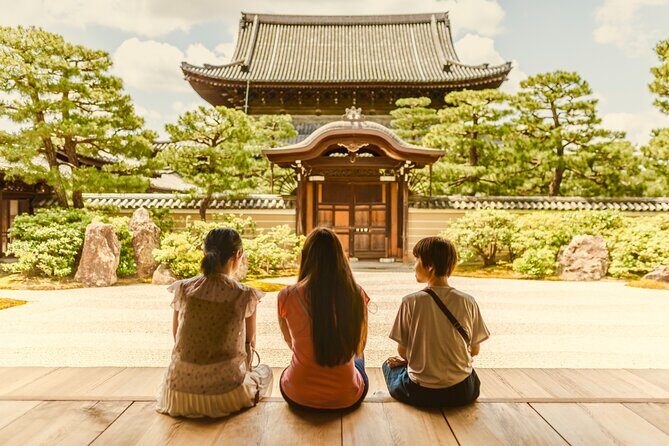
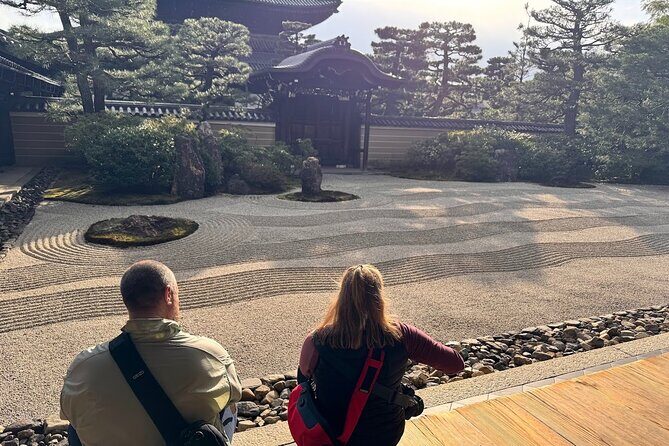
Nara’s ancient capital vibe is impossible to ignore. This 8-hour walking day trip is built around the key stops you’d want for 8th-century Japan: Naramachi’s old merchant-town lanes, Todai-ji with its massive Buddha, plus Kasuga Grand Shrine and Nara Park’s roaming deer. I like that a private guide handles the route, so you can focus on the stories instead of maps.
I especially like the human touch: guides I met on this tour style, like Satomi, can stay flexible if you want to detour to places such as the Nara National Museum, and still keep the day flowing. Another big win is the mix of sights, from temple architecture to everyday street history in Naramachi. One thing to consider: it’s private, but it’s not presented as fully customized, so you should expect a set route rather than a totally pick-your-own adventure.
With an 8:30am start and a full day on foot, you’ll want good shoes and a calm pace. One more practical note: major temple/shrine entry fees are not included, so your total spend is tour price plus tickets and local transport.
In This Review
- Key reasons to love this one-day Nara walking tour
- Nara in one day: what this tour actually gets you
- Entering Naramachi’s old-town lanes without getting lost
- Kasuga Grand Shrine and the Fujiwara family thread
- Todai-ji: the moment the huge Buddha takes over your attention
- Nara Park deer: the fun, the rules, and the reality
- Walking pace, timing, and how to plan your day
- Price and value: what you’re really paying for
- The guides make a difference: the flexibility you’ll feel
- Who should book this Nara day walking tour?
- Should you book? My quick decision guide
- FAQ
- What is the duration of the One-Day Walking Tour of Nara?
- What does the tour include, and what do I pay separately?
- When does the tour start?
- Is this tour private?
- Can I see the deer at Nara Park?
- Do I need good weather for the tour?
- Can I cancel and get a full refund?
Key reasons to love this one-day Nara walking tour
- Private guiding that keeps you moving efficiently between Naramachi, Kasuga, and Todai-ji
- Todai-ji + UNESCO context explained in plain language, including how it ties to Emperor Shōmu
- Kasuga Grand Shrine’s Fujiwara connection, with history brought to life on site
- Nara Park deer time, including that unmistakable moment when you’re close enough to feel the place
- Guides who adapt in real ways, like Tomoko supporting a guest’s knee needs or Fumiko steering answers around what you care about
- Simple day format: a long but focused walk that gets you key highlights without hours of planning
Nara in one day: what this tour actually gets you
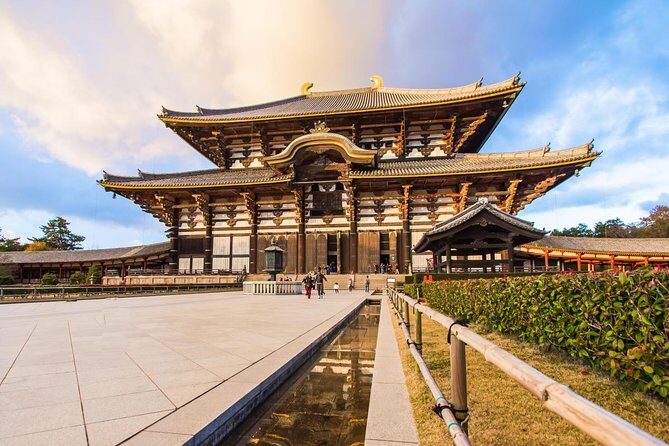
This is the kind of day trip where you stop thinking like a tourist and start thinking like a reader. Nara was Japan’s old capital, so the city naturally layers history on top of itself. You’re not just ticking landmarks. You’re walking through the eras that shaped the place, then hearing how they connect.
The best part is the routing. If you’ve ever tried to stitch together Nara Park, Kasuga Shrine, and Todai-ji on your own, you know how easy it is to waste time. Here, the guide keeps the day moving so you can spend more energy looking closely instead of getting oriented.
It’s also a good match if you like cultural stops with a purpose. The stops aren’t random. They’re anchored to the stories of power, faith, and city life—temple foundations, aristocratic influence, and the everyday “temple town that became a merchant town” feel of Naramachi.
A few more Kyoto tours and experiences worth a look
Entering Naramachi’s old-town lanes without getting lost
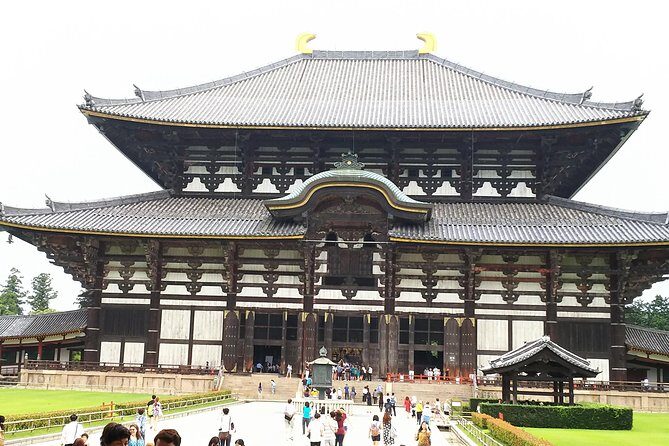
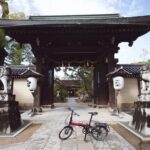
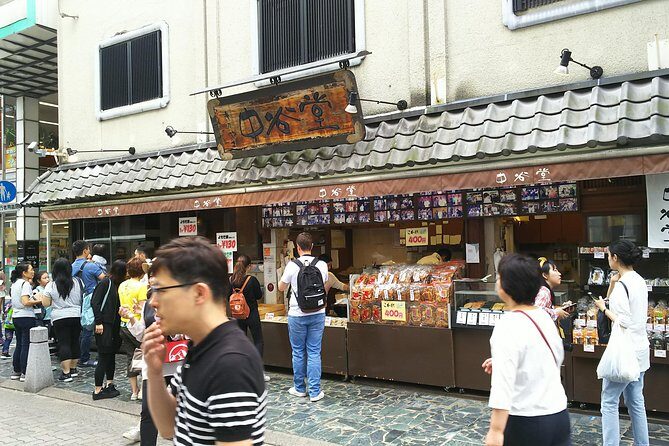
The day begins in Naramachi, a neighborhood with a backstory that starts in the 8th century and later turns into a merchant town. What you’ll notice right away are the traditional-style lattice houses—some 100 years old and up—that give the area that slow, lived-in mood.
This stop is not about one single photo spot. It’s about how Naramachi looks and feels like a transition zone between “official history” and daily commerce. When you walk through lanes like this, you start to understand how people supported temples and religious life long after the first wave of court attention.
The practical upside: this segment is planned for about 1 hour 30 minutes, and it’s free at the admission level. That makes it an easy warm-up before the bigger-ticket religious sites.
Small drawback: it’s still walking time. If you’re already tired from Kyoto transit, you’ll want to start with a snack or water before meeting up.
Kasuga Grand Shrine and the Fujiwara family thread
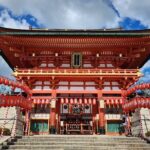
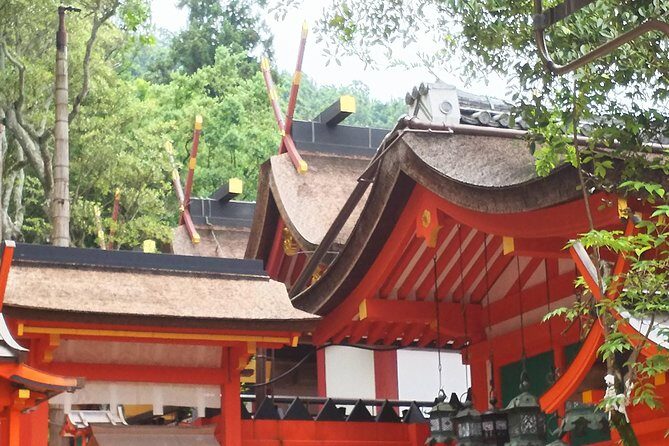
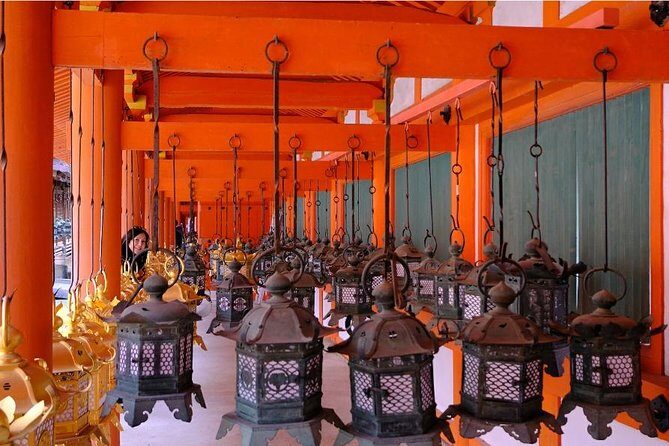
Kasuga Grand Shrine is where you shift from neighborhood history into aristocratic power. The shrine was founded in the 8th century by the Fujiwara clan, a family that dominated court politics for centuries.
On this tour, that isn’t just trivia. The guide helps you see why the Fujiwara connection matters: this wasn’t a small local shrine that happened to survive. It was tied to influence and patronage, which helps explain why Kasuga still feels so carefully maintained today.
You’ll also learn a detail that most guidebooks don’t emphasize. The head priest is described as a descendant from the Fujiwara clan, which gives the site a sense of continuity across generations.
Time here is about 1 hour. Entrance is not included in the tour price, so plan for tickets separately. If you’re sensitive to crowds, go in with patience; shrine grounds tend to gather people, especially during peak travel hours.
Todai-ji: the moment the huge Buddha takes over your attention
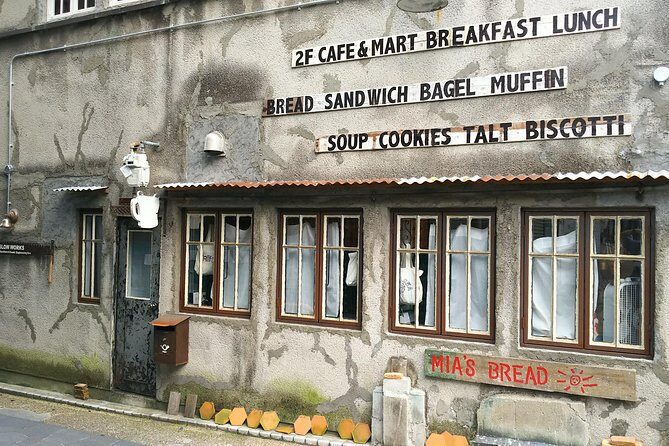
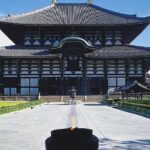
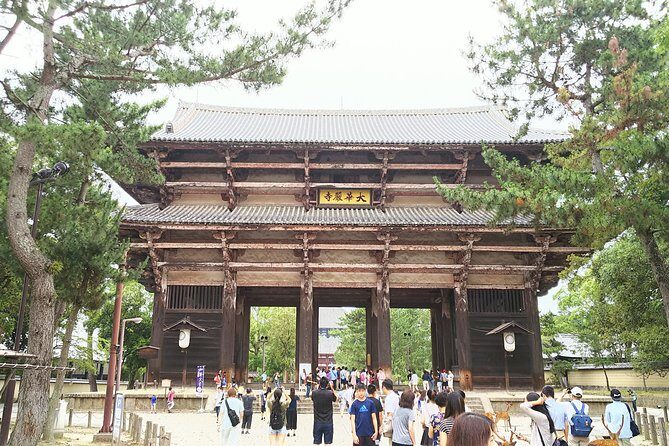
Todai-ji is the anchor stop of the day, and it’s earned its reputation. This temple was founded by Emperor Shōmu over 1,300 years ago and is a UNESCO World Heritage site. It also sits beneath Mt. Wakakusa, which is part of why the precinct can feel both monumental and slightly sheltered.
What I like most about Todai-ji on a guided walk is the way the scale becomes meaningful. The main sights can feel overwhelming on your own because you see size first and meaning second. With a guide, you get the structure: why certain buildings exist, what the complex represents, and how the site fits into Japan’s early Buddhist world.
You’re given around 1 hour for Todai-ji. Entrance is not included, and it’s a place where tickets can be worth budgeting for even if you’ve paid for the tour already.
One of the most memorable moments people report here is seeing the largest wooden structure and the enormous Buddha. That reaction makes sense. Standing in the same space, it’s hard not to feel your attention slow down.
Nara Park deer: the fun, the rules, and the reality
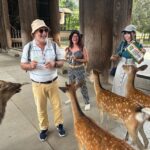
Between the major temple and shrine stops, you get time at Nara Park to see the deer that roam freely around the grounds. This is the part that feels playful even when you’re learning serious history.
In practice, the deer interaction can range from just watching them wander to a closer experience where you may have a chance to feed them, depending on what’s allowed on the day. Your guide can help you stay safe and figure out what’s permitted, which matters because deer behavior is not something you want to gamble with.
What makes this stop valuable is not just cuteness. It’s how the park operates as a living tradition. Nara’s wild deer aren’t a staged attraction; they’re woven into how people experience the city’s sacred spaces.
Timing-wise, the deer portion is built into the overall 8 hours. So if you’re hoping for a long sit-down picnic, you might find the schedule too tight. But if you want that signature Nara moment without spending half your day circling for deer, it works well.
Other walking tours we've reviewed in Kyoto



Walking pace, timing, and how to plan your day
This tour runs for about 8 hours with a start time of 8:30am, and it ends in a different location than where it begins. That matters because you’ll want to plan your next activity with some breathing room. Don’t book a tight train connection right after the tour.
Because this is a walking tour, comfort is not optional. Bring shoes you can walk in for hours, and pack a small amount of water. If rain shows up, the whole day can feel longer, and the provider notes that the experience requires good weather.
The tour is also private for your group. That usually means a calmer pace than a large group tour, and it also means your guide can answer questions without having to rush to keep everyone together.
One more budget item: public transportation fare is listed separately (¥2,000 per person). So even though the core tour is one fixed price, you should keep some yen ready for local movement.
Price and value: what you’re really paying for
The price is $137.17 per person, and the big value is the professional guide who takes care of navigation and interpretation. That’s worth real money if you want more than photos—especially at sites where the details help you understand what you’re seeing.
Entrance fees are not included. You should plan for Todai-ji and Kasuga Taisha Shrine ticket costs (listed as ¥1,500 per person). Then there’s the local transport fare (¥2,000 per person). So your all-in total is typically higher than the headline tour cost.
Still, the structure makes sense for value. You’re paying to avoid research time and route headaches, and you’re buying context for three major sites plus Naramachi. If you were to DIY, you’d spend time sorting tickets, figuring out timing, and trying to decide how long to linger at each place. Here, the guide handles that pacing for you.
In short: pay for convenience and clarity. Just don’t assume entry is included.
The guides make a difference: the flexibility you’ll feel
A theme shows up with this tour style: guides treat your day like a real human schedule, not a rigid script. For example, Satomi was described as extremely flexible when someone diverted to the Nara National Museum, and she still helped with timing and insight afterward. That’s a huge relief if you like options.
Another example: Tomoko was praised for being accommodating when someone’s husband had a bad knee. If your group has mobility limits, this is a sign you should communicate needs early.
And Fumiko stood out for answering questions and bringing culture and history into focus in a way that felt useful, not robotic.
The lesson for you: if you have a preference—more museum time, less rushing, a slower pace—tell your guide what “good” looks like for you at the start. Private guiding works best when you set expectations early.
Who should book this Nara day walking tour?
This tour is a strong fit if you want the classic Nara highlights in one go: Naramachi, Kasuga Grand Shrine, and Todai-ji, with the deer experience at Nara Park as the emotional reset.
It’s also a good pick if you enjoy architecture and history but don’t want to do heavy planning. The tour format saves time while still giving you enough on-the-ground context to make the sites feel connected.
If you’re the type who hates walking all day or needs a lot of breaks, you should be upfront about mobility needs before you book. The tour is planned for most travelers, and service animals are allowed, but the day still involves long stretches of walking.
Should you book? My quick decision guide
Book it if you want Nara’s biggest hits with a route that keeps you from wasting time, plus a guide who can answer questions and adapt within reason. It’s also worth it if you like learning as you go and you don’t want to piece together three major stops on your own.
Skip it if you’re hoping for a heavily customized itinerary with lots of extra time at one place, or if you dislike paying separate entrance and transport costs. This is best viewed as a focused guided day, not a fully custom private tour where every stop is redesigned from scratch.
If the weather looks good and you’re ready for an 8-hour walking day, this is an efficient way to experience Nara beyond the surface.
FAQ
What is the duration of the One-Day Walking Tour of Nara?
The tour runs for about 8 hours.
What does the tour include, and what do I pay separately?
The tour includes a professional guide. Entrance fees to Todai-ji Temple and Kasuga Taisha Shrine are not included, and public transportation fare is also listed separately.
When does the tour start?
The start time is 8:30am.
Is this tour private?
Yes, it is private, and only your group participates.
Can I see the deer at Nara Park?
Yes. The tour includes a chance to see the wild deer of Nara Park.
Do I need good weather for the tour?
Yes. The experience requires good weather, and if it is canceled due to poor weather, you will be offered a different date or a full refund.
Can I cancel and get a full refund?
You can cancel for a full refund if you cancel at least 24 hours before the experience’s start time.